Summer Solstice 2026: Why June 21 Is the Longest Day of the Year
By NatureWeatherHub Team
Reading Time: 6 Minutes
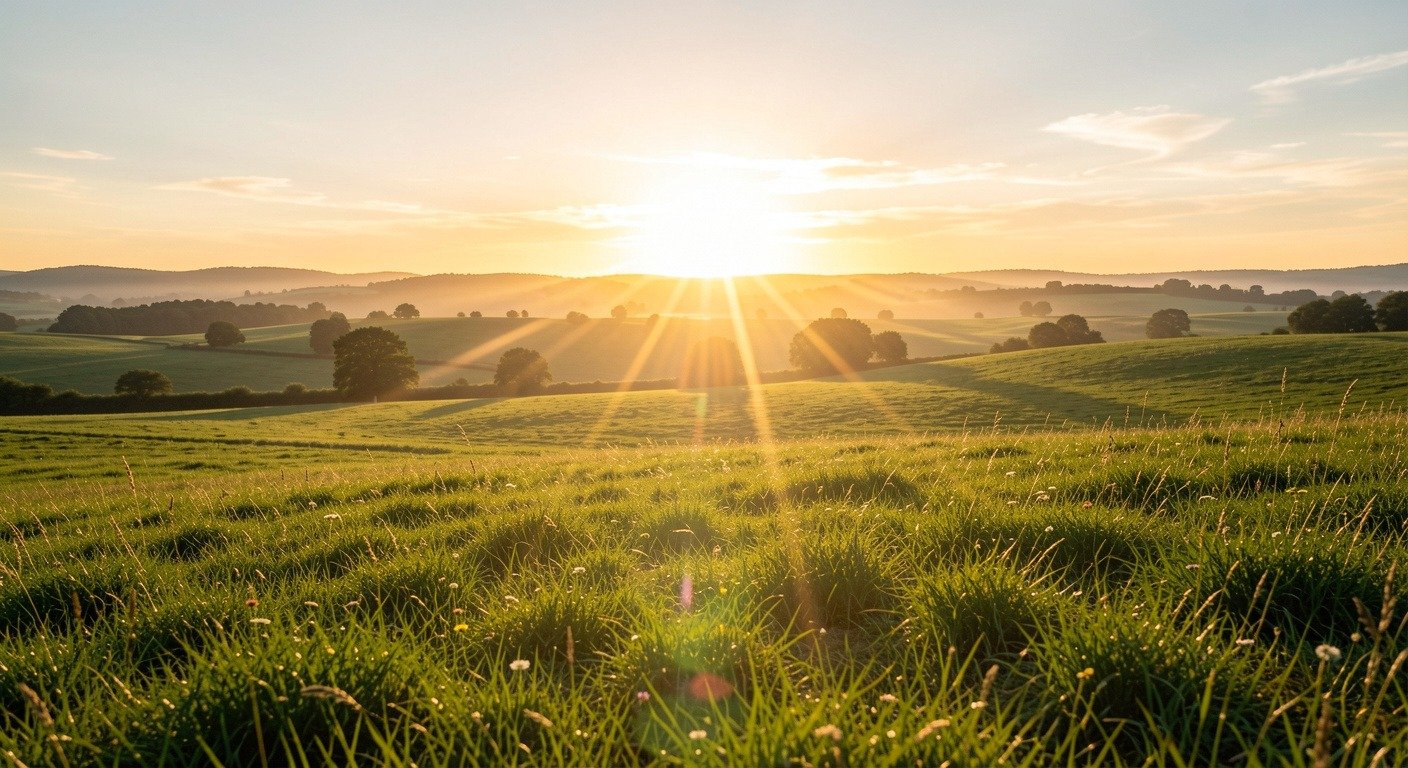
Today, North of the Arctic Circle, the Sun will not set at all. In London, daylight will stretch past 16 hours. And somewhere on England’s Salisbury Plain, thousands of people will gather before dawn at a ring of ancient stones to watch the sunrise, just as people have done there for thousands of years.
This Sunday, June 21, 2026, is the summer solstice. At 09:24 British Summer Time, or 08:24 Coordinated Universal Time, the Northern Hemisphere reached its maximum tilt toward the Sun. It is the longest day of the year, a moment shaped by physics, marked by human tradition, and felt by everyone who steps outside into the extra light.
What Is the Summer Solstice?
The summer solstice is the moment the Northern Hemisphere leans closest to the Sun. That tilt delivers the year’s longest stretch of daylight above the equator. In the United Kingdom, the Sun rose before 5 a.m. and will set after 9:30 p.m. In Seattle, daylight lasts nearly 16 hours. At the North Pole, the Sun traces a full circle around the horizon without ever dipping below it: 24 hours of continuous light.
For the Southern Hemisphere, the story is reversed. June 21 is the winter solstice there, the shortest day of the year. While London basks in summer sun, Buenos Aires sees barely 10 hours of daylight.
The word solstice comes from the Latin sol, meaning Sun, and sistere, meaning to stand still. For several days around the solstice, the Sun’s noontime height barely changes. It appears to pause before beginning its slow descent toward winter. According to the Royal Observatory Greenwich, ancient skywatchers tracked this stillness with precision using nothing more than shadows and stone.
Why Does It Happen?
Earth does not spin upright. Its axis is tilted at 23.4 degrees relative to the plane of its orbit. That tilt, frozen in space as the planet circles the Sun, is the entire reason seasons exist.
Imagine a spinning top, slightly off-kilter, tracing a loop around a lamp. When it leans toward the lamp, the upper half catches more light. Earth works the same way. The solstice is the peak of the lean. At the Tropic of Cancer, an invisible line at 23.4 degrees north latitude, the Sun appears directly overhead at solar noon today. Everywhere north of that line, the Sun arcs across the sky at its highest possible path.
Without the tilt, daylight would remain nearly constant year-round. There would be no long summer evenings, no short winter afternoons. According to NASA, the tilt is likely the result of a massive collision early in Earth’s history that knocked the young planet off its vertical axis.
One twist: the summer solstice does not bring the earliest sunrise or latest sunset. According to BBC Weather, the earliest sunrises occur about a week before the solstice, and the latest sunsets trail several days after. Earth’s orbit is elliptical, not circular, and the Sun’s apparent motion speeds up and slows down while our clocks tick a steady 24 hours.
The date of the solstice also drifts between June 20, 21, and 22. The reason is simple: Earth takes roughly 365 days and 6 hours to orbit the Sun. Those extra hours accumulate until a leap year resets the calendar.
Social Media Highlight
“The summer solstice is not just the longest day. It is the moment the planet leans closest to the Sun, and for thousands of years, humans have gathered to watch.”
How the Solstice Affects People
The solstice is physics, but it is also a human story. The extra daylight shapes how people spend their time, how their bodies respond, and how communities come together.
Health and Sun Exposure
More daylight means more Sun. Benefits include vitamin D production, improved mood, and more time for outdoor activity. But the risk rises too. On the longest day, ultraviolet radiation has more hours to reach the ground. According to the World Health Organization, UV exposure is the primary cause of skin cancer, with the hours around solar noon carrying the greatest danger. The solstice, for all its beauty, is also a day to reach for sunscreen and shade.
Travel and Outdoor Life
Long daylight transforms movement. Across the United Kingdom this Sunday, parks swell with families, hiking trails draw bank-holiday crowds, and coastal roads carry traffic late into an evening that still looks like afternoon. For the travel industry, the weeks around the solstice mark the start of peak summer season across the Northern Hemisphere.
Culture and Celebration
For at least 5,000 years, people have built monuments aligned to the solstice sunrise. Stonehenge is the most famous: its massive heel stone frames the rising Sun exactly on the summer solstice. According to English Heritage, thousands still gather at the stones each June 21 to watch dawn break over the ancient monument.
Across Scandinavia, Midsummer festivals light bonfires and raise maypoles in traditions that predate Christianity. Indigenous communities across North America have held solstice ceremonies for centuries, including the Lakota Sun Dance. The day connects modern life to something older: the human need to mark the turning of the year.
Mental Health and Light Sensitivity
Not everyone welcomes the extended daylight. For people sensitive to light or prone to sleep disruption, long bright evenings can disturb circadian rhythms. In far northern cities where the Sun barely sets, residents often rely on blackout curtains to maintain normal sleep. What feels like a gift to many is a genuine challenge for others.
Outdoor Workers
For farmers, construction crews, and road workers, the solstice means long hours under direct Sun. According to the U.S. Occupational Safety and Health Administration, outdoor workers face heightened heat stress risk during the weeks around the solstice, when solar intensity peaks.
Why It Matters Now
The solstice is ancient, but its context is changing.
The UK weather forecast for this solstice Sunday tells its own story. According to BBC Weather, high pressure dominates much of the country, bringing dry and mostly sunny conditions. Southern temperatures reach 26 to 31 degrees Celsius, or 79 to 88 degrees Fahrenheit, with isolated thunderstorms possible in eastern England. The north stays cooler at 15 to 25 degrees. It is, in short, the kind of day that makes the solstice feel like summer’s true arrival.
Yet the hottest days almost never land on the solstice itself. In the Northern Hemisphere, peak heat arrives in late July or early August, sometimes six weeks after the longest day. Scientists call this seasonal temperature lag: oceans and land absorb solar energy slowly and release it even more slowly. The planet keeps heating up after daily sunlight has already begun to decline. In a warming world, that lag means the heat building through July and August now starts from a higher baseline than it did a generation ago.
The solstice also reveals a practical split in how we measure summer. Meteorological summer, the fixed three-month block of June through August used for climate records, began on June 1. Astronomical summer begins today, tied to Earth’s position in space. In an era of shifting climate patterns, both lenses matter.
What We Can Learn
The solstice offers something increasingly rare: a natural cycle that is predictable, visible, and shared across continents. It asks only that a person look up.
Watching the solstice sunrise, or noticing how high the Sun climbs at noon and how slowly it sets, connects a person to the mechanics that govern every season. The same tilt that makes today the longest day will make December 21 the shortest. The rhythm holds.
The temperature lag teaches a quieter lesson. The longest day is not the hottest. The most intense sunlight does not bring the most immediate heat. Natural systems respond on a delay, a reminder that cause and effect in the physical world often operate at different speeds.
For thousands of years, people have marked this day with stone, fire, and gathering. The science is more precise than ever. But the feeling of standing in the longest light of the year, watching the Sun pause before the slow turn toward winter, remains exactly what it has always been.
Final Call to Action
“The Sun stands still today. Worth looking up.”
The solstice is not complicated to understand, and that is part of its power. Earth tilts. The light shifts. Seasons turn. Every June, the Northern Hemisphere leans toward the Sun, and for one day, the world feels a little more open, a little longer, a little closer to the sky.