Thousands of Fireflies Flash in Perfect Unison Every June — Here’s the Science Behind It

Thousands of Fireflies Flash in Perfect Unison Every June — Here’s the Science Behind It

For two weeks every year, something almost supernatural happens in a forest in Tennessee.

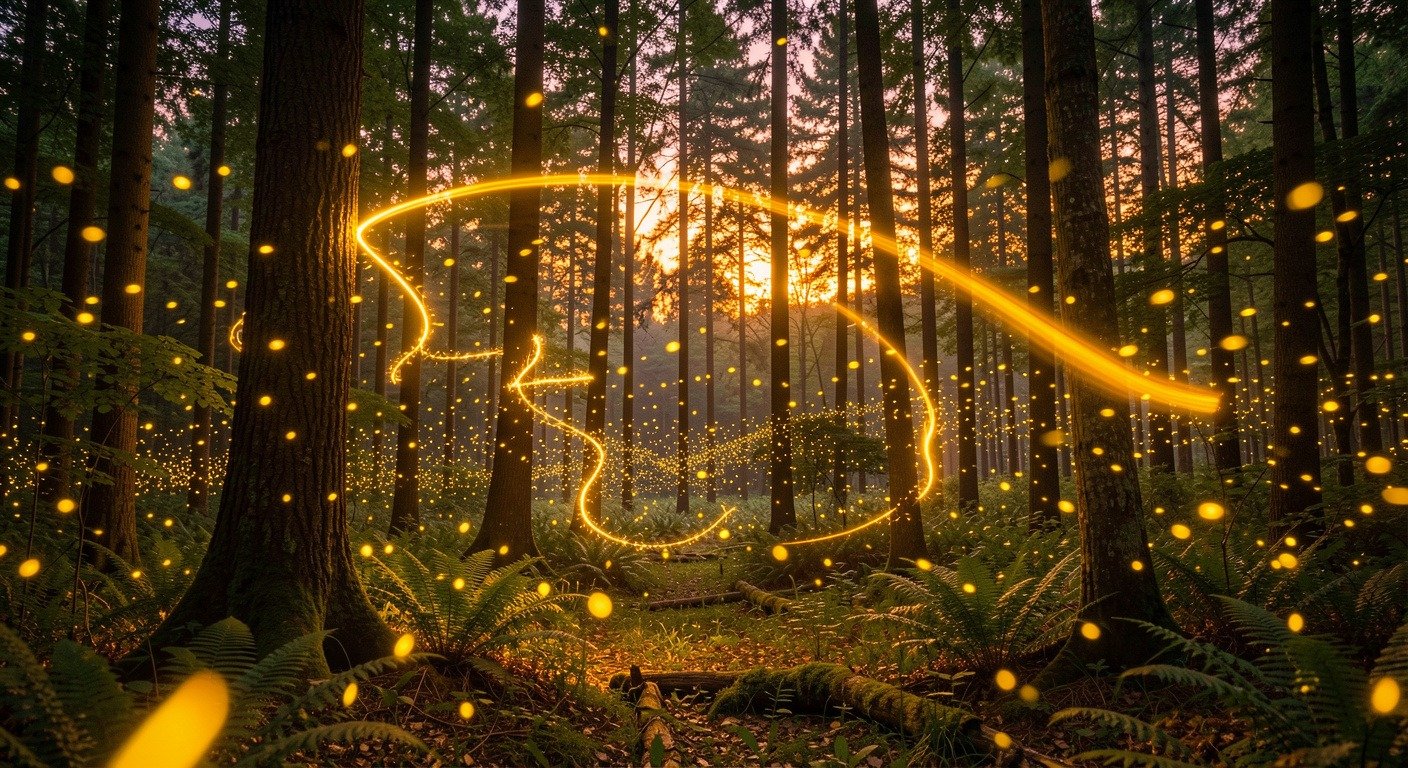
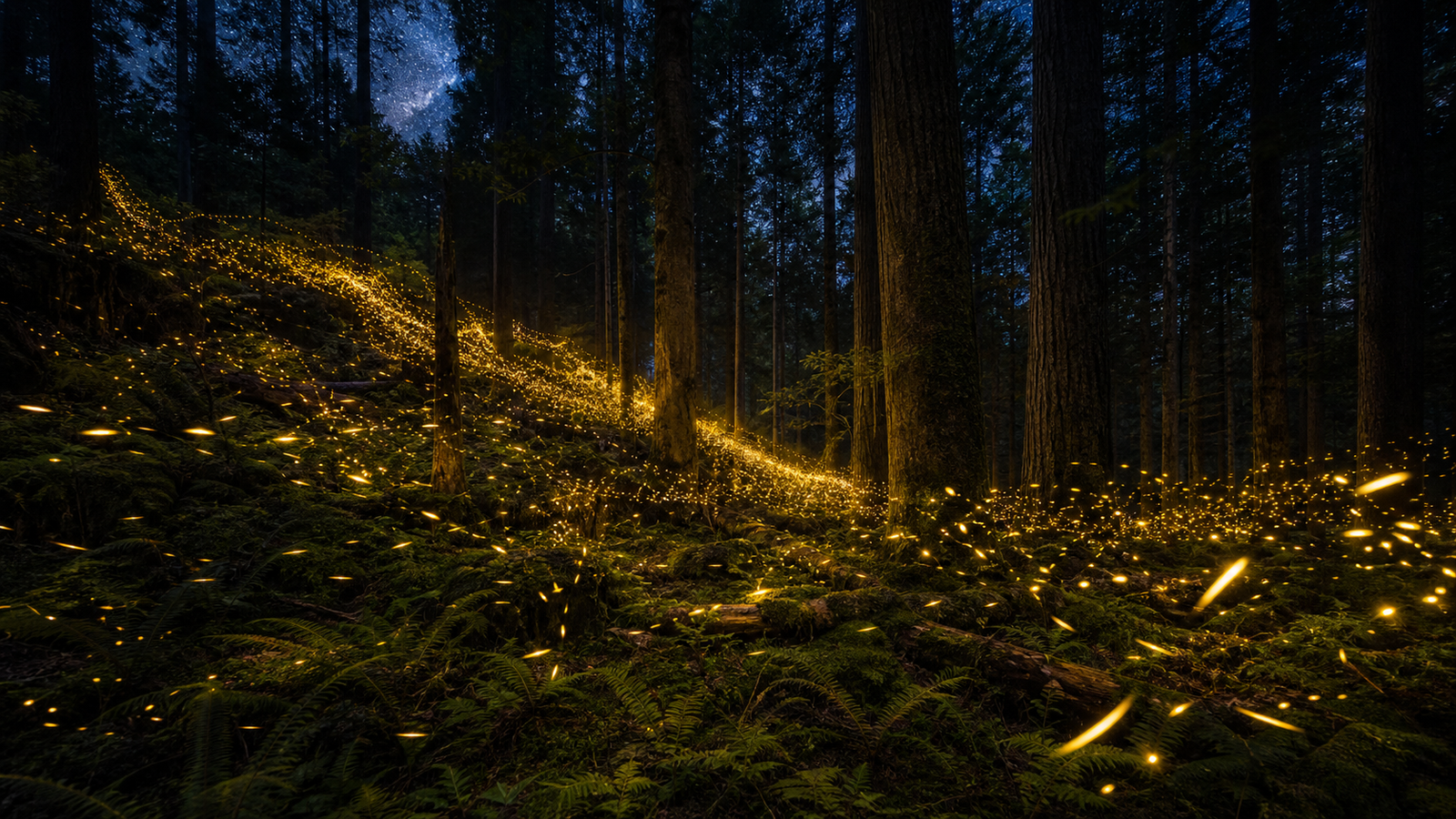
The sun sets. The woods go dark. And then — one by one, then hundreds, then thousands — fireflies light up. But these aren’t the random, scattered flashes you remember from childhood summers. These fireflies pulse together. Perfectly. As if someone is conducting them.

A wave of light sweeps through the trees. Flash. Pause. Darkness. Flash. Again. For hours. Every night.

This isn’t a special effect. It’s Photinus carolinus — one of the only firefly species on Earth capable of synchronized flashing. And the 2026 viewing season just wrapped up in late May.

The Only Firefly That Does This

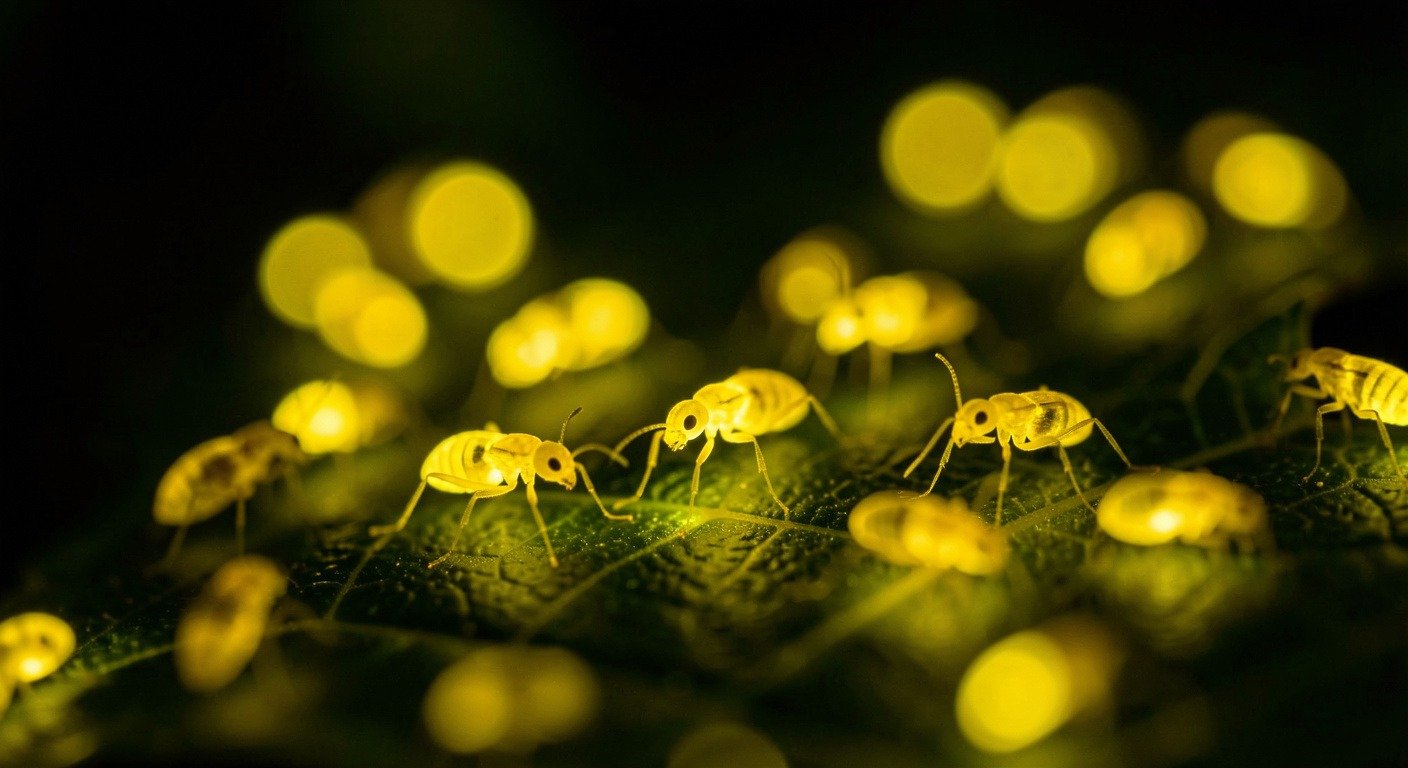
The Great Smoky Mountains National Park is home to 19 different firefly species. But only one — Photinus carolinus — puts on the synchronized show.

What makes them unique? While most fireflies flash in their own isolated rhythm, Photinus carolinus males coordinate. They flash six to eight times in rapid bursts, then go completely dark for several seconds. Thousands of them do this at the same time. The forest flickers like a stadium crowd doing “the wave.”

Scientists have been trying to understand this coordination for decades. It turns out, no one is in charge. There’s no leader firefly calling the shots. Each firefly simply watches its neighbors and adjusts its own timing — a phenomenon mathematicians call “coupled oscillators.”

Steven Strogatz, a mathematician at Cornell University, developed the mathematical models that explain this self-organizing behavior. His research showed that a group of independent oscillators — whether fireflies, heart cells, or pendulum clocks — can spontaneously fall into perfect sync when enough of them interact. It’s the same principle that makes audiences clap in unison without anyone directing them.

Why They Actually Do It

The flashing isn’t for our entertainment. It’s a mating signal.

Male fireflies flash to attract females, who wait in the grass below. Each pattern is a species-specific code: “I’m here, I’m your species, come find me.” By synchronizing, the males create a stronger collective signal that carries further through the forest. It’s harder for a female to miss a thousand flashing lights than a single lonely blink.

Interestingly, not all firefly lights are romantic. Some female fireflies in the Photuris genus mimic the flash patterns of other species — then eat the males who come calling. Nature is beautiful. And brutal.

How Hard Is It to See the Show?

Pretty hard, actually — and that’s on purpose.

The National Park Service limits access to the Elkmont area of the park during the peak viewing window. In 2026, the event ran from May 20 to May 27. A lottery system distributes a fixed number of vehicle passes — and demand far exceeds supply. In recent years, over 29,000 people applied for roughly 1,800 available parking spots.

If you want to try for 2027, mark your calendar for late April. That’s when the lottery typically opens. Passes cost a small fee (usually around $25), and winners are notified by early May.

But here’s a tip most people don’t know: you don’t need a lottery pass to see synchronous fireflies. The Elkmont viewing is the most famous, but Photinus carolinus also lives outside the lottery zone. Nearby areas like the Cataloochee Valley and parts of the Cherokee National Forest have populations of synchronous fireflies — without the crowds. You just need to be patient, go at the right time, and find the right spot.

The Bigger Problem: Fireflies Are Disappearing

Here’s something troubling: firefly populations are declining worldwide.

According to the Xerces Society for Invertebrate Conservation, three main threats are driving the decline:

  • Habitat loss. Fireflies need forests, meadows, and wetlands. When those places become parking lots and subdivisions, fireflies lose their homes.
  • Light pollution. Outdoor lights confuse fireflies. Males can’t find females when artificial light drowns out their signals. In some areas, entire populations have disappeared after bright street lamps were installed.
  • Pesticides. Lawn chemicals and agricultural sprays kill firefly larvae, which live in soil and leaf litter for up to two years before emerging as adults.

One study published in BioScience found that roughly 1 in 3 firefly species in North America may be at risk of extinction. Climate change adds another layer — drought and sea level rise threaten wetland habitats where many firefly species breed.

What You Can Do in Your Own Yard

You don’t have to travel to Tennessee to make a difference for fireflies. Small changes at home actually help.

  • Turn off outdoor lights. Motion sensors and dim, warm-colored bulbs are better than bright white floodlights. Better yet — go dark at night during firefly season.
  • Leave some leaf litter. Firefly larvae live in decomposing leaves and rotting wood. A perfectly manicured lawn with bagged leaves is a firefly desert.
  • Skip the pesticides. If you spray for mosquitoes, you’re also killing fireflies. Try natural alternatives like removing standing water instead.
  • Plant native species. Native grasses and shrubs create the moist, shaded habitat fireflies need.
  • Let part of your yard go wild. Even a small strip of unmowed grass or a patch of native plants provides habitat.

The Bottom Line

Synchronous fireflies are one of those rare natural wonders that stop you in your tracks. Thousands of tiny creatures, each with a brain smaller than a grain of rice, somehow coordinate a light show so precise that mathematicians build models to explain it.

But the truth is, these shows are getting rarer. Fireflies need darkness, native plants, and chemical-free soil — things that are harder to find in a world of streetlights and lawn sprays.

The good news? Every yard left a little wilder, every porch light turned off, every patch of leaves left where they fell — it all adds up. You don’t need to win a lottery to help fireflies. You just need to give them a little room to exist.

And maybe one summer, you’ll walk outside and see them flashing in your own backyard.


Written by NatureWeatherHub — your simple guide to weather, nature, and the planet.

Similar Posts

Leave a Reply