What Happens When You Stop Managing the Land and Let It Manage Itself?
For decades, the assumption was simple: if you want healthy land, you manage it. You graze it, plant it, fence it, drain it. Nature gets a corner, and everything else stays under human control.
A new study from Scotland just flipped that assumption on its head.
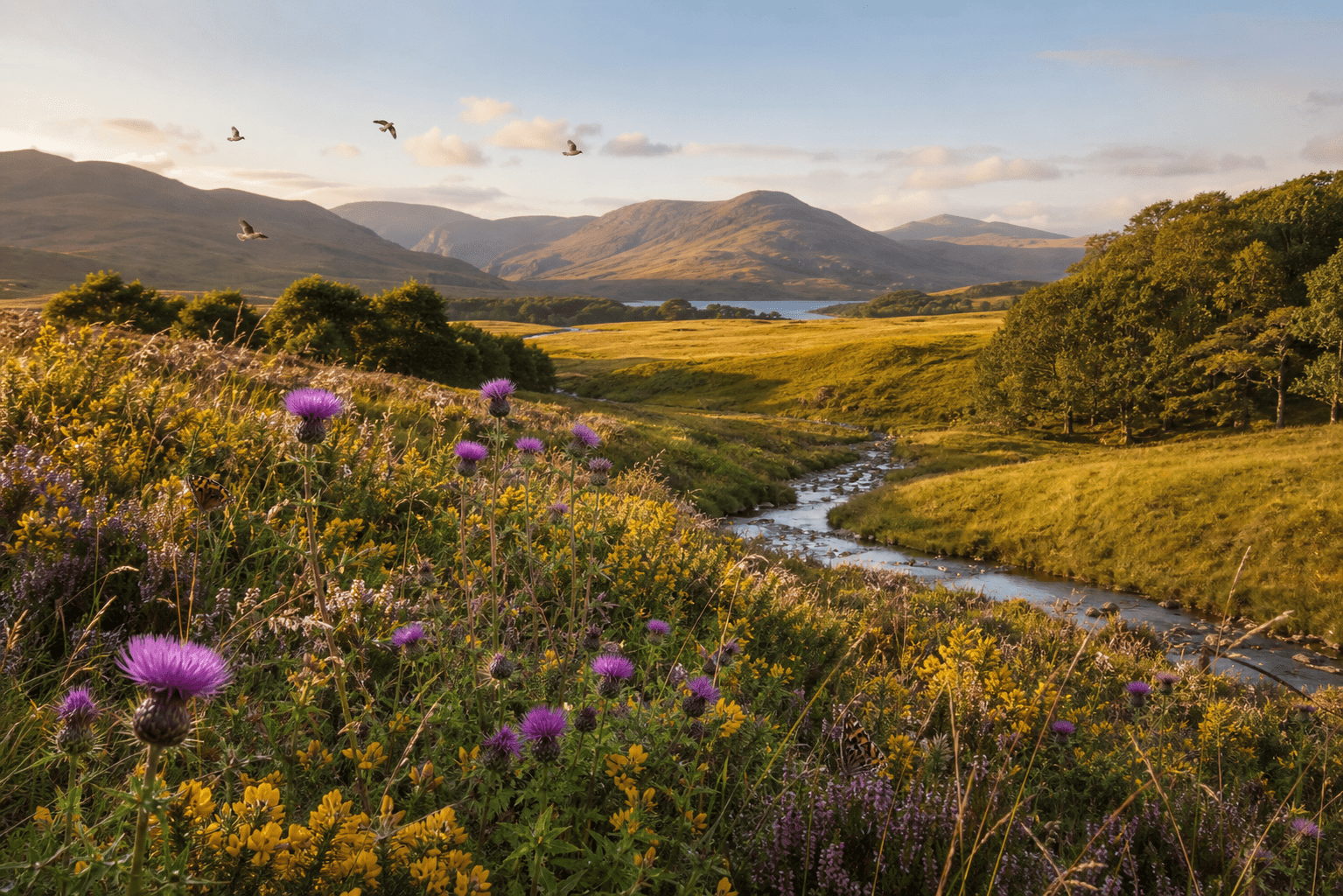
Researchers from Liverpool John Moores University (LJMU) spent months surveying 11 sites across Scotland’s Northwoods Rewilding Network. They walked more than 120 kilometres of transects, recorded over 3,000 pollinator sightings, and tracked 1,000 pairs of breeding birds. At every site, they compared rewilded land directly against adjacent land that was still managed in the traditional way.
The results were not subtle.
The Numbers That Changed the Conversation
On rewilded land, the variety of bird species jumped 261%. Their breeding territories — actual nests being built and chicks being raised — increased by 546%.
Pollinators went even further. The diversity of bumblebee and butterfly species more than doubled. Their overall abundance? Up over tenfold. The number of nectar-rich plants they depend on rose by roughly 250%.
Separate analysis estimated that rewilded landscapes in the network now support around 2.5 million pollinating insects.
“The results are astonishingly clear,” said Dr Ross Macleod, the LJMU ecologist who analyzed the data. Anyone who has spent time around academic researchers knows they don’t use words like “astonishingly” lightly.
What “Rewilding” Actually Means Here
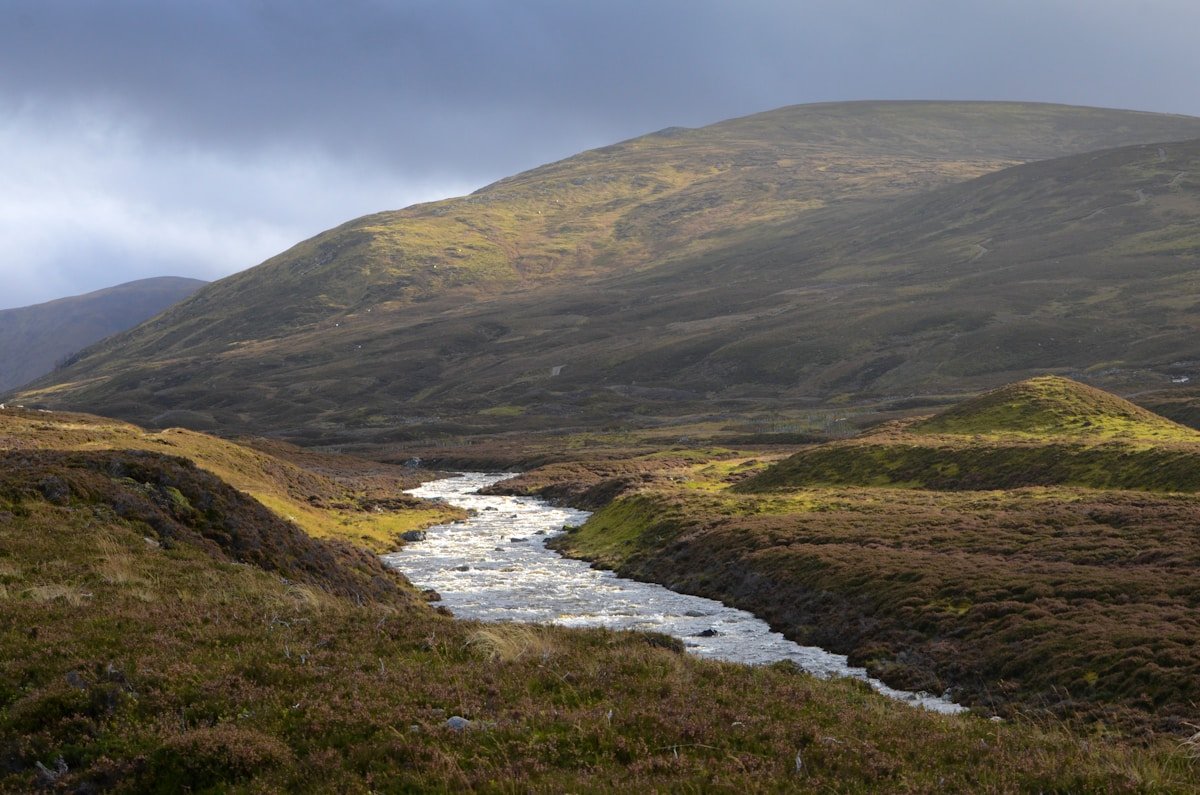
Rewilding is not the same as abandoning land. It is a deliberate process of stepping back enough for natural processes to take over — reducing grazing pressure, removing non-native plantations, restoring wetlands, and letting species return on their own terms.
The Northwoods Rewilding Network is a chain of over 100 landholdings across Scotland, coordinated by the charity SCOTLAND: The Big Picture. Since launching in 2021, it has supported £4.2 million in local investment. Participating landowners commit to a shared set of rewilding principles, but each site is different — some are former livestock farms, others were conifer plantations, and a few were simply degraded hillsides.
What they share is the decision to work with nature instead of against it.
Species That Were Disappearing Are Coming Back
One of the most encouraging findings involved birds on the UK’s red and amber conservation lists — species of serious concern.
The same formula works beyond birds. The giant panda’s downlisting from endangered to vulnerable shows what protection, habitat restoration, and patience can do for a species that looked finished.
Spotted flycatchers, cuckoos, and woodcocks are relatively common on rewilded Northwoods sites, even as their national populations continue to crash. The survey team noted this specifically. These birds are not just surviving on rewilded land — they are breeding there.
“Bucking the national trend of almost catastrophic declines,” is how Northwoods Rewilding Officer Aidan Maccormick put it.
When a species is vanishing everywhere else but thriving in one place, that place is worth studying.
A Farm That Became Something Else Entirely
Comrie Croft is one of the sites in the network. Thirty years ago, it was a nature-depleted livestock farm and non-native conifer plantation making very little money. Today, it is an award-winning rewilded destination that attracts 50,000 visitors a year for mountain biking, eco-tourism, and wildlife watching.
And it supports four times as many birds as it did before rewilding began.
“Families, jobs, wildlife — it doesn’t have to be either or,” said founder Andrew Donaldson. “It’s hugely satisfying to know that a site that was a nature-depleted, non-native woodland making little money 30 years ago, is now an award-winning, rewilded mountain biking destination.”
That detail matters. Rewilding is sometimes framed as taking land away from people. Comrie Croft shows the opposite — bring nature back, and people want to be there.
Scotland Rewilding: By the Numbers
| Metric | Result |
|---|---|
| Bird species diversity | +261% |
| Breeding territories | +546% |
| Pollinator abundance | +10x (over tenfold) |
| Pollinating insects supported | ~2.5 million |
| Local investment | £4.2 million |
Most rewilding success stories are anecdotal. Someone sees an otter where there was not one before and calls it a win. That is fine, but it does not convince policymakers or unlock funding.
This study is different because it used side-by-side comparisons — rewilded land next to non-rewilded land, surveyed by the same team, at the same time, using the same methods. The researchers detected bumblebees and butterflies more than 3,000 times across their survey periods. That sample size makes the numbers hard to dismiss.
Dr Macleod’s team at LJMU’s School of Biological and Environmental Sciences ran the analysis, which was then published through SCOTLAND: The Big Picture. It now stands as some of the strongest evidence yet that rewilding produces measurable, large-scale ecological recovery — and relatively quickly.
What You Can Take Away From This
You probably don’t own 100 acres of Scottish hillside. But the principle scales down.
- Less mowing means more pollinators. Letting even a strip of lawn grow wild supports dozens of bee and butterfly species. The tenfold pollinator increase in Scotland started with plants being allowed to flower.
- Diversity creates stability. Rewilded sites got more birds, more insects, more plants. A system with more moving parts handles stress better.
- Nature recovers fast. The Northwoods Network launched in 2021. In five years, bird species increased 261%. That is not a century-long project.
- It is about doing less of the wrong things. Reducing grazing, removing invasive trees, blocking drainage ditches. Small actions, big ripple effects.
— they got more different kinds of birds, more insects, more plants, more everything. A system with more moving parts handles stress better.
It is about doing less of the wrong things. Reducing grazing. Removing invasive trees. Blocking drainage ditches. Small actions, big ripple effects.
The Bottom Line
We spend a lot of time talking about what we are losing. The Scotland rewilding data offers something different — hard evidence of what we can gain.
When you give nature room to work, it does not hesitate. It fills every gap with life. Birds nest. Flowers bloom. Bees return. And the whole thing holds together better than anything humans could engineer on their own.
The question is no longer whether rewilding works. The question is how much of it we are willing to let happen. For one answer to how fragile those wins can be, look at Sweden’s wolverines — saved from extinction, now at risk again.
Source: Liverpool John Moores University (March 2026), SCOTLAND: The Big Picture, Northwoods Rewilding Network.
Written by NatureWeatherHub — your simple guide to weather, nature, and the planet.