Record-Breaking June Heat Wave Sweeps Across Southern Europe
What’s Happening Across Southern Europe
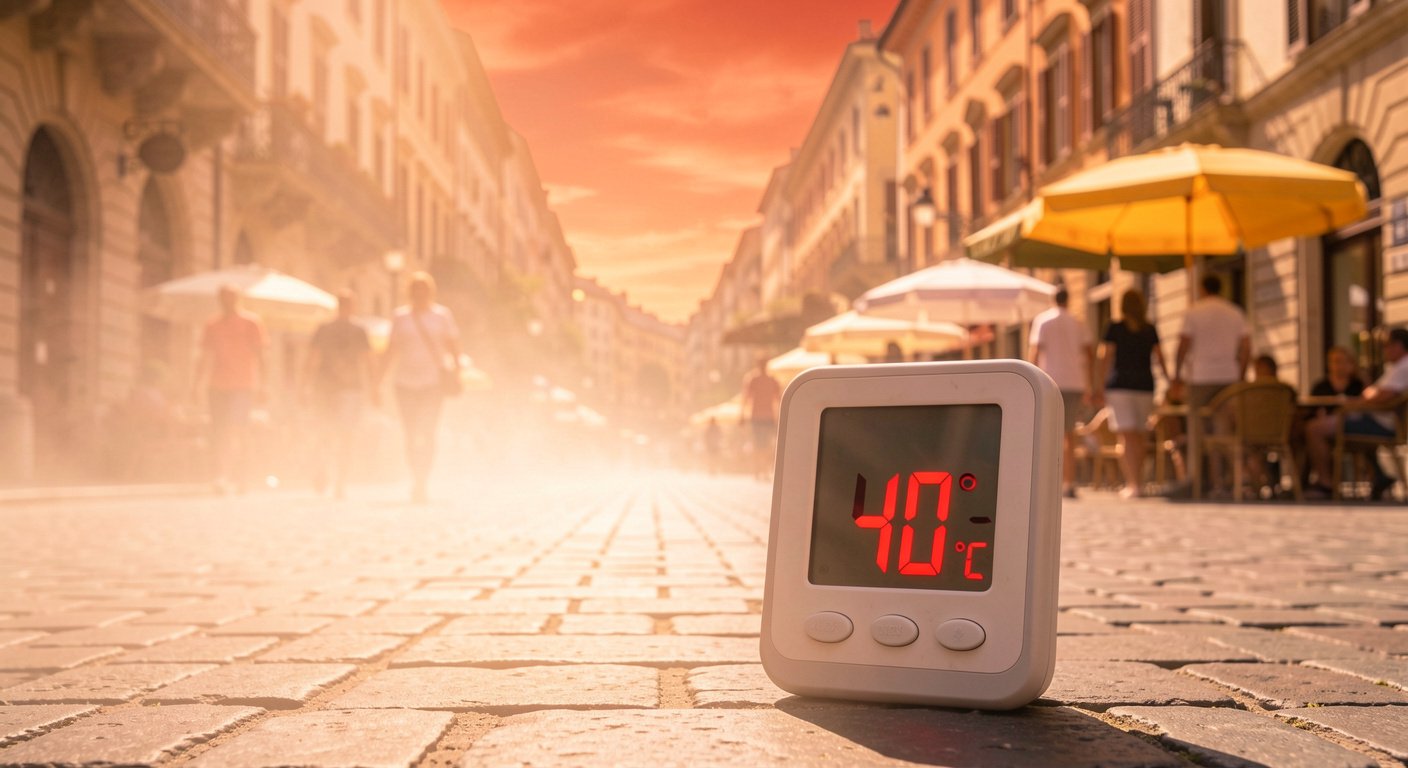
Southern Europe is in the grip of another extreme heat wave, with temperatures approaching 40 degrees Celsius across multiple countries. The event began around June 17 and is expected to intensify through the weekend and into the following week, with little relief at night.
Spain’s national weather agency has issued yellow warnings across much of the country. Cities including Seville, Zaragoza, and Córdoba are pushing toward 40°C, and forecasters expect the heat to persist well into next week. Tropical nights, where overnight lows fail to drop below 20°C, are forecast across large portions of the Mediterranean coast.
In France, temperatures are projected to reach 39°C in the southwest, particularly around Bordeaux and the interior. The heat arrives just weeks after a deadly May heat wave that claimed lives across the country. Portugal is bracing for some of the highest readings on the continent, with inland areas including the Douro Valley, the Tagus Valley, and the Alentejo region likely to exceed 40°C.
Portuguese meteorologist Maria João Frada told reporters that temperatures would reach 35 to 40°C by the start of next week, though the 40°C mark would be “more confined to inland regions.” Italy is also in the crosshairs: hot air flowing from North Africa is pushing readings into the high 30s across the south, and Florence in the north could touch 40°C.
Further east, the Danube plains of Bulgaria and Romania are projected to reach 38°C, while Budapest could see 36 to 37°C. The breadth of the affected area, from the Atlantic coast to the Black Sea, reveals the scale of this event.
Why It’s Happening
The immediate cause is an atmospheric blocking pattern: a powerful ridge of high pressure parked over western and central Europe. This system acts like a lid, trapping hot air beneath it and preventing cooler Atlantic weather from moving in.
The Met Office describes the mechanism as “widespread sinking air” that suppresses cloud formation and allows for prolonged sunshine. Air compresses and warms as it descends, driving temperatures well above seasonal norms. Across much of central and western Europe, readings are running 10 to 15°C above the mid-June average.
Meteorologists call this configuration a heat dome. Severe Weather Europe notes that the upper-level ridge originated over northwest Africa and has expanded across the continent, with 500-millibar geopotential heights approaching record levels for late June. The blocking pattern keeps the dome parked in place, which is why this is not a two-day spike but a prolonged event that could persist through the remainder of the month.
Climate change provides the backdrop. The baseline temperature from which these events launch is higher than it was a century ago, making heat waves more frequent, more intense, and longer-lasting. Scientists describe this as the “new normal”: extreme heat arriving earlier and returning more often. Understanding the difference between weather and climate helps explain why a single hot day is not the same as a shifting baseline.
Compounding the heat is a drought feedback loop. Soils across Iberia and southern France remain exceptionally dry after the record-breaking May heat wave. Dry ground cannot cool itself through evaporation, so solar radiation goes almost entirely into heating the surface, which heats the air above even faster.
How It Affects People
The most dangerous element of this heat wave is not the daytime peak but what happens after sunset. Tropical nights, where the minimum temperature stays above 20°C, are forecast across wide areas of the Mediterranean. In the worst cases, some locations may experience “super-tropical nights” with lows above 25°C.
Ionna Vergini, founder of weather analysis platform wyf24.com, describes the hidden threat in stark terms. “Excess mortality during heat waves correlates much more heavily with consecutive high nighttime minimums than with a single hot afternoon,” she told Euronews. When the body cannot cool down overnight, the cardiovascular system stays under constant strain. There is no recovery window.
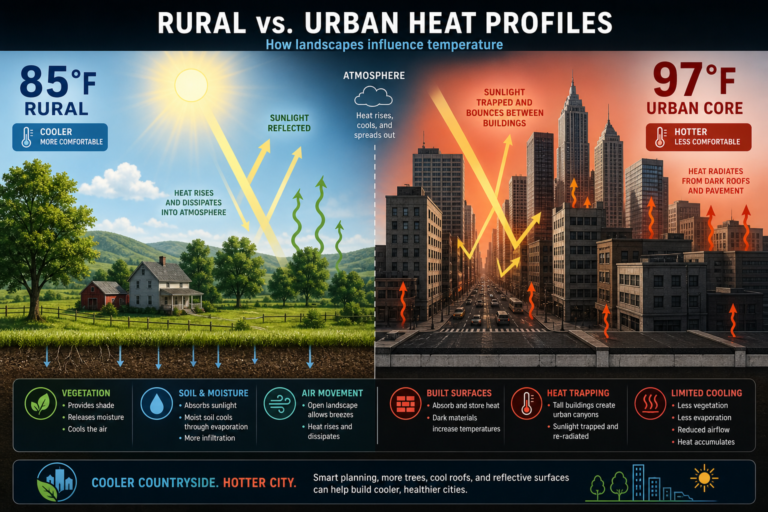
This is especially dangerous in cities, where the urban heat island effect traps warmth in asphalt, concrete, and brick long after the sun goes down. Buildings radiate stored heat through the night, keeping indoor temperatures elevated. For elderly residents, young children, and people with pre-existing health conditions, the cumulative stress can become fatal.
Infrastructure is struggling too. Southern Europe’s electrical grids were designed for late-20th-century thermal thresholds, not for sustained 40°C heat. Air-conditioning demand surges during heat waves, and when transformers overheat, blackouts follow. Turin experienced repeated outages during May’s heat wave, and similar strain is expected again.
Public transport systems are also vulnerable. France’s Transilien network has advised passengers to check for heat-related schedule disruptions. Rail lines can buckle in extreme temperatures, and older rolling stock lacks adequate cooling. The French education ministry is considering rescheduling exams to cooler hours after students struggled to sleep in the heat.
Why It Matters Now
This is the second major European heat wave of 2026. The first, in late May, shattered records across the continent. Mora, Portugal, reached 40.3°C on May 27, the hottest May day ever recorded in the country. Twenty-two stations broke their all-time maximum temperature records that day.
Spain’s Health Ministry reported 101 heat-related deaths in May, the highest figure for the month since records began in 2015 and more than three times the historical average. The United Kingdom recorded its hottest spring day on record, 35.1°C at Kew Gardens in London on May 26, and at least 15 water-related deaths as people sought relief in rivers, lakes, and the sea.
France recorded 37.8°C in Angoulême and at least seven heat-related deaths. Italy issued red alerts for Rome, Florence, Bologna, Brescia, and Turin, where repeated blackouts strained the city’s power grid. The May heat wave caused at least 11 direct deaths and what public health researchers believe is a far larger number of excess mortalities that will take months to quantify.
The fact that a second major event is unfolding just three weeks later is what makes this moment significant. Heat waves are no longer isolated episodes; they are arriving in clusters, with diminishing recovery time between them. Resilience is not just about surviving one hot week. It is about surviving the next one, and the one after that.
This pattern has implications far beyond Europe. With the FIFA World Cup 2026 underway across North America, where host cities are also grappling with extreme summer temperatures, the global conversation about heat preparedness has never been more urgent.
What We Can Learn
Vergini points to a widening structural gap. Southern Europe has developed behavioral adaptations, such as afternoon siestas and closed shutters, that help people cope with heat. But those are cultural habits, not biological protections, and they do nothing to shield electrical grids, rail lines, or hospitals from thermal stress.
The preparedness gaps are becoming clearer with each event. Early warning systems have improved; France, Spain, and Portugal now have heat-health alert protocols that did not exist two decades ago. But warnings only work if the systems behind them can respond. Cooling centers need reliable electricity. Hospitals need backup power. Public transport needs to keep running so vulnerable people are not stranded.
Urban design is another front. Cities built for a cooler climate, with dense masonry, dark surfaces, and limited green space, amplify heat rather than mitigate it. Increasing tree cover, using reflective building materials, and designing ventilation corridors can lower neighborhood temperatures by several degrees. These solutions have been tested in cities from Melbourne to Medellín, but adoption across Europe remains slow.
The June 2026 heat wave is not a surprise. It was forecast. Its predecessor was forecast. The next one will be forecast too. The question is whether the warnings will be matched by the investment and planning that turn preparedness from a document into a reality.
“This isn’t just another hot week; it has the structural fingerprints of an atmospheric blocking event, not a passing warm spell.”
Ionna Vergini, wyf24.com, via Euronews
“Sustained nighttime heat is arguably a greater public health threat than the daytime peak. When lows fail to drop below 20°C … the body is denied its vital recovery window.”
Ionna Vergini, wyf24.com, via Euronews