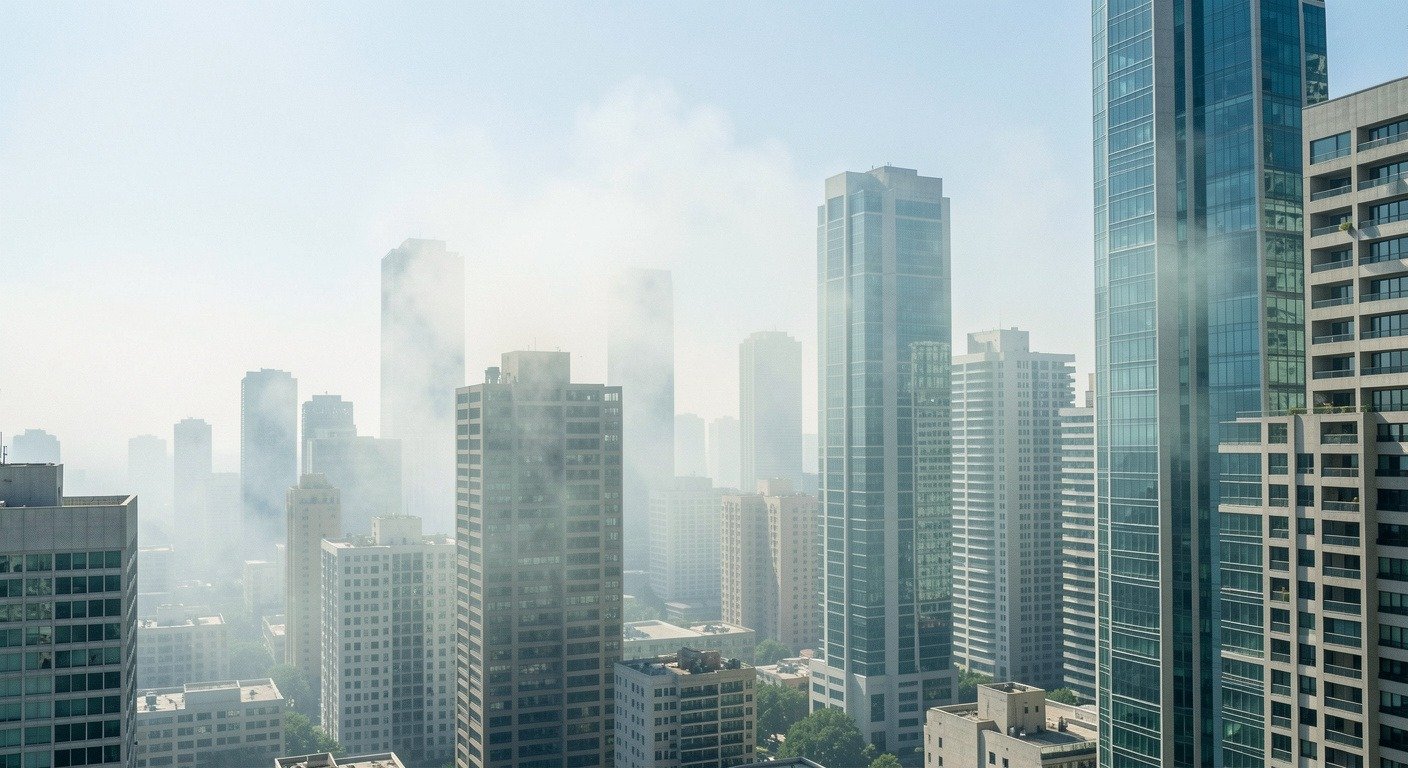
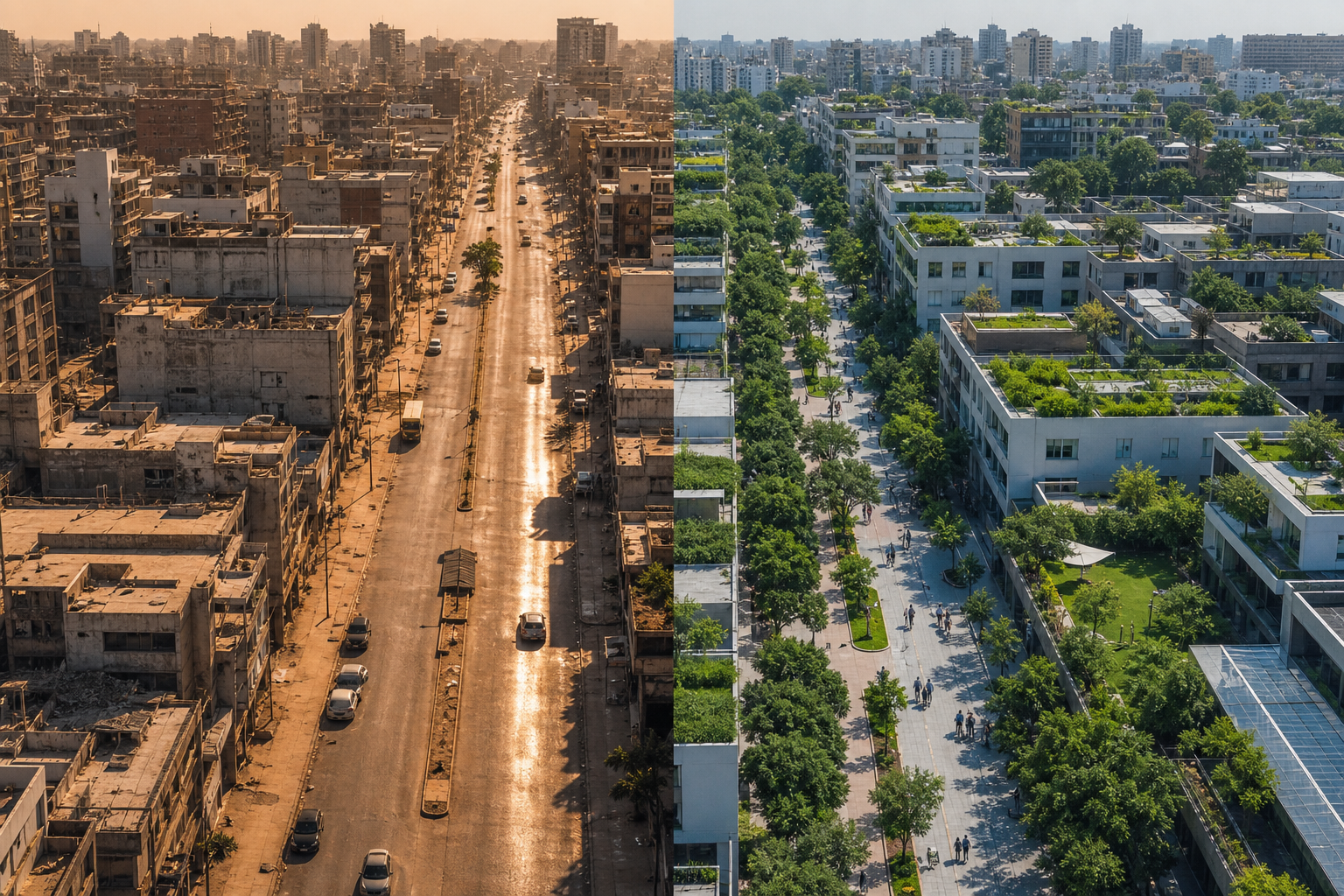
Cities can be 5 to 15 degrees Fahrenheit hotter than surrounding rural areas, a phenomenon called the urban heat island effect that turns concrete and asphalt into a giant heat battery. On the hottest summer days, this temperature difference can mean the difference between uncomfortable and deadly. Here is the science behind why cities bake, who gets hit hardest, and the proven cooling solutions that work.
The Physics of an Urban Oven
Four main ingredients cook a city into a heat island.
First, the materials cities are made of absorb and hold heat differently than natural landscapes. Asphalt roads, concrete buildings, brick walls, and dark rooftops all have high thermal mass and low albedo (reflectivity). A fresh asphalt surface can reach 160 degrees Fahrenheit on a sunny summer afternoon.
Second, cities lack vegetation. Trees and plants cool the air through evapotranspiration, essentially nature’s air conditioning. A single large tree can provide the cooling equivalent of ten room-sized air conditioners running for 20 hours.
Third, the geometry of city streets creates what scientists call the urban canyon effect. Tall buildings close together trap heat and block wind. During the day, sunlight bounces between building walls, and at night, the narrow gaps between buildings slow the release of stored heat.
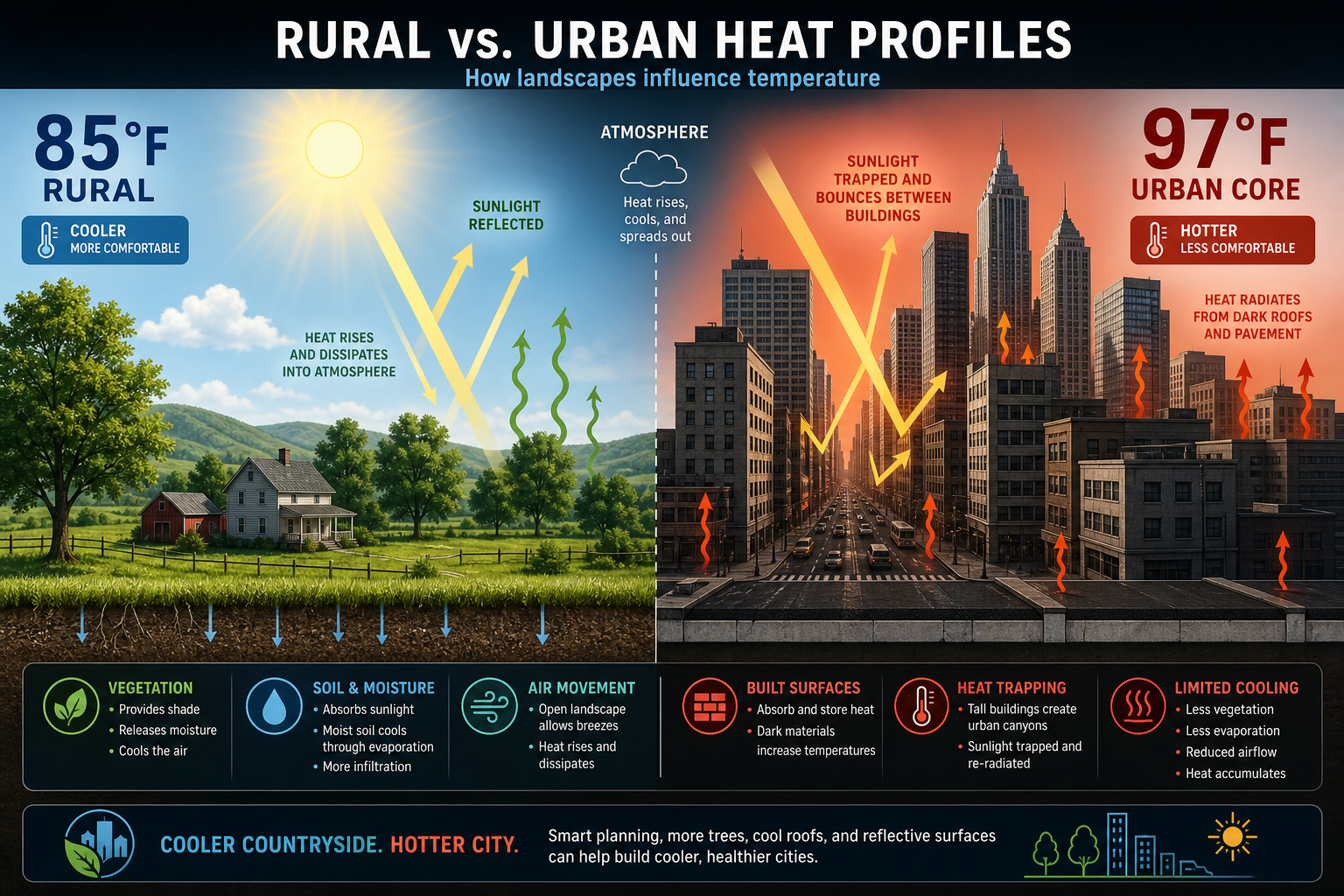
Fourth, cities generate their own heat. Vehicle engines, air conditioning units pumping hot exhaust outside, and industrial processes all release anthropogenic waste heat. On the hottest days, millions of AC units running simultaneously can raise outdoor temperatures by an additional 1 to 2 degrees.
Who Gets Hit Hardest
The urban heat island effect does not fall evenly across a city. Neighborhoods with fewer trees, more pavement, and older building stock consistently run hotter. A 2021 study published in Climate found that formerly redlined neighborhoods are on average 5 degrees hotter in summer than non-redlined areas in the same city.
“During the 1995 Chicago heat wave that killed more than 700 people, neighborhoods with little tree cover and high building density suffered the highest mortality.”
U.S. Environmental Protection Agency, Heat Island Effect Report
Why It Is Getting Worse
Climate change is turning up the thermostat underneath the urban heat island. By 2050, nearly 70 percent of the world’s population will live in urban areas, according to the United Nations. More people means more heat-generating activity, more pavement, and higher demand on an already strained cooling infrastructure.
Urban Heat Island: Key Statistics
| Metric | Value |
|---|---|
| Urban vs rural temp difference | 5-15 degrees F hotter |
| Asphalt surface temp on sunny day | Up to 160 degrees F |
| Redlined neighborhoods (avg hotter) | +5 degrees F vs non-redlined |
| 1995 Chicago heat wave deaths | 700+ (highest in low-tree areas) |
| Urban population by 2050 | ~70% of world population |
| Medellin green corridor cooling | Reduced temps by 2 degrees C (3.6 F) |
What Works: Proven Cooling Strategies
Cities around the world are already implementing solutions that work. These are not theoretical, they have measured results:
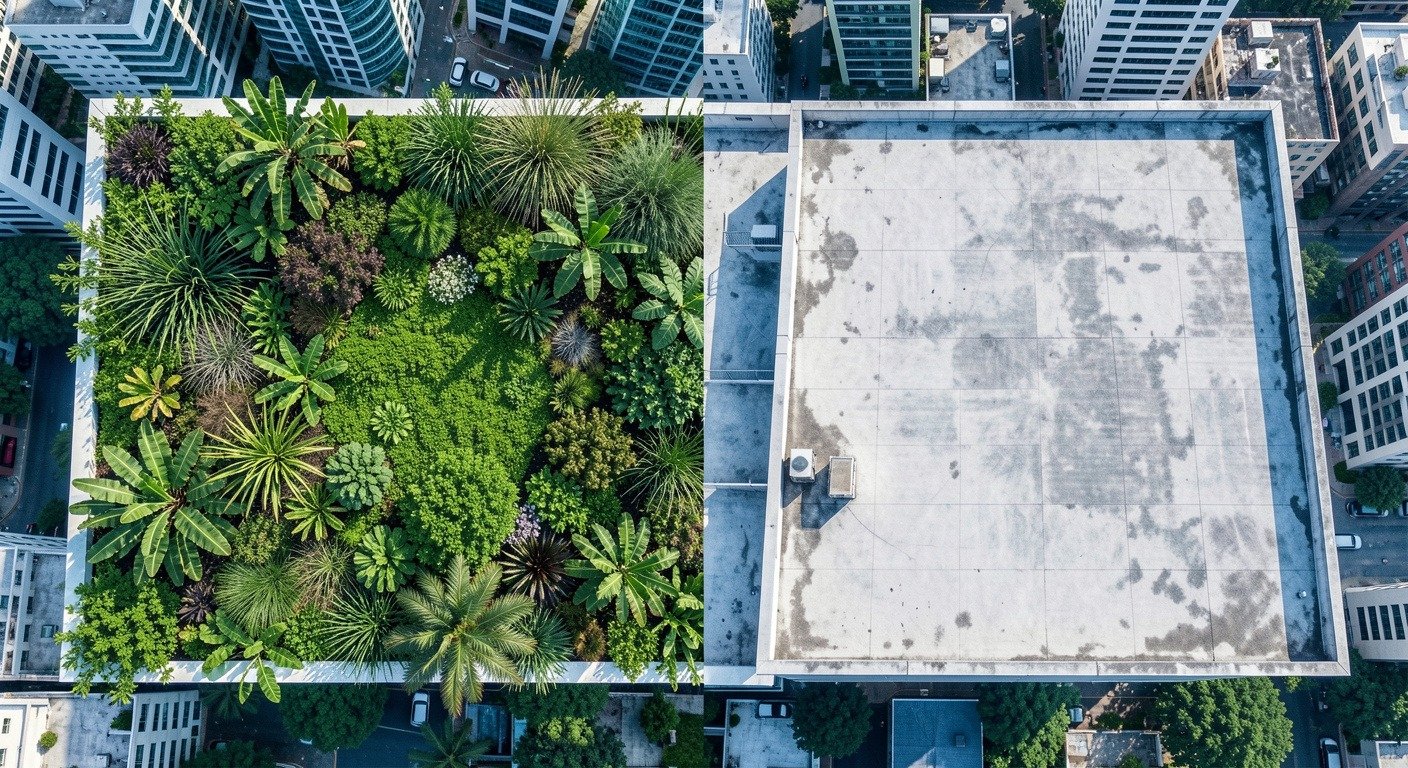
- Green roofs and cool roofs. A green roof can be 30 to 40 degrees F cooler than a conventional dark roof. Cool roofs use reflective materials that bounce sunlight back instead of absorbing it. The U.S. Department of Energy estimates cool roofs can reduce peak cooling demand by 10 to 15 percent.
- Urban tree canopy. Trees provide shade and cool the air through evapotranspiration. American Forests tracks Tree Equity Scores showing that lower-income neighborhoods have on average 27 percent less tree cover.
- Cool pavement technology. Reflective coatings and lighter-colored materials can reduce surface temperatures by 10 to 20 degrees F. Cities like Los Angeles and Phoenix are piloting cool pavement programs.
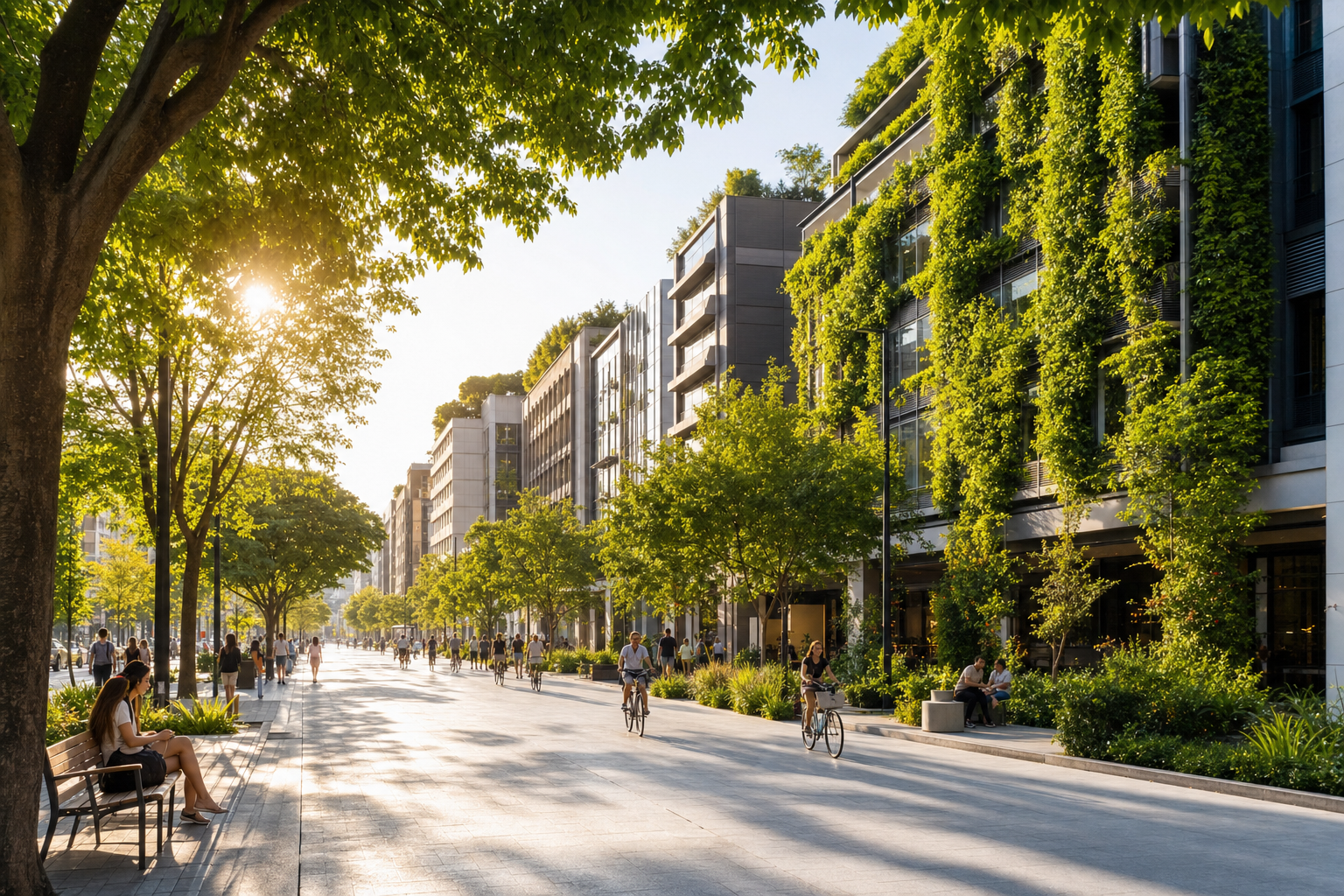
- Green corridors and parks. Medellin, Colombia, built 30 green corridors connecting parks and tree-lined streets, reducing the urban heat island effect by 2 degrees C (3.6 degrees F). Melbourne aims to double tree canopy cover by 2040. Paris is replacing asphalt schoolyards with green spaces.
What You Can Do
- Plant a tree. If you have a yard, plant a deciduous tree on the south or west side of your home. It provides shade in summer and lets sunlight through in winter after the leaves drop.
- Add a reflective roof coating. If you own your home, a cool roof coating can reduce indoor temperatures by several degrees and lower your energy bill.
- Support local tree-planting programs. Many cities have nonprofit partners that plant free street trees. A single request can add canopy to your block.
- Advocate for cool surfaces. Attend city planning meetings. Ask about cool pavement pilots, green roof incentives, and tree canopy goals for your neighborhood.
The urban heat island effect is one environmental problem where the fixes are well understood and the benefits show up immediately. For more on how heat affects cities, read our heat dome science guide.
Sources: U.S. EPA Heat Island Effect; NOAA Climate.gov; NASA Earth Observatory; American Forests Tree Equity Score; U.S. Department of Energy Cool Roofs.