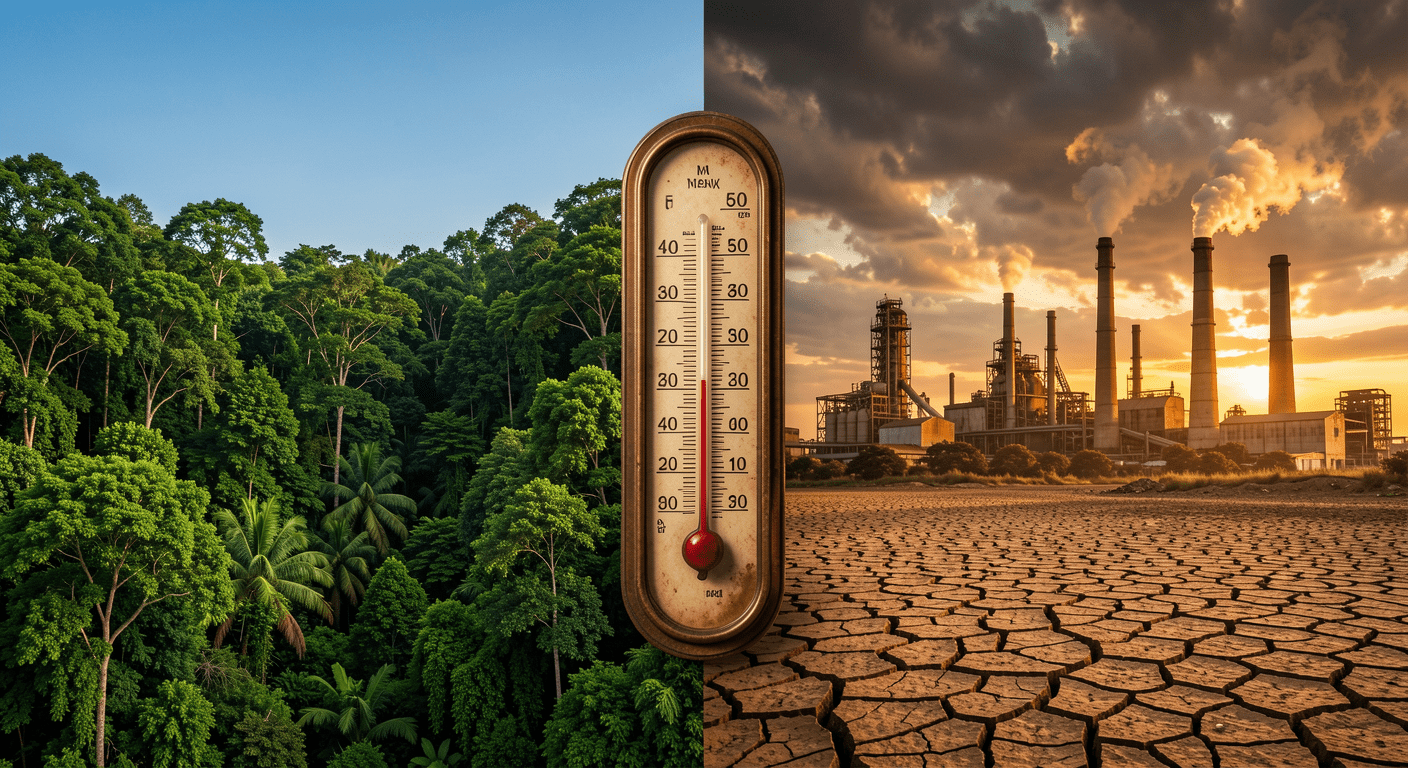
Climate change is the defining story of our time, and the 2026 data leaves no room for doubt. Every major monitoring agency on Earth is telling the same story: the planet is warming, the evidence is overwhelming, and the pace is accelerating.
What Is Climate Change?
Climate change is the long-term shift in Earth’s average temperatures and weather patterns. While the planet’s climate has always changed naturally over thousands of years, the warming we are seeing now is happening at a speed with no parallel in recent geological history.
Earth’s average surface temperature has risen by roughly 2 degrees Fahrenheit (1.1 degrees Celsius) since the late 1800s. That may not sound like much, but on a planetary scale, it is an enormous amount of extra stored heat. Most of that warming has occurred in just the last 50 years.
To put it in perspective: the last time Earth was 2 degrees cooler than today, half of North America sat buried under a mile of ice. A few degrees change everything. The last time atmospheric carbon dioxide was as high as it is now, roughly 3 million years ago, sea levels stood 60 feet higher and humans did not exist.
The Science: How Greenhouse Gases Actually Work
Here is the simplest way to understand the physics behind global warming.
Simple Explanation
The sun sends energy to Earth. Some of it bounces back into space. But certain gases in our atmosphere, especially carbon dioxide (CO2), act like a blanket. They trap some of that outgoing heat and keep the planet warm enough for life. The problem is we have made the blanket much, much thicker.
The Professional Term: The Greenhouse Effect
Scientists call this the greenhouse effect. Carbon dioxide, methane (CH4), and nitrous oxide (N2O) are the primary greenhouse gases. They let sunlight pass through but absorb and re-radiate infrared heat that would otherwise escape to space. The physics is the same as a garden greenhouse, or your car on a sunny day: sunlight enters, heat builds, and the glass, or in Earth’s case, the gas layer, prevents it from escaping as fast as it accumulated.
Real-World Example: The Car Windshield Test
Park your car in the sun on a 25 degrees Celsius (77 degrees Fahrenheit) day. Within 20 minutes, the dashboard can hit 50 degrees Celsius (122 degrees Fahrenheit). Sunlight came through the windows, heated the interior, and the glass trapped the heat. That is exactly what greenhouse gases do to Earth, just on a global scale and over decades instead of minutes.
Before the Industrial Revolution, CO2 levels held steady near 280 parts per million (ppm) for thousands of years. In May 2026, the Mauna Loa Observatory in Hawaii recorded CO2 at 432.34 ppm, a more than 50 percent increase. We have not seen CO2 levels this high in at least 3 million years.
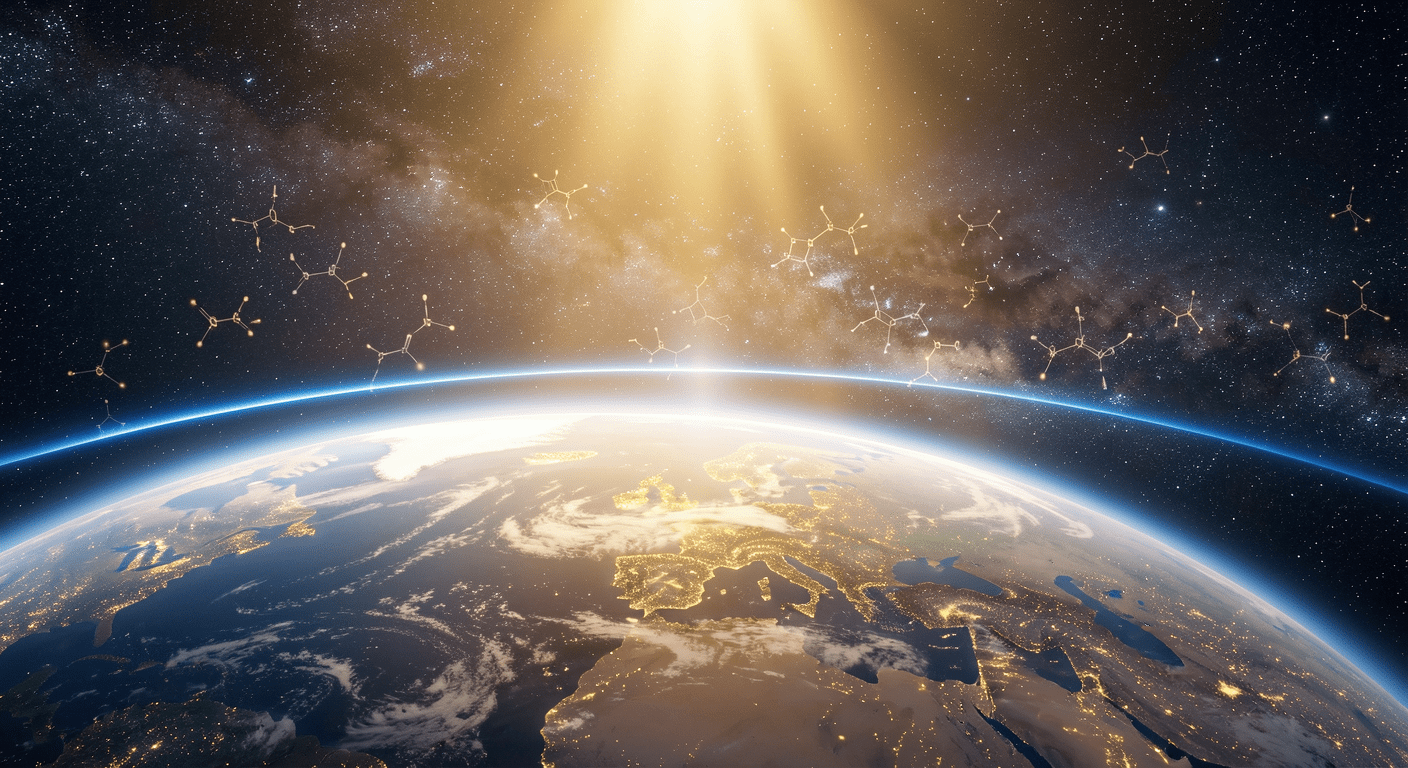
The planet is not debating. It is responding. Every degree of warming is already rewriting the rules of where and how we can live.
Climate Change at a Glance: Key Numbers for 2026
| Metric | Pre-Industrial | Current (2026) |
|---|---|---|
| Atmospheric CO2 | 280 ppm | 432 ppm |
| Global Temperature Rise | Baseline | +1.1 degrees C |
| Hottest Year (2024) | Baseline | +1.60 degrees C |
| Sea Level Rise Since 1880 | Baseline | 20-23 cm (8-9 in) |
| Arctic Sea Ice (June) | Stable | Record low |
How Climate Change Affects People Right Now
Climate change is not a future problem. It is a now problem, and it touches nearly every part of daily life. Here is how it is already reshaping our world across five major categories.
Health
Extreme heat is the deadliest weather-related hazard in the United States. Heat waves that used to occur once a decade now strike two to three times more often. Hospitals in cities like Phoenix and Delhi have opened dedicated heat-stroke wards. Warmer temperatures also expand the range of disease-carrying mosquitoes, pushing dengue and malaria into regions that never faced them before. A 2025 Lancet Countdown report found that 12 of 20 key health indicators linked to climate change have reached record levels.
Food and Farming
Farmers are watching their planting calendars become unreliable. A late spring freeze can destroy fruit blossoms. A flash drought six weeks later can shrivel grain in the field. According to the United Nations, climate-related crop failures contributed to food price spikes across East Africa and South Asia in early 2026. Coffee, chocolate, and olive oil have all seen supply shocks tied to extreme weather in their growing regions. The Food and Agriculture Organization estimates that heat waves alone have reduced global agricultural productivity by 5 to 10 percent over the past three decades.
Homes and Insurance
In the United States, major home insurers have stopped writing new policies in parts of California, Florida, and Louisiana. Wildfire and hurricane risk has outpaced what premiums can cover. For millions of families, that means either paying dramatically higher rates or going without coverage entirely. This is not a distant trend. It is happening now, reshaping housing markets from coast to coast.
Cities and Infrastructure
Coastal cities from Miami to Mumbai are dealing with what scientists call sunny day flooding. The ocean simply rises into the streets at high tide, even without a storm. Roads buckle in extreme heat. Urban heat islands can make city centers 5 to 8 degrees Celsius hotter than surrounding rural areas. Power grids strain under air-conditioning demand, and sometimes they fail entirely, as Texas demonstrated during the 2021 winter storm and repeated heat emergencies since.
Wildlife and Ecosystems
Coral reefs, which support roughly a quarter of all ocean species, are bleaching at unprecedented rates. In 2026, scientists recorded the fourth global bleaching event in just seven years. On land, animals are shifting toward the poles or up mountainsides to find livable temperatures. Some species cannot move fast enough. Scotland’s rewilding experiments show that giving nature room to recover can help reverse these trends. The Bramble Cay melomys, a small rodent native to a low-lying Australian island, was declared extinct in 2016 solely due to sea level rise, the first mammal extinction directly attributed to climate change. The flip side is measured in conservation status: the giant panda’s move from endangered to vulnerable shows how a species climbs off the endangered list.

What the 2026 Data Actually Shows
This is the year the evidence became impossible to ignore. Here is what the monitoring stations and satellites are telling us right now.
Record heat keeps accumulating. The year 2024 remains the hottest calendar year in recorded history, with an average global temperature 1.60 degrees Celsius above pre-industrial levels. It was the first year to cross the 1.5-degree threshold that the Paris Agreement aimed to avoid. While 2025 was slightly cooler due to a fading El Nino, it still ranked among the top five warmest years ever recorded. According to Berkeley Earth, 2026 is on track to land somewhere between the third and fifth warmest year on record, meaning every single year since 2015 has been among the hottest ever measured.
Carbon dioxide is still climbing. The May 2026 reading of 432.34 ppm at Mauna Loa is not just a record. It represents one of the fastest rates of CO2 increase ever observed. In 2024, the annual jump of 3.75 ppm was the largest single-year increase in the modern record, according to NOAA’s Global Monitoring Laboratory. The gas persists in the atmosphere for centuries. Every ton we emit today commits the planet to more warming for generations.
The cryosphere is retreating. Arctic sea ice hit a record low for June in 2026. The Greenland ice sheet is losing roughly 6 billion tons of ice per day during peak summer melt. Antarctica, once considered relatively stable, is now losing ice at an accelerating rate. Sea levels have risen about 8 to 9 inches since 1880, and the rate of rise has nearly doubled since the 1990s.
Extreme weather is more extreme. Every major climate attribution study published in 2026 has reached the same conclusion: the heat waves, floods, and wildfires making headlines are made more likely and more intense by human-caused warming. The World Meteorological Organization now predicts that one of the years between 2026 and 2030 has an 86 percent chance of surpassing 2024 as the hottest year ever recorded.
Warming is accelerating. A study published in early 2026 in the journal Geophysical Research Letters confirmed that the rate of global temperature increase over the last 15 years is significantly faster than the rate over the previous 30. In plain terms: we are not just warming. We are warming faster. This acceleration means shorter timelines for adaptation. Coastal communities that planned for 2050 sea levels are seeing those water levels arrive by 2030.
In 2026, carbon dioxide hit 432 parts per million. The last time Earth had this much CO2, sea levels were 60 feet higher and humans did not exist. The atmosphere does not care about politics. It only responds to physics.
What We Can Learn
The scale of the problem can feel paralyzing. But the science also tells us something important: every fraction of a degree of avoided warming matters. This is not an all-or-nothing situation. The solutions fall into two broad categories.
Mitigation: Reducing Emissions
Mitigation means reducing the greenhouse gases we put into the atmosphere. The biggest levers include shifting energy production from coal and oil to solar, wind, and nuclear power; improving energy efficiency in buildings and transportation; and protecting natural carbon sinks like forests, peatlands, and mangroves. Global investment in clean energy is now roughly double what the world spends on fossil fuels each year, a milestone crossed for the first time in 2025. The International Energy Agency reports that clean energy investment reached $2 trillion in 2024, compared to $1 trillion for fossil fuels.
Adaptation: Preparing for What Is Already Coming
Adaptation means preparing for the changes already locked into the system. This includes building sea walls and restoring coastal wetlands to absorb storm surges, developing heat-resistant crops, upgrading power grids for peak demand, and creating early warning systems for extreme weather. Cities like Rotterdam, Singapore, and Copenhagen are demonstrating that adaptation works and can improve quality of life even without a climate motive.
What Individuals Can Do
- Reduce energy waste at home. Better insulation, efficient appliances, and programmable thermostats cut both emissions and bills.
- Choose walking, biking, or transit over driving when practical. Transportation is the largest source of greenhouse gases in the United States.
- Eat less red meat and dairy. Livestock agriculture accounts for roughly 14.5 percent of global greenhouse gas emissions.
- Support leaders and companies taking the issue seriously. Policy and corporate action scale impact far beyond what any individual can achieve alone.
- Talk about it. Silence is one of the biggest obstacles to action. Public understanding drives public demand for solutions.
Explore More on NatureWeatherHub
- El Nino Complete Guide: How Pacific Ocean Temperatures Shape Weather Worldwide
- What Causes Heat Waves: The Science Behind Extreme Heat and Deadly Heat Domes
- Why Cities Feel Like Ovens: The Science of Urban Heat Islands
Sources
- NOAA Global Monitoring Laboratory: Mauna Loa CO2 Trends
- NASA Earth Indicators: Global Temperature Data
- World Meteorological Organization: Global Climate Update 2026-2035
- Met Office: More Temperature Records Ahead
- AGU Geophysical Research Letters: Global Warming Acceleration Study
- Berkeley Earth: Global Temperature Report 2025
- United Nations: Climate Reports