To understand the July 2026 heat wave tracker, three scientific concepts matter.
A heat dome is a stationary area of high pressure that traps hot air underneath it. Severe Weather Europe describes it as working like a lid on a pot: the extensive dome traps warm air at all levels, preventing cooler air from moving in and allowing temperatures to build day after day. The heat domes currently parked over the Western US and Western Europe are textbook examples of this phenomenon. For a deeper look at how these systems form and why they are becoming more frequent, our complete guide to heat dome science explains the mechanics in full.
The heat index explains why a 95-degree day on the East Coast can feel more dangerous than a 105-degree day in the desert. When humidity is high, sweat cannot evaporate efficiently, which is the body’s main way of cooling itself. The heat index accounts for this by measuring what the temperature actually feels like to the human body. When the East Coast sees air temperatures in the 90s but heat index values in the low 100s, it means the humidity is turning uncomfortable heat into dangerous heat.
Tropical nights are a third and often overlooked factor. The term describes nights when the temperature stays above 20C (68F), giving the human body no chance to recover from daytime heat exposure. Madrid has been experiencing tropical nights during this European heat dome, a pattern that health researchers have linked to increased mortality during heat waves. Without overnight cooling, the body accumulates heat stress day after day.
The Human Impact: Health Emergencies, and Strained Infrastructure
Extreme heat is the most deadly form of weather, and 2026 is now on track to be the hottest year on record. The extreme heat July 2026 has put nearly 100 million Americans under alerts while wildfires consume tens of thousands of hectares across Europe. Europe’s June heat dome was linked to more than 1,300 deaths. The July 2026 event, broader in geographic scope and longer in duration, threatens to exceed those numbers.
The health burden falls unevenly. The elderly, children, outdoor workers, and people in low-income housing without air conditioning face the highest risk. Urban areas amplify the danger through the heat island effect, where concrete and asphalt absorb and re-radiate heat, keeping cities several degrees warmer than surrounding rural areas overnight.
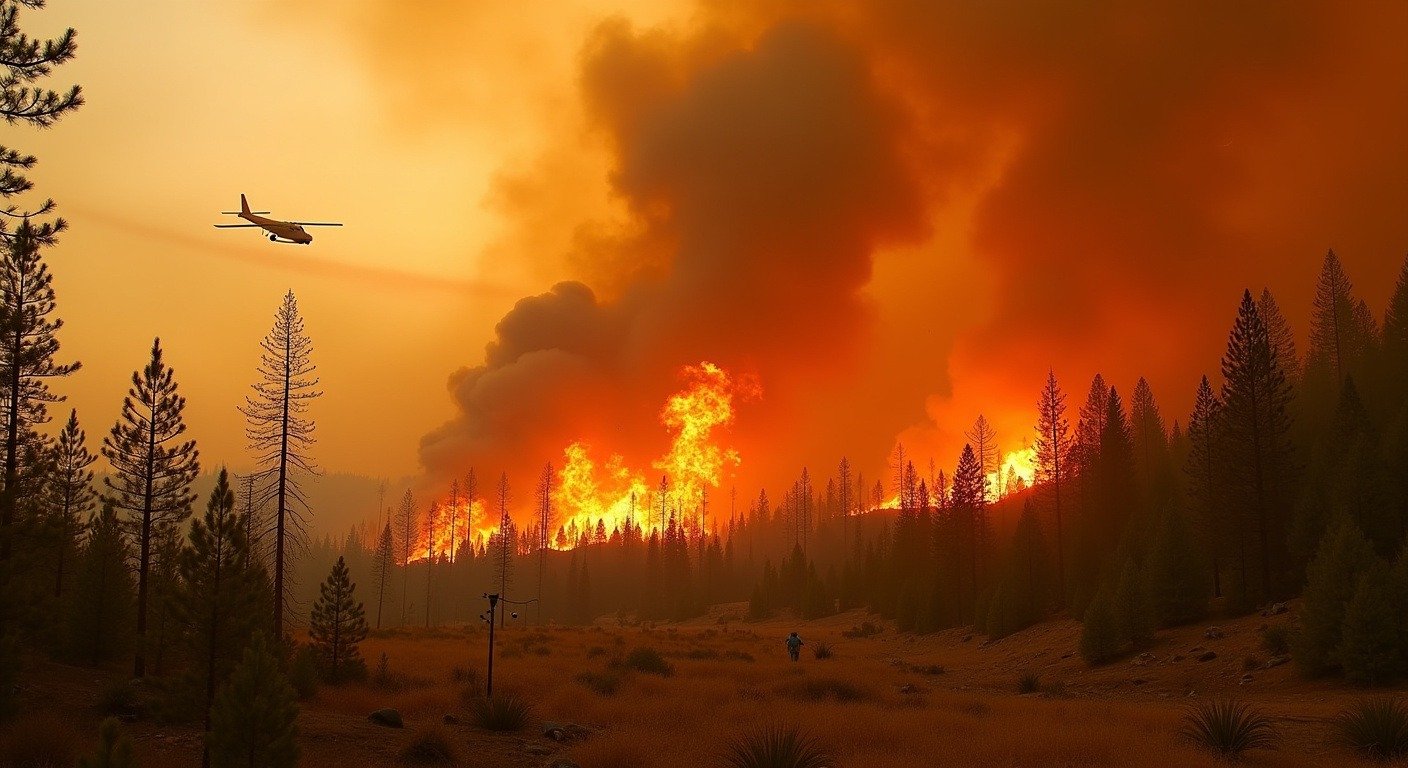
Wildfires are the most visible consequence. The 20,000 hectares burned across southern Europe represent not just environmental destruction but lost homes, displaced families, and a firefighting infrastructure stretched to its limit. Inside Climate News reports that the combination of record heat and dry conditions has created what firefighters call extreme fire behavior: flames that move faster, burn hotter, and are harder to predict.
Power grids are straining under the load. CNBC reported in early July that extreme heat threatens to overwhelm US power grids during peak demand hours, when millions of air conditioning units run simultaneously. Infrastructure designed for historical temperature ranges is being tested by conditions those designs never anticipated.
Agriculture faces a quieter but equally serious crisis. Severe Weather Europe notes that soil moisture across many European regions remains exceptionally dry after a record-breaking hot spell. Farmers are watching crops wither at a critical point in the growing season. The drought conditions intensifying beneath the heat dome could affect food prices and supply chains for months to come.
Transportation networks across Europe have been disrupted. The Guardian detailed how wildfires forced changes to the Tour de France route, and rail services in multiple countries have imposed speed restrictions because extreme heat can warp tracks and overhead power lines. Sport is learning the same lesson: the 2026 World Cup’s scariest opponent isn’t a team — it’s the heat.
Why It Matters Now: A Pattern, Not an Anomaly
The July 2026 heat wave tracker exists because these events are no longer isolated. This global heat wave July 2026 is unfolding across three continents simultaneously.
Japan has now recorded its hottest summer for three consecutive years. Europe is on its second major heat dome of the summer, before August has even begun. The Western US repeatedly sets new all-time records, and the heat is spreading further east with each cycle.
Climate scientists are careful about attribution. No single heat wave is caused by climate change alone. The broader pattern is unmistakable.
The heat domes forming in 2026 are sitting on top of a baseline global temperature that is warmer than at any point in recorded human history. That warmer baseline means heat waves start from a higher floor, peak at higher extremes, and last longer. Our climate change evidence explainer breaks down the data behind this trend.
What makes July 2026 different is the simultaneity. When multiple continents experience extreme heat at the same time, disaster response systems, food distribution networks, energy markets, and insurance frameworks are all tested at once. No slack exists anywhere in the system.
Japan’s experience, documented in our coverage of the Tokyo heat emergency, shows what happens when a society adapts to a reality its infrastructure was not built for. The word kokushobi did not exist a few years ago. Now it appears in daily conversation.
What We Can Learn: Practical Takeaways
The July 2026 heat wave tracker is not a story of helplessness. It is a story of what people and institutions can do when they understand what they are facing.
First, heat-related deaths are largely preventable. Cooling centers, check-in programs for elderly neighbors, and public awareness campaigns about the warning signs of heat stroke save lives. Cities from Phoenix to Paris have demonstrated that organized heat response plans work. The question is not whether they are effective; it is whether they are deployed fast enough and widely enough.
Second, infrastructure adaptation has to accelerate. Power grids that fail during peak summer demand are not a weather problem. They are a design problem.
Rail systems that buckle in heat, roads that soften, and buildings that trap heat share the same root cause. Every heat wave reveals the same vulnerabilities. Addressing them before the next one arrives is a matter of planning, not technology.
Third, individual actions matter in aggregate. Staying hydrated, checking on vulnerable neighbors, knowing the location of the nearest cooling center, and understanding the difference between heat exhaustion and heat stroke are not minor precautions. They are survival skills for a warming world.
The heat domes of July 2026 will eventually break. The next ones will form. What changes between now and then is the question every tracker ultimately asks.
Billings, Montana hit 111 degrees Fahrenheit. Salt Lake City broke its all-time temperature record at 109F.
Across the Atlantic, wildfires have consumed 20,000 hectares across four European countries while temperatures pushed past 110F in parts of Spain. This is not one heat wave. It is a simultaneous global heat event, and it is still unfolding.
What Is Happening: The July 2026 Heat Wave Tracker Across Three Continents
The July 2026 heat wave tracker reveals a planet under simultaneous pressure from multiple heat domes. Nearly 100 million Americans are under heat alerts as of mid-July. The numbers tell a story that stretches from the Western United States to southern Europe to Japan.
In the United States, a powerful heat dome that shattered records across the West is now spreading east. The US heat dome July 2026 delivered all-time highs in Billings (111F) and Salt Lake City (109F) before pushing temperatures into the upper 90s and low 100s across the Upper Midwest, Northeast, Mid-Atlantic, and Southeast. According to Marc Chenard of the Weather Prediction Center, the heat index, a measure of how hot it actually feels when humidity combines with air temperature, is pushing into the low 100s along the East Coast even as the air temperature itself stays in the 90s. According to the New York Times, the combination of heat and humidity makes this event particularly dangerous because the body loses its primary cooling mechanism when the air is saturated with moisture.
Red flag warnings for critical fire weather are active across Oregon and Idaho as the heat dome dries vegetation to kindling. NASA’s Earth Observatory captured satellite imagery of the Western US heat dome on July 12, showing a massive high-pressure system parked over the region like a lid.
Europe faces its own second heat dome, locked over the western part of the continent since early July. The Europe heat wave July 2026 has pushed temperatures across southern Europe to between 104F and 113F (40 to 45C). France may challenge its all-time July records as the heat dome persists.
Twenty thousand hectares, roughly 49,500 acres, of forest and farmland have burned. Thousands of people have been evacuated from their homes. According to The Guardian, the fires have even disrupted the Tour de France, forcing route changes as flames approached cycling stages.
The United Kingdom, unaccustomed to sustained extreme heat, is seeing temperatures in the mid-30s Celsius (mid-90s Fahrenheit). Ireland has reached the mid-to-upper 20s Celsius. As the European heat dome expands eastward, Italy and the Balkans are bracing for 38 to 41C (100 to 106F).
Across the world, Japan is experiencing its third consecutive year of the hottest summer on record. The Japan Times reports that extreme heat continues to grip the country through July 2026, and the Japanese language has even coined a new word for the reality its citizens now live through: kokushobi, meaning cruelly hot.
The Science: Heat Domes, Heat Index Nights
To understand the July 2026 heat wave tracker, three scientific concepts matter.
A heat dome is a stationary area of high pressure that traps hot air underneath it. Severe Weather Europe describes it as working like a lid on a pot: the extensive dome traps warm air at all levels, preventing cooler air from moving in and allowing temperatures to build day after day. The heat domes currently parked over the Western US and Western Europe are textbook examples of this phenomenon. For a deeper look at how these systems form and why they are becoming more frequent, our complete guide to heat dome science explains the mechanics in full.
The heat index explains why a 95-degree day on the East Coast can feel more dangerous than a 105-degree day in the desert. When humidity is high, sweat cannot evaporate efficiently, which is the body’s main way of cooling itself. The heat index accounts for this by measuring what the temperature actually feels like to the human body. When the East Coast sees air temperatures in the 90s but heat index values in the low 100s, it means the humidity is turning uncomfortable heat into dangerous heat.
Tropical nights are a third and often overlooked factor. The term describes nights when the temperature stays above 20C (68F), giving the human body no chance to recover from daytime heat exposure. Madrid has been experiencing tropical nights during this European heat dome, a pattern that health researchers have linked to increased mortality during heat waves. Without overnight cooling, the body accumulates heat stress day after day.
The Human Impact: Health Emergencies, and Strained Infrastructure
Extreme heat is the most deadly form of weather, and 2026 is now on track to be the hottest year on record. The extreme heat July 2026 has put nearly 100 million Americans under alerts while wildfires consume tens of thousands of hectares across Europe. Europe’s June heat dome was linked to more than 1,300 deaths. The July 2026 event, broader in geographic scope and longer in duration, threatens to exceed those numbers.
The health burden falls unevenly. The elderly, children, outdoor workers, and people in low-income housing without air conditioning face the highest risk. Urban areas amplify the danger through the heat island effect, where concrete and asphalt absorb and re-radiate heat, keeping cities several degrees warmer than surrounding rural areas overnight.
Wildfires are the most visible consequence. The 20,000 hectares burned across southern Europe represent not just environmental destruction but lost homes, displaced families, and a firefighting infrastructure stretched to its limit. Inside Climate News reports that the combination of record heat and dry conditions has created what firefighters call extreme fire behavior: flames that move faster, burn hotter, and are harder to predict.
Power grids are straining under the load. CNBC reported in early July that extreme heat threatens to overwhelm US power grids during peak demand hours, when millions of air conditioning units run simultaneously. Infrastructure designed for historical temperature ranges is being tested by conditions those designs never anticipated.
Agriculture faces a quieter but equally serious crisis. Severe Weather Europe notes that soil moisture across many European regions remains exceptionally dry after a record-breaking hot spell. Farmers are watching crops wither at a critical point in the growing season. The drought conditions intensifying beneath the heat dome could affect food prices and supply chains for months to come.
Transportation networks across Europe have been disrupted. The Guardian detailed how wildfires forced changes to the Tour de France route, and rail services in multiple countries have imposed speed restrictions because extreme heat can warp tracks and overhead power lines. Sport is learning the same lesson: the 2026 World Cup’s scariest opponent isn’t a team — it’s the heat.
Why It Matters Now: A Pattern, Not an Anomaly
The July 2026 heat wave tracker exists because these events are no longer isolated. This global heat wave July 2026 is unfolding across three continents simultaneously.
Japan has now recorded its hottest summer for three consecutive years. Europe is on its second major heat dome of the summer, before August has even begun. The Western US repeatedly sets new all-time records, and the heat is spreading further east with each cycle.
Climate scientists are careful about attribution. No single heat wave is caused by climate change alone. The broader pattern is unmistakable.
The heat domes forming in 2026 are sitting on top of a baseline global temperature that is warmer than at any point in recorded human history. That warmer baseline means heat waves start from a higher floor, peak at higher extremes, and last longer. Our climate change evidence explainer breaks down the data behind this trend.
What makes July 2026 different is the simultaneity. When multiple continents experience extreme heat at the same time, disaster response systems, food distribution networks, energy markets, and insurance frameworks are all tested at once. No slack exists anywhere in the system.
Japan’s experience, documented in our coverage of the Tokyo heat emergency, shows what happens when a society adapts to a reality its infrastructure was not built for. The word kokushobi did not exist a few years ago. Now it appears in daily conversation.
What We Can Learn: Practical Takeaways
The July 2026 heat wave tracker is not a story of helplessness. It is a story of what people and institutions can do when they understand what they are facing.
First, heat-related deaths are largely preventable. Cooling centers, check-in programs for elderly neighbors, and public awareness campaigns about the warning signs of heat stroke save lives. Cities from Phoenix to Paris have demonstrated that organized heat response plans work. The question is not whether they are effective; it is whether they are deployed fast enough and widely enough.
Second, infrastructure adaptation has to accelerate. Power grids that fail during peak summer demand are not a weather problem. They are a design problem.
Rail systems that buckle in heat, roads that soften, and buildings that trap heat share the same root cause. Every heat wave reveals the same vulnerabilities. Addressing them before the next one arrives is a matter of planning, not technology.
Third, individual actions matter in aggregate. Staying hydrated, checking on vulnerable neighbors, knowing the location of the nearest cooling center, and understanding the difference between heat exhaustion and heat stroke are not minor precautions. They are survival skills for a warming world.
The heat domes of July 2026 will eventually break. The next ones will form. What changes between now and then is the question every tracker ultimately asks.
One last thought
The forecast moves on. Understanding stays.
What happens in the sky becomes part of how a place is remembered. Keep the meaning, not only the measurement.
Contains information related to marketing campaigns of the user. These are shared with Google AdWords / Google Ads when the Google Ads and Google Analytics accounts are linked together.
90 days
__utma
ID used to identify users and sessions
2 years after last activity
__utmt
Used to monitor number of Google Analytics server requests
10 minutes
__utmb
Used to distinguish new sessions and visits. This cookie is set when the GA.js javascript library is loaded and there is no existing __utmb cookie. The cookie is updated every time data is sent to the Google Analytics server.
30 minutes after last activity
__utmc
Used only with old Urchin versions of Google Analytics and not with GA.js. Was used to distinguish between new sessions and visits at the end of a session.
End of session (browser)
__utmz
Contains information about the traffic source or campaign that directed user to the website. The cookie is set when the GA.js javascript is loaded and updated when data is sent to the Google Anaytics server
6 months after last activity
__utmv
Contains custom information set by the web developer via the _setCustomVar method in Google Analytics. This cookie is updated every time new data is sent to the Google Analytics server.
2 years after last activity
__utmx
Used to determine whether a user is included in an A / B or Multivariate test.
18 months
_ga
ID used to identify users
2 years
_gali
Used by Google Analytics to determine which links on a page are being clicked
30 seconds
_ga_
ID used to identify users
2 years
_gid
ID used to identify users for 24 hours after last activity
24 hours
_gat
Used to monitor number of Google Analytics server requests when using Google Tag Manager