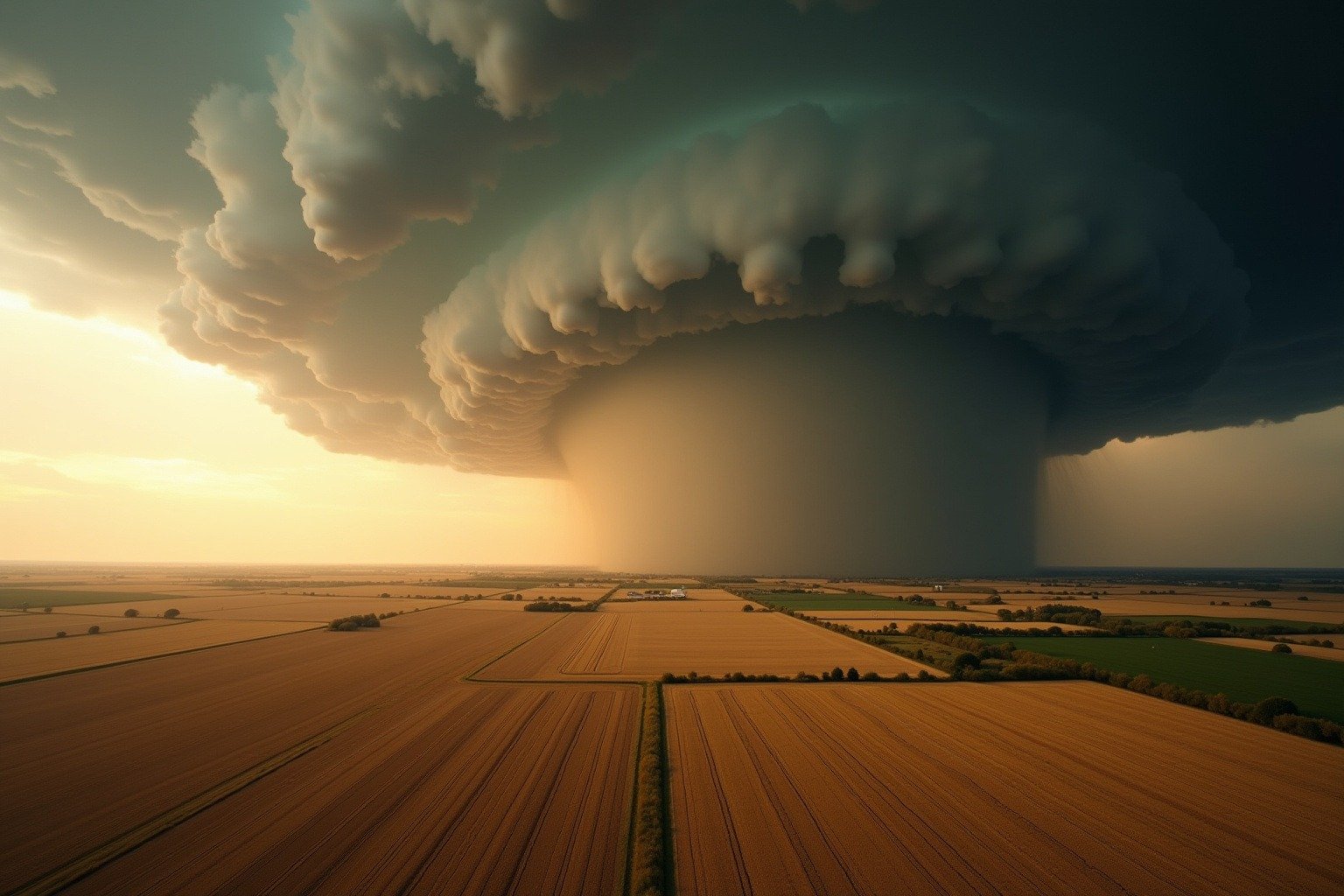
Heat domes are among the most dangerous weather patterns on Earth, capable of killing more people in a single week than hurricanes and tornadoes combined. In June 2026, one parked over the United States and subjected 170 million Americans to triple-digit temperatures. Another settled over Europe, pushing thermometers past 40°C across Spain and France. And it is only getting worse.
Quick Summary
- A heat dome is a massive high-pressure system that traps hot air over a region for days or weeks, like a lid on a boiling pot.
- They form when the jet stream buckles into a blocking pattern, allowing high pressure to park in place.
- Climate change is making heat domes more frequent, more intense, and longer-lasting by weakening the jet stream.
- The March 2026 heat dome pushed temperatures to 112°F in Arizona and broke records in 14 states, an event scientists say was virtually impossible without human-caused warming.
- Heat already kills more Americans annually than floods, hurricanes, and tornadoes combined.
In Simple Terms
A heat dome is like putting a lid on a boiling pot. The sun heats the ground, and a stubborn high-pressure system acts as that lid, trapping all the hot air underneath. Normally, hot air rises, cools, and forms rain, but under a dome, the sinking air acts like a giant hand pressing down. The air compresses, gets even hotter, and cannot escape. Day after day, the heat builds. Without clouds or rain to break the pattern, the dome feeds on itself. That is why a heat wave can turn a city into an oven for an entire week, not just one hot afternoon.
What a Heat Dome Actually Is
The term “heat dome” entered the public vocabulary around 2021, when a catastrophic event over the Pacific Northwest killed more than 600 people in Canada alone. But the phenomenon itself is not new. Meteorologists have studied these systems for decades under less vivid names like “persistent warm-core anticyclone.”
At its core, a heat dome is an area of high atmospheric pressure that becomes stationary. In a normal weather pattern, high- and low-pressure systems move across the landscape, producing a mix of sunny days, clouds, and rain. Under a heat dome, that movement stops. The high-pressure system parks over a region and refuses to budge, sometimes for two weeks or more.
This parking is caused by a buckling jet stream. The jet stream, a river of fast-moving air about 5 to 9 miles above the Earth’s surface, normally flows west to east in a relatively straight line. But when it slows down and develops large north-south bends (meteorologists call this an “omega block” because it resembles the Greek letter Ω), the weather underneath gets stuck. Under the downward bulge of the omega, a heat dome forms.
The Science: How Heat Domes Form
Three physical processes work together to create the brutal heat inside a dome:
1. Compression heating. Air inside a high-pressure system sinks toward the ground. As it descends into higher atmospheric pressure, it compresses, and compressing a gas heats it, the same principle that makes a bicycle pump feel warm after use. This sinking air can add several degrees to surface temperatures before the sun even comes up.
2. Clear-sky feedback. High pressure suppresses cloud formation. Without clouds, the sun beats down on the ground uninterrupted from sunrise to sunset. The ground absorbs solar radiation and radiates heat back into the air. With no clouds to reflect sunlight or bring cooling rain, the cycle intensifies.
3. Soil moisture depletion. After several days of intense heat, the soil dries out. Dry ground cannot cool itself through evaporation the way moist ground can. A dry landscape absorbs more solar energy and radiates more heat back, pushing temperatures even higher. This is why the third and fourth days of a heat dome are often the most dangerous, the land itself becomes part of the heating system.
Meteorologists call the most extreme version a “death ridge”, a massive, stubborn ridge of high pressure that locks into place and refuses to move for a week or longer. The March 2026 event over the American Southwest was a textbook death ridge: 112°F in Phoenix, 14 states shattering records, and temperatures that would have been extreme for July showing up in early spring.
Why Heat Domes Are Getting Worse
The science connecting climate change to more extreme heat domes is increasingly clear. The mechanism runs through the Arctic.
The Arctic is warming roughly four times faster than the global average. This reduces the temperature contrast between the poles and the equator, and that contrast is what drives the jet stream. A weaker temperature gradient produces a slower, wavier jet stream that is more likely to buckle into blocking patterns. More blocking patterns mean more stationary heat domes.
This connection is not theoretical. The World Weather Attribution group analyzed the March 2026 heat wave and found that without human-caused climate change, an event of that magnitude would have been “virtually impossible.” The same group has linked multiple heat dome events since 2021 to a warming atmosphere.
How Heat Domes Affect People
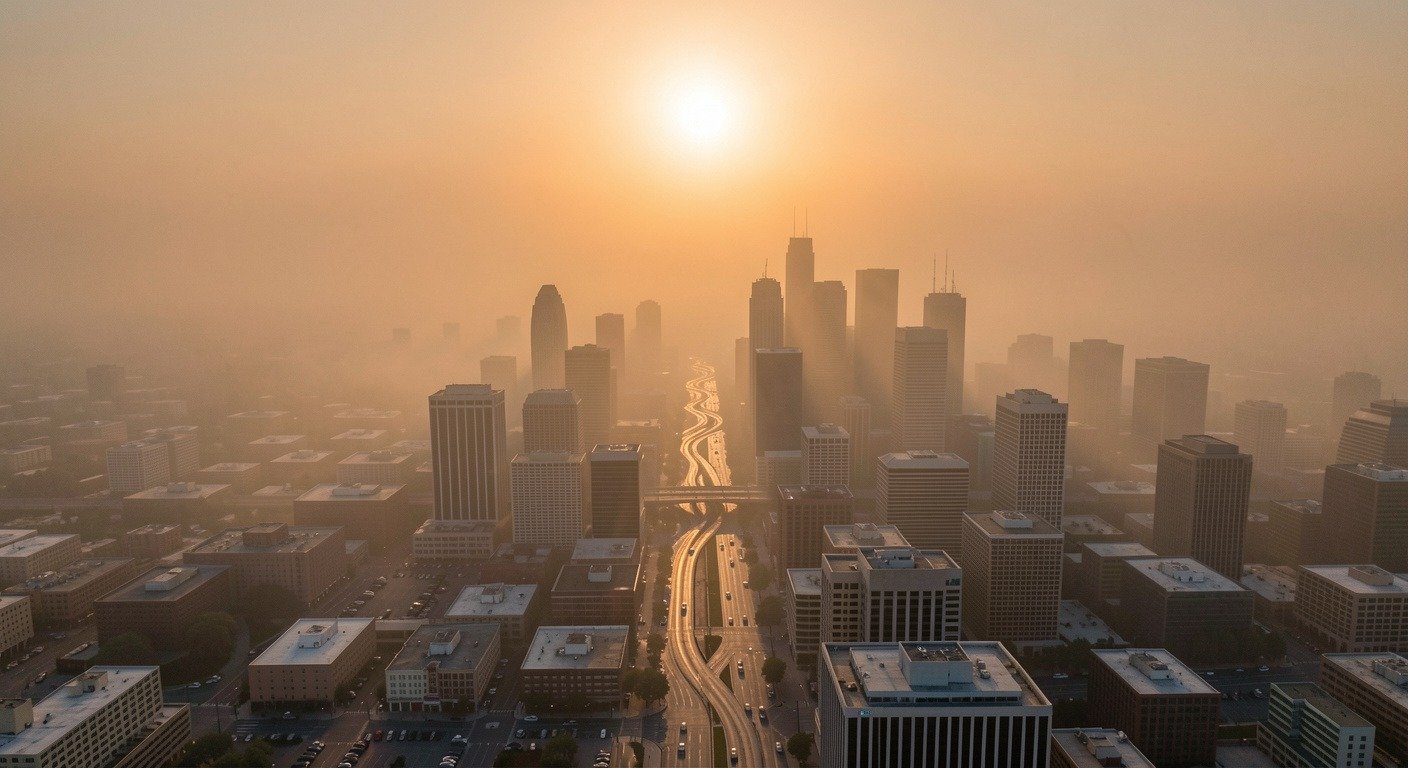
Heat domes are not just uncomfortable. They kill. Extreme heat is already the deadliest weather phenomenon in the United States, exceeding the combined death toll of hurricanes, floods, and tornadoes in most years.
Health
When the body cannot cool itself through sweating, core temperature rises dangerously. Heat exhaustion, marked by heavy sweating, weakness, dizziness, and nausea, can progress to heat stroke within hours. Heat stroke is a medical emergency: the body’s temperature regulation fails, internal temperatures can exceed 106°F, and organ damage begins. Without immediate cooling, heat stroke is often fatal.
The danger is amplified by humidity. When the air is saturated with moisture, sweat cannot evaporate, the body’s main cooling mechanism shuts down. Meteorologists track this using wet-bulb temperature, which combines heat and humidity into a single survival threshold. At a wet-bulb temperature of 35°C (95°F), even a healthy person resting in shade will die within hours.
Infrastructure
Roads buckle. Power lines sag. Transformers overheat and fail, often at the exact moment when millions of air conditioners are running at full capacity. During the June 2026 US heat dome, multiple cities issued rolling blackout warnings as the electrical grid strained under record demand. Rail lines warp in extreme heat, forcing trains to slow to a crawl or stop entirely.
Agriculture and Food
Crops wither in the field. Livestock suffer heat stress that reduces milk production and weight gain. In 2026, the heat dome that settled over the Western US coincided with a rapidly accelerating wildfire season, six major fires burning simultaneously under a single dome, as dry vegetation turned into kindling.
Heat Dome Events: 2026 at a Glance
| March 2026 | 112°F in Arizona, 14 states break records. Death ridge over Southwest US. |
| June 2026 (US) | 170 million Americans under heat alerts. Triple-digit temperatures from California to the Carolinas through July Fourth week. |
| June 2026 (Europe) | 40°C+ across Spain and France. UK issues rare extreme heat warnings for England and Wales. Second major European heat wave of 2026. |
Why It Matters Now
The pattern is unmistakable. Each of the last three years has produced heat dome events that scientists previously thought were one-in-a-thousand-year occurrences. In 2021, the Pacific Northwest heat dome killed over 600 people. In 2022, Europe’s summer heat wave caused more than 60,000 excess deaths. In 2023 and 2024, multiple concurrent heat domes across North America, Europe, and Asia broke thousands of temperature records.
2026 is continuing the trend. The March heat dome was the earliest such extreme event on record for the United States. The June dome over the US is affecting nearly half the country’s population simultaneously. In Europe, two major heat waves before July suggests the continent is on track for another devastating summer.
These are not separate events. They are the same physical mechanism, the buckling jet stream, the self-reinforcing high-pressure system, the dried-out landscape, occurring with greater frequency because the Arctic is warming and the atmosphere that governs our weather is changing.
What You Can Do: Staying Safe Under a Heat Dome
Safety Checklist When a Heat Dome Arrives
- Check on vulnerable people. The elderly, young children, pregnant women, and people with chronic illnesses are at highest risk. A 5-minute phone call or visit can save a life.
- Stay hydrated before you feel thirsty. By the time you feel thirst, you are already mildly dehydrated. Water is best, avoid alcohol and caffeine, which increase dehydration.
- Know the signs of heat exhaustion. Heavy sweating, cold clammy skin, nausea, muscle cramps, dizziness, headache. Move to a cool place, drink water, and use cool compresses.
- Never leave anyone in a parked car. Car interiors can reach deadly temperatures within 10 minutes, even with windows cracked.
- Use cooling centers. Many cities open air-conditioned public buildings during extreme heat events. Libraries, community centers, and shopping malls can provide life-saving relief.
- Limit outdoor activity to early morning or evening. The hottest hours are typically 12 PM to 6 PM. Reschedule strenuous activity.
A heat dome is predictable. Unlike a tornado or flash flood, meteorologists can see it forming days in advance. The danger comes not from surprise but from underestimation, the belief that heat is just uncomfortable, not deadly. Every major heat dome produces a death toll that public health officials later describe as preventable. A wet-bulb temperature of 31°C (88°F) can kill vulnerable people within hours. At 35°C (95°F), even healthy adults cannot survive.

Looking Ahead
The heat domes of 2026 are not anomalies. They are previews. As the Arctic continues warming and the jet stream continues destabilizing, these events will become more frequent and more intense. The science is clear: a warmer atmosphere holds more energy, and that energy manifests as more extreme weather, including the stationary, suffocating high-pressure systems we call heat domes.
Understanding how heat domes work is the first step toward taking them seriously. The second step is preparation: knowing the warning signs, checking on neighbors, and respecting heat as the deadly force it is. Read our guide on wet-bulb temperature and heat danger to understand the humidity threshold. Learn how climate change is reshaping weather patterns worldwide. And for the latest on active heat events, follow our extreme weather coverage.