The thermometer reads 104 degrees Fahrenheit. In Phoenix, that is a Tuesday in July, uncomfortable but survivable with shade and water. In Chennai, with humidity at 80 percent, that same 104 degrees becomes a death sentence. The difference is wet-bulb temperature, and it is the metric that actually determines whether your body can keep itself alive.
Most people check the temperature and maybe the heat index before stepping outside. But neither of those numbers tells you the most important thing: whether your sweat will evaporate. When the air is too humid for sweat to do its job, your body’s only cooling system shuts down. Understanding when that threshold is crossed, and how close much of the world already is to crossing it, is not just a scientific curiosity. It is a matter of survival.
What Is Wet-Bulb Temperature?
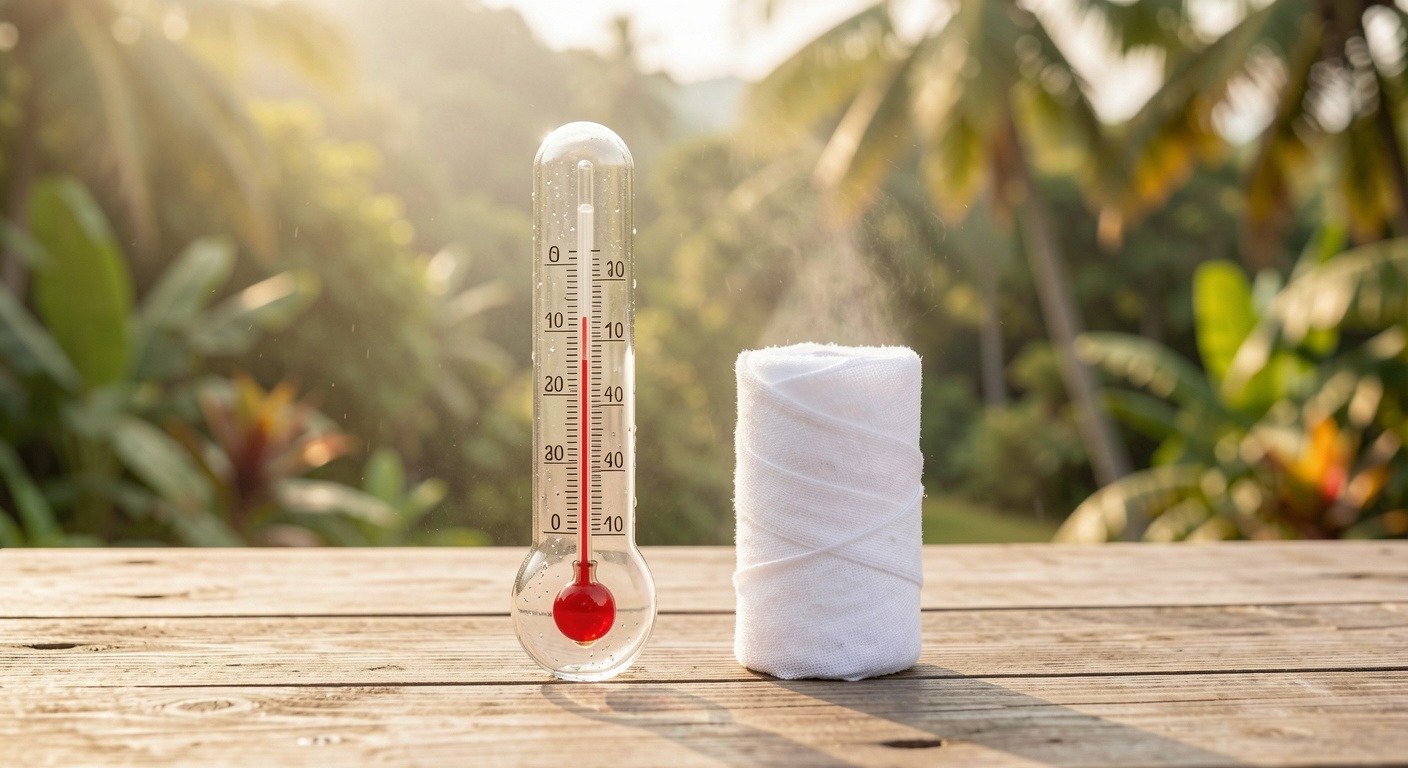
A wet-bulb temperature is measured by a thermometer whose bulb is wrapped in a wet cloth and swung through the air, or placed in front of a fan. As water evaporates from the cloth, it cools the thermometer, just as sweat evaporating from your skin cools your body. The reading you get is the lowest temperature that evaporative cooling can achieve in those conditions.
On a dry day, water evaporates fast and the wet-bulb temperature drops well below the air temperature. On a humid day, evaporation slows and the wet-bulb reading stays close to the regular temperature. The closer the wet-bulb temperature gets to your skin temperature, the less cooling your body can manage.
The standard air temperature you see on a weather app tells you how hot the air is. The heat index combines temperature and humidity to estimate how hot it feels. But the wet-bulb temperature is different. It directly measures your body’s ability to cool itself, which is the difference between discomfort and organ failure. This is why climate scientists and military planners alike rely on it as the critical threshold for human survivability, according to the United Nations University’s explainer on the topic.
Why Humidity Makes Heat Deadly
Your body has exactly one mechanism for cooling itself in hot conditions: sweating. When sweat evaporates from your skin, it carries heat away with it. This process works beautifully as long as the air around you is dry enough to accept the moisture. But when humidity climbs, the air is already crowded with water molecules, and evaporation slows to a crawl, then stops entirely.
25°C (77°F) Wet-Bulb: Dangerous humid heat begins. Outdoor labor becomes unsafe. Heat illness risk spikes significantly.
30°C (86°F) Wet-Bulb: Severe heat stress for most people. The US military halts outdoor training when WBGT reaches 32°C (90°F).
35°C (95°F) Wet-Bulb: Theoretical human survivability limit. A healthy person resting in shade with water cannot cool down. Fatal within roughly six hours without artificial cooling, according to NASA climate scientists.
The key insight is that dry heat and humid heat are entirely different experiences. At 40°C (104°F) in Phoenix, where humidity hovers around 10 to 15 percent, sweat evaporates fast enough to keep your core temperature in check if you stay hydrated and find shade. At that same 40°C in a city where humidity reaches 80 percent, the wet-bulb temperature climbs past 36°C. Your sweat pools on your skin rather than evaporating. Cooling stops. It becomes fatal within hours.
What New 2026 Research Found
A landmark study published in Nature Communications in April 2026 rewrote the playbook on heat danger. Researchers using a physiological model called HEAT-Lim found that deadly heat-stress conditions are already occurring at wet-bulb temperatures well below the long-cited 35°C limit. The model accounts for real-world variables that the theoretical limit ignores: age, physical exertion, access to cooling, and underlying health conditions.
The findings are sobering. Six recent extreme heat events have already crossed deadly thresholds, particularly for fully exposed older populations. Outdoor workers, people over 65, and those without access to air conditioning face life-threatening conditions at wet-bulb temperatures previously considered merely uncomfortable. The HEAT-Lim model demonstrates that for a 65-year-old person without cooling access, a wet-bulb temperature of just 28°C can become lethal over a period of hours.
This shifts the conversation from a theoretical future danger to a present-tense emergency. The study’s authors noted that the 35°C limit, widely cited for years in climate communication, has given a false sense of how much headroom humanity still has. For the most vulnerable, the safety margin is already gone.
Where This Is Happening Now
The Nature Communications paper is not describing a distant scenario. June 2026 has brought a cascade of extreme heat events to different corners of the world, each carrying the signature of high humidity and elevated wet-bulb temperatures.
In the United States, a massive heat dome settled over the central and eastern states in late June, exposing roughly 170 million Americans to triple-digit temperatures. For a detailed breakdown, see our coverage of the US heat dome scorching the country through the Fourth of July week. The combination of extreme heat and Gulf moisture has pushed heat index values past 110°F in cities from Chicago to Washington, D.C.
The United Kingdom, a country unaccustomed to extreme heat, issued a rare red extreme heat warning as temperatures approached 40°C. For a nation where air conditioning is uncommon in homes, the danger is amplified. For context on why these events are intensifying, our explainer on what causes heat waves and the science of heat domes provides the atmospheric background.
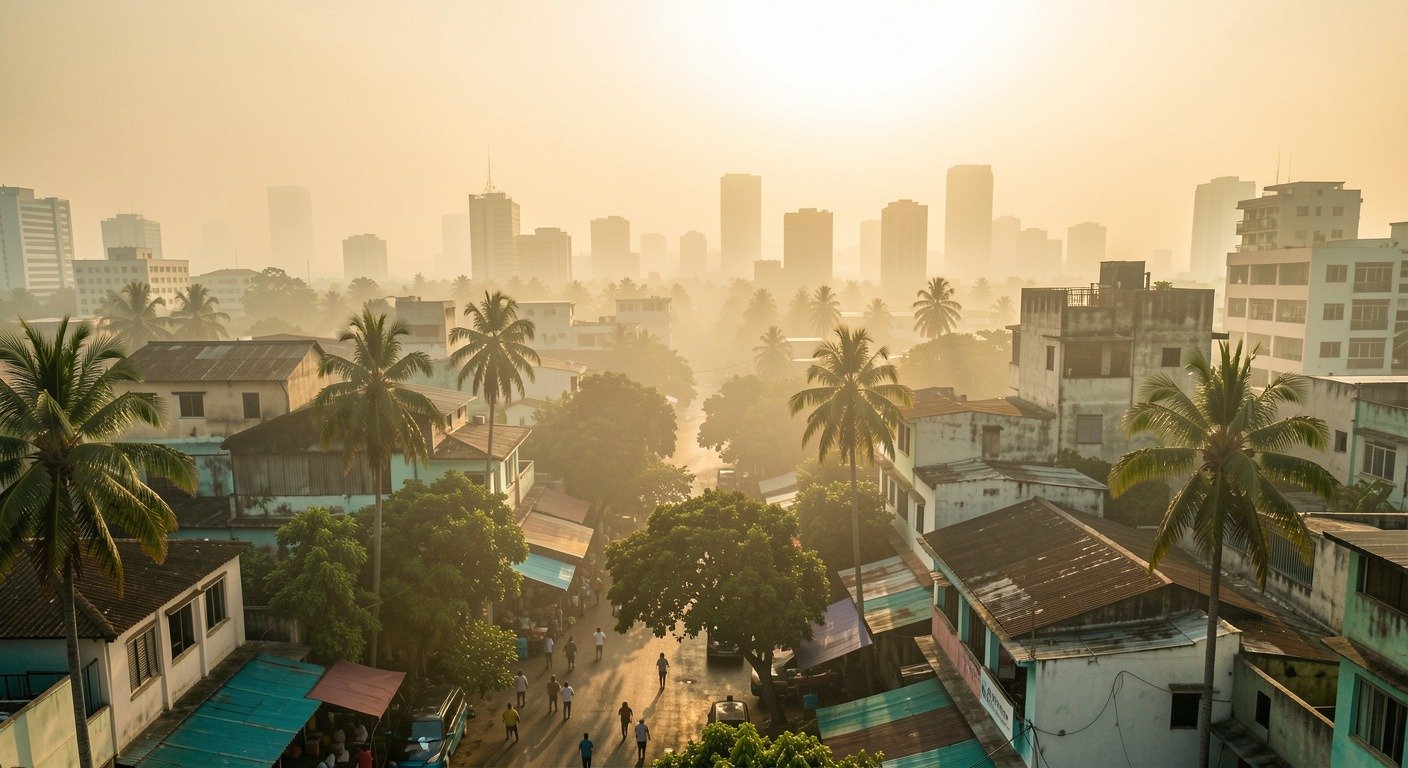
In India, the annual monsoon has failed to deliver, with rainfall running at a 43 percent deficit according to the India Meteorological Department. The combination of stalled rains and relentless heat has pushed wet-bulb temperatures in cities like Kolkata and Chennai into the danger zone for millions of outdoor workers.
Compounding all of this, the World Meteorological Organization confirmed in its June 2026 update that there is an 80 percent likelihood of El Niño conditions persisting from June through August. El Niño tends to raise global temperatures and deliver higher humidity to vulnerable regions including South Asia, the Middle East, and the U.S. Gulf Coast. For the full picture, our El Niño complete guide covers the mechanics and the implications.
How to Protect Yourself
Watch the right number: Download a free WBGT (Wet Bulb Globe Temperature) monitoring app. Standard temperature and heat index are not enough during humid heat events.
Know the warning signs: Heat exhaustion brings heavy sweating, weakness, dizziness, and nausea. Heat stroke is a medical emergency: body temperature above 103°F, hot dry skin, confusion, possible loss of consciousness. Call emergency services immediately for heat stroke.
Act early: During heat advisories, avoid outdoor exertion between 11 a.m. and 4 p.m. Drink water before you feel thirsty. Wear light-colored loose clothing. Never leave children or pets in parked vehicles.
Check on others: Isolation is one of the strongest predictors of heat-related death. Check on elderly neighbors and relatives who live alone. Cooling centers in public buildings are proven lifesavers.
Heat waves are deadly, but almost every heat death is preventable. The difference comes down to knowing which number to watch, recognizing the warning signs, and acting before it is too late.