For the first time since its introduction in 2023, Britain’s Heat-Health Alert system has been escalated to red across most of England. Hospitals are canceling non-urgent surgeries. Rail operators are slowing trains. And in care homes from London to Leeds, staff are moving residents to the coolest rooms they can find. The UK is not built for this kind of heat.
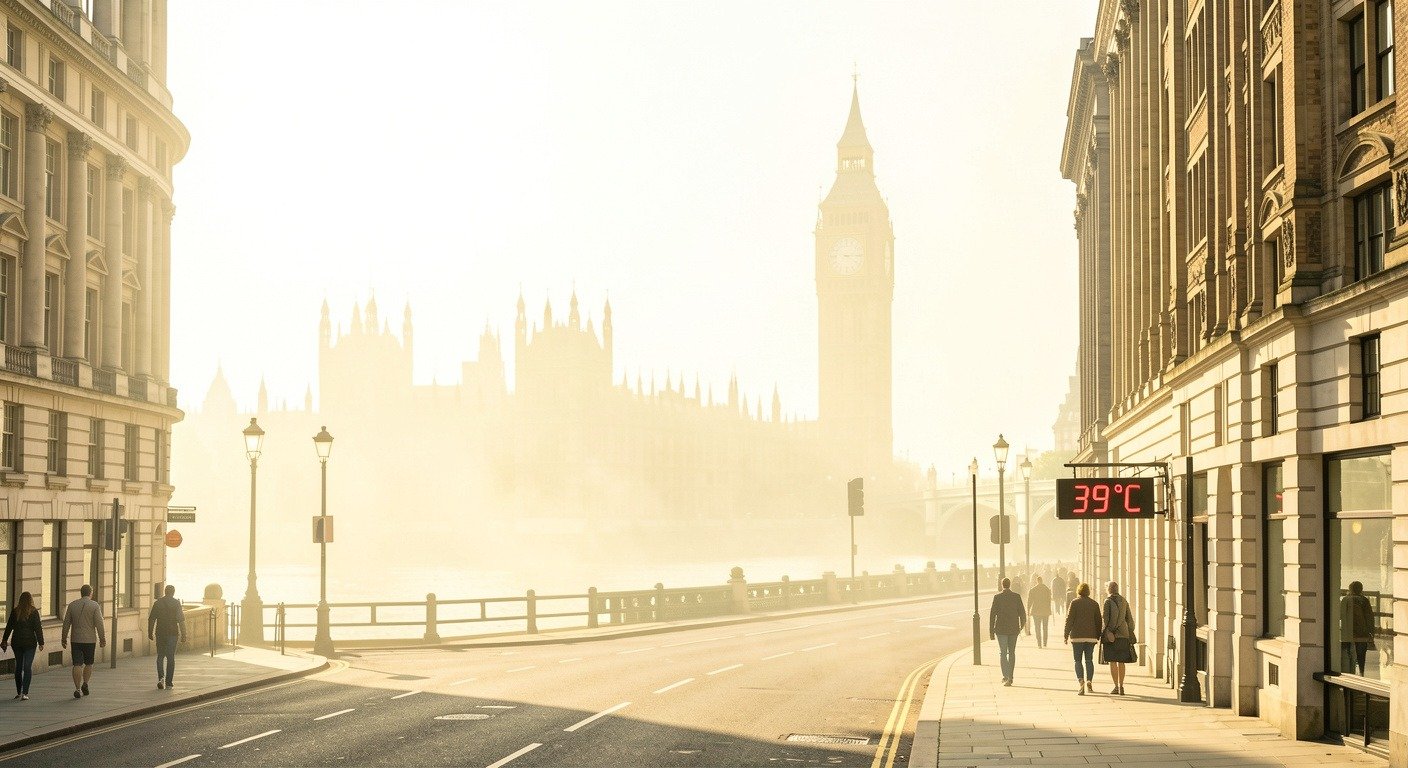
The United Kingdom is bracing for what could be its hottest June day ever recorded. The Met Office has issued a rare Red Extreme Heat Warning, the highest level in its alert system, as a punishing heat dome settles over southern and central England. Temperatures are forecast to surge past 35°C (95°F), with some models suggesting 40°C (104°F) is possible in London and the Southeast. The current June record stands at 35.6°C, set in 1976, a number that now looks increasingly fragile.
The UK Health Security Agency (UKHSA) has extended its red heat-health alert across all nine regions of England, warning that the extreme temperatures pose a direct risk to life, even among healthy adults. For a country where fewer than 5 percent of homes have air conditioning and where brick construction is designed to retain heat, the coming days represent a genuine public health emergency.
What Just Happened: Britain Under Red Alert
On June 22, the Met Office did something it has done only a handful of times since overhauling its warning system. It raised the alert level to red, meaning the heat is expected to be so severe that widespread disruption, illness, and excess deaths are likely unless the public takes protective action.
The UKHSA followed within hours, extending its own red heat-health alert until at least June 26, with a strong likelihood of further extensions. This is a system that only activates between June 1 and September 30 each year. It has never before stayed at red for more than 48 consecutive hours. This time, it may persist for a full week.
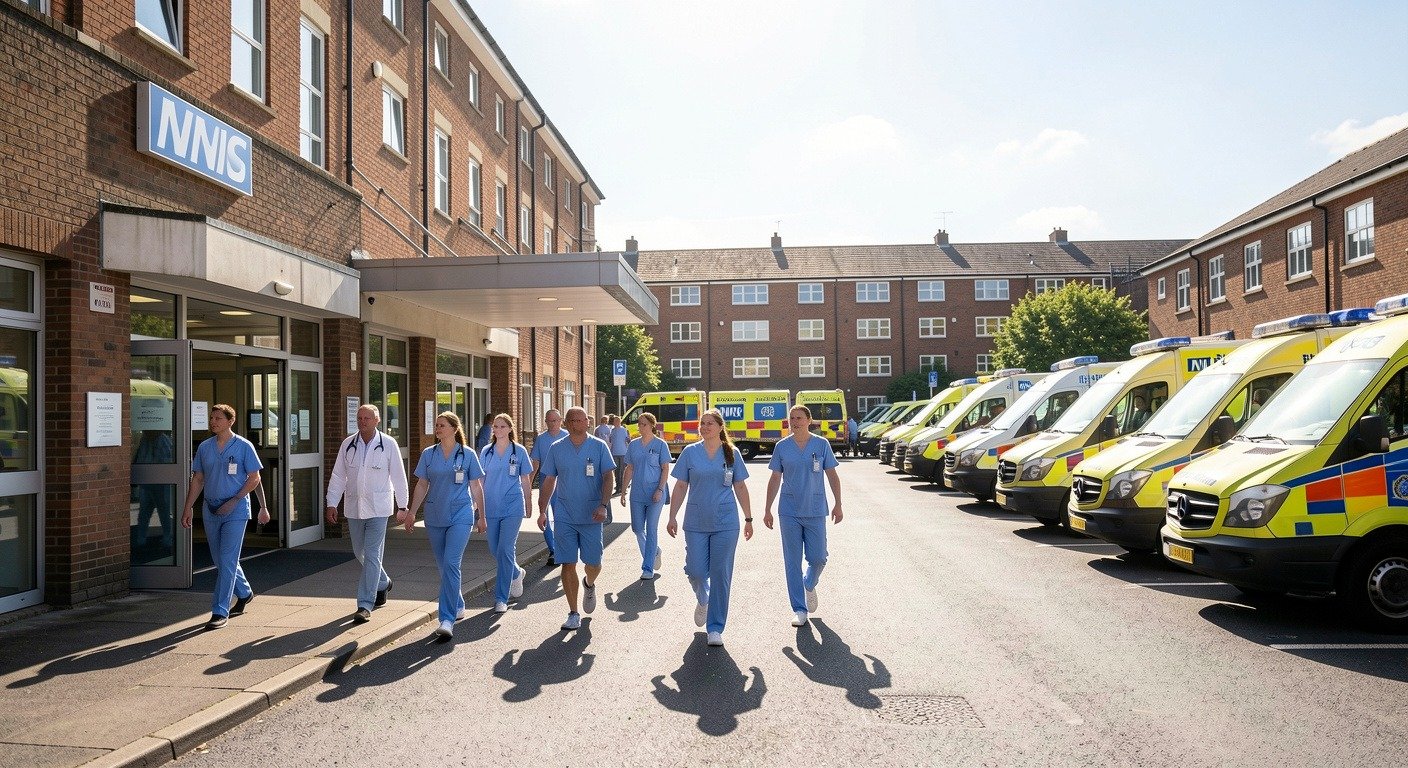
What does a red alert actually mean on the ground? For the National Health Service, it triggers emergency protocols refined after the devastating July 2022 heat wave, which was linked to more than 3,200 excess deaths in England alone. Non-urgent outpatient appointments and elective surgeries are being rescheduled. Ambulance trusts are moving to their highest readiness level. Hospital emergency departments are preparing for a surge in heat-stroke cases, respiratory distress from poor air quality, and cardiac events triggered by thermal stress.
The government’s “Heatwave Plan for England” is now fully active. Local authorities are opening cooling centers in community halls, libraries, and places of worship. Social care teams are conducting welfare checks on vulnerable people registered on their lists. Schools in several counties have announced early closures, while some have shifted to remote learning, a tactic borrowed from the pandemic playbook.
The scale is striking. Britain is not experiencing a Mediterranean-style pleasant summer spell. It is confronting extreme heat in a built environment never designed for it.
Why This Is Happening: The Heat Dome Over Britain
The immediate cause is a stubborn high-pressure system that has parked itself over western Europe. This is the same heat dome that has been baking the United States, where 170 million Americans are under heat alerts through the July Fourth holiday week. The transatlantic connection is not coincidental: the jet stream, the fast-moving river of air that normally separates cool polar air from warm tropical air, has become unusually wavy and stuck in place.
When the jet stream develops these deep northward bulges, known as ridges, it allows hot air from the Sahara to surge far into northern Europe. The high pressure acts like a lid, trapping the heat near the surface and preventing cooler air or rain-bearing clouds from moving in. Meteorologists call this an omega block, named for the distinctive shape the jet stream takes when this pattern locks in place.
The science behind how heat domes trap hot air is straightforward. High pressure compresses and warms the air beneath it. Over multiple days, each afternoon builds on the previous one, and overnight temperatures fail to drop enough to provide relief. London’s nighttime low on June 24 stayed above 23°C (73°F), which in Britain is considered a “tropical night.” For people without air conditioning, it means no respite.
Climate scientists are quick to point out that individual heat waves are weather events, not climate. But the statistical pattern is impossible to ignore. The UK’s ten hottest years on record have all occurred since 2002. The Met Office itself has published attribution studies showing that climate change is making heat waves more frequent, more intense, and longer-lasting across the UK. A heat wave that would have occurred once every 50 years in a pre-industrial climate now occurs roughly every three to four years.
This event also follows the earlier Europe-wide heat wave that pushed temperatures above 40°C in France, Spain, and Italy earlier this month. The continent has had almost no break between these extreme heat pulses, straining emergency services, agriculture, and energy grids across multiple countries simultaneously.
How This Affects People
Health: An NHS Already Under Pressure
The NHS enters this heat wave already stretched. Emergency departments in England reported record wait times in May. Now, heat-related admissions are climbing. The UKHSA estimates that during the 2022 heat wave, heat-related hospital admissions increased by 187 percent compared to the five-year average. Early data from this week suggests a similar trajectory.
The most vulnerable are the elderly, infants, people with chronic conditions, and outdoor workers. Construction workers, agricultural laborers, delivery drivers, and railway maintenance crews face prolonged exposure. The Trades Union Congress has called for a legal maximum workplace temperature of 30°C (86°F), or 27°C for strenuous work. Currently, there is no upper legal limit, only a requirement that employers keep temperatures “reasonable.”
Transport: Rails Buckle in the Heat
Network Rail has imposed speed restrictions across much of its network. Steel rails absorb heat and expand. When they expand too much, they can buckle, creating a serious derailment risk. On the hottest days, some routes will see trains limited to 20 mph on sections that normally carry 125 mph traffic. Commuters are being told to avoid non-essential travel. London Underground lines without air conditioning, which is most of them, are reaching ferociously uncomfortable temperatures.
Homes: A Building Stock Built for Cold
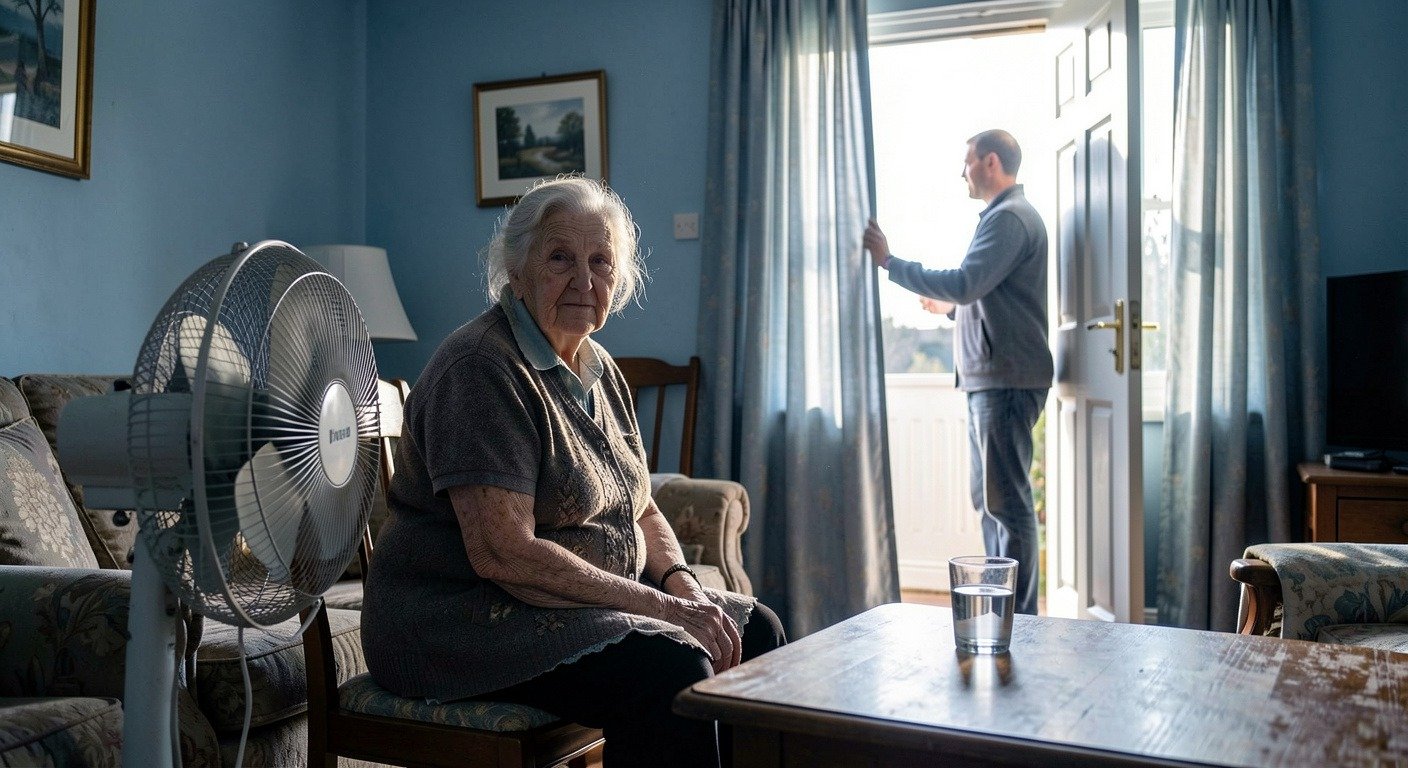
This is the fundamental vulnerability. British homes were built to retain heat through long, damp winters. Triple-glazed windows, thick insulation, and brick construction are assets in January and liabilities in a 39°C June. Fewer than 5 percent of UK homes have any form of air conditioning. The standard advice is to keep curtains drawn, open windows only when it is cooler outside than inside, and stay hydrated. But when temperatures stay above 30°C indoors for days, that advice reaches its limit.
The Inequality of Heat
The heat wave exposes a stark divide. Wealthier households can afford portable air conditioning units, even if they are noisy and inefficient. They can decamp to air-conditioned hotels or second homes. Lower-income households, often in top-floor flats that act as heat traps, have no such options. Council estates built with flat roofs and poor ventilation become dangerous. This is sometimes called “heat poverty,” and it is becoming a recognized dimension of climate vulnerability in Britain.
Why This Matters Now
The June 2026 heat wave is not happening in isolation. It arrives amid a year that is already on track to be the hottest ever recorded globally, according to the World Meteorological Organization. Every month of 2026 so far has ranked among the top five warmest for that month. The developing El Niño in the Pacific is adding extra heat to an already warmed global system.
What makes this particular heat wave significant is its timing. Late June is early in the British summer for such extreme temperatures. The 1976 heat wave, which held the June record for five decades, peaked in late June and early July, but that was considered a once-in-a-generation event. For the record to be challenged barely 50 years later, and in a climate 1.2°C warmer than pre-industrial levels, is exactly what climate models have predicted.
The UK’s Climate Change Committee warned in its 2025 progress report that the country was “dangerously underprepared” for extreme heat. It estimated that heat-related deaths could triple by 2050 without significant adaptation investment. That investment has not yet materialized at scale.
| June temperature record | 35.6°C (set in 1976) |
| Forecast high this week | Up to 40°C (104°F) |
| UK homes with AC | Fewer than 5% |
| 2022 heat wave excess deaths | 3,200+ in England |
| Heat-health alert level | Red (highest) |
| Alert duration | Up to 7 days (unprecedented) |
What We Can Learn: Heat Preparedness in a Warming Britain
The Heat-Health Alert system, introduced in June 2023, is working. It has given the NHS, local authorities, and the public more lead time than ever before. The color-coded system, from green through yellow, amber, and red, is intuitive and widely understood. But an alert system only works if people can act on it.
Several practical measures are being tested this week:
- Community check-in networks. In dozens of local authorities, volunteers are going door to door to check on elderly and vulnerable residents, ensuring they have water, fans, and someone to call.
- Cool spaces. Public buildings with air conditioning, including libraries, museums, and community centers, are staying open late as designated cooling centers.
- Workplace flexibility. Some employers have shifted to earlier start times, allowing outdoor workers to finish before the midday peak.
- Hospital heat plans. NHS trusts are implementing specific protocols for moving patients to cooler wards, suspending visiting hours during peak heat, and stocking extra IV fluids for dehydration cases.
The longer-term question is about adaptation. Retrofitting millions of British homes with external shading, reflective roofing, and passive cooling design would cost billions but would save thousands of lives over coming decades. Urban greening projects, including street trees, green roofs, and parks, can reduce city center temperatures by 2-3°C. These investments are no longer optional luxuries. They are the difference between a manageable heat wave and a deadly one.
Britain’s buildings, roads, and hospitals were designed for drizzle, not 39°C heat. The country now faces a choice: adapt quickly or accept that each summer will bring preventable tragedy.
As this red alert continues, the immediate priority is clear: check on elderly neighbors, stay hydrated, avoid the midday sun, and do not underestimate what extreme heat can do to a healthy body in a country that was not built for it. The UK’s heat emergency is not just a weather story. It is a preview of summers to come, and a test of how well the country can adapt before the next one arrives.
Sources
- Met Office: Red Extreme Heat Warning for England (metoffice.gov.uk)
- UK Health Security Agency: Red Heat-Health Alert extension (gov.uk)
- BBC Weather: Coverage of UK heat warnings and NHS preparations (bbc.com/weather)
- UK Climate Change Committee: 2025 Progress Report on Adaptation (theccc.org.uk)
- NHS England: Heatwave Plan for England emergency protocols (england.nhs.uk)