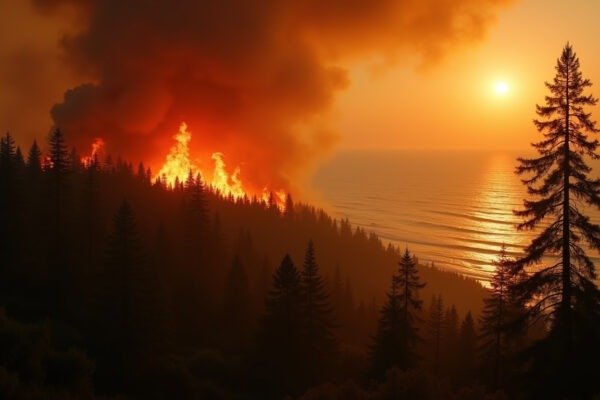
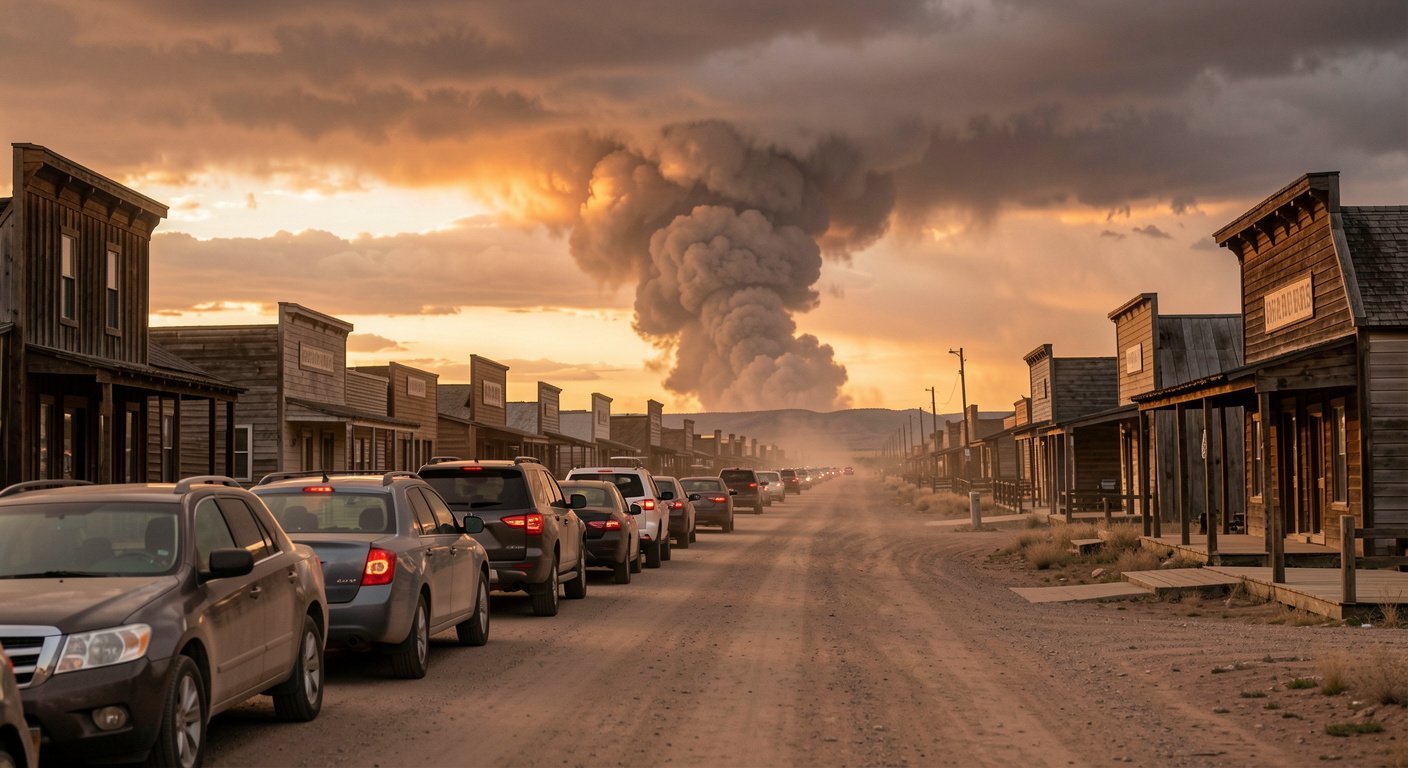
Western wildfires are burning earlier and hotter in 2026, fueled by the same massive heat dome that is now scorching 170 million Americans. In a single weekend, 14 new fires ignited across the West, and the Iron Fire in Utah alone has consumed more than 40,000 acres.
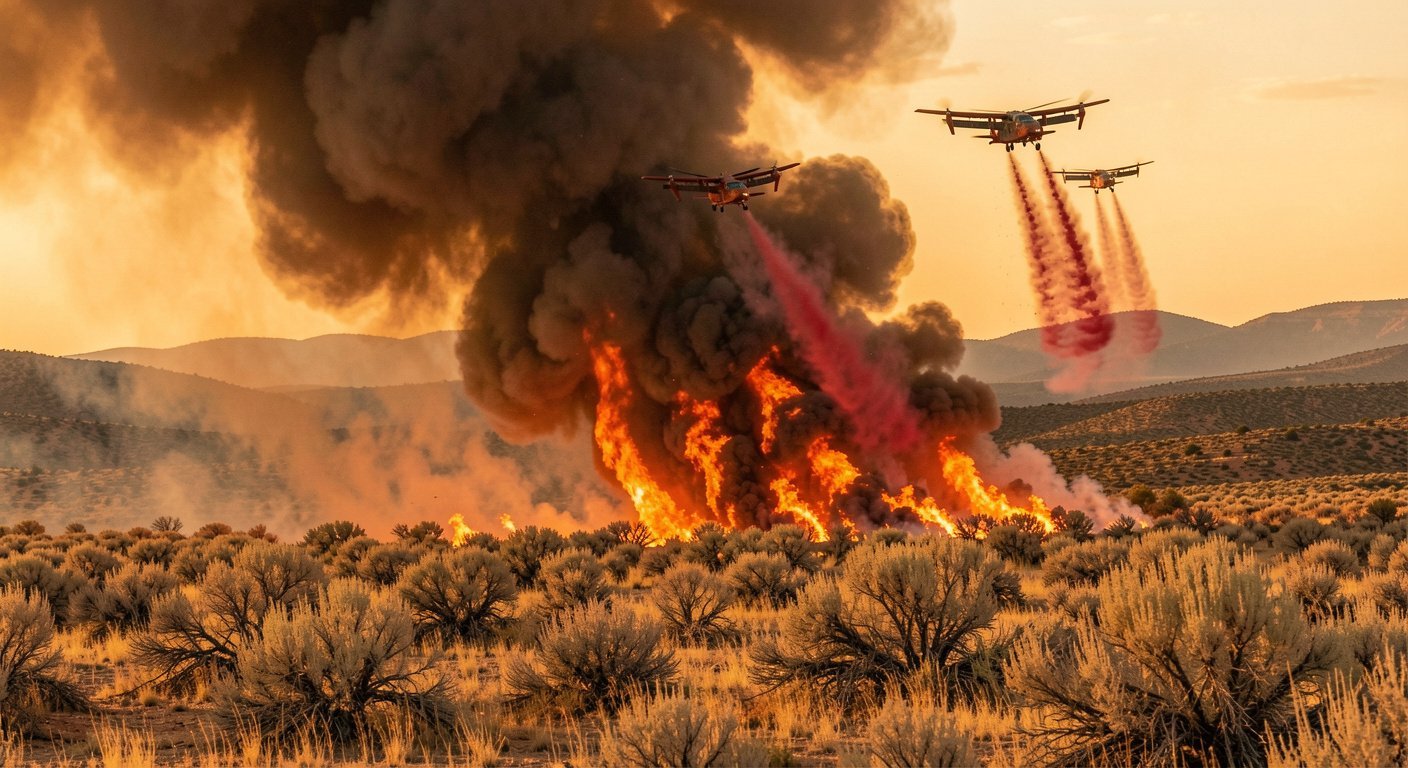
On June 19, 2026, a spark still confirmed as human-caused lit the dry sagebrush west of Eureka, Utah. Within 48 hours, the Iron Fire had forced the evacuation of an entire town, burned more than 37,000 acres, and become one of six wildfires burning simultaneously across a single state. It was, Governor Spencer Cox said, exactly what officials had feared.
“We knew there was going to be extreme fire danger, and sure enough we had multiple fires.”
Gov. Spencer J. Cox, visiting Eureka on June 22
The Iron Fire is now the headline, but it is not the whole story. From Arizona to California to Colorado, the same pattern is repeating: extreme heat, severe drought, and gusty winds are combining to create the most dangerous early-summer fire conditions the West has seen in years. This is what a firestorm summer looks like before July has even arrived. By late July, the pattern had reached central Oregon, where the Akawa Butte Fire bore down on Sisters.
What Is Happening: A Map of Fire
As of June 26, the Iron Fire had grown to more than 40,000 acres and was 26 percent contained, with 664 firefighters and 15 crews working to protect the small communities of Eureka and Elberta. No homes had been lost, but only because of an all-night backburn operation that firefighters called a success against long odds.
It was not the only fire in Utah. The Bonneville Fire in the foothills above Salt Lake City forced shelter-in-place orders for neighborhoods near the University of Utah. The Sawmill Fire, the Hastings Fire, the Cottonwood Fire, at one point on June 21, Utah Fire Info was tracking six active incidents, from the Wasatch Front to the desert south.
Across state lines, the picture was equally grim. In California, the Orange Fire near Sacramento burned 1,200 acres in 12 hours and forced 8,400 residents in El Dorado Hills, Folsom, and Fair Oaks to evacuate. In Arizona, the Pocket Fire north of Sedona closed State Route 89A and forced mandatory evacuations in Oak Creek Canyon. In Colorado, the National Weather Service issued red flag warnings for the southwest corner, with gusty winds, single-digit humidity, and temperatures above 100 degrees Fahrenheit.
The National Interagency Fire Center in Boise counted 14 new fires nationwide on the weekend of June 21 alone, including two new large incidents and five uncontained large fires still burning.
Why It Is Happening: Heat, Drought, and the Fire Triangle
To understand why the West is burning so aggressively in June 2026, you need to look at three factors converging at once.
First, the heat. A massive heat dome, the same system now pushing temperatures past 100 degrees Fahrenheit across two dozen states, settled over the Western United States in mid-June. Temperatures in Carlsbad, New Mexico, hit 108 degrees Fahrenheit. Much of the region from the Rockies to the Pacific coast saw above-average temperatures for weeks, with even hotter weather forecast for early July.
Second, the drought. According to the U.S. Drought Monitor, much of Utah is experiencing severe to extreme drought. Parts of Arizona and Colorado are in severe drought. When soil moisture is this low, vegetation becomes fuel. Grass, sagebrush, and pinon-juniper forest dry out to the point where a single spark can ignite a fast-moving blaze.
Third, the wind. Red flag warnings from the National Weather Service mean exactly this: winds gusting above 25 miles per hour combined with relative humidity below 15 percent. Under those conditions, a fire can double in size in a matter of hours. The Iron Fire grew from zero to 13,000 acres in its first 36 hours, driven by exactly this combination.
Wildfire scientists call this the fire triangle: heat, fuel, and oxygen. A heat dome provides the heat. Drought provides the fuel. Wind provides the oxygen, pushing flames across the landscape faster than firefighters can cut containment lines. In June 2026, all three sides of the triangle are extreme.
How It Affects People
Evacuations: Leaving Everything Behind
When the Iron Fire mandatory evacuation order reached Eureka, a town of roughly 1,000 people 70 miles southwest of Salt Lake City, Juab County Emergency Management issued a life-threatening alert telling residents to leave immediately and not stop to gather belongings. An evacuation shelter opened at an LDS meetinghouse in nearby Elberta.
Across the West, tens of thousands of people faced similar orders in a single weekend. In California El Dorado Hills, emergency shelters hit 87 percent capacity within hours. In Arizona Oak Creek Canyon, evacuees could not return home as of Sunday evening, with State Route 89A closed indefinitely.
The psychological toll is rarely discussed in fire statistics. Evacuation means leaving behind pets, medications, family photos, and the accumulated life of a home. Even when firefighters successfully defend every structure, as they did in Eureka, residents return to a landscape transformed, the familiar hills blackened, the air still thick with smoke.
Air Quality: The Invisible Threat
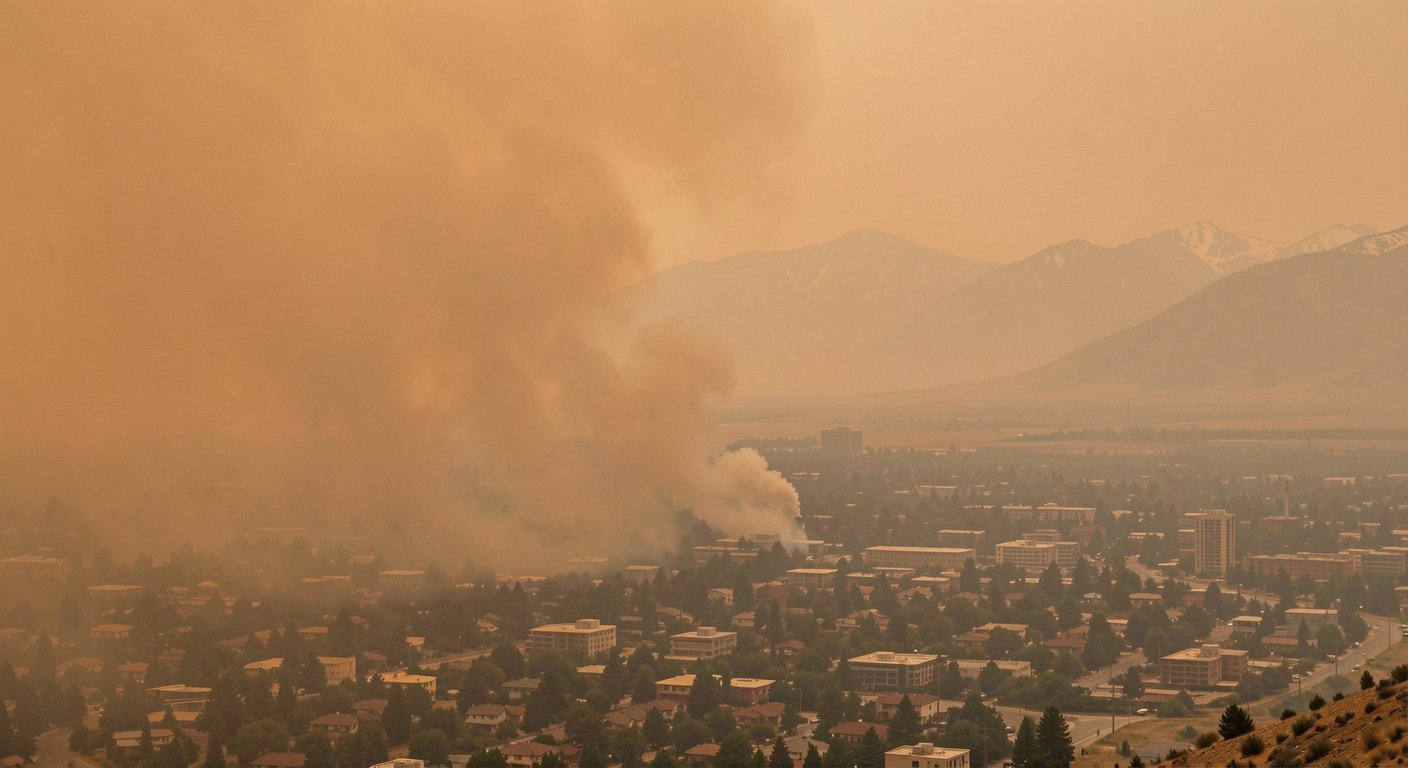
For the millions of people far from the flames, the bigger immediate risk is what they cannot see. Wildfire smoke contains PM2.5, fine particulate matter small enough to enter the bloodstream through the lungs. When fires burn across six states simultaneously, that smoke travels hundreds of miles, drifts across state lines overnight, and accumulates in valleys where atmospheric inversions trap it close to the ground.
By the week of June 22, several Utah cities ranked among the worst air quality in the United States. Salt Lake City residents reported haze so thick it obscured the Wasatch Mountains, not just from the Iron Fire and local blazes, but from large fires burning as far away as Colorado and Arizona.
Firefighters: The Line That Holds
More than 200 firefighters defended Eureka on the night of June 20, conducting backburn operations to remove fuel ahead of the advancing flames. Across the Iron Fire complex, 664 personnel were assigned by June 25, including 15 crews working 24-hour shifts in triple-digit heat.
Firefighting is physical labor at the extreme edge of human endurance. Crews carry 45-pound packs up steep terrain while temperatures on the fire line can exceed 120 degrees Fahrenheit. The 2026 season is forcing that labor earlier, in hotter conditions, across more simultaneous fronts than many veteran firefighters have seen.
Why It Matters Now
The 2026 fire season is not arriving early, it is arriving all at once.
The National Interagency Fire Center predictive outlook for July 2026 warns of above-normal significant wildfire potential across the Four Corners region, western Colorado, Utah, northern California, and the Inland Northwest. That means the fires of late June are likely the beginning, not the peak.
There is a compounding effect at work. Fires that start in June dry out the landscape further, making July fires burn hotter and spread faster. Smoke from early-season fires exposes millions to PM2.5 over weeks rather than days, with cumulative health effects that researchers are only beginning to understand. And every large fire consumes firefighting resources, aircraft, crews, equipment, that cannot be in two places at once when the next ignition occurs.
| Iron Fire (Utah) | 40,445 acres | 26% contained |
| Orange Fire (California) | 1,200 acres | 8,400 evacuated |
| Pocket Fire (Arizona) | 500 acres | SR 89A closed |
| Deer Canyon Fire (New Mexico) | 350 acres | extreme behavior |
| New fires June 21 weekend | 14 nationwide |
What We Can Learn
If you live in the West, fire season now starts earlier than you remember.
The practical steps are familiar but worth repeating: sign up for your county emergency alert system, build a go-kit with medications and documents, know at least two evacuation routes out of your neighborhood, and check air quality before outdoor activity. The PurpleAir map and the EPA Fire and Smoke Map update in near real time.
But the bigger lesson of June 2026 is that the old boundaries of fire season no longer apply. A human-caused spark on a Friday night in rural Utah can become a 40,000-acre fire by Tuesday, not because firefighters failed, but because the landscape was primed to burn. Heat, drought, and wind are not separate problems. They are three sides of the same emergency.
The Iron Fire will eventually be contained. The question is how many more Iron Fires the West will see before summer ends.
- Sign up for your county emergency alert system
- Build a go-kit with medications, documents, and essentials
- Know at least two evacuation routes from your neighborhood
- Check air quality at fire.airnow.gov or the PurpleAir map before outdoor activity
- If under an evacuation order, leave immediately. Property can be replaced. You cannot.
Sources: PBS NewsHour / Associated Press (June 21, 2026), PurpleAir Blog (June 22, 2026), IQAir (June 26, 2026), U.S. Drought Monitor, National Interagency Fire Center, Utah Fire Info.