By NatureWeatherHub Team
Reading Time: 11 Minutes
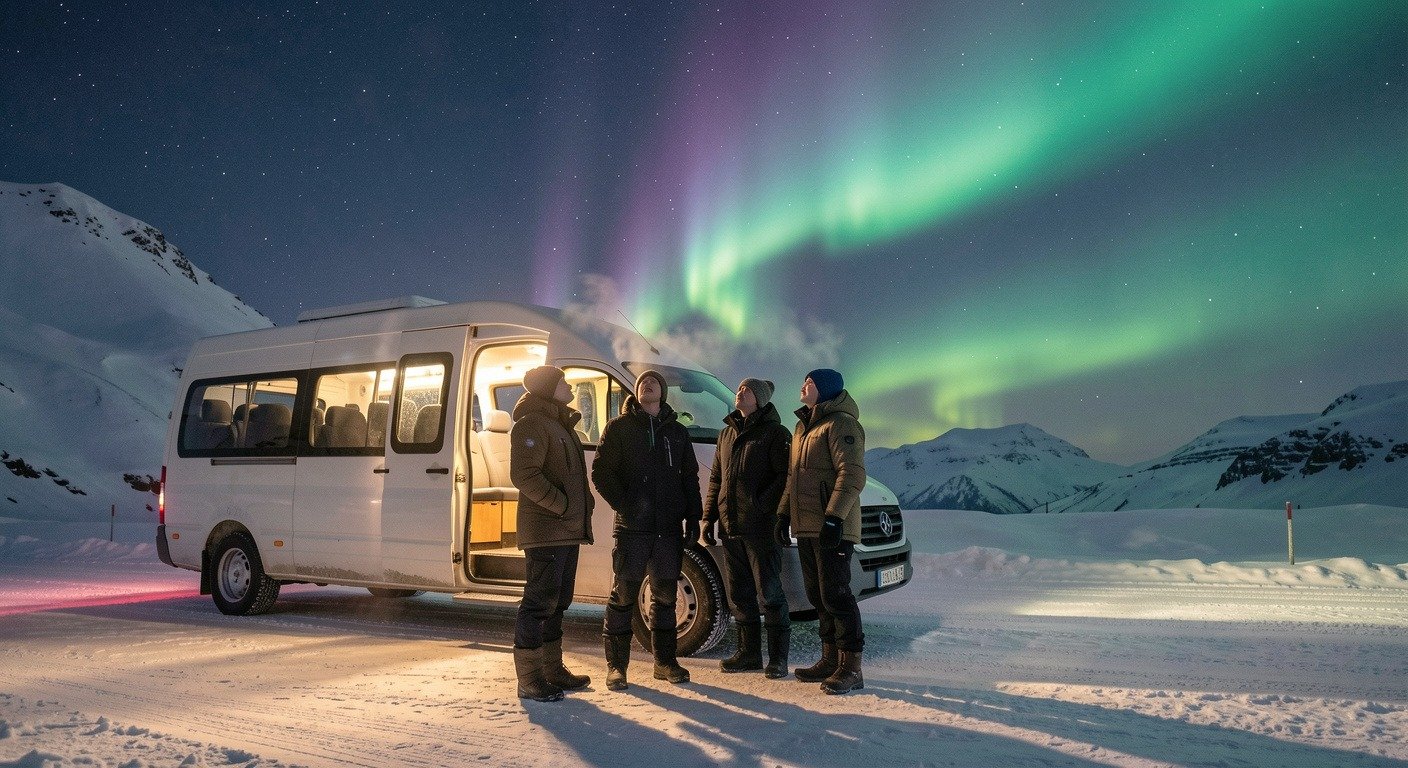
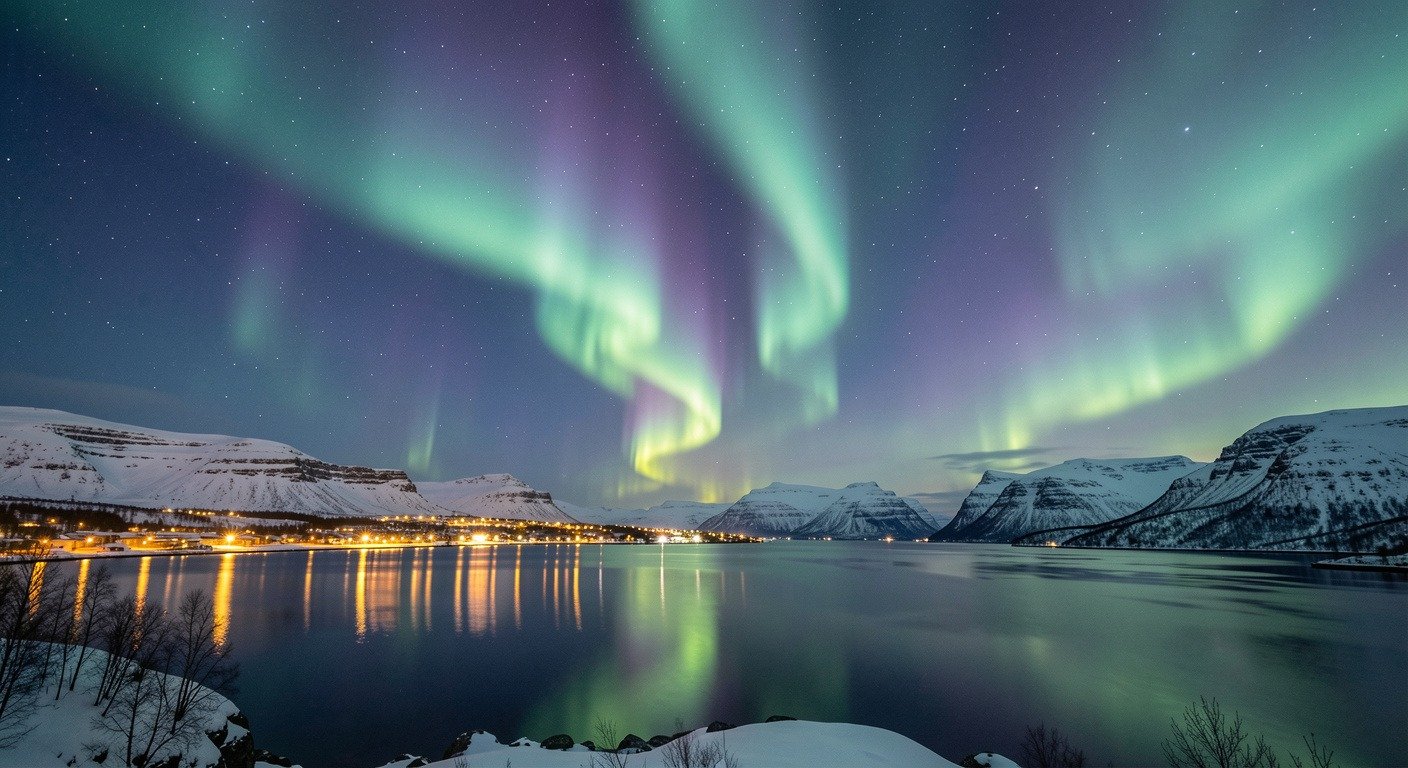
The first time you see the northern lights, you stop breathing for a second. Not because someone told you to, but because the sky just did something that doesn’t seem possible. A green ribbon stretches from horizon to horizon, twisting like it has a heartbeat. You are standing in the snow, in the dark, at negative twenty degrees, and you cannot look away. This is what drives half a million people to the Arctic Circle every year, each searching for the best place to see northern lights. In 2026, the Sun is making that search easier than it has been in over a decade.
What Are the Northern Lights
The northern lights, or aurora borealis, are not magic. They are physics, and the physics is straightforward. The Sun constantly releases a stream of charged particles called the solar wind. When those particles reach Earth, our planet’s magnetic field catches them and funnels them toward the North and South Poles. As the particles collide with oxygen and nitrogen atoms in the upper atmosphere, roughly 100 to 300 kilometers above the ground, they transfer energy that gets released as light.
That is the simple version. The professional term for the ring-shaped zone where this happens is the auroral oval, and it sits between 60 and 75 degrees north latitude. Scientists measure aurora activity using the Kp index, a scale from 0 to 9. At Kp 3 or below, the lights stay near the poles. At Kp 5 and above, a geomagnetic storm is underway, and aurora can push south into places like Scotland, the northern United States, and even France during rare Kp 7 or 8 events.
The colors tell you what is happening and where. Green, the most common color, comes from oxygen atoms about 100 to 250 kilometers up. Red is rarer, produced by oxygen at altitudes above 250 kilometers. Blue and purple come from nitrogen molecules lower in the atmosphere. When you see pink along the bottom edge of a green curtain, you are looking at nitrogen and oxygen mixing around the 100-kilometer mark.
In simple terms: The northern lights are nature’s biggest light show, powered by the Sun and shaped by Earth’s magnetic field.
Here is why 2026 matters more than a typical year. The Sun runs on an 11-year activity cycle called Solar Cycle 25, which began in December 2019. NOAA’s Space Weather Prediction Center originally forecast a moderate peak around 2025, but the Sun outperformed those predictions. According to research published by McIntosh, Leamon, and Egeland in 2023, Solar Cycle 25 is now tracking as one of the strongest cycles in decades, with a projected maximum smoothed sunspot number of 184, roughly double what early models suggested [SOURCE: Wikipedia Solar Cycle 25]. The cycle has shown a double-peak pattern: a first surge in late 2023 through mid-2024, with a second peak extending into 2025 and 2026 [SOURCE: AuroraForecast.me]. Even after the absolute sunspot maximum, the strongest auroral activity typically lags by one to two years, which means 2026 remains squarely in the high-activity window. Aurora frequency during solar maximum is two to three times higher than during solar minimum [SOURCE: Trafalgar]. If you have ever considered planning a trip to see the northern lights, this is the window you want to be in.
Best Place to See Northern Lights
Six destinations sit under or near the auroral oval and offer reliable viewing, established tourism infrastructure, and distinct experiences. Here is an honest comparison, because the best place to see aurora borealis depends on what kind of trip you want. For a detailed tour operator comparison, see our Northern Lights tours guide.
Tromsø, Norway
Tromsø sits at 69 degrees north, directly under the auroral oval, and benefits from the Gulf Stream, which keeps winter temperatures around minus 5 degrees Celsius, far warmer than anywhere else at that latitude. This is a real city of 77,000 people with an international airport, excellent hotels, restaurants, and more tour operators than you can count.
Best months: September through April, with peak darkness from November to February. September and October offer milder weather and autumn colors for photography. November through January brings polar night, where the sun never rises above the horizon, giving you maximum dark hours.
Tour prices: Budget group tours start at 1,100 to 1,800 NOK, roughly $100 to $170 USD per person. Small-group tours run 1,500 to 2,500 NOK, about $140 to $230 USD. Multi-day packages from operators like Nordic Visitor range from roughly 1,300 EUR to over 7,000 EUR per person depending on duration and luxury level [SOURCE: Visit Tromsø].
Pros: Mild winter temperatures, excellent infrastructure, direct flights from major European cities, whale watching combo possible in November through January, lively city with museums and restaurants.
Cons: Norway is expensive across the board. Coastal cloud cover can obstruct viewing on any given night. Peak-season accommodations book out months in advance.
Iceland
Iceland offers a different equation. The entire island sits between 63 and 66 degrees north, with aurora visible nationwide on clear nights. It is accessible from both North America and Europe, roughly five hours from New York and three hours from London. The volcanic landscape, waterfalls, black sand beaches, and geothermal hot springs provide backdrops no other destination can match.
Best months: Mid-September through early April, peaking October through March. The trade-off is weather. Iceland’s North Atlantic storms mean cloud cover is the single biggest barrier to seeing the aurora here.
Tour prices: Budget bus tours from Reykjavík start at 8,000 to 12,000 ISK, roughly $60 to $90 USD per person. Small-group tours with photos and hot chocolate run 9,990 to 15,000 ISK, about $75 to $115 USD. Super Jeep tours that access highland terrain cost 15,000 to 25,000 ISK, around $115 to $190 USD [SOURCE: Guide to Iceland].
Pros: Easiest access from both sides of the Atlantic, spectacular photography backdrops, geothermal hot springs for warm viewing, English widely spoken, self-drive friendly along the Ring Road.
Cons: Weather is unpredictable and often stormy in winter. Reykjavík has light pollution requiring a drive out of the city. Accommodations and dining are expensive. For a deeper Iceland aurora guide, read our Iceland Northern Lights guide.
Yellowknife, Northwest Territories, Canada
Yellowknife, at 62.5 degrees north, may sit slightly lower in latitude than Tromsø, but its semi-arid climate and flat terrain give it some of the highest clear-sky probability of any aurora destination. The official season runs nine months, from mid-August through April, the longest reliable window in the world.
Best months: August and September are unique. The aurora reflects off the open waters of Great Slave Lake, and temperatures are still comfortable, ranging from minus 5 to 10 degrees Celsius. December through March offers the darkest skies, but temperatures can drop to minus 40 degrees Celsius.
Tour prices: Single-night tours start at $85 CAD for the first night, dropping to $65 CAD for subsequent nights. Aurora Village offers heated teepees and multi-night packages combining hotel, viewing, and airport transfers [SOURCE: North Star Adventures].
Pros: Longest season, high clear-sky probability, warm-season aurora with lake reflections is a one-of-a-kind experience, less crowded than European destinations, Aurora Village heated teepees are comfortable.
Cons: Extreme cold in deep winter, minus 30 to minus 40 degrees Celsius is common in December through February. Remote location with limited and expensive flights. Small city of about 20,000 people with limited hotel inventory.
Finnish Lapland (Rovaniemi, Kakslauttanen, Saariselkä)
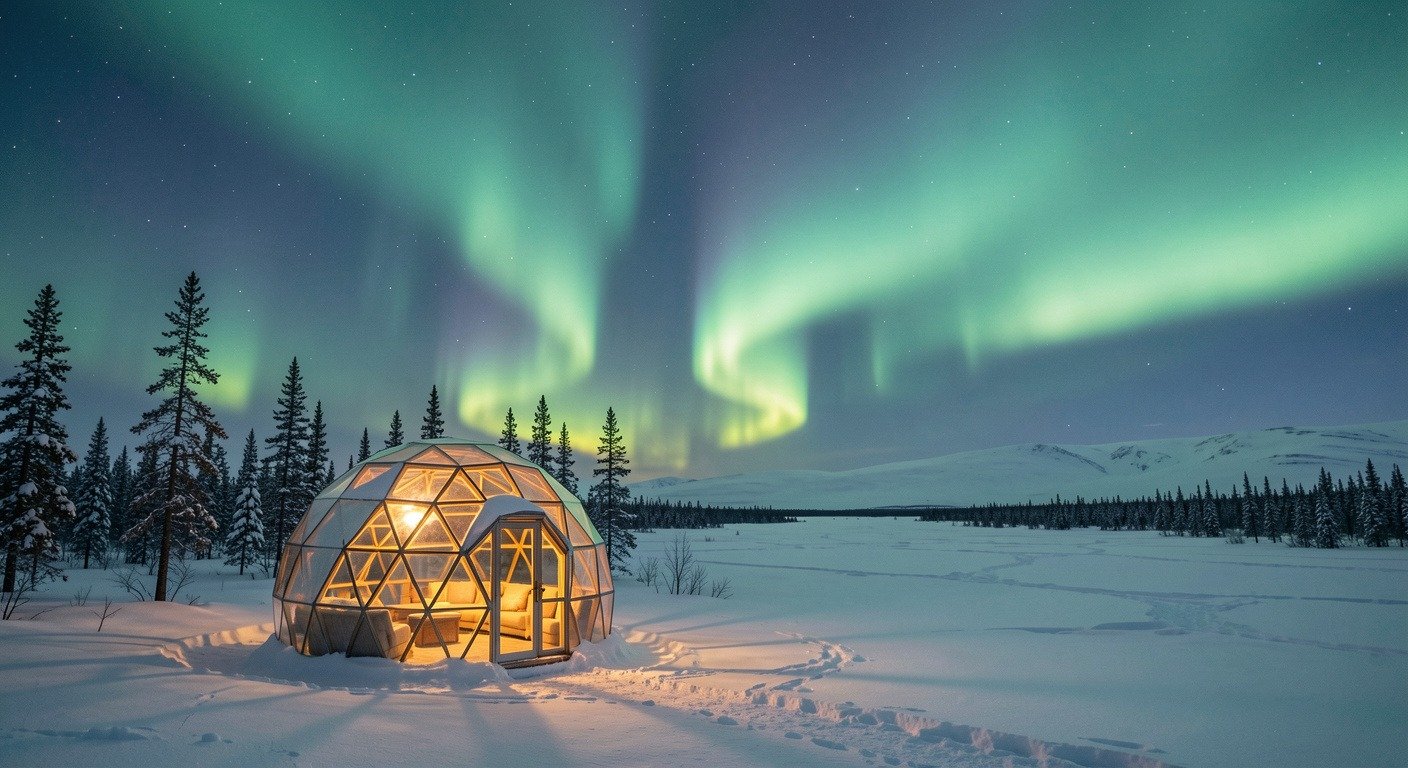
Finnish Lapland, spanning 66 to 69 degrees north, combines aurora viewing with a full winter wonderland experience. The glass igloo concept, watching the aurora from your warm bed, originated here and remains the defining image of luxury aurora travel. Add reindeer sleigh rides, husky safaris, snowmobiling, and the Santa Claus Village in Rovaniemi, and this is the most family-friendly aurora destination on the list.
Best months: September through March, peaking December through February. November and December bring Christmas tourism crowds and polar night in the far north. January through March offers deep snow, magical forest landscapes, and excellent aurora and snow activity combinations.
Tour prices: Basic aurora chases from Rovaniemi start at 80 to 120 EUR, about $90 to $135 USD per person. Glass igloos at Kakslauttanen Arctic Resort run roughly 500 to 800 EUR per night for a two-person igloo in peak season [SOURCE: Kakslauttanen Arctic Resort]. Multi-day packages combining Helsinki and Lapland start around 3,150 EUR per person.
Pros: Glass igloos for aurora viewing from bed, extensive winter activities, family-friendly with Santa Claus Village, relatively accessible via flights from Helsinki to Rovaniemi, sauna culture adds to the experience.
Cons: Glass igloo stays are very expensive. Rovaniemi has light pollution requiring travel outside the city. Peak December is crowded and premium-priced. Cloud cover is common in coastal-influenced areas.
Fairbanks, Alaska
Fairbanks, at 64.8 degrees north, sits directly under the auroral oval and offers some of the highest viewing probability in North America. The University of Alaska Fairbanks Geophysical Institute runs one of the world’s best aurora forecast services. For U.S. travelers, this is the most accessible international aurora destination. No passport required. Direct flights from Seattle take about three and a half hours.
Best months: The official aurora season runs August 21 through April 21. August and September are warmer with fall colors. December through February brings the darkest skies but temperatures averaging minus 20 to minus 35 degrees Fahrenheit. March offers excellent viewing with slightly warmer temperatures and the World Ice Art Championships as a bonus.
Tour prices: Basic viewing tours start at $50 to $100 per person for four hours. Chena Hot Springs day trips from Fairbanks run $250 to $275 per person. Multi-day lodge packages at remote locations range from $1,500 to over $3,000 per person [SOURCE: Explore Fairbanks].
Pros: No passport needed for U.S. citizens, scientific aurora forecasting from UAF Geophysical Institute, Chena Hot Springs for warm viewing, dog sledding and Arctic Circle tours available, direct flights from Seattle.
Cons: Extreme cold, among the coldest aurora destinations. Car rental is recommended. Less European-style tourism infrastructure compared to Tromsø or Iceland.
Abisko National Park, Sweden
Abisko, at 68.3 degrees north, is arguably the single best aurora viewing location on Earth from a pure probability standpoint. The surrounding mountains create what scientists call a blue hole, a microclimate where the sky stays clear even when surrounding areas are covered in cloud. The Aurora Sky Station sits at 900 meters elevation, above the tree line, with essentially zero light pollution. Abisko has been scientifically recognized as one of the premier sites for aurora research globally.
Best months: Mid-November through mid-March is the core season, with some operators extending to September through April. The blue hole effect is most pronounced during the darkest months.
Tour prices: Night visits to the Aurora Sky Station, including chairlift, guide, and warm overalls, run 995 to 1,295 SEK, roughly $95 to $125 USD per person. Guided photography tours cost 1,200 to 1,800 SEK, about $115 to $175 USD. Accommodation at Abisko tourist station ranges from 800 to 1,500 SEK per night [SOURCE: Aurora Sky Station].
Pros: Blue hole microclimate gives the highest clear-sky probability of any aurora destination. Aurora Sky Station at elevation. Minimal light pollution. Scientifically recognized as exceptional. Nearby ICEHOTEL in Jukkasjärvi. Less crowded than Tromsø.
Cons: Very remote. You fly to Kiruna, then travel roughly 90 minutes by train or bus. Limited dining and accommodation in Abisko village. Fewer non-aurora activities if skies are cloudy. Limited flight options to Kiruna.
Social Media Highlight
“In 2026, the Sun is throwing its biggest party in over a decade. Earth’s polar skies are the dance floor.”
Quick Comparison
| Destination | Latitude | Best Months | Starting Tour Price | Winter Temps | Clear Sky Odds |
|---|---|---|---|---|---|
| Tromsø, Norway | 69°N | Sep-Apr | ~$100 USD | -5°C to -15°C | Moderate |
| Iceland | 63-66°N | Sep-Apr | ~$60 USD | -5°C to 0°C | Low (stormy) |
| Yellowknife, Canada | 62.5°N | Aug-Apr | ~$65 CAD | -20°C to -40°C | High |
| Lapland, Finland | 66-69°N | Sep-Mar | ~€80 | -15°C to -30°C | Moderate |
| Fairbanks, Alaska | 64.8°N | Aug-Apr | ~$50 USD | -20°C to -35°C | Moderate |
| Abisko, Sweden | 68.3°N | Nov-Mar | ~SEK 995 | -10°C to -25°C | Very High |
When to Go
The aurora season across all major destinations runs from late August through late April. The single non-negotiable requirement is darkness. Above the Arctic Circle during summer, the midnight sun makes aurora completely invisible, no matter how high the Kp index climbs.
The best time of night, according to NOAA’s Space Weather Prediction Center, falls within two hours of local midnight, roughly 9 p.m. to 2 a.m., with peak activity concentrated around 10 p.m. to midnight [SOURCE: NOAA SWPC]. That said, aurora can appear anytime during dark hours, and patience is the real currency.
September and March are widely considered the sweet-spot months across destinations. Both offer enough darkness for viewing without the extreme cold of midwinter. More importantly, auroral activity is statistically enhanced around the spring and autumn equinoxes due to the Russell-McPherron effect, a phenomenon where Earth’s magnetic field geometry becomes more receptive to solar wind coupling [SOURCE: AuroraForecast.app]. If you can only travel once, target March or September.
The Solar Cycle 25 context makes 2026 particularly significant. The Sun is in its high-activity phase, producing more frequent and more intense coronal mass ejections, the plasma eruptions that drive dramatic auroral displays. According to travel operators tracking the cycle, 2026 has been widely described as a last-call window before solar activity begins its gradual decline toward the next solar minimum projected around 2030 [SOURCE: Trafalgar]. Even after the peak passes, elevated aurora activity will continue through roughly 2028 to 2029, but travelers who go in 2026 catch the strongest possible displays. Understanding large-scale natural cycles, whether El Niño in the Pacific or the solar cycle above, is key to planning any nature-dependent trip.
How to Plan Your Trip
What It Costs
Northern lights travel spans a wide budget range. Here is what to expect per person for a five to seven day trip in the 2025 to 2026 season.
Budget: $1,500 to $2,500. Hostel or budget hotel, two to three group tours, self-drive or public transport, and basic meals. Iceland at the lower end, Norway at the upper end.
Mid-range: $3,000 to $5,000. Three-star hotel or guesthouse, three to four guided tours, some meals out, rental car. This is the sweet spot for most travelers and covers a comfortable experience at any of the six destinations.
Premium: $5,000 to $8,000 and above. Glass igloo or remote lodge, private tours, full packages, fine dining. Finland and Norway dominate this category due to glass igloo and luxury lodge pricing.
Per-destination approximate costs for a five-day mid-range trip: Iceland runs $2,500 to $4,000 with round-trip flights from the U.S. or Europe costing $400 to $800. Norway, specifically Tromsø, runs $3,000 to $5,000. Yellowknife runs $2,500 to $4,000 with domestic Canadian flights around $300 to $600. Finnish Lapland runs $3,500 to $6,000, pushed higher by glass igloo stays. Fairbanks runs $2,000 to $3,500 with West Coast flights around $300 to $500. Abisko runs $2,500 to $4,000 with limited but good-value accommodation options [SOURCE: aggregated from destination-specific sources in research brief].
Tours vs. DIY
For first-timers, guided tours are strongly recommended. Local guides know where to find clear skies, how to interpret aurora forecast data beyond the Kp index, and they provide photography assistance, warm clothing, hot drinks, and safety in remote winter conditions. Tour operators also share knowledge you can use on subsequent self-guided nights.
DIY aurora hunting is significantly cheaper and offers complete flexibility. It works best in Iceland, where the Ring Road gives you mobility, in Norway, where coastal drives offer multiple viewing pull-offs, and in Alaska, where you can drive yourself to Chena Hot Springs or Murphy Dome.
The most effective approach is a hybrid. Book one or two guided tours early in your trip to learn local patterns, then self-drive on remaining nights armed with aurora forecast apps and what you learned from your guide.
Packing Essentials
Winter in the Arctic is not a fashion problem. It is a safety problem. Temperatures at Yellowknife and Fairbanks routinely hit minus 30 to minus 40 degrees Celsius. The layer system is your only defense.
Start with a merino wool thermal base layer, top and bottom. Add a fleece or wool mid-layer. Your outer layer should be a down jacket rated to at least minus 20 degrees Celsius. For your legs, insulated ski or snow pants are non-negotiable. Wool socks inside insulated winter boots rated to minus 30 degrees Celsius or lower. Thin liner gloves under thick mittens, because mittens are warmer than gloves. A wool hat and a neck gaiter or buff to cover exposed skin [SOURCE: CN Traveler, Inspiring Vacations].
For gear, a camera and a sturdy tripod are essential for photography. Extra batteries are critical because cold drains them fast. Keep spares in an inner jacket pocket against your body. A headlamp with a red light mode preserves your night vision and the night vision of everyone around you. A thermos with a hot drink, a portable power bank for your phone, and hand and foot warmer packets round out the kit.
Book flights two to four months ahead for the best prices, especially to remote destinations like Yellowknife and Kiruna. Peak-season accommodations, December through March, book out three to six months in advance at popular destinations. Plan for at least four nights to maximize your probability. Three nights gives roughly a 70 percent chance of seeing aurora at least once at prime destinations in season. Four nights pushes that above 85 percent [SOURCE: The Aurora Zone].
What to Expect
Realistic Expectations
The aurora is a natural phenomenon. It is never guaranteed, no matter what a tour company’s marketing says. When operators claim a 90 percent or higher success rate, they typically mean over three to four nights, not on any single evening.
Cloud cover is the real enemy, not the Kp index. You can have Kp 5 activity, a geomagnetic storm in progress, and see absolutely nothing if the sky is overcast. This is why destinations like Abisko, with its blue hole microclimate, and Yellowknife, with its semi-arid skies, are prized by serious aurora hunters.
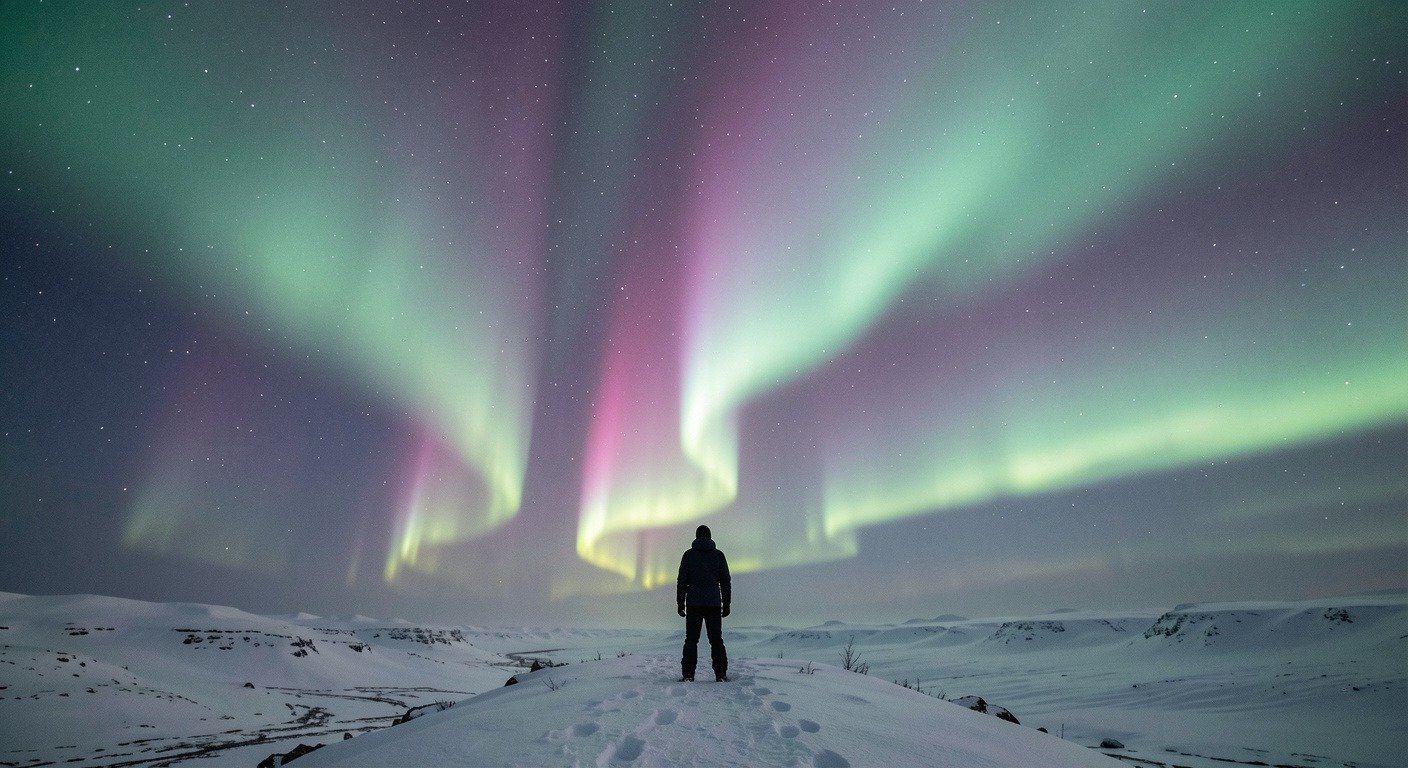
Here is what most guides do not fully prepare you for. The aurora often looks white or pale grey to the naked eye, especially during weaker displays. Your camera captures the vivid green and purple that your eyes cannot fully perceive. This is because human night vision relies on rod cells in the retina, which are color-blind. Cone cells, which detect color, need more light than a faint aurora provides. A pale greyish-white arc on the horizon might be a bright green band on your camera screen. Do not be disappointed. This is normal.
You must be willing to stay up late, potentially wake up in the middle of the night, and stand outside in extreme cold for hours. The aurora does not perform on schedule.
Photography Tips
For DSLR and mirrorless cameras, start with these settings. Set your mode to manual. Open your aperture as wide as possible, f/2.8 or lower. Set ISO to 1600 to 3200, adjusting up to 6400 if needed. Shutter speed should be 5 to 20 seconds. Use faster speeds, 2 to 8 seconds, for bright and active aurora. Use slower speeds, 15 to 25 seconds, for faint displays. Focus manually to infinity. A reliable method is to autofocus on a bright star or distant light, then switch to manual focus and do not touch the ring again. Shoot in RAW for post-processing flexibility [SOURCE: Capture the Atlas].
A sturdy tripod is non-negotiable. Handheld aurora photos will be blurry. Use a wide-angle lens, 14 to 24 millimeters or similar. A remote shutter release or two-second self-timer avoids camera shake when pressing the shutter. Lens heater strips or hand warmers rubber-banded to the lens prevent fogging and icing.
For smartphones, recent flagship models from 2024 and later, including iPhone 15 and 16 Pro, Pixel 8 and 9, and Galaxy S24 and S25, perform surprisingly well. Use Night Mode, which activates automatically in low light on recent iPhones. Set maximum exposure to 10 to 30 seconds. Prop the phone on a steady surface or a small phone tripod. Turn flash off. Reduce exposure slightly by sliding down to avoid overexposing bright aurora [SOURCE: Fjords and Beaches].
Common mistakes to avoid: forgetting to focus to infinity, which produces blurry stars and blurry aurora. Using too long an exposure, which turns defined curtain structures into shapeless green blobs because aurora moves. Not checking your lens for frost and condensation. Using flash, which illuminates the foreground but destroys the sky.
Final Call to Action
“The northern lights are never guaranteed. That is exactly what makes the moment you finally see them so unforgettable.”
You do not need to be a photographer. You do not need to speak Norwegian or Finnish or Swedish. You need darkness, clear skies, a warm coat, and the willingness to look up. The Sun has done its part. Solar Cycle 25 is peaking. The auroral oval is active. The only remaining variable is whether you show up. 2026 is your window.
Sources Used
- NOAA Space Weather Prediction Center (Aurora)
- NOAA SWPC Viewing Tips
- NASA Science (Auroras)
- UAF Geophysical Institute Aurora Forecast
- Wikipedia (Aurora)
- Wikipedia (Solar Cycle 25)
- AuroraForecast.me Solar Maximum Guide
- Trafalgar (2026 Peak)
- Visit Norway
- Visit Tromsø Budget Tours
- Guide to Iceland
- North Star Adventures
- Kakslauttanen Arctic Resort
- Explore Fairbanks Aurora Tracker
- Aurora Sky Station
- Capture the Atlas Photography Guide
- Fjords and Beaches (iPhone Guide)
- AuroraForecast.app Best Time Guide
- CN Traveler Winter Dressing Guide
- Inspiring Vacations Packing List
- The Aurora Zone