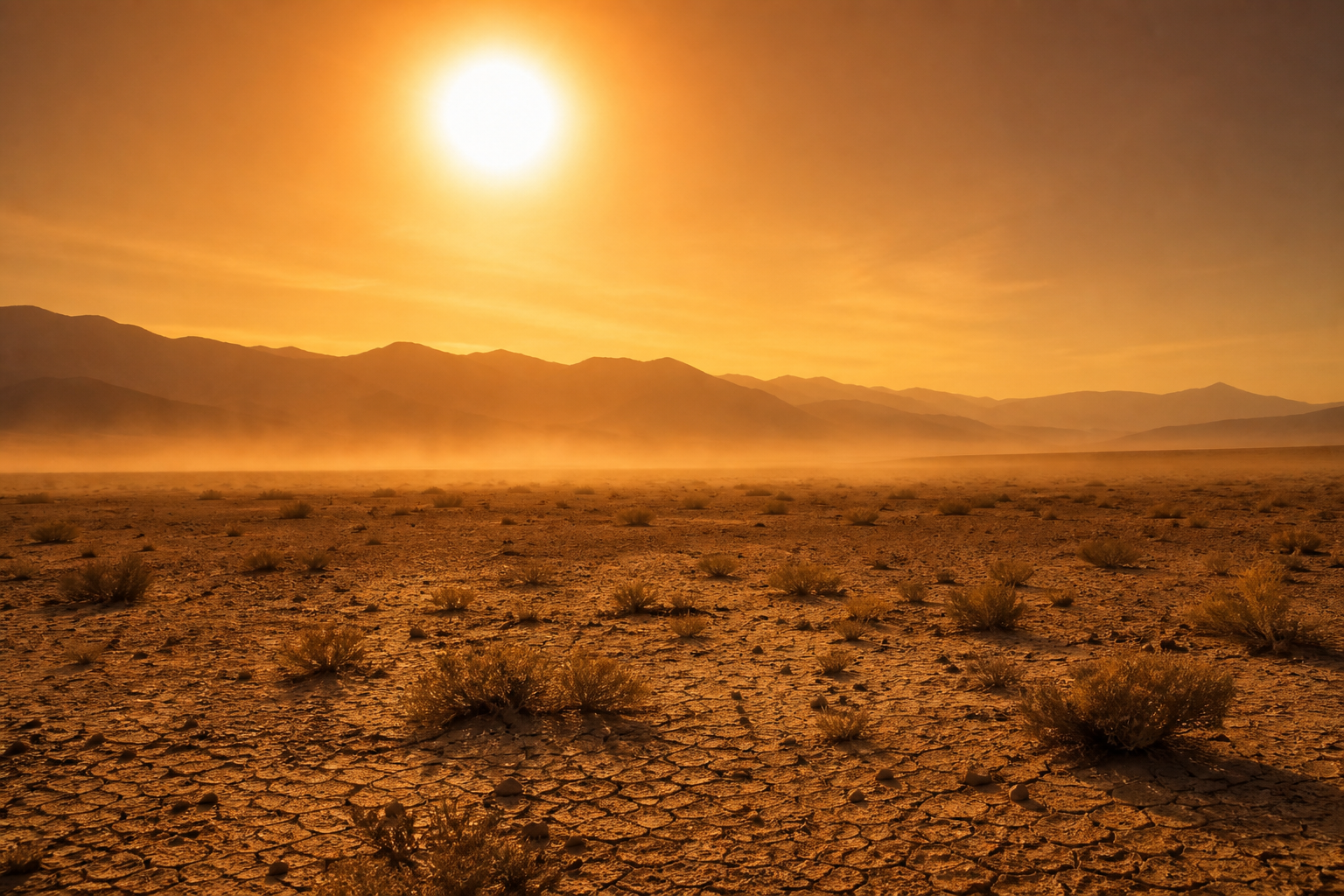
What Is a Heat Dome? The Weather Phenomenon Behind 2026’s Record Temperatures
112 Degrees in March? That’s Not Normal — and It Has a Name
In March 2026, something strange happened. Arizona and California hit 112 degrees Fahrenheit. In March. Not July. Not August. March.
Fourteen states broke temperature records in a single week. Phoenix felt like Death Valley. The Tohono O’odham Nation in southern Arizona issued an extreme heat warning — something usually reserved for midsummer.
This wasn’t just a hot day. It was a textbook heat dome. And if you’ve been hearing that term more and more, there’s a reason.
What Exactly Is a Heat Dome?
Think of a heat dome like a lid on a pot. When you put a lid on boiling water, the steam can’t escape. The heat gets trapped inside. The same thing happens in the atmosphere.
A heat dome forms when a strong area of high pressure parks itself over a region and refuses to move. This high-pressure system acts like a cap — it traps hot air underneath and prevents clouds and rain from forming.
Normally, hot air rises, cools, and eventually produces rain. But under a heat dome, the sinking air from above acts like a giant hand pushing down. The air compresses, gets even hotter, and can’t escape. Day after day, the heat builds.
Weather experts call the most extreme version a “death ridge” — a massive area of high pressure that can push temperatures 20 to 30 degrees Fahrenheit above normal.
How the 2026 Heat Dome Broke the Rules
What made the March 2026 heat dome so remarkable wasn’t just the temperature — it was the timing.
March in the American Southwest is supposed to be pleasant. Average highs in Phoenix hover around 80°F. Tucson sees the mid-70s. It’s the kind of weather that draws spring breakers and baseball fans.
Instead, temperatures soared 11 to 17°C (20 to 30°F) above average across parts of California, Nevada, and Arizona. The World Weather Attribution group — an international team of scientists who study extreme weather — ran the numbers.
Their conclusion? Human-caused climate change added 4.7 to 7.2°F (2.6 to 4.0°C) to the observed temperatures. Without that extra push from a warming planet, the event would have been “virtually impossible.”
By May, the heat dome had expanded even further. The Washington Post reported 22 states under extreme heat warnings, with 61 million people facing temperatures above 90°F and 11 million expected to cross 100°F.
Why Heat Domes Are Getting Worse
Heat domes aren’t new. The 2021 Pacific Northwest heat dome killed hundreds and shattered records in Portland and Seattle — cities where many homes don’t even have air conditioning.
But three things are making them more frequent and more intense:
1. The baseline is warmer. Global average temperatures have risen about 1.2°C since pre-industrial times. Every heat wave now starts from a higher starting point.
2. The jet stream is behaving differently. Some research suggests Arctic warming is weakening the jet stream — the fast-moving air current that steers weather systems. A weaker, wobblier jet stream means high-pressure systems can get “stuck” for longer periods.
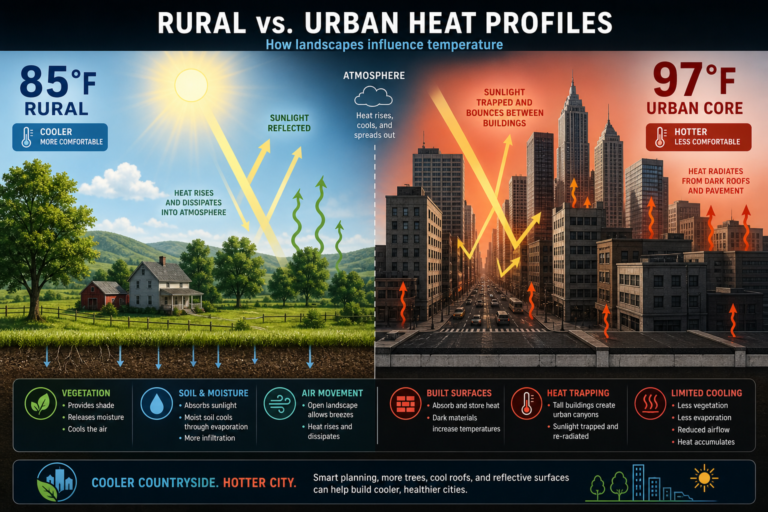
3. Dry soil makes it worse. When the ground is already dry, there’s less moisture to evaporate. Without evaporation, there’s less cooling. The land heats up faster, and the dome feeds on itself.
Scientists at Phys.org noted in May 2026 that “we’re getting more heat waves because it’s getting hotter, and because of that we also pick up more heat domes.” The phenomenon itself isn’t changing — the background temperature is.
What a Heat Dome Means for You
Knowing what a heat dome is matters. But knowing how to handle one matters more.
Heat is the deadliest weather event in the United States — it kills more people every year than hurricanes, tornadoes, and floods combined. During a heat dome event, these risks multiply because the heat doesn’t let up overnight. There’s no recovery period.
Here’s what to do when a heat dome settles over your area:
- Hydrate before you feel thirsty. By the time you’re thirsty, you’re already behind. Water is best — skip the alcohol and caffeine when temperatures spike.
- Stay inside between 10 AM and 4 PM. These are the peak heating hours. If you must be outside, take frequent breaks in the shade.
- Know the signs of heat illness. Heavy sweating, dizziness, nausea, and muscle cramps are early warning signs of heat exhaustion. If it progresses to hot, dry skin and confusion, that’s heat stroke — call 911 immediately.
- Check on the vulnerable. Elderly neighbors, young children, pregnant women, and people with chronic conditions are at the highest risk. A quick check-in can save a life.
- Cool your space efficiently. Close blinds on sun-facing windows. Use fans to circulate air. If you don’t have AC, visit a public cooling center — many cities open them during extreme heat events.
The Bottom Line
A heat dome is simple physics: high pressure traps hot air, and the longer it sits, the hotter it gets. But simple physics has real consequences. The 2026 heat dome wasn’t just a record-breaker — it was a warning shot.
Understanding what’s happening in the atmosphere doesn’t just satisfy curiosity. It helps you prepare. It helps you protect yourself and the people around you. Because when the next heat dome parks over your city, you’ll know exactly what you’re dealing with.
And maybe you’ll keep that extra water bottle handy.
Written by NatureWeatherHub — your simple guide to weather, nature, and the planet.