The summer solstice 2026 arrives on June 21 at 4:24 AM EDT, marking the moment the Northern Hemisphere tilts closest to the sun. It is the longest day of the year, and the science behind why it happens, and why the hottest days still lie weeks ahead, reveals the elegant physics of our spinning, tilted planet.
On Sunday morning, at 4:24 AM Eastern Daylight Time, the Northern Hemisphere will tilt as far toward the sun as it gets all year. That moment, the summer solstice, gives us the longest stretch of daylight in 2026 and marks the official start of astronomical summer.
If you’re north of the Arctic Circle, the sun won’t set at all. If you’re in Miami, you’ll get nearly 14 hours of daylight. In Seattle, almost 16. And if you’ve ever wondered why the longest day of the year isn’t the hottest day of the year, stick around. That’s one of the strangest quirks in how our planet works.
What’s Actually Happening
Earth doesn’t sit straight up and down. It’s tilted 23.5 degrees relative to its orbital plane. That tilt is the entire reason we have seasons. The solstice is the moment the North Pole reaches its maximum lean toward the sun. On June 21, the sun appears directly overhead at the Tropic of Cancer, the line of latitude at 23.5 degrees north. Everywhere north of that line, the sun traces its highest arc across the sky of the year. The word “solstice” comes from the Latin sol (sun) and sistere (to stand still), because for a few days the sun’s path seems to pause before reversing.
The Hottest Day Isn’t the Longest Day
If June 21 delivers the most direct sunlight, shouldn’t it be the hottest day? It almost never is. The hottest days in the Northern Hemisphere typically arrive in late July or early August, sometimes a full six weeks later. The reason is seasonal temperature lag: oceans and land masses absorb solar energy slowly and release it even more slowly. Think of a cast-iron pan on a stove. The burner is the solstice. The pan is the planet. The pan keeps getting hotter even after you turn the burner down.
There’s another counterintuitive twist: the earliest sunrises actually happen about a week before the solstice, and the latest sunsets happen several days after. This is because Earth’s orbit is elliptical, not circular, and our clocks don’t perfectly track the sun’s apparent motion.
How Humans Have Marked This Day
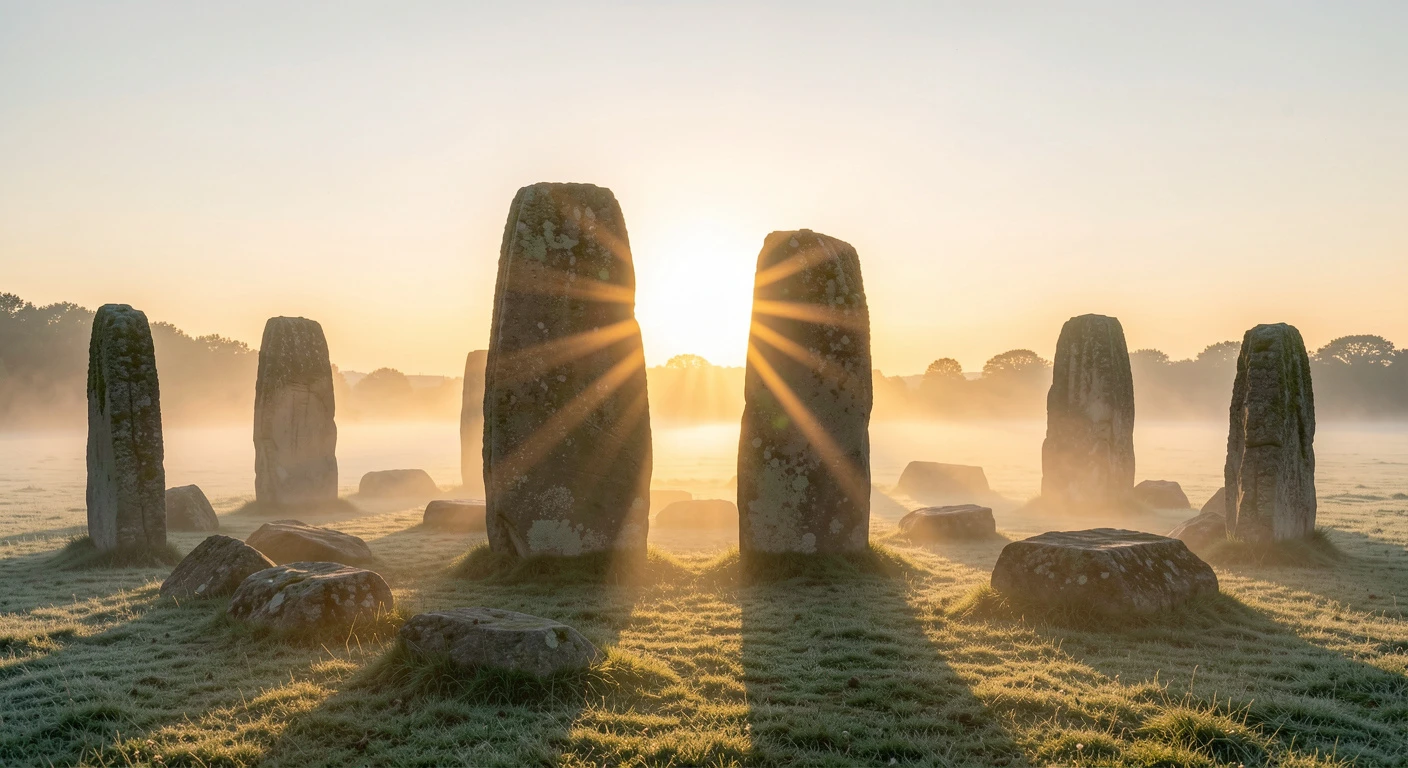
People have been tracking the solstice for at least 5,000 years. Stonehenge aligns perfectly with the sunrise on the summer solstice. In Sweden, Midsummer Eve remains one of the biggest celebrations of the year with bonfires, flower crowns, and dancing around the maypole. Native American tribes from the Plains to the Southwest built solar calendars and held ceremonies around the solstice. This year’s solstice has a bonus: the June full moon, known as the Strawberry Moon, falls just a few days later on June 25.
How to See It
You don’t need a Stonehenge. Watch the sunrise. Track how high the sun gets at noon; your shadow will be the shortest it gets all year. Notice the slow sunset as twilight stretches out. The solstice connects us directly to the same sky our ancestors watched and the same mechanics that govern why seasons change at all.
This Sunday, the sun stands still for a moment. It’s a good day to look up.