A single bolt of lightning heats the air to 50,000 degrees Fahrenheit, about five times hotter than the surface of the sun. At any given moment, roughly 2,000 thunderstorms are active across Earth, producing about 40 lightning flashes every second.
Most people have watched lightning split the sky and wondered what makes it possible. The answer connects a doorknob spark to one of the most powerful forces in nature.
- Lightning heats air to 50,000F, five times hotter than the sun’s surface.
- About 2,000 thunderstorms produce 40 lightning flashes every second worldwide.
- Lake Maracaibo in Venezuela is Earth’s top lightning hotspot, with strikes nearly 300 days a year.
- The 30/30 rule: count seconds between flash and thunder. Under 30 = seek shelter.
Lightning by the Numbers
| Measurement | Value |
|---|---|
| Temperature | 50,000F |
| Voltage | Up to 1 billion volts |
| Return stroke speed | 60,000 miles/second |
| Global flashes/year | Over 2 billion |
| US deaths/year | About 20 |
| Top hotspot | Lake Maracaibo, 232/km2/yr |
Understanding how lightning works reveals why certain places on Earth almost never stop flashing, why climate change may be making things worse, and what you need to know when thunder rolls in. This is how lightning forms, what its different types mean, and where lightning strikes most on the planet. Here is how lightning forms and what every flash tells us about the atmosphere above.
What Lightning Actually Is
Lightning is a giant spark of static electricity. The same zap you sometimes feel when you touch a metal doorknob on a dry day, scaled up to staggering proportions. A single bolt can carry 100 million to 1 billion volts of electricity.
The numbers are hard to grasp: more than 14.5 million thunderstorms form worldwide each year, producing over 2 billion lightning events. In the United States alone, about 25 million cloud-to-ground lightning strikes hit the country annually. About 20 Americans die from lightning each year, and hundreds more survive with lifelong injuries.
The visible flash you see is not the whole story. What looks like a bolt coming down from the sky is actually a return stroke shooting upward from the ground, traveling at roughly 60,000 miles per second. The entire event happens in a few thousandths of a second, faster than you can blink.
How Lightning Works: The Science
The Thunderstorm Becomes a Giant Battery
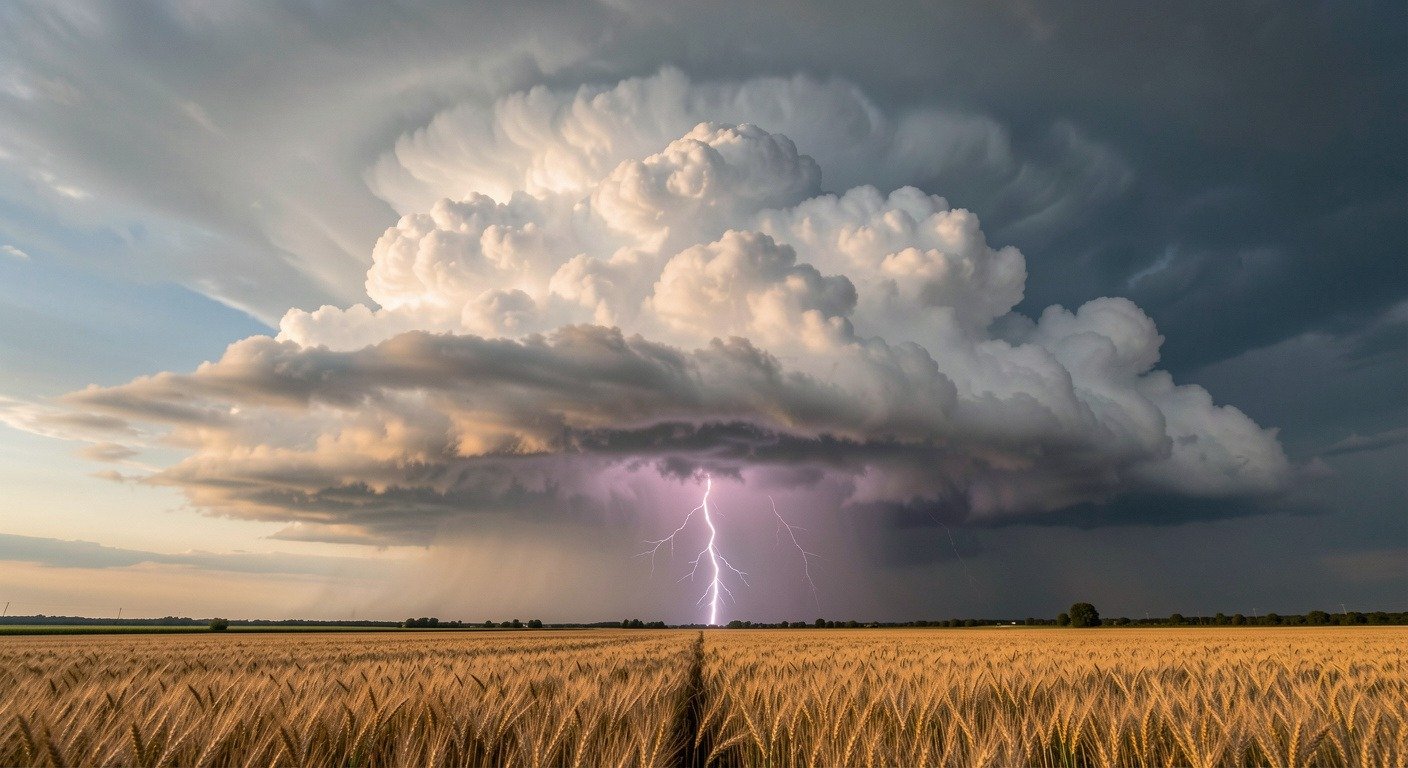
Inside a mature thunderstorm, powerful updrafts and downdrafts toss ice particles around like a blender. This is where the answer to how does lightning form begins, and it starts with collisions.
When small ice crystals collide with larger soft hail (called graupel), they trade electric charges. The lighter ice crystals carry a positive charge to the top of the cloud, while the heavier graupel, now negatively charged, sinks to the middle and lower parts.
This process is called non-inductive charge separation. Think of rubbing a balloon on your hair: electrons move, and your hair stands up. Inside a thunderstorm, millions of ice crystals and graupel particles collide every second, building up enough charge to produce a bolt that could light 100 million bulbs.
The result is a cloud with a positive top, a negative middle, and often a small pocket of positive charge near the base. The ground below becomes positively charged by induction. When the electrical difference grows large enough, the air can no longer act as an insulator and a spark jumps across the gap.
The Stepped Leader and the Return Stroke
Lightning does not fire in one clean line. An invisible channel of negative charge, called a stepped leader, zigzags downward from the cloud in 50-yard jumps. When it gets close to the ground, a spark reaches up from a tall object such as a tree, building, or even a person standing in an open field.
When the two connect, a massive electrical current, the visible return stroke, shoots back up the channel at one-third the speed of light. This is the brilliant flash you see. The air along the channel is heated to 50,000 degrees Fahrenheit, causing explosive expansion that we hear as thunder.
Several return strokes can travel the same channel in rapid succession, producing the flickering appearance of a lightning bolt. These different types of lightning, from the common negative strike to the rare and powerful positive bolt, each have distinct characteristics and dangers.
Positive Lightning: The Real Danger
Most lightning, about 95%, is negative lightning, carrying a negative charge from the lower cloud to the ground. But a small percentage originates from the very top of the storm. This is positive lightning, and it is far more dangerous.
Positive lightning carries up to 10 times more current than negative strikes, up to 300,000 amperes and 1 billion volts. It lasts longer, strikes farther from the storm (sometimes more than 25 miles away), and is a major cause of forest fires and power grid damage.
A “bolt from the blue” is positive lightning that travels horizontally out of a storm’s anvil cloud before turning toward the ground. You might be standing under a clear blue sky, miles from any rain, when suddenly a bolt strikes nearby. This is why meteorologists warn: if you can hear thunder, you are close enough to be struck.
How Lightning Affects People
Health and Survival
Lightning is one of the top three storm-related killers in the United States. Survivors often face lifelong neurological damage, memory loss, chronic pain, and personality changes. In 2026, one death has been confirmed so far.
Florida leads the nation in lightning deaths and lightning density. The state’s geography, a peninsula between the Atlantic and Gulf of Mexico, funnels warm, moist air year-round. Florida recorded four lightning fatalities in 2025.
Around Lake Maracaibo in Venezuela, home to the most intense lightning on Earth, about 20,000 fishermen live in one-room tin shacks on stilts. These communities are struck at a rate 3 to 4 times higher than anywhere in the United States. A NOAA physicist described them as “the forgotten people, frequently getting struck by lightning.”
Wildfire Ignition
Lightning is a major ignition source for wildfires, and positive lightning is especially effective because its longer-duration current ignites dry vegetation. Dry lightning, which occurs with little or no rain reaching the ground, is the most dangerous variety: the bolt provides ignition, but no rain follows to put it out.
NOAA projects that lightning-caused wildfires could burn at least 30% more land in the southeastern United States by 2060. A 2025 study by researcher Dmitri Kalashnikov predicts 4 to 12 additional days per year with ground lightning strikes during fire season in the northwestern US by mid-century.
Infrastructure and the Global Electric Circuit
Lightning damages power lines, transmission grids, wind farms, and airports. At Lake Maracaibo, lightning-related disruptions hamper about 10% of yearly oil extraction across more than 15,000 miles of pipelines that crisscross the lake floor.
Thunderstorms and lightning are essential to the planet’s global electric circuit. They act as batteries that maintain a negative charge on Earth’s surface and a positive charge in the atmosphere. Without them, the entire electrical balance of the Earth-atmosphere system would collapse within five minutes. Understanding how lightning works at this global scale connects every flash you see to the fundamental physics keeping our planet alive.
Where Lightning Strikes Most: Global Hotspots
Lake Maracaibo, Venezuela: The Everlasting Storm
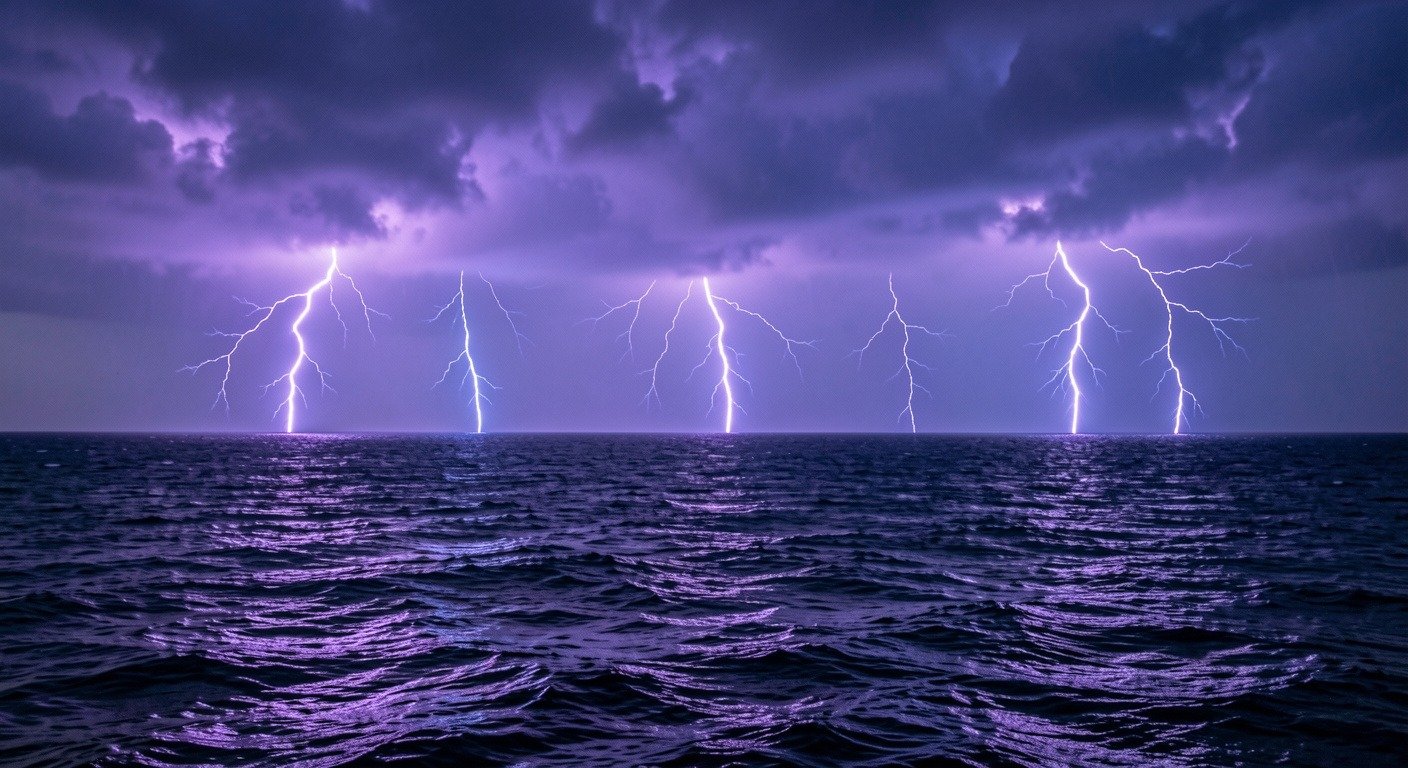
So where does lightning strike most? Lake Maracaibo in Venezuela holds the title. Satellite data confirms a flash density of 232 flashes per square kilometer per year, more than double the next closest location. Lightning strikes here roughly 297 days of the year, almost always at night and in the same area.
This phenomenon, known as Catatumbo lightning, produces about 28 flashes per minute for up to nine hours at a stretch. Sailors have used it as a natural beacon for centuries.
The cause is a unique combination of geography: the lake basin is surrounded on three sides by mountains that trap warm, moist air from the Caribbean Sea. At night, a low-level jet of air funnels into the basin, colliding with cooler mountain air and triggering near-constant thunderstorms.
The World’s Top Lightning Hotspots
The Congo Basin in Africa is the world’s second most active lightning region. Kabare in the Democratic Republic of Congo records 205 flashes per square kilometer per year, followed by Kampene at 177, Sake at 144, Butembo at 142, and Boende at 130. Unlike Maracaibo’s nocturnal pattern, DRC lightning is spread across the day.
Colombia, Pakistan, and Cameroon all host locations in the global top 10 lightning hotspots. The common thread is warm, humid air, strong daytime heating, and mountain ranges that force air upward, creating the perfect conditions for thunderstorm development.
Florida: America’s Lightning Capital
Within the United States, Florida sees the most lightning per square mile, making it a natural laboratory for studying how lightning works. A single storm over Tampa Bay in 2025 produced a bolt measuring nearly 470,000 amps, roughly equivalent to the current flowing through 2,350 average-sized houses. The state recorded a 27% increase in lightning strikes in the first nine months of 2025 compared to all of 2024.
Why Lightning Matters Now
Climate Change Is Turning Up the Voltage
The connection between lightning and climate change is one of the most active areas of research in atmospheric science. The IPCC reported in 2023 that lightning activity could increase by up to 12% for every 1 degree Celsius of global warming. Warmer air holds more moisture (about 7% more water vapor per degree of warming), and moisture plus atmospheric instability are the essential ingredients for thunderstorms.
The trend in Florida is suggestive but noisy. Cloud-to-ground strikes increased by more than a third between 2021 and 2022, then decreased by nearly the same amount between 2023 and 2024 before spiking again in 2025. Scientists caution that lightning is affected by many factors that remain poorly understood, including wind shear, making long-range projections uncertain.
What is clearer is the wildfire connection. As the lower atmosphere warms, rain from high-altitude thunderstorms can evaporate before reaching the ground, leaving only the lightning’s ignition without the extinguishing rainfall. This dry lightning pattern is expected to become more common, contributing to the kind of extreme conditions that produce heat domes and prolonged fire weather.
What You Can Do: Lightning Safety Tips
The 30/30 Rule
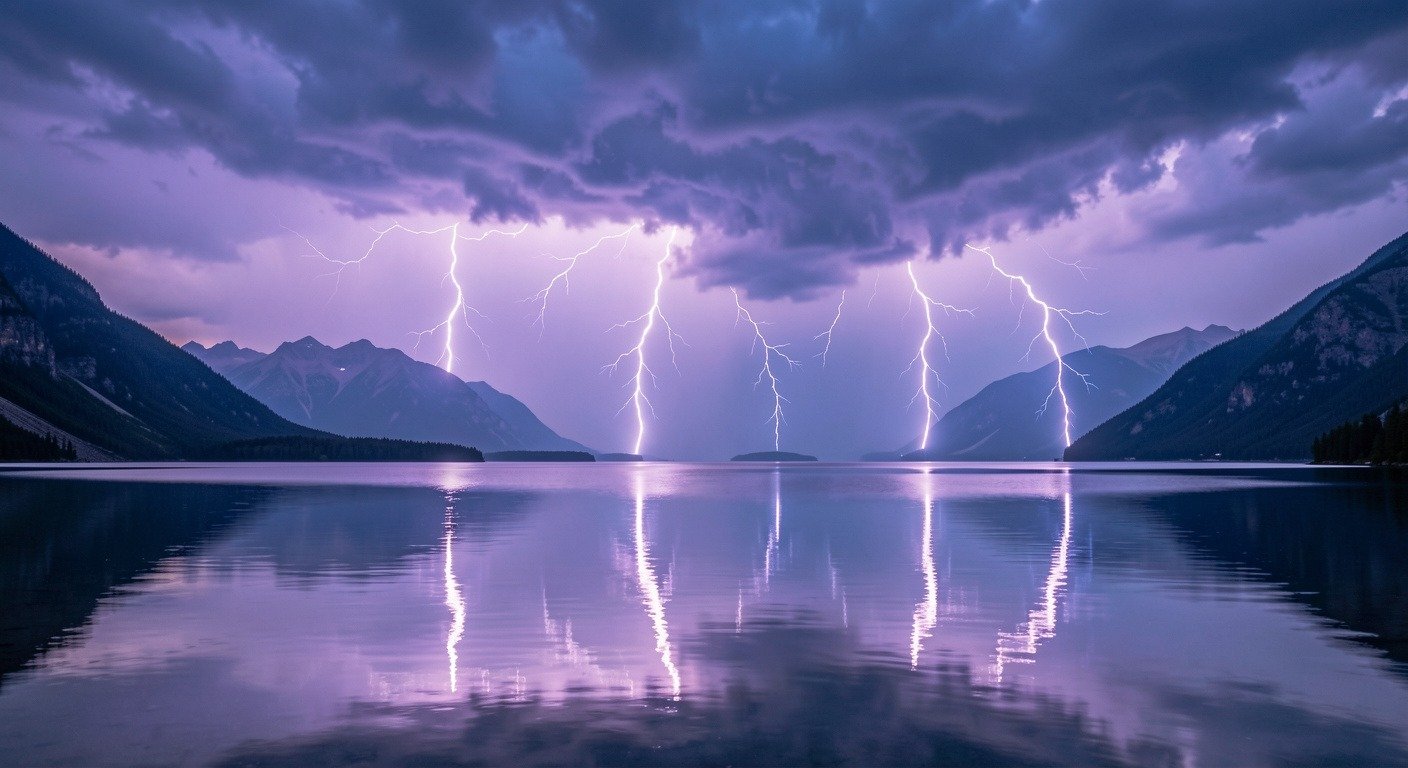
The most important of all lightning safety tips is the 30/30 rule. Count the seconds between a lightning flash and the thunder. Sound travels roughly 1 mile every 5 seconds, so divide your count by 5 to get the distance in miles.
If the count is less than 30 seconds (6 miles or closer), seek shelter immediately. Wait at least 30 minutes after the last thunder before going back outside.
Indoor Safety
Being inside a building is safe, but not everything indoors is safe. Stay away from corded phones. Avoid plumbing: do not wash dishes, shower, or bathe during a thunderstorm, as lightning can travel through metal pipes.
Stay off concrete floors and walls, which may contain metal rebar that conducts electricity. Keep away from windows, doors, and electrical equipment plugged into wall outlets.
Outdoor Safety
There is no completely safe place outdoors during a thunderstorm. If you are caught outside, avoid open fields and hilltops. Stay away from tall, isolated trees, which are the second leading cause of lightning casualties.
Do not lie flat on the ground, this increases your exposure to ground current. If you are in a group, spread out to reduce the chance of multiple casualties from a single strike. Get off the water immediately if you are boating or swimming.
That quote comes from a researcher who studies the Catatumbo lightning of Lake Maracaibo, and it captures something essential: lightning deserves both fear and wonder.
Respect comes from understanding the science of how lightning works. Safety comes from knowing the rules. Both are within reach for anyone who takes a few minutes to learn.