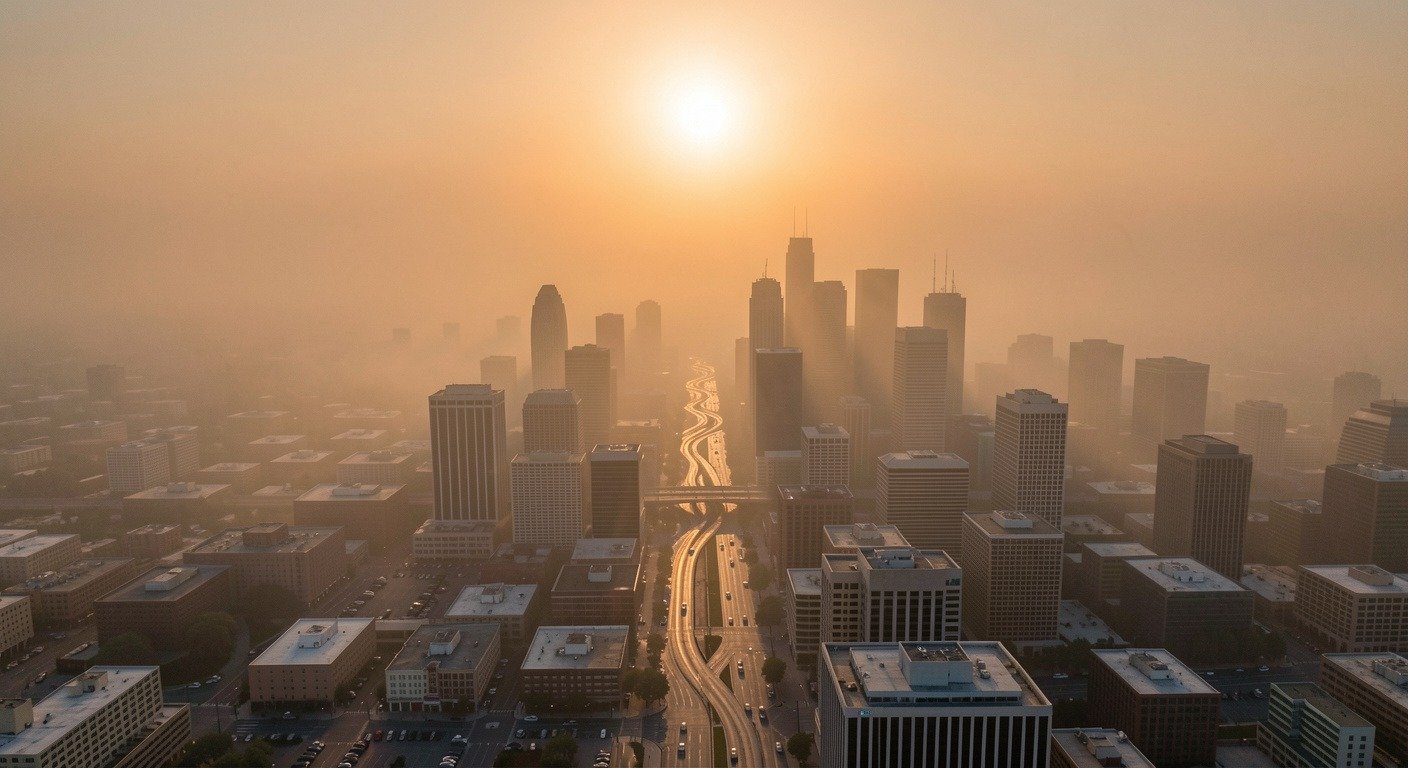
The 2026 Europe May heatwave shattered records across the continent. Temperatures in Paris hit 36 degrees Celsius, London reached 35.1, and southern Portugal climbed past 40 , all before the calendar turned to June. None of these numbers should have been possible in May. All of them happened.
According to Copernicus, the European Union’s climate monitoring service, “feels-like” temperatures reached 35 to 40 degrees Celsius across large parts of the continent between May 21 and May 30. The UK recorded its hottest May temperature on record. France placed much of the country under yellow heat alert. Portugal baked. The early-season heat did more than break records , it killed. CNN reported the heatwave was “deadly” as well as early, hitting vulnerable populations with a force emergency services normally expect in July or August.
May 2026 Heatwave: By the Numbers
| Location | Max Temp | Above Normal |
|---|---|---|
| Paris, France | 36°C (97°F) | +12°C |
| London, UK | 35.1°C (95°F) | +15°C |
| Southern Portugal | 40°C+ (104°F+) | +14°C |
| Madrid, Spain | 38°C (100°F) | +13°C |

Why a Heat Dome Settled Over Europe
The immediate cause was a heat dome, a high-pressure system that parks itself over a region and refuses to budge. High pressure acts like a lid on a pot. The air beneath that lid sinks, and as it sinks, it compresses. Compressing air heats up , the same physics that makes a bicycle pump warm to the touch after a few strokes.
Normally, weather systems move along, pushed by the jet stream. When the jet stream weakens or stalls, high-pressure systems can sit in place for days or weeks. The sinking air clears the sky of clouds, which lets the sun heat the ground without interruption. The ground then radiates that heat back, and with the lid still on, there is nowhere for it to escape.
Heat domes have always existed. But climate change has raised the baseline temperature from which they start. According to Carbon Brief, the May 2026 event produced temperatures more than 10 degrees Celsius above normal, a departure so large that scientists describe it as statistically extreme even in the context of a warming planet.
“By the end of May, western Europe had experienced heat that would have been extreme even in July. The calendar said spring. The thermometer said otherwise.”
How the Heat Hit People
The toll of an early-season heatwave is not the same as a midsummer one. Bodies have not had time to acclimate. People have not yet switched on their cooling systems. Public health agencies have not yet rolled out their heat season protocols. The overlap of extreme heat and unprepared systems is what turns a weather event into a human disaster.
Health
Heat is the deadliest weather hazard globally. The World Health Organization launched its Heat-Health Action Plans Guidance on June 11, 2026, in direct response to the increasing frequency of events like this one. Heat exhaustion starts with heavy sweating, weakness, and nausea. It can progress to heat stroke, where body temperature climbs above 103 degrees Fahrenheit, the skin turns hot and dry, and the pulse becomes rapid and strong. At that point, the condition is a medical emergency.
The populations most at risk: the elderly, outdoor workers, people without air conditioning, and those with preexisting heart or respiratory conditions. In cities, where the urban heat island effect kept nighttime temperatures elevated, there was little relief even after sunset.
Infrastructure
Railways buckled across France, the UK, and Germany. Steel rails expand in extreme heat and can warp, creating derailment risks. Power grids strained under surging air conditioning demand, particularly in southern Europe. Eurostar warned travelers to expect delays.
Agriculture and Economy
Crops planted for spring were hit with midsummer conditions before they were ready. Soil moisture evaporated faster than irrigation could replace. Livestock suffered heat stress, reducing milk production and weight gain. For farmers across western Europe, the May heatwave was a balance-sheet event with consequences extending through the growing season.

Why It Matters Now
The European heatwave was extreme, but it was not isolated. In March 2026, roughly 30 percent of active weather stations in the United States set new temperature records. According to Reuters, May 2026 was the world’s second-hottest May on record, with average temperatures 1.42 degrees Celsius above pre-industrial levels.
The sequence is what troubles climate scientists. A record-hot May in 2024, followed by the second-hottest May in 2026, with a European heatwave in between that should not have happened at that time of year. Copernicus, as reported by Euronews, described the trajectory as a “new normal,” cautioning that the speed of the transition is what increases the impact on vulnerable populations.
The 1.5 degrees Celsius threshold, the Paris Agreement’s guardrail between manageable and dangerous warming , is no longer a distant prospect. Individual months are already exceeding it. Research published in Communications Earth and Environment found that climate change and population growth have together driven a 51 percent increase in global exposure to extreme daytime heat in cities over the past two decades.
What We Can Learn
The May 2026 heatwave offers a preview, and previews have value. They show what breaks first.
Heat preparedness cannot wait until July. Cities that activated cooling centers, distributed water, and checked on elderly residents during the May event learned that early-season protocols need to be in place before the first hot day arrives, not after.
Urban design matters more than most people realize. The difference between a city street shaded by trees and one lined with exposed concrete can be 10 degrees Celsius or more. Reflective roofing materials, green spaces, and ventilation corridors reduce the urban heat island effect in ways that air conditioning, which pumps heat outdoors and strains power grids, does not.
- Check on vulnerable neighbors. The elderly, young children, and those with chronic illnesses are at highest risk during heat events.
- Know the signs. Heat exhaustion (heavy sweating, nausea, dizziness) can progress to heat stroke (hot dry skin, confusion, rapid pulse). Heat stroke is a medical emergency.
- Stay hydrated. Drink water consistently. Avoid alcohol and caffeine during peak heat.
- Cool your space. Close curtains on sun-facing windows. Use fans. Visit public cooling centers if you lack air conditioning.
“The heat dome was a weather event. The conditions that made it so severe, so early, and so dangerous are a climate signal. The baseline has shifted. The preview was in May. Summer is still ahead.”