61% of the Continental US Is in Drought — Here’s What’s Happening

61% of the Continental US Is in Drought — Here’s What’s Happening

Take a look at a drought map of the United States right now, and you’ll see something alarming: a lot of brown. Like, *a lot* of brown.

As of June 2026, 61% of the contiguous United States is experiencing some form of drought. That’s nearly two out of every three Americans living somewhere that’s drier than it should be. And 44% of the country is in “severe” drought or worse — the kind where crops start failing, reservoirs drop to worrisome levels, and fire season looks grim before it even really starts.

This isn’t your typical summer dry spell. This is a drought that’s carving across regions in ways that don’t fit the usual pattern. Let’s walk through what’s happening, where it’s hitting hardest, and whether the developing El Niño can actually fix any of this.

The Southeast is in a fight it’s not used to having

US Drought Monitor map for June 2026 showing 61% of continental US in drought conditions
US Drought Monitor: 61% of the continental US in drought as of June 2026

You don’t normally associate the Southeast with drought. The region that gets battered by hurricanes, soaked by afternoon thunderstorms, and blanketed in humidity — that place should not be this dry. Yet here we are. Parts of Georgia, Alabama, and the Carolinas are sitting in “extreme” to “exceptional” drought, the two worst categories on the US Drought Monitor scale.
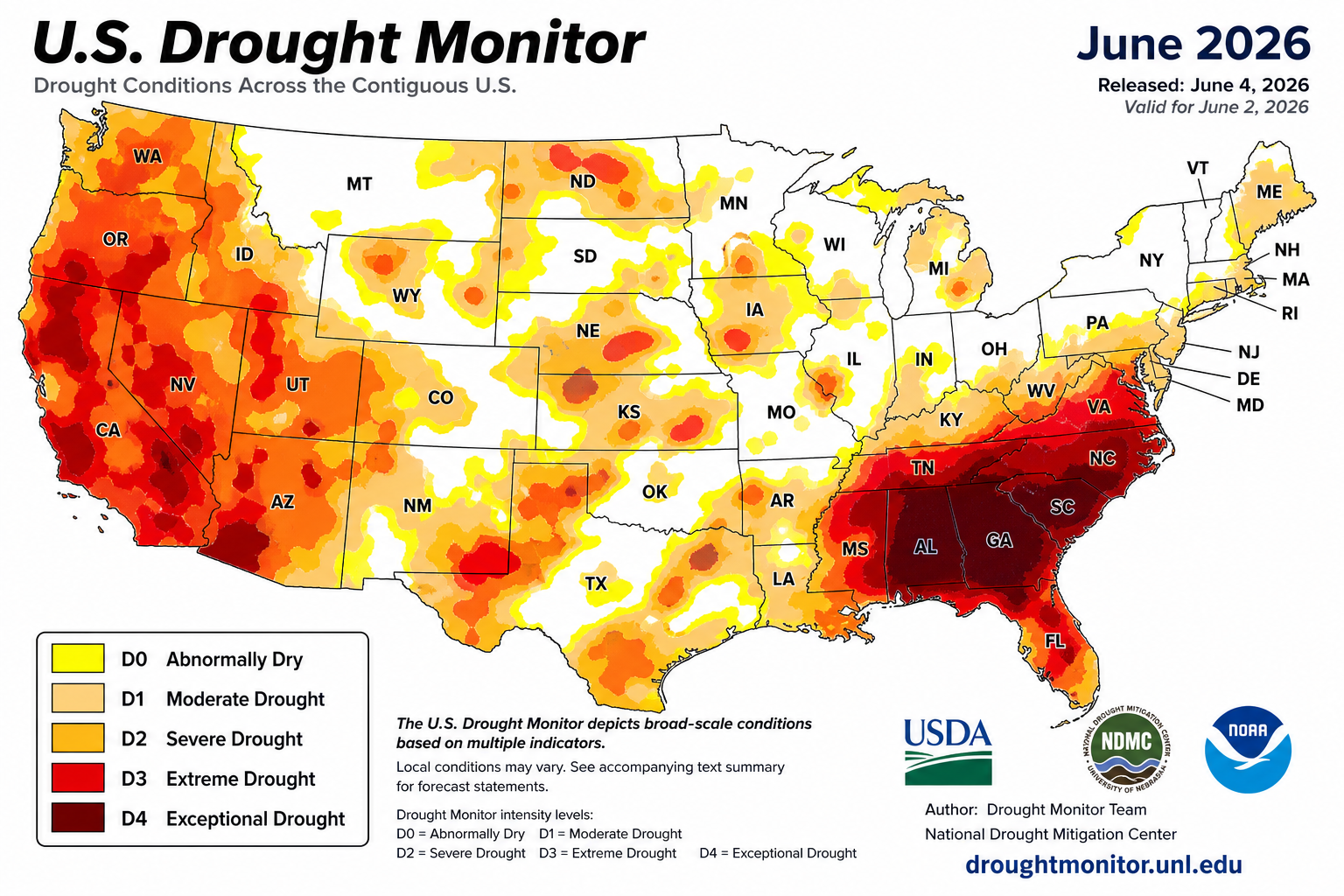
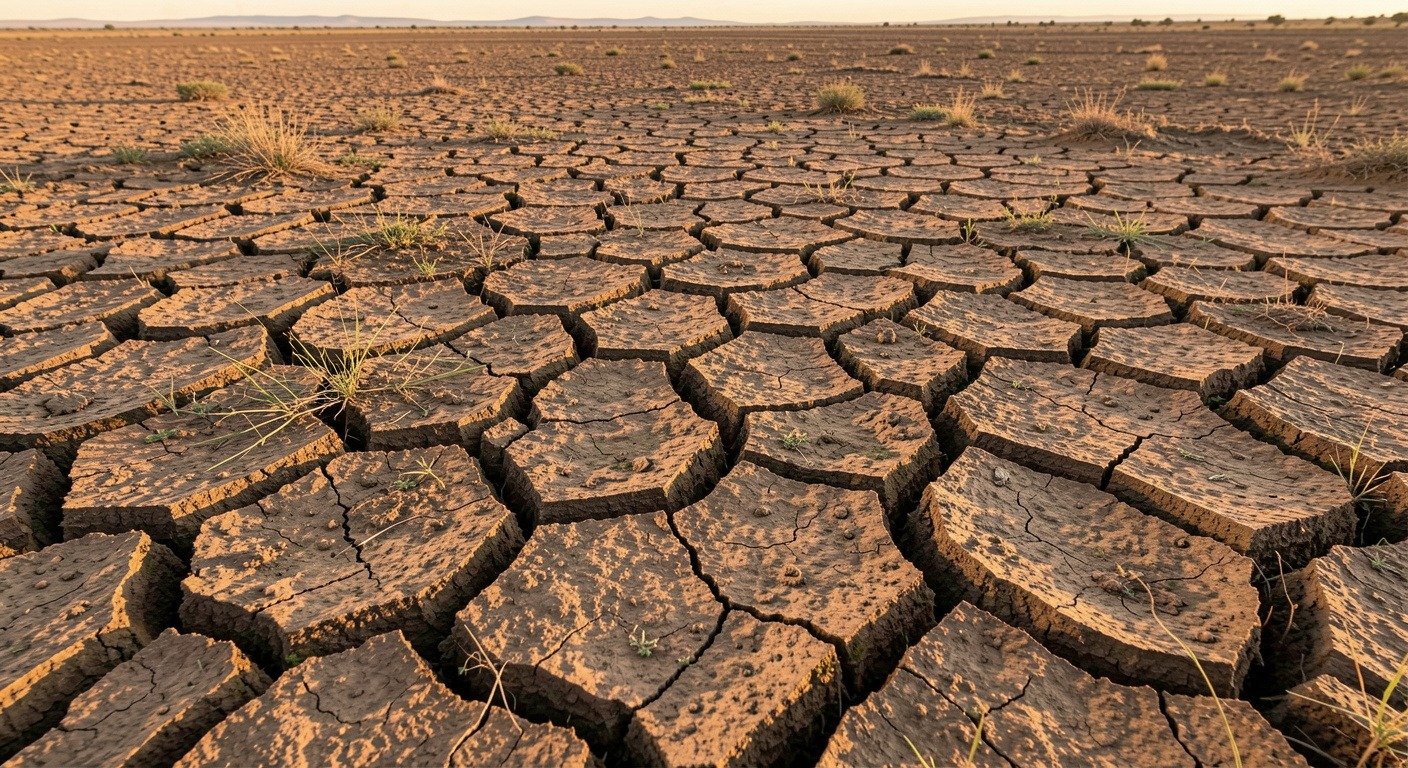
The numbers are stark. The Southeast has seen some of the most rapid drought intensification on record over the past six months. Lake levels are dropping. Farmers are watching irrigation ponds turn to cracked mud. And the fire risk — usually something the West worries about — is creeping eastward.

The West has its own emergency, of course. The Colorado River basin is locked in a drought that scientists now describe as the worst in over a millennium. And the Plains are caught in between — too dry to grow decent wheat, too parched to build up subsoil moisture before the heat of summer arrives. For a deeper look at what western water systems are up against, read our explainer on the Colorado River crisis.

What broke the water cycle this time?

Split infographic comparing healthy winter snowpack vs 2026 low snowpack with above-average temperatures
Low winter snowpack and early heat created the conditions for widespread drought

Here’s the formula for a really bad drought: take one part low winter snowpack, mix with one part unprecedented early-season heat, and let it bake across the spring.
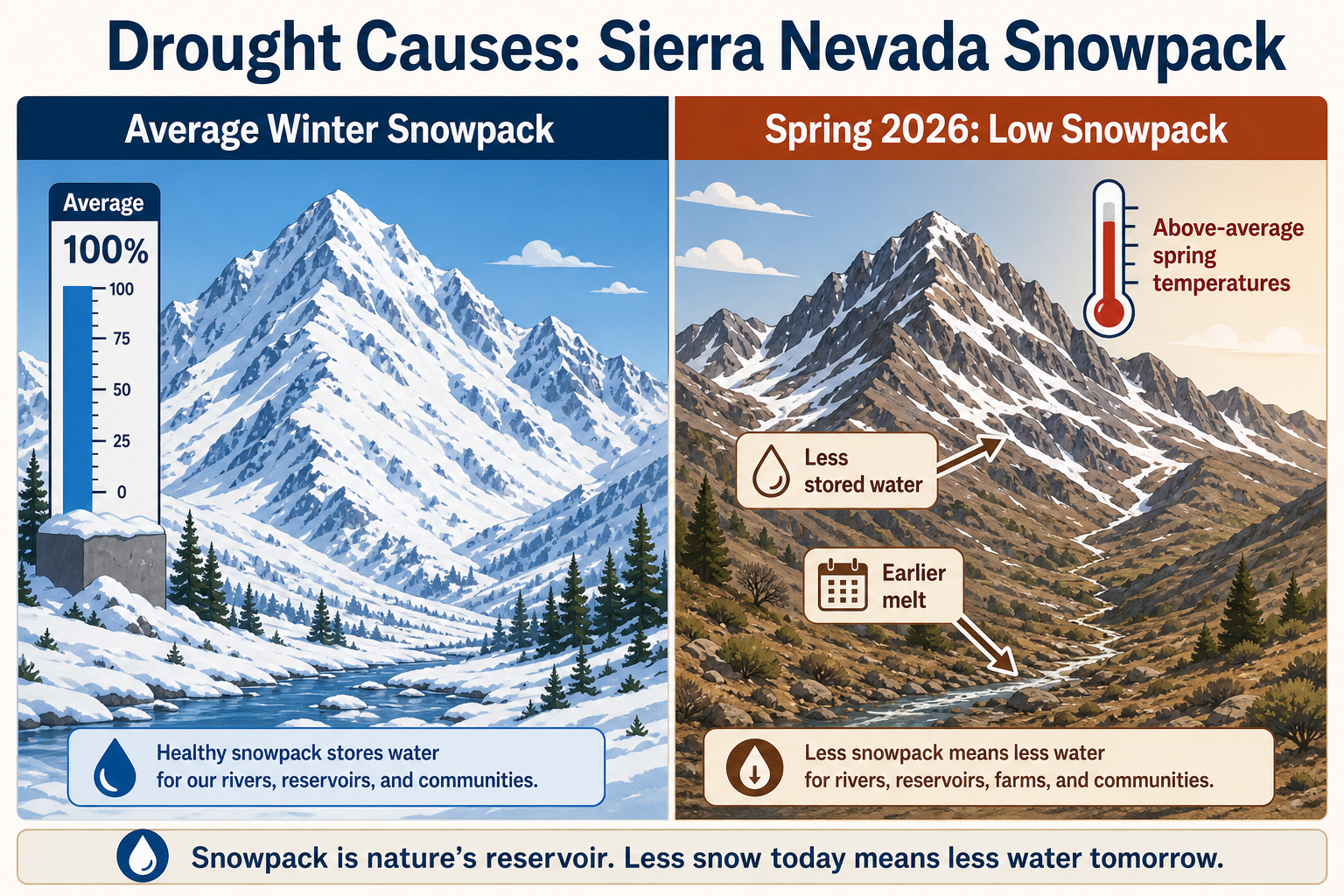
The winter of 2025-2026 delivered a weak snowpack across most of the West. That’s a problem because mountain snow acts as a natural reservoir — it melts slowly through spring and summer, feeding rivers and refilling reservoirs. When that snowpack is thin, you start summer already behind.

Then March through May happened. Multiple regions saw record-breaking heat weeks earlier than normal. The heat sucked moisture out of soils, evaporated what little snowmelt there was, and cranked up demand for irrigation all at once. The result? Drought that deepened faster than forecasters expected.

Some places did catch a break. May rains brought meaningful relief to parts of the South, the Southeast corridor, northern Illinois, and Iowa. For a few weeks, the drought map looked like it was healing. But it wasn’t enough to erase the underlying deficit. For more on how extreme heat amplifies drought conditions, check our guide on the Danger Season phenomenon.

The El Niño question: savior or wild card?

And here’s where the developing El Niño enters the story. Remember that big El Niño declaration from NOAA back on June 11? The one that could be the strongest since 1997? It might also be the thing that finally breaks the drought — depending on where you live.

The classic El Niño pattern tends to bring above-average winter rainfall to the southern tier of the US — California, the Southwest, Texas, and the Gulf states. That’s exactly the kind of relief the Southeast and Southern Plains desperately need. As we covered in our El Niño announcement piece, the typical forecast calls for a wetter southern US.

But here’s the catch: “typical” doesn’t mean “guaranteed.” Some El Niños deliver dramatic drought-busting rain. Others disappoint. And this El Niño is forming in an ocean that’s already historically warm, which means the normal rules might not apply. Climate scientists are careful not to promise anything. “El Niño brings an increased *chance* of wetter conditions” is about as strong as the forecast gets. If the rain doesn’t show up, the drought could deepen even further through the fall.
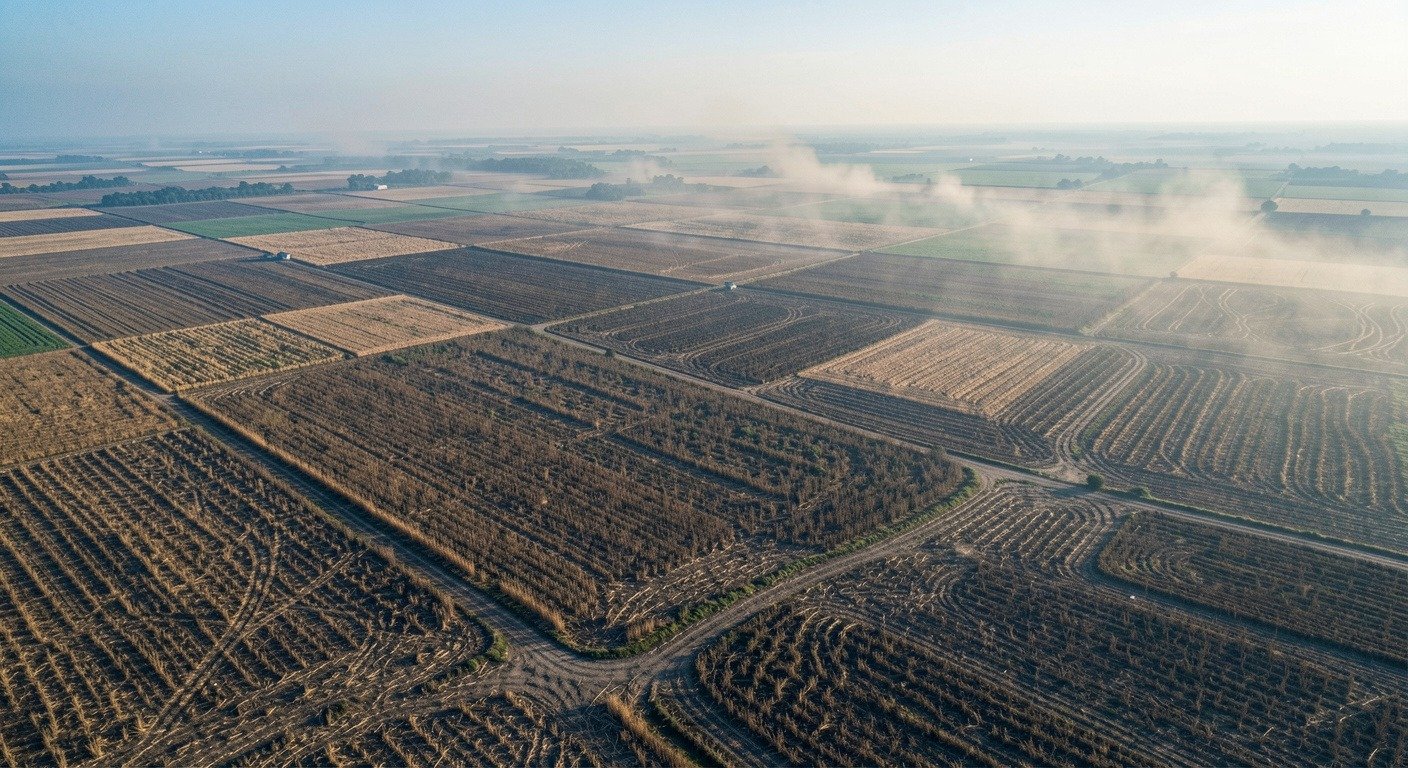
Danger Season 2026: where drought meets fire meets flood

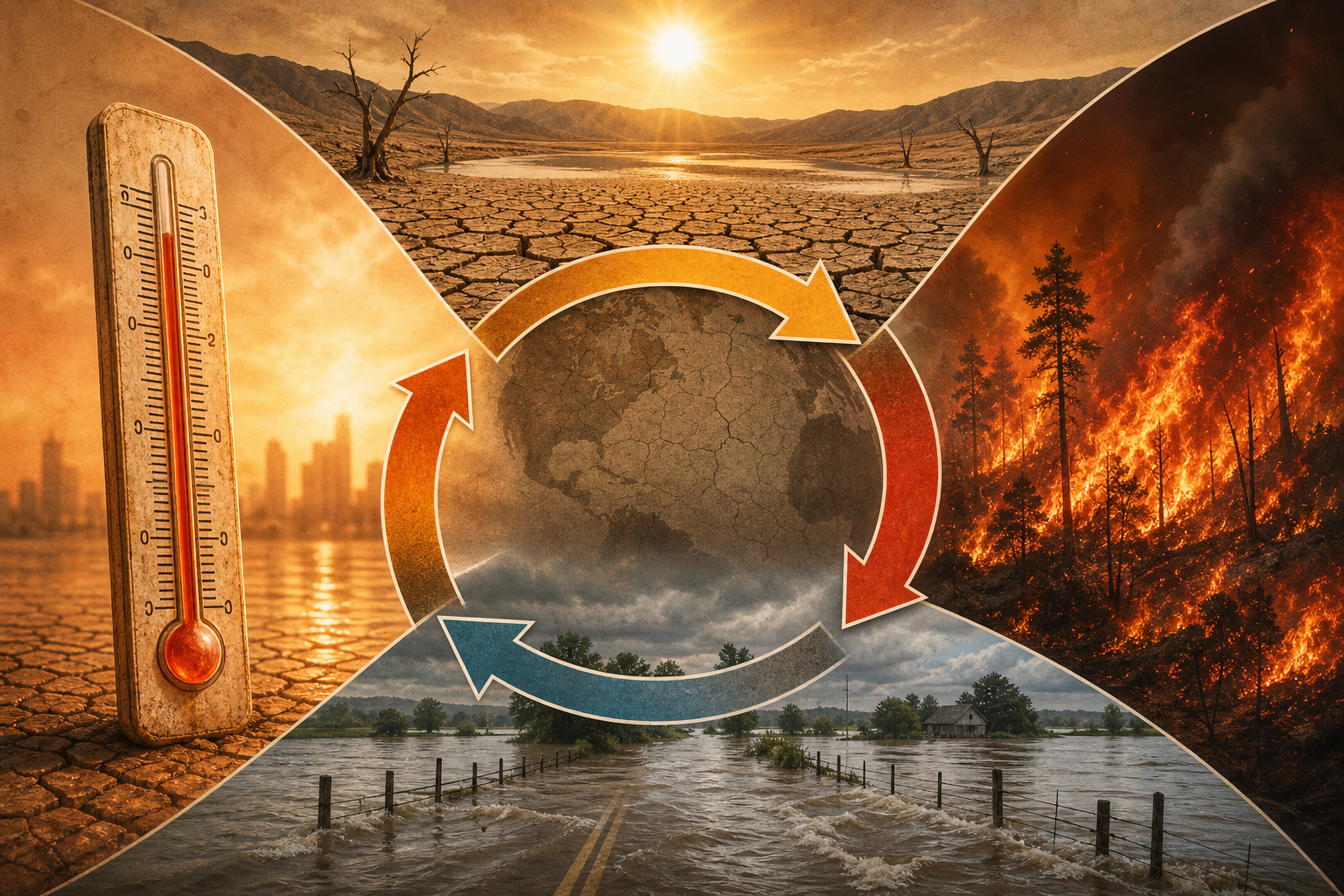
Composite image showing interconnected climate hazards: drought, wildfire, flood, and extreme heat
Danger Season 2026: how drought, fire, flood, and heat amplify each other

This isn’t just a drought story. It’s a compound-disaster story. The phrase you’ll hear from climate researchers is “Danger Season” — the time of year when multiple hazards overlap and amplify each other.

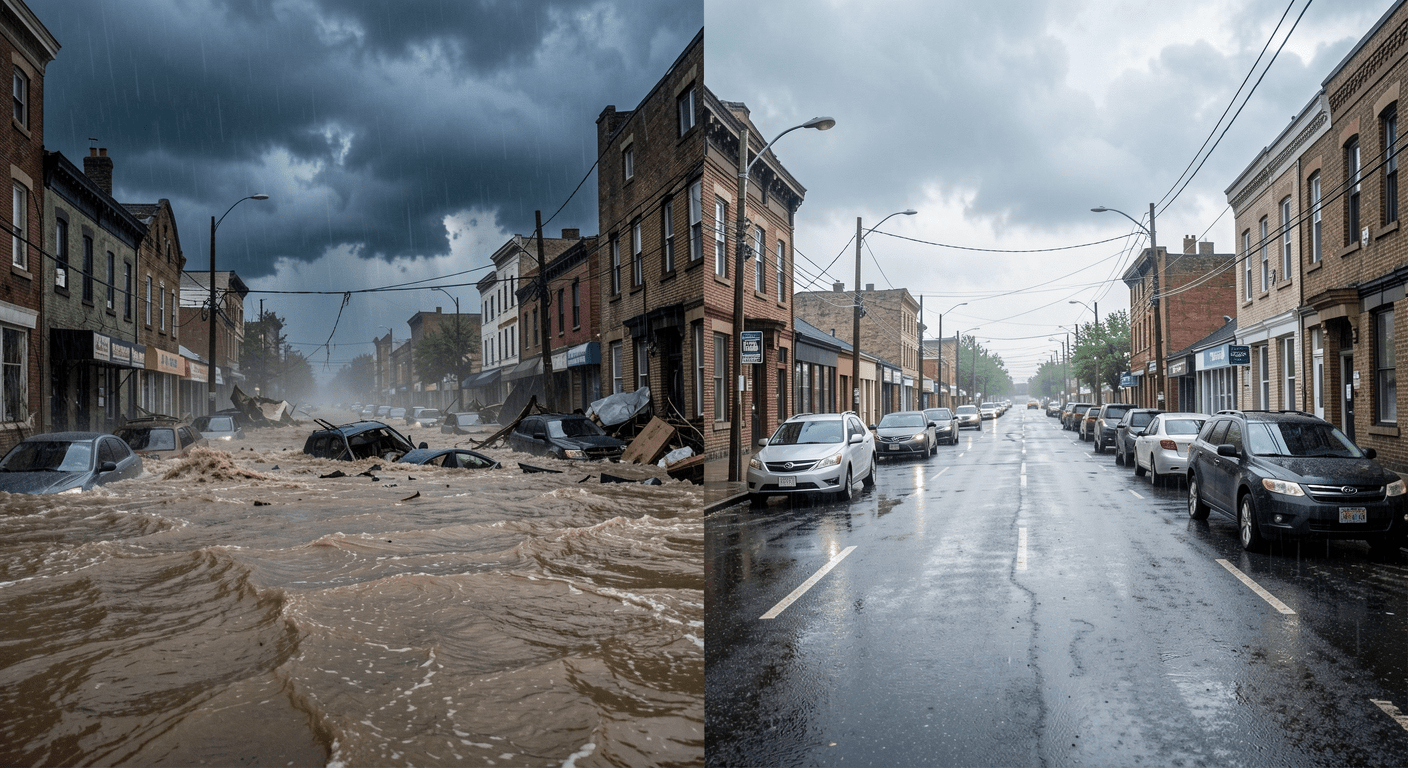
Here’s how it works in practice. The drought dries out vegetation and soil. That creates perfect fuel for wildfires — and fire season hasn’t even peaked yet in most of the West. The dry ground also can’t absorb rainfall when it does come, which means a single heavy storm can trigger dangerous flash flooding in places that haven’t seen rain in months. And the energy sector gets squeezed too: hydropower output drops, cooling demand for air conditioning spikes, and natural gas prices feel the pressure.

All of this has real costs. Water restrictions are already in effect in dozens of communities. Food prices are sensitive to drought stress in agricultural regions — the Plains wheat crop, Midwest corn and soybeans, California’s produce. Energy bills climb. Wildfire insurance gets harder to find. These aren’t hypotheticals for the people living through them.

What to watch for next

The drought outlook for the next few months depends on two big questions. First: will the summer monsoon deliver for the Southwest, or will it fizzle out like it did in some previous dry years? Second: once El Niño fully establishes, will it shift the winter storm track far enough south to bring relief to the places that need it most?

We’ll start getting answers by late summer. For now, 61% of the country is waiting for rain. Some of them have been waiting a very long time.

*Sources: US Drought Monitor, NOAA National Integrated Drought Information System, Union of Concerned Scientists, Drought.gov.*

Similar Posts

Leave a Reply