The atmosphere is not just warmer now. It is thirstier, and when it drinks its fill, it dumps what it took all at once.
Most people think of rain as something that just happens. A storm rolls in, it pours, it passes. But the physics behind rain global warming has rewritten that script.
Since the 1950s, heavy precipitation events have increased in frequency and intensity across most land areas on Earth. The reason is not complicated. The consequences are.
Quick Summary
- The Clausius-Clapeyron relation: 7 percent more atmospheric moisture per 1 degree C of warming
- Earth has warmed 1.46 degrees C since pre-industrial times, meaning roughly 10 percent more water in the sky
- Heavy precipitation intensity projected to increase 16 to 24 percent globally by 2100
- Recent extreme rainfall events have killed hundreds and cost tens of billions of dollars worldwide in 2025 alone
- The same warming that intensifies rain also accelerates drought, creating weather whiplash
- Every fraction of a degree of avoided warming reduces future rainfall intensity
The Rain Has Changed
Rain does not fall the way it used to. The pattern has shifted from steady, predictable rainfall to violent bursts after long dry spells. A single downpour is weather; the long-term shift is climate — here’s the difference and why it matters.
In 2024, the planet hit its warmest year on record at 1.46 degrees C above pre-industrial levels, according to NOAA. The ten warmest years in recorded history have all occurred between 2015 and 2024.
This is not a minor statistical wobble. The Earth is now warming at 0.36 degrees F per decade, more than triple the rate observed since 1850, which was 0.11 degrees F per decade.
A warmer planet means a fundamentally different water cycle. That changes everything about how, when, and how hard it rains.
The IPCC confirmed with high confidence that human influence is the main driver of the increase in heavy precipitation events since the mid-20th century. Climate change rainfall patterns have shifted across every continent, as documented in our Climate Change 101 explainer.
The question is no longer whether global warming precipitation trends are real. The question is how fast this trend is accelerating and what that means for the communities in its path.
The Physics: Why Rain Global Warming Follows a Simple Law
The science behind rain global warming is simple, which is part of what makes it so unnerving.
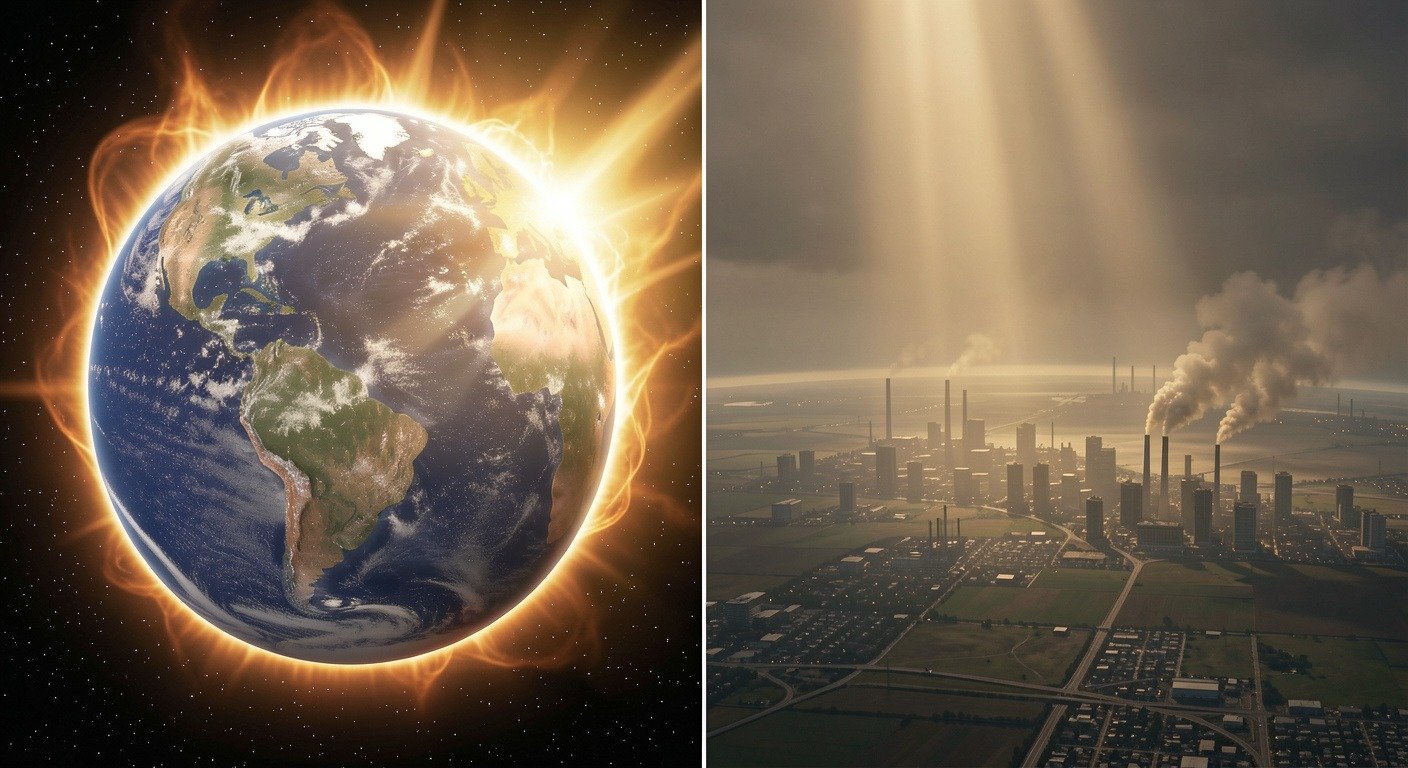
There is a fundamental law of thermodynamics called the Clausius-Clapeyron relation. It states that for every 1 degree C of warming, the atmosphere can hold approximately 7 percent more water vapor. Warmer air is a bigger container for moisture.
The math is linear. At 1.46 degrees C of warming so far, the sky now carries roughly 10 percent more water than it did before the industrial era.
Think of the atmosphere as a sponge. A cold sponge holds less water. A warm sponge soaks up far more.
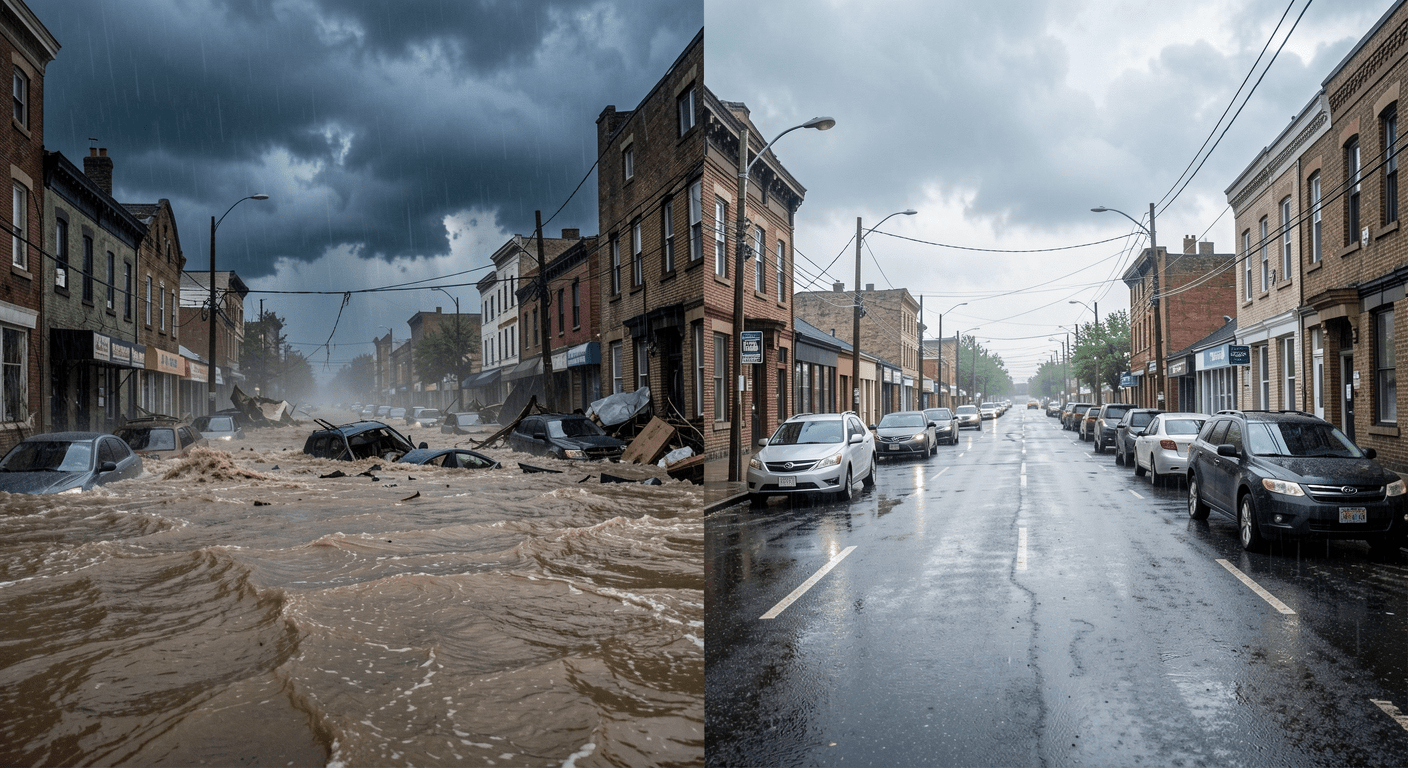
When a storm system arrives and squeezes that warm, saturated sponge, the volume of water released is dramatically larger. That is why rain global warming makes downpours heavier, not just more frequent.
At 4 degrees C of warming, a scenario consistent with current emissions trajectories, the atmosphere would hold roughly 28 percent more moisture than pre-industrial levels. Every storm that forms in that world arrives with nearly a third more water available to fall.
The warmer atmosphere more rain dynamic is not theoretical. It is measurable now.
Climate models project that heavy precipitation intensity will increase 16 to 24 percent globally by 2100, according to research cited by Carbon Brief. Nearly every region of the planet is expected to see an increase in extreme precipitation.
Even areas projected to receive less total rainfall will experience more intense rain when it does fall. How climate change affects rain is not a uniform story of wetter everywhere. It is a story of extremes at both ends: longer dry spells and heavier deluges.
When the Sky Breaks: Real Events, Real People
The physics of rain global warming stops being abstract the moment it intersects with human settlements. Across 2025 and early 2026, a cascade of extreme rainfall events demonstrated exactly what a supercharged water cycle looks like on the ground.
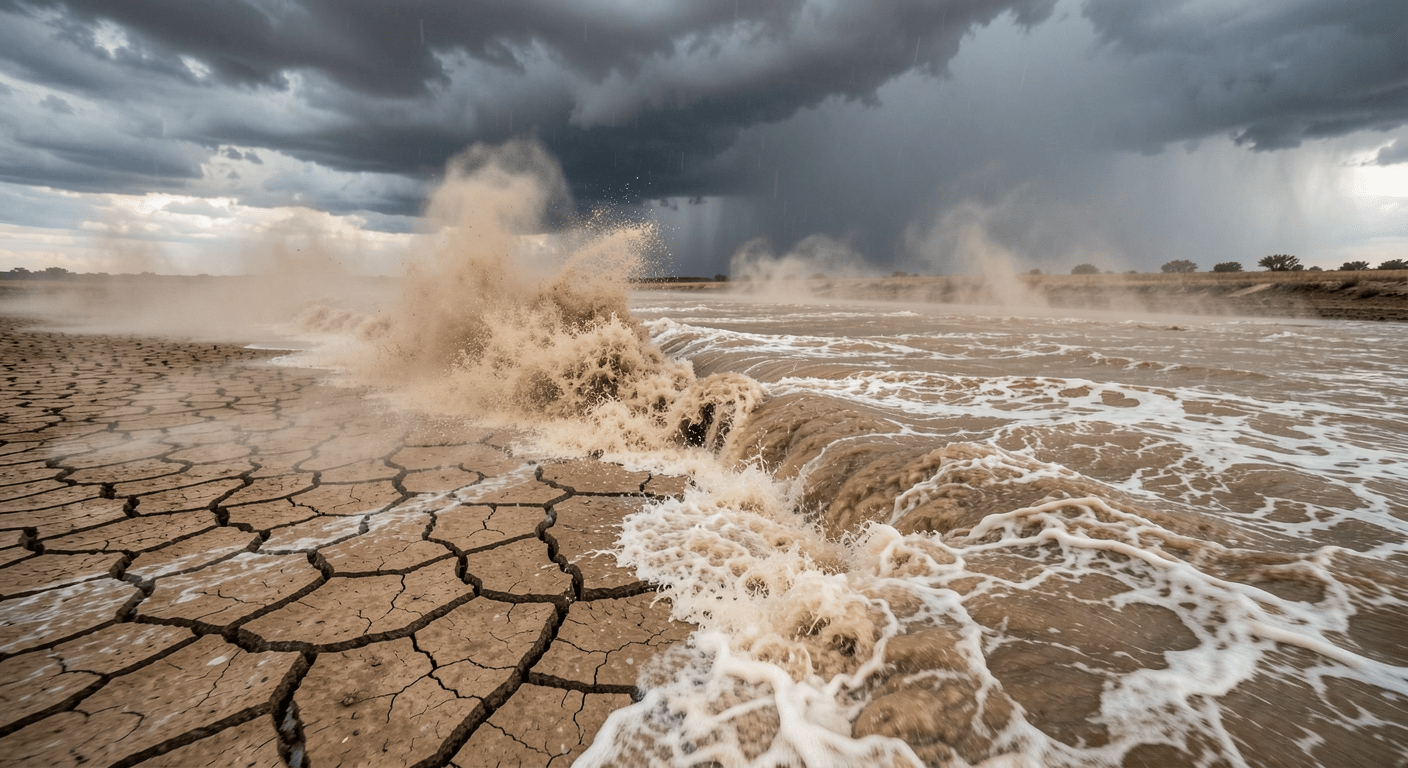
In Central Texas, July 2025 brought a 1-in-1000-year rainfall event after a prolonged multi-year drought. Over 100 people died, including 27 children. The region had been bone-dry for years.
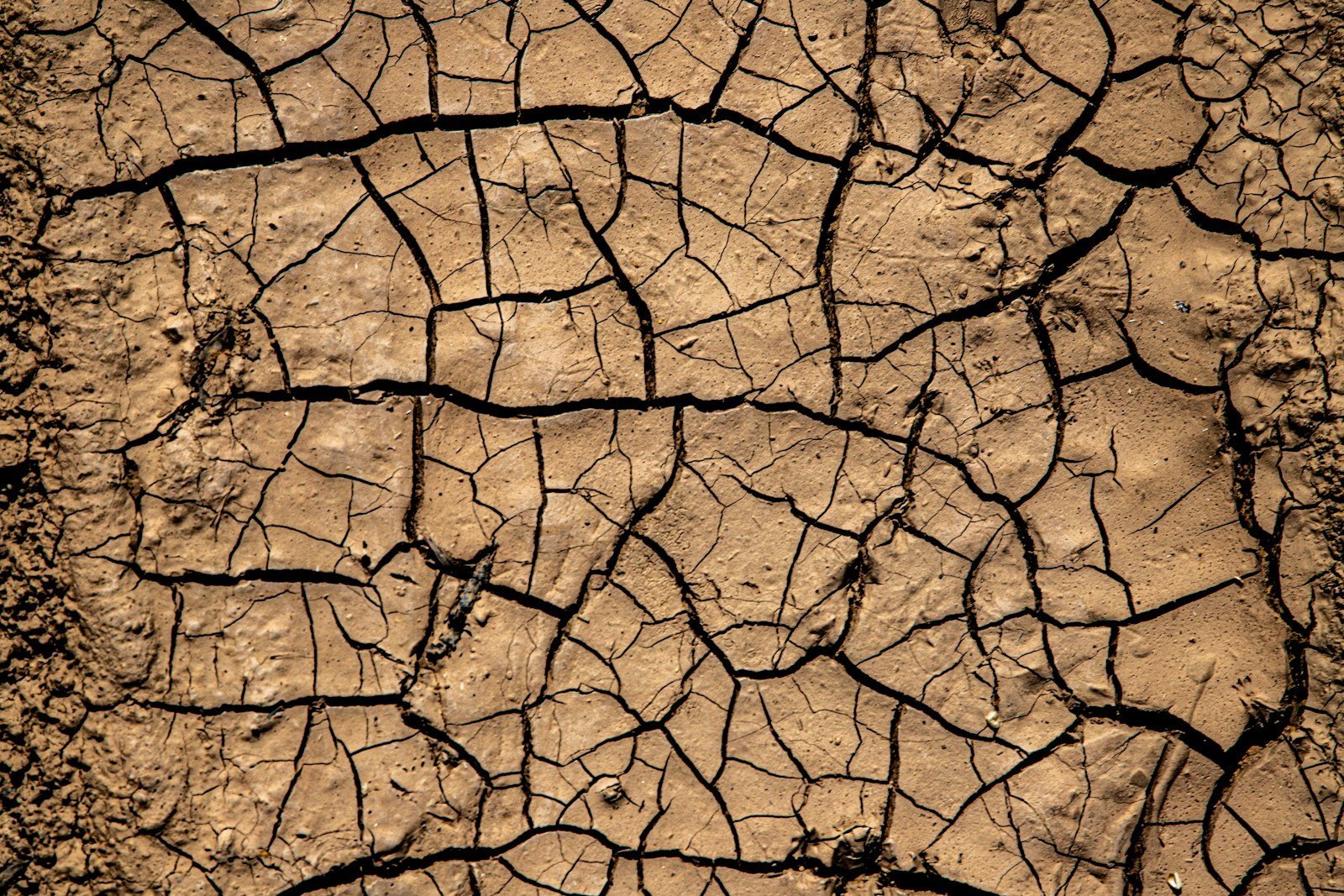
The baked, hardened soil could not absorb the deluge. This is weather whiplash: the rapid swing from exceptional drought to catastrophic flood. Climate change flooding in Texas had been predicted by models for years.
When it arrived, it did so with terrifying speed.
Southern California experienced a series of atmospheric rivers in December 2025. They produced the wettest Christmas Eve and Christmas Day on record. One monitoring station in the Ventura County mountains recorded over 15 inches of rain.
Debris flows followed the fires that had scarred the hillsides earlier that year. The sequence of fire then flood is becoming a signature pattern of how a warmer atmosphere reshapes the American West.
Brazil suffered devastating landslides in Minas Gerais in February 2026 when intense rainfall triggered slope failures that killed more than 70 people. Spain, Portugal, and Morocco were hit by nine named storms between January and February 2026, forcing 12,400 evacuations and prompting more than 7 billion euros in government aid.
Southern Africa endured catastrophic flooding between December 2025 and January 2026, with over 200 people killed and 173,000 acres of crops destroyed. Sri Lanka was struck by Cyclone Ditwah in November 2025, the deadliest weather disaster to hit the island nation since the 2004 tsunami.
These are not isolated tragedies. They are connected by the same thermodynamic engine. A warmer atmosphere holds more water.
When that water comes down, it comes down with force that infrastructure, agriculture, and emergency systems were never designed to handle.
The economic toll is staggering and accelerating. US severe storms, including heavy rain, hail, wind, and tornadoes, cost an estimated $50.7 billion in 2025 alone, according to C2ES.
That is a single year of damage in a single country. The global total, when you add the rebuilding costs from Spain, Southern Africa, Brazil, and Sri Lanka, climbs far higher. The economics of rain global warming have become a line item in national budgets that did not exist a generation ago.
Beyond the immediate death toll and property damage, rain global warming creates slower, less visible crises. Flooded buildings breed toxic mold. Overwhelmed sewer systems discharge untreated waste into waterways.
In Jackson, Mississippi, the city’s combined sewer system failed during heavy rains in 2022, contaminating the water supply for thousands of residents. Repeated displacement erodes community resilience. In Mozambique, more than 75,000 people were displaced by the 2025-2026 floods.
When you lose your home every few years to a storm that historical records said should happen once a century, the psychological toll compounds.
What the Science Projects: A Wetter, More Dangerous Future
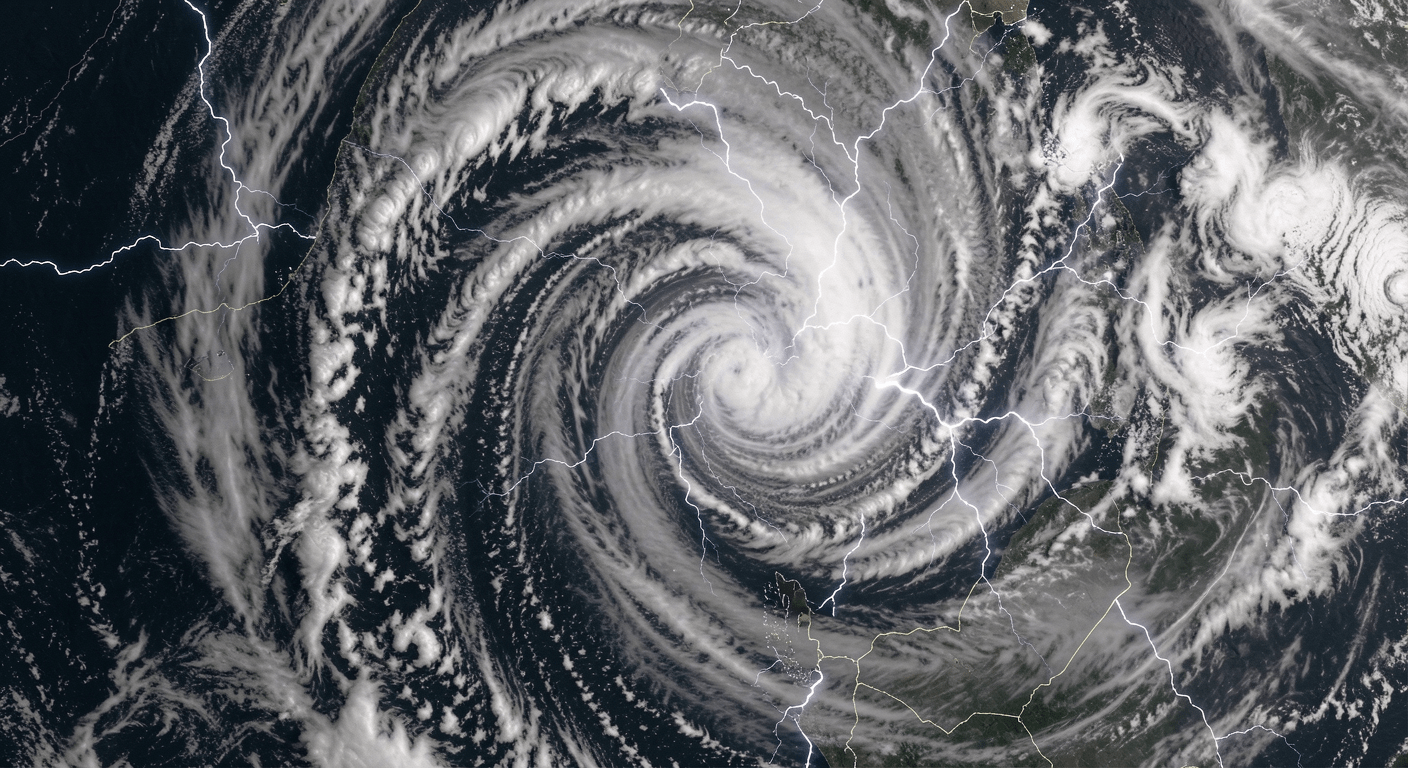
The projections are not ambiguous. The IPCC AR6 report states that with every additional increment of warming, extreme precipitation will intensify further in all regions. The models that projected a 16 to 24 percent increase in heavy precipitation by 2100 reflect the central tendency of what the physics demands.
Rising temperatures intensify the water cycle in both directions, as seen with extreme heat events that accelerate evaporation. Increased evaporation pulls moisture from soils, lakes, and reservoirs faster than before.
That same moisture enters the atmosphere and fuels heavier storms. The result is a planet where wet regions trend wetter and dry regions trend drier, but both experience more violent rain when it comes.
NASA’s Global Precipitation Measurement Mission has confirmed that rising temperatures are accelerating evaporation rates globally. The data shows more frequent and intense storms forming over every ocean basin.
The Mediterranean region could see around 20 percent less total precipitation by 2100 under high emissions, while South Asia and high-latitude regions will see more total rainfall. Even in the drying Mediterranean, the rain that does fall will arrive in sharper, more destructive bursts.
Extreme rainfall events are not just a coastal or tropical problem. The contiguous United States has seen annual precipitation rise 0.2 inches per decade since 1901, with the Midwest and Northeast experiencing the most substantial increases.
The trend has accelerated. Extreme events are now outpacing the average, meaning the wettest days are getting wetter faster than the overall climate is moistening.
Infrastructure built for 20th-century rainfall assumptions cannot handle what is coming. Stormwater systems sized for a 100-year storm now face those conditions every decade or sooner. Flood maps drawn from historical data are obsolete before they are published.
The $50.7 billion in US storm damages in 2025 is not a ceiling. It is a checkpoint on an upward curve.
What We Can Learn
The 7 percent rule means every fraction of a degree of warming matters. The difference between 1.5 degrees C and 2.0 degrees C of warming translates to roughly 3.5 percent more atmospheric moisture globally.
That 3.5 percent is not an abstraction. For a storm system already carrying billions of gallons of water, it represents millions of additional gallons falling on communities that are already struggling to cope. Slowing emissions directly reduces future rainfall intensity and the damage that comes with it.
Communities need to prepare for rain that is heavier and less predictable than their historical records suggest. Updating building codes, investing in green infrastructure that absorbs stormwater, separating combined sewer and stormwater systems, and expanding early warning networks are not luxuries.
They are adaptations to a world where rain global warming has already changed the baseline. Some cities are leading. Others are still planning based on rainfall data from the 1970s.
The same physics that produces heavier rain also causes faster drying, a pattern El Nino cycles can amplify dramatically. Preparing for one without the other guarantees failure.
Central Texas in 2025 is the cautionary tale. Years of drought hardened the soil.
Then a 1-in-1000-year rain arrived. The ground could not absorb it.
Resilience means designing for both extremes simultaneously. Storage for drought.
Drainage for deluge. Neither alone will be enough.
How Warming Multiplies Moisture
At 4 degrees C of warming, the atmosphere would hold approximately 28 percent more water vapor than pre-industrial levels. That means every storm system carries nearly a third more water, making extreme rainfall events dramatically more destructive.
| Warming Level | Extra Atmospheric Moisture | Implication for Rain |
|---|---|---|
| 1.0 degrees C | 7 percent | Noticeable intensification |
| 1.46 degrees C (current) | ~10 percent | Measured increase in extreme events |
| 2.0 degrees C | 14 percent | Significant flooding risk expansion |
| 4.0 degrees C | 28 percent | Catastrophic rainfall intensification |