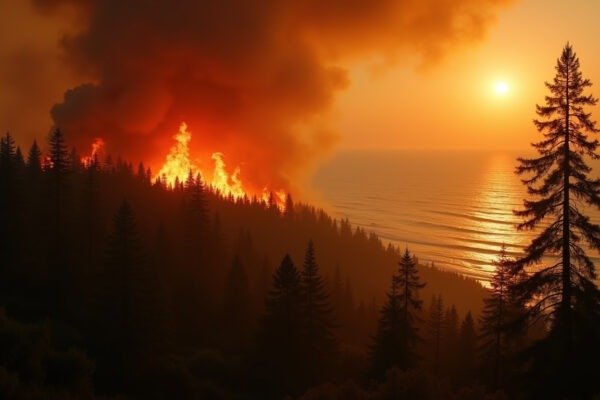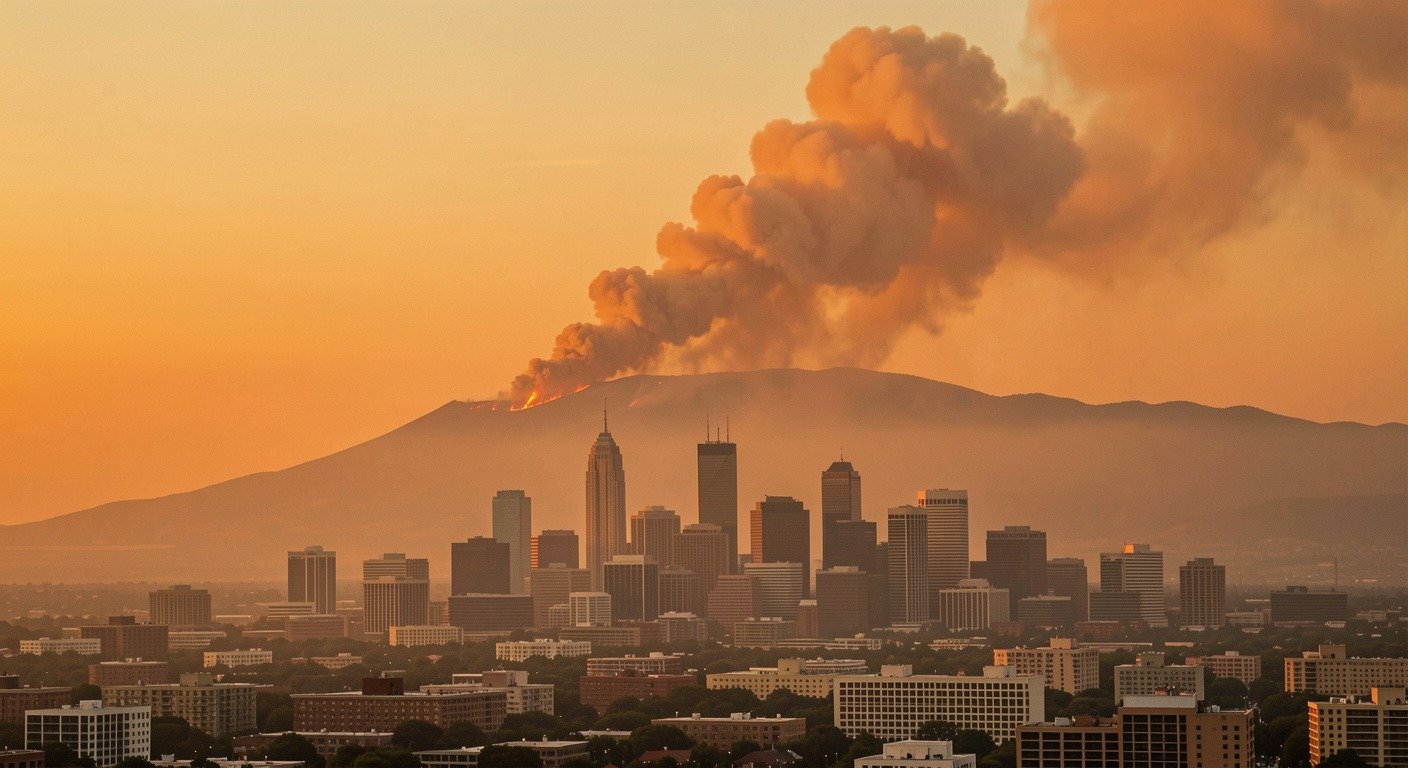
You do not need to live near a wildfire for its smoke to find you. In 2023, New York City briefly had the worst air quality on the planet, and the fires were in Canada, hundreds of miles away.
Right now, six major fires are burning across the American West under a relentless heat dome. The Iron Fire in Utah alone has consumed more than 40,000 acres. But the flames are only half the story. The smoke from these fires does not stay in Utah. It climbs into the upper atmosphere and rides the jet stream east, carrying a cocktail of fine particles that can trigger asthma attacks in Chicago, worsen heart conditions in Atlanta, and show up in the lungs of people who have never seen a wildfire in their lives.
Wildfire smoke is not just a Western problem anymore. It is an everyone problem. Here is what the science says about how far it travels, what it does inside your body, and exactly how to protect yourself.
The Invisible Threat: What Is Actually in Wildfire Smoke?
When a forest burns, it releases more than just ash. Wildfire smoke is a complex mixture of gases and microscopic particles. The most dangerous component is PM2.5, fine particulate matter smaller than 2.5 microns across. To put that in perspective: a single human hair is about 70 microns wide. These particles are so small they bypass your body’s natural defenses in your nose and throat and lodge deep in your lungs. From there, some enter your bloodstream.
According to the World Meteorological Organization, wildfire smoke can travel thousands of kilometers, crossing borders, oceans, and continents. The WMO’s 2026 Air Quality Bulletin describes wildfire smoke as one of the fastest-growing threats to global air quality.
A study published in The Lancet Planetary Health found that short-term exposure to wildfire-related PM2.5 is associated with a measurable increase in mortality risk. Researchers examined data from 749 cities across 43 countries and found that each 10 microgram per cubic meter increase in wildfire PM2.5 was linked to a rise in all-cause deaths.
How Far Can Wildfire Smoke Actually Travel?
The short answer: farther than most people realize. Much farther.
Smoke rises because it is hot. Large fires create pyrocumulonimbus clouds, essentially fire-generated thunderstorms, that can inject smoke particles directly into the stratosphere. Once at that altitude, the smoke gets caught in fast-moving wind currents that push it across entire continents.
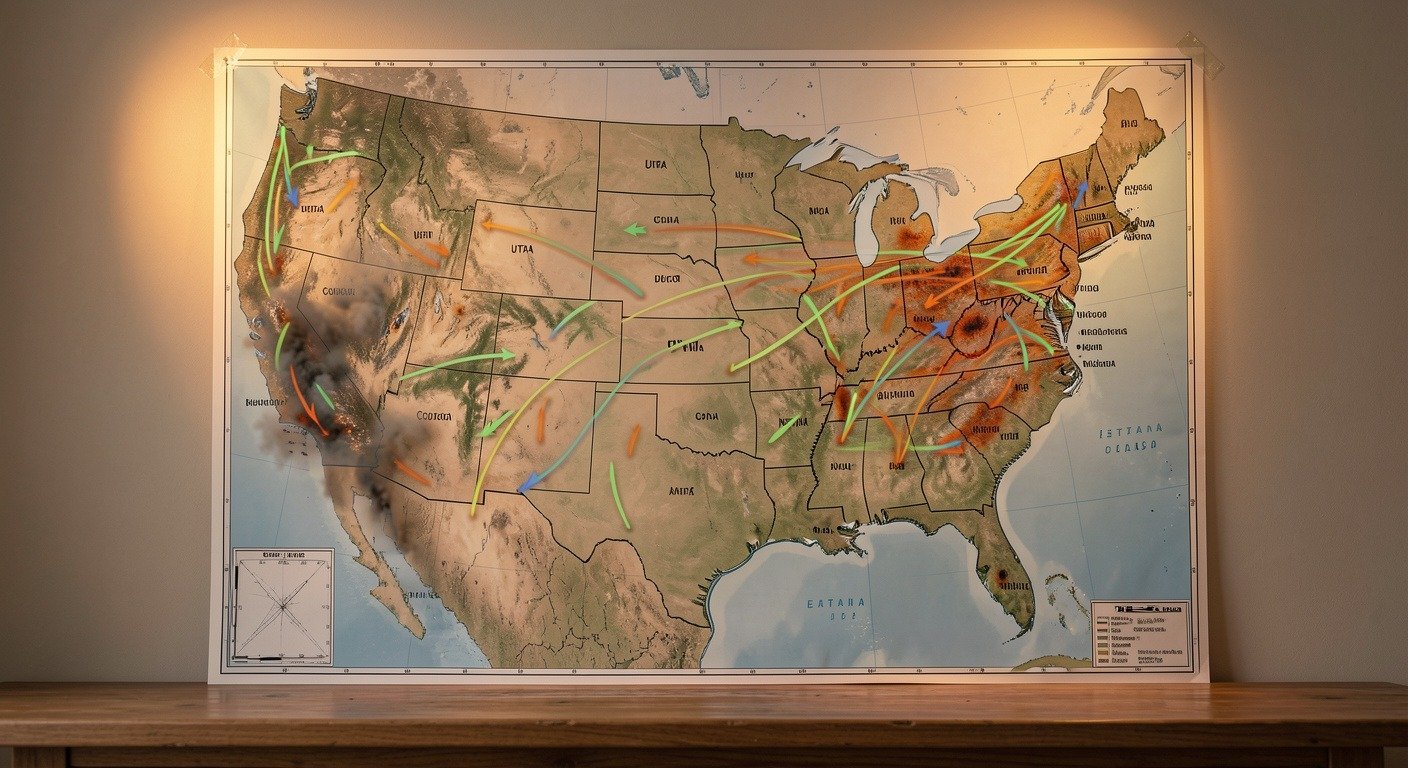
In June 2023, smoke from wildfires in Quebec traveled more than 500 miles to New York City, turning the sky orange and pushing the Air Quality Index past 400, firmly in the “Hazardous” range. For several hours, New York had the worst air quality of any major city on Earth. The same smoke plume reached as far as Portugal.
Research published by the National Institutes of Health confirms that western US wildfire smoke routinely degrades air quality across the entire continental United States. A 2025 study in the journal GeoHealth found that wildfire smoke transported from the West was responsible for over 60 percent of the PM2.5 pollution days in Eastern US cities during the 2023 fire season.
This year, with the massive heat dome parked over the West and multiple large fires already burning in early summer, the cross-country smoke transport pattern is repeating.
What Wildfire Smoke Does Inside Your Body
The health effects of wildfire smoke go well beyond coughing and watery eyes. Researchers are now linking smoke exposure to a range of serious conditions.
Immediate Effects
Within hours of exposure, PM2.5 particles can irritate the lungs, trigger asthma attacks, and cause shortness of breath. Emergency room visits for respiratory complaints typically spike within one to two days of a heavy smoke event.
Cardiovascular Impact
A major 2026 study in the European Heart Journal found that long-term exposure to wildfire smoke PM2.5 is associated with a significantly increased risk of stroke. The study, which tracked over 1.5 million adults, found that the stroke risk from wildfire smoke was particularly pronounced in people under 65, a group generally considered lower-risk for cardiovascular events.
Long-Term Risks
DW News reports that long-term PM2.5 exposure has been linked to lung diseases including asthma and COPD, as well as heart disease, diabetes, dementia, and several types of cancer. Wildfire smoke particles are thought to be more toxic than PM2.5 from other sources, like car exhaust or industrial pollution, because the combustion of trees and vegetation produces a more chemically complex mixture.
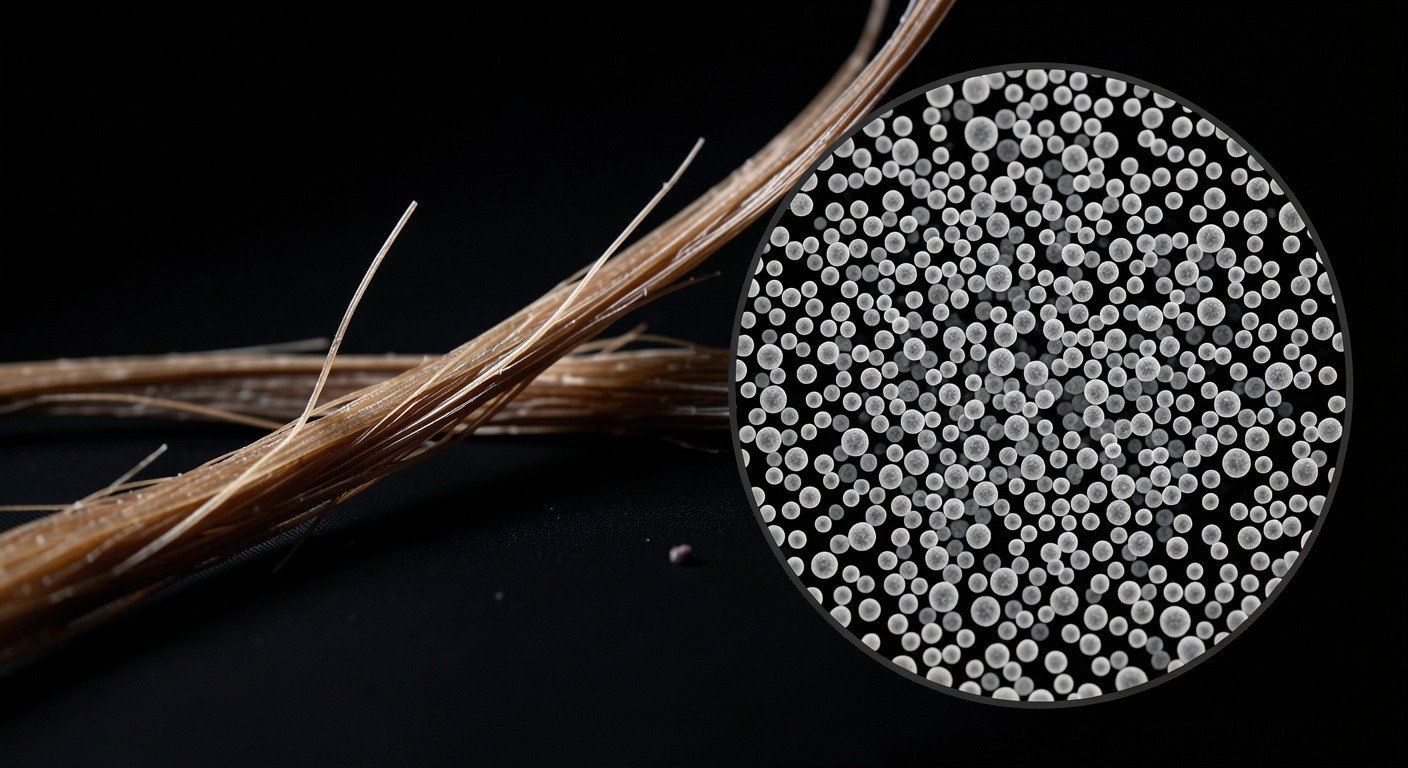
You do not need to see the flames to be breathing the smoke. Wildfire pollution crosses state lines, borders, and oceans, and it stays in your body longer than it stays in the sky.
Why This Matters Right Now: Summer 2026
Several factors are converging to make the summer of 2026 a particularly dangerous one for wildfire smoke:
- The massive US heat dome, covering 170 million Americans and pushing temperatures above 100 degrees Fahrenheit, is creating perfect fire conditions across the West. Hot, dry air pulls moisture out of vegetation, turning forests into tinder.
- Early fire season, the Iron Fire in Utah, the Dry Creek Fire in Colorado, and multiple other blazes ignited weeks before the traditional peak of the Western fire season , the 2026 wildfire season is already running 40% above normal.
- El Nino conditions, the developing El Nino of 2026 is already altering global weather patterns. In the Western US, El Nino typically brings drier conditions and higher fire risk. The World Meteorological Organization has warned that El Nino will likely lead to more heatwaves, droughts, and wildfires over the coming months.
- Repeated exposure, communities in the West have now endured multiple consecutive summers of heavy smoke. The health burden accumulates. What was once an occasional event is becoming a seasonal reality for millions of people.
Wildfire Smoke at a Glance
| PM2.5 size | Smaller than 2.5 microns (1/30th of a human hair) |
| Max travel distance | Thousands of miles (cross-continental) |
| AQI threshold for concern | Above 100 (unhealthy for sensitive groups) |
| Best mask type | N95 or P100 respirator |
| Indoor reduction | 30-40% lower than outdoor levels |
| 2026 risk factors | El Nino + early fire season + massive heat dome |
How to Protect Yourself: A Practical Guide
You cannot control where the wind blows the smoke. But you can control how much of it enters your body.
1. Know Your Air Quality
Bookmark AirNow.gov or download your local air quality app. The AQI (Air Quality Index) uses a color-coded scale: green (good), yellow (moderate), orange (unhealthy for sensitive groups), red (unhealthy), purple (very unhealthy), and maroon (hazardous). Check it every morning during fire season. If the AQI is above 100, take precautions.
2. Stay Indoors, and Make Indoor Air Cleaner
Indoor air pollution from wildfire smoke is typically 30 to 40 percent lower than outdoor levels, according to air quality researchers. Close all windows and doors. Set your air conditioning to recirculate mode. If you have a HEPA air purifier, run it in the room where you spend the most time. The EPA recommends creating a “clean room”, one room in your home with a HEPA filter running, doors and windows sealed, and no activities that generate indoor pollution like cooking or vacuuming.
3. Wear the Right Mask
A surgical mask, cloth mask, or bandanna will not protect you from wildfire smoke. N95 or P100 respirator masks are the only masks that filter out PM2.5 particles. Keep a few on hand before smoke season starts. Hardware stores and pharmacies typically carry them.
4. Reduce Other Sources of Indoor Pollution
Do not burn candles, use gas stoves, or vacuum during a smoke event. All of these add particles to your indoor air.
5. Watch for Symptoms
If you experience difficulty breathing, chest pain, severe coughing, or dizziness during a smoke event, seek medical attention. Children, pregnant women, older adults, and people with existing heart or lung conditions are at the highest risk.
Sources: World Meteorological Organization, The Lancet Planetary Health, European Heart Journal, DW News, NBC News, NIH/GeoHealth, US EPA, UN News/WMO.
Related: Why the West Is Burning Earlier and Hotter in 2026 | What Causes Heat Waves: Heat Dome Science | US Heat Dome to Scorch 170 Million Through July Fourth | Wildfire Smoke Map