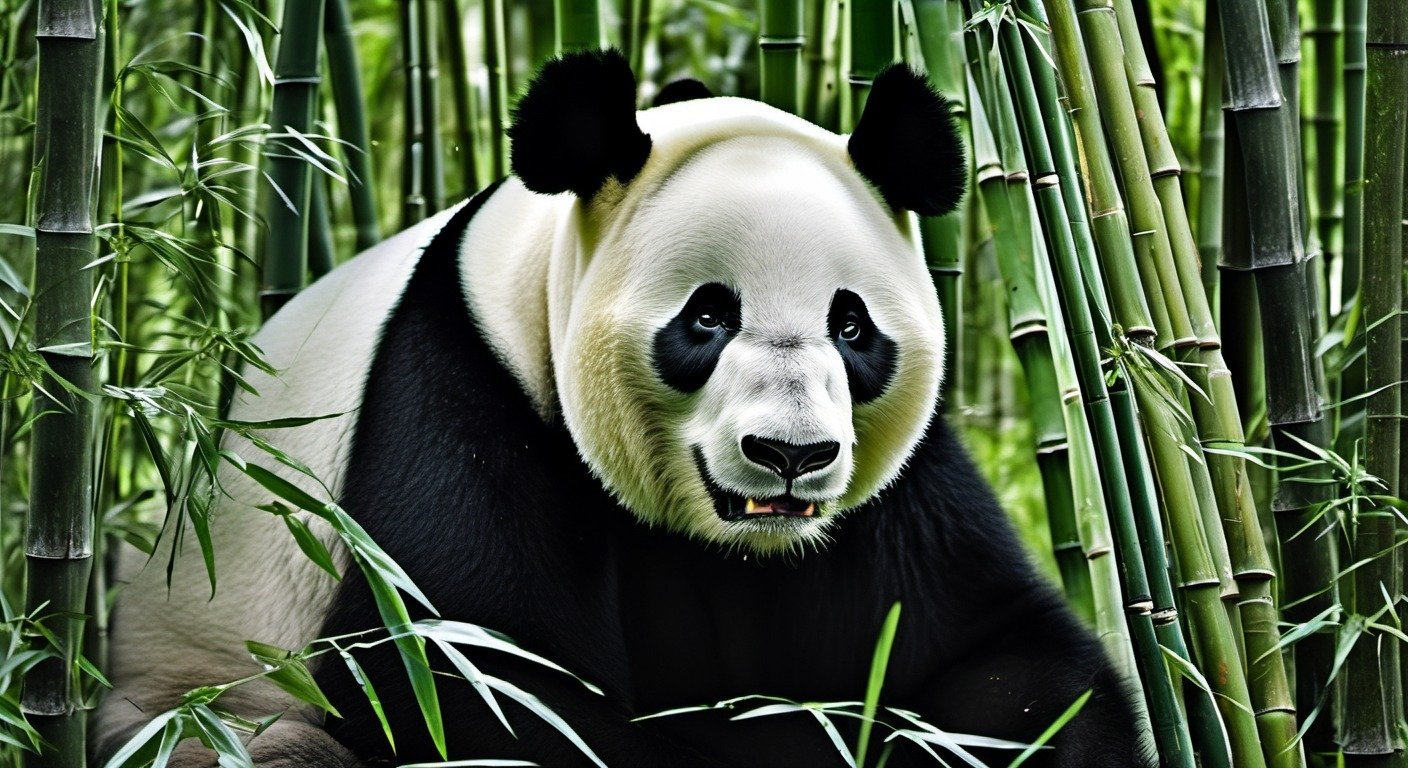
In 2016, the giant panda stepped back from the edge of extinction. After decades on the Endangered list, the world’s most famous bear was reclassified to Vulnerable. What that actually means, how conservation status works, and why the monarch butterfly tells a very different story.
In Simple Terms
In simple terms: Pandas are no longer classified as Endangered. In September 2016, the International Union for Conservation of Nature (IUCN) reclassified the giant panda from Endangered to Vulnerable. That means the population is growing, but the species still needs protection to survive in the long term. Conservation status categories are like a report card for wildlife, and they tell us which species need help and which are recovering.
Quick Summary
- The giant panda was downlisted from Endangered to Vulnerable in September 2016, following decades of habitat protection, captive breeding, and international cooperation. About 1,864 pandas now live in the wild.
- The IUCN Red List uses nine categories from Least Concern to Extinct to measure extinction risk. Three of those categories, Vulnerable, Endangered, and Critically Endangered, are grouped together as “Threatened.”
- Not every status change is a success story. The monarch butterfly is currently classified as Endangered on the IUCN Red List, and its populations have declined by more than 80% since the 1990s. A proposal to list the monarch as threatened under the U.S. Endangered Species Act was made in December 2024.
1. Panda No Longer Endangered Species: The Giant Panda Recovery Story
In the 1980s, the outlook for giant pandas was bleak. Only about 1,200 remained in the wild, scattered across shrinking bamboo forests in China’s Sichuan, Shaanxi, and Gansu provinces. Poaching was a serious problem.
Habitat fragmentation meant small groups of pandas could not reach each other to breed. The species was on a collision course with extinction.
Then something changed. In 1980, the World Wildlife Fund (WWF) began conservation work in China, the first international conservation organization invited to do so. Over nearly 50 years, China established 67 protected areas, with about 67% of the wild panda population now living in reserves and 54% of total habitat protected.
The protected area is roughly the size of Bhutan.
Wildlife corridors, strips of protected bamboo forest connecting isolated panda populations, allowed the animals to move freely and find mates.
Captive breeding programs expanded, creating a safety net population in case the wild one collapsed.
Anti-poaching laws, China’s Wildlife Protection Act of 1988, banned poaching with severe punishments, driving poaching impact down significantly.
The numbers told the story. A national survey counted 1,864 wild pandas, a 16.8 percent increase from the previous survey.
Two years later, on September 4 and 5, 2016, the IUCN made it official: the giant panda was reclassified from Endangered to Vulnerable. In July 2021, China’s government announced that pandas were no longer endangered in the wild.
The important nuance: pandas remain what conservation biologists call “conservation reliant.” Their survival still depends on active human protection. Climate change threatens their bamboo habitat, which makes up 99 percent of their diet.
Population fragmentation has not been fully solved. Moving from Endangered to Vulnerable is progress. It is not a mission accomplished.
2. How Conservation Status Works
When scientists say a species is “Endangered” or “Vulnerable,” they are using a precise system called the IUCN Red List of Threatened Species. Founded in 1964, it is the world’s most comprehensive inventory of extinction risk, tracking more than 172,600 species as of 2025.
The system uses nine categories, arranged on a spectrum from lowest to highest risk.
| Simple Explanation | Professional Term | Real-World Example |
|---|---|---|
| “Doing fine, no immediate worries” | Least Concern (LC) | Brown pelican, removed from U.S. Endangered Species list in 2009 |
| “Keep an eye on this one” | Near Threatened (NT) | Jaguar, emperor penguin |
| “Needs protection to survive” | Vulnerable (VU) | Giant panda, 1,864 wild |
| “In serious trouble” | Endangered (EN) | Tiger, mountain gorilla |
| “Emergency, could disappear soon” | Critically Endangered (CR) | Vaquita porpoise, fewer than 10 remain |
| “Only exists in zoos now” | Extinct in the Wild (EW) | Scimitar-horned oryx, though reintroduction is underway |
| “Gone forever” | Extinct (EX) | Dodo, passenger pigeon, thylacine |
Two additional categories complete the system: Data Deficient (DD), meaning scientists do not have enough information to assess the species, and Not Evaluated (NE), meaning no assessment has been done yet. Most insect species fall into Not Evaluated.
The three middle categories, Vulnerable, Endangered, and Critically Endangered, are collectively called “Threatened.” When you hear that a species is “threatened,” it falls into one of these three groups.
Species are assessed using five quantitative criteria: how fast the population is declining, the size of its geographic range, the total population size plus evidence of ongoing decline, how concentrated the remaining population is, and statistical models estimating extinction probability. A species does not need to meet all five criteria. Meeting just one can be enough to trigger a listing.
The category thresholds are precise. Vulnerable requires a population decline of 30 to 50 percent over 10 years or three generations, a geographic range under 20,000 square kilometers, fewer than 10,000 mature individuals, or greater than 10 percent extinction probability within 100 years. Endangered thresholds are tighter: 50 to 70 percent decline, range under 5,000 square kilometers, fewer than 2,500 mature individuals, or greater than 20 percent extinction probability within 20 years or five generations.
This system is a scientific tool, not a legal one. The IUCN Red List carries no enforcement power on its own. Individual countries create their own laws.
In the United States, that role belongs to the Endangered Species Act (ESA), which is legally binding and enforced by the U.S. Fish and Wildlife Service.
Social Media Highlight
“The panda is no longer endangered. But the monarch butterfly, which most Americans think of as common, is moving in the opposite direction. Conservation status tells a much richer story than a single label.”
3. How Species Get Reclassified
The path from Endangered to Vulnerable follows a structured scientific process, not a press release.
First comes data collection. Researchers conduct population surveys over time, ideally spanning 10 years or three generations of the species, whichever is longer. For pandas, this meant decades of field surveys, camera trap monitoring, and habitat mapping across China’s mountainous bamboo forests.
Next, the data is evaluated against IUCN criteria. Scientists measure population trends, geographic range shrinkage, and threats like habitat loss, hunting, and climate change. The assessment is reviewed by the IUCN Species Survival Commission, a network of thousands of experts organized into specialist groups for different types of animals, plants, and fungi.
Species are meant to be reassessed every 5 to 10 years. Outside parties can also petition for reclassification if they believe new data warrants a change.
Category changes fall into two types. Genuine changes reflect real biological improvement or deterioration, like the panda recovering through decades of conservation investment. Non-genuine changes happen when better information becomes available, a taxonomic revision redefines the species, an error is discovered in a previous assessment, or older criteria with different thresholds were used.
Not every downlisting is a recovery. Sometimes the data simply got better. The monarch butterfly’s 2023 status change happened because a petition challenged the population models used in an earlier assessment, not because monarch populations suddenly surged.
Both assessments were scientifically valid. The difference was methodology, not recovery.
Governments can also apply pressure to resist uplisting, because listing a species under national law triggers expensive regulatory requirements. IUCN classifications themselves are scientific, but the funding and enforcement that follow can become deeply political.
Social Media Highlight
“The monarch butterfly’s status changed not because populations recovered but because the data was reassessed using a different methodology. The difference was methodology, not recovery.”
4. Case Study: Monarch Butterflies
If the panda is the story of conservation working, the monarch butterfly is the story of how fast things can still go wrong.
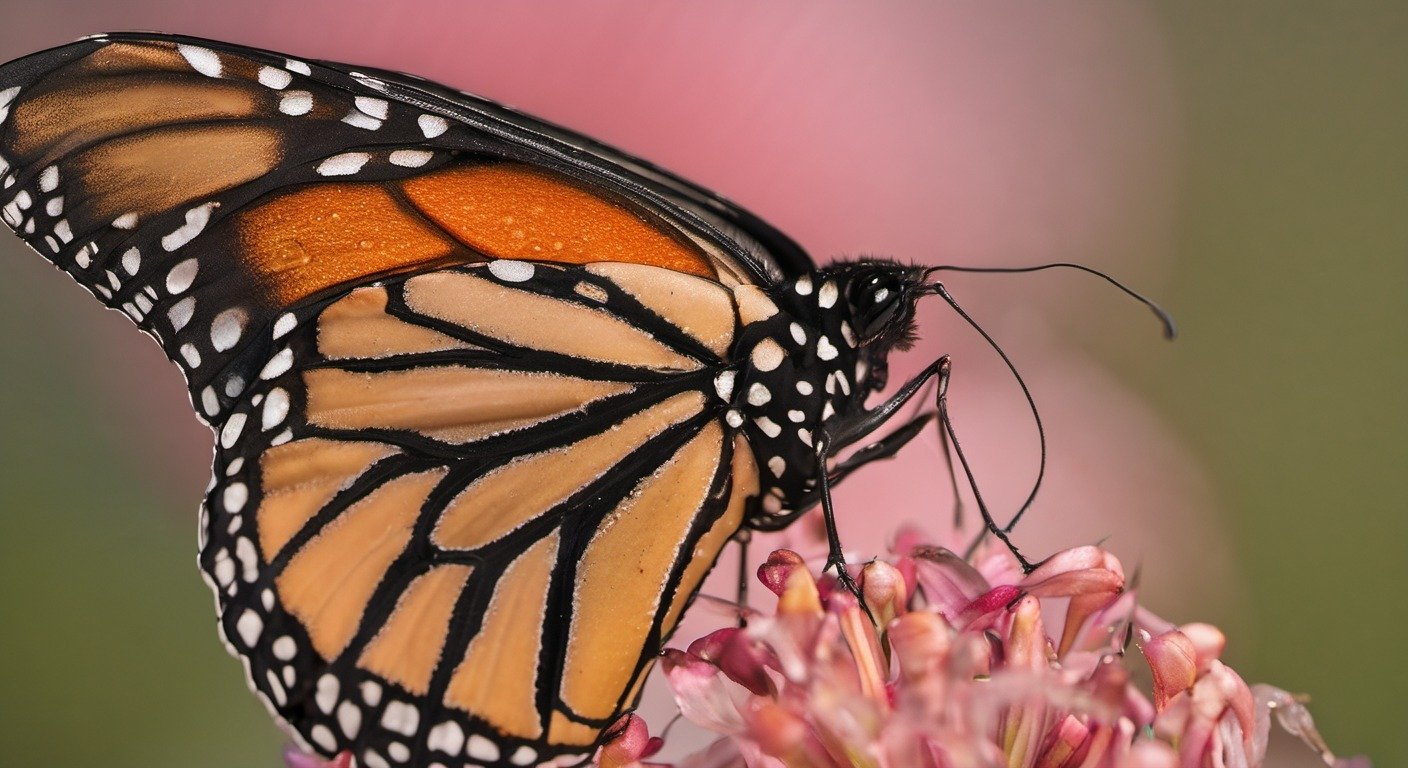
Monarch butterflies migrate across North America in two main populations. The eastern population, which winters in the oyamel fir forests of central Mexico, has declined by approximately 80 percent since the mid-1990s. Scientists estimate the eastern population’s probability of extinction at 56 to 74 percent.
The western population, which winters along the California coast, has declined by more than 95 percent since the 1980s, from over 4.5 million butterflies. The probability of extinction for the western population by 2080 is greater than 99 percent.
Three main threats drive the decline.
Habitat loss is the primary driver. Monarch caterpillars eat only one plant: milkweed. Agricultural herbicide use, particularly glyphosate on genetically modified crops, eliminated 99 percent of the milkweed that once grew in corn and soybean fields across the United States and Canada.
At the same time, illegal logging in Mexico’s Monarch Butterfly Reserve removes the protective forest canopy that shields monarchs from wind, rain, and low temperatures. Urban development has further reduced breeding and migratory habitat.
Insecticides make the problem worse. Neonicotinoid insecticides, widely used in agriculture, have made U.S. agriculture “48 times more toxic to most insects, including pollinators.”
They are persistent in the environment, infiltrate groundwater, and have cumulative and largely irreversible effects on invertebrate populations.
Climate change disrupts migratory timing, causes extreme weather events like droughts and storms that kill butterflies during migration, and shifts temperature ranges so that breeding habitat becomes less suitable. Colder, wetter winters could be lethal to overwintering monarchs, while hotter, drier summers could shift suitable habitat north.
On December 10, 2024, the U.S. Fish and Wildlife Service proposed listing the monarch as “threatened” under the Endangered Species Act, a legal designation that would trigger formal protections if finalized. The proposal includes 4,395 acres of critical habitat for the western migratory population across seven California counties.
WWF is also launching multiyear field trials starting in 2025, comparing non-neonic treated seeds with treated seeds, and working to restore formerly plowed grasslands back to pollinator habitat in the Great Plains.
The monarch’s IUCN Red List status is Endangered, not Vulnerable. This is not a technical detail. The difference reflects the severity of the threat: a species classified as Endangered faces a very high risk of extinction in the wild.
5. What Conservation Status Means for Regular People
Conservation status categories are not just for scientists. They affect policy, funding, and the choices available to ordinary people.

First, they act as an early warning system. When a species moves from Least Concern to Near Threatened, that is a signal to pay attention before it is too late. These assessments guide where governments, nonprofits, and international donors direct their conservation dollars.
Second, they create accountability. A species can be tracked across decades. When the panda moved from Endangered to Vulnerable, it validated decades of investment.
When the monarch’s status confirmed it as Endangered, the crisis became impossible to ignore.
Third, conservation works when it is funded. The European bison moved from Vulnerable to Near Threatened in 2020 through reintroduction and habitat protection. Four tuna species showed measurable recovery in 2021 after regional fishing quota enforcement. And when funding stalls, recovery can reverse: Sweden’s wolverine, saved from extinction and now slipping again, is the cautionary counterpoint.
The scimitar-horned oryx was reintroduced from Extinct in the Wild to Endangered in 2016 through captive breeding. Wild tiger populations have doubled, meeting a global goal set for 2022, through habitat expansion and anti-poaching connectivity efforts.
These are not miracles. They are the result of deliberate, sustained human effort.
Individual actions matter. If you live in North America, plant native milkweed species in your garden or yard. Monarch caterpillars cannot survive without it.
Reduce or eliminate pesticide use on your property.
Support conservation organizations like WWF, the Xerces Society, and local land trusts. Visit national parks and wildlife refuges, because funding through visitation keeps them operating.
Participate in community science projects like monarch butterfly monitoring counts, the Christmas Bird Count, or iNaturalist observations. Avoid products that drive tropical deforestation, including unsustainable palm oil.
Protecting species also protects people. The umbrella effect of panda conservation safeguards entire mountain ecosystems that thousands of other species and millions of people depend on for water, clean air, and resources. Monarch conservation benefits the pollinators that support the global food system.
Final Call to Action
“There are now 1,864 giant pandas in the wild, up from about 1,200 in the 1980s. Conservation works. It is slow, expensive, and uncertain. But it works.”
The panda comeback happened because people decided the species was worth saving, funded the effort for nearly 50 years, and backed it with science.
The monarch butterfly’s Endangered status shows what happens when a species slips through the cracks. Conservation status is not a verdict. It is a tool, and it is only as effective as the will behind it.
FAQ
Are pandas still endangered?
No. The giant panda was reclassified from Endangered to Vulnerable on September 4 and 5, 2016, by the IUCN. About 1,864 pandas now live in the wild, up from roughly 1,200 in the 1980s.
What does Vulnerable mean?
Vulnerable means a species faces a high risk of human-caused extinction without continued protection. It is one step better than Endangered but still requires active conservation effort. The panda remains conservation reliant.
When did pandas stop being endangered?
The IUCN reclassified the giant panda from Endangered to Vulnerable on September 4 and 5, 2016. China’s government made its own parallel announcement in July 2021.
Are monarch butterflies endangered?
Yes. On the IUCN Red List, migratory monarchs are classified as Endangered. The U.S. Fish and Wildlife Service proposed listing the monarch as threatened under the Endangered Species Act in December 2024, but this is not yet finalized.
What is the IUCN Red List?
The IUCN Red List of Threatened Species, founded in 1964, is the world’s most comprehensive inventory of species extinction risk. It uses nine categories from Least Concern to Extinct and is maintained by the International Union for Conservation of Nature.
How many species are on the Red List?
As of 2025, the IUCN Red List tracks more than 172,600 species. Of those, more than 48,600 are classified as Threatened, meaning they fall into the Vulnerable, Endangered, or Critically Endangered categories.
Sources Used
- WWF: Giant Panda Species Page
- WWF: Nature Breaking Podcast , Why Giant Pandas Are a Conservation Success Story (April 2026)
- WWF: Monarch Butterfly Species Page
- U.S. Fish and Wildlife Service: Monarch Butterfly Proposed for Endangered Species Act Protection (Dec 10, 2024)
- National Wildlife Federation: Monarch Butterfly Wildlife Guide
- IUCN Red List of Threatened Species: About
- IUCN: Reasons for Changing Category
- IUCN: Red List Resources
- National Geographic Education: Endangered Species