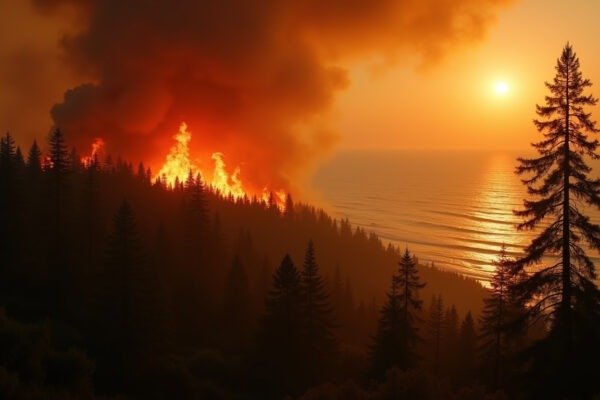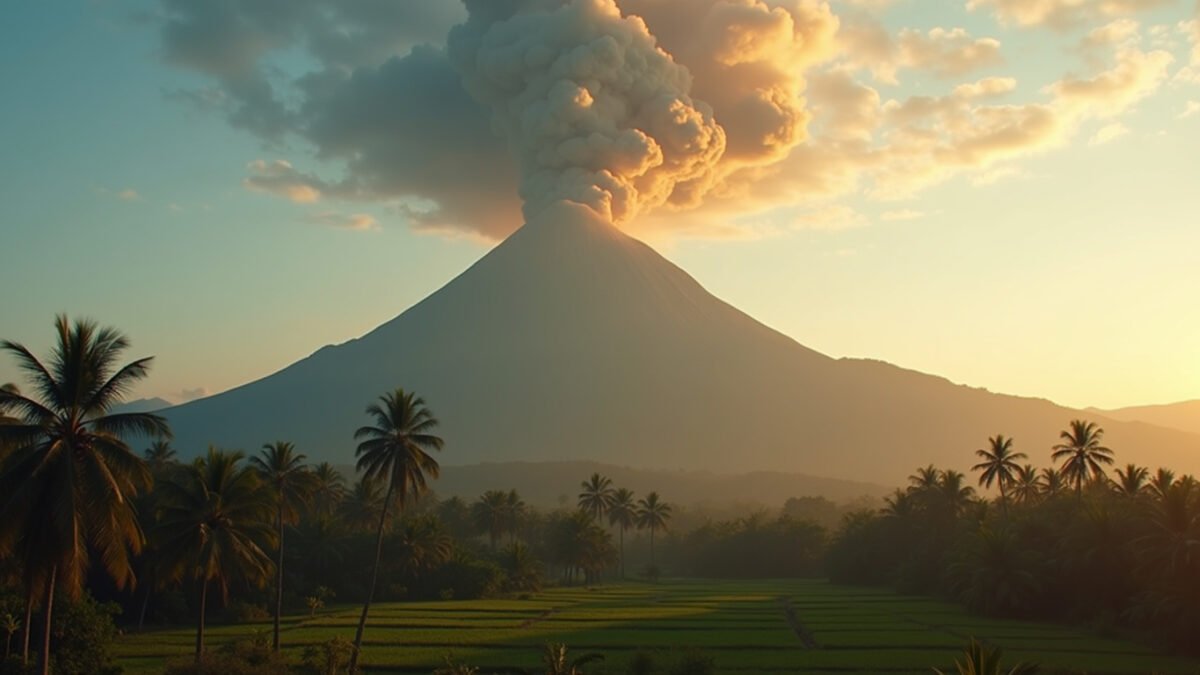
On the morning of July 15, 2026, the Mayon Volcano eruption 2026 entered a dramatic new phase as explosive Strombolian bursts launched incandescent lava high above the volcano’s iconic cone. The eruption sent plumes of ash across Albay province in the Philippines, affecting nearly 200,000 people and pushing an already tense situation closer to a potentially hazardous eruption. (source: watchers.news)
What Happened in the Mayon Volcano Eruption 2026
The Mayon volcano Philippines eruption intensified on July 15 when the Philippine Institute of Volcanology and Seismology (PHIVOLCS) recorded a series of explosive Strombolian eruptions from the summit crater. The volcano, already under the PHIVOLCS alert level 3 status, produced its largest Strombolian bursts in recent records.
The numbers behind the unrest tell a sobering story. In a single 24-hour period, PHIVOLCS recorded 187 volcanic earthquakes, 398 rockfall events, and 10 pyroclastic density currents. These fast-moving avalanches of hot gas, ash, and rock race down the volcano’s slopes at hundreds of kilometers per hour. Effusive lava flow had already been ongoing since July 14, with fresh lava steadily emerging from the summit. (source: www.pna.gov.ph)
Authorities enforced the 6-kilometer permanent danger zone around Mayon. Nearly 200,000 people across Albay province have been affected by heavy ashfall from collapsing lava deposits on the volcano’s upper slopes.
Why Mayon Erupts
Mayon sits firmly on the Pacific Ring of Fire, a 40,000-kilometer horseshoe of tectonic plate boundaries where about 75 percent of the world’s active volcanoes are concentrated. The Philippine Sea Plate subducts beneath the Eurasian Plate, melting rock into magma that rises through the Earth’s crust. This feeds Mayon’s persistent volcanic activity, making it the most active volcano in the Philippines. A related Ring of Fire volcano, Indonesia’s Mount Lewotobi Laki-laki, erupted just weeks before Mayon’s July outburst. Weeks later, Taal volcano, also in the Philippines, blasted a 2,000-foot plume and triggered a rare crater tsunami. Learn more about the broader pattern in our coverage of the Indonesia volcanic eruption 2026.
The term Strombolian eruption comes from Stromboli volcano in Italy, where this type of moderate, rhythmic explosive activity was first studied. Unlike a catastrophic Plinian eruption that blasts ash into the stratosphere, Strombolian bursts eject lava fragments, ash, and incandescent bombs in short repeated pulses. These bursts are visually dramatic but typically confined to the immediate summit area.
According to the Smithsonian Institution’s Global Volcanism Program, Mayon has erupted more than 47 times since 1616. Its most destructive eruption occurred in 1814, when pyroclastic flows buried the town of Cagsawa and killed an estimated 1,200 people. The volcano’s near-perfect conical shape, while breathtakingly beautiful, signals its danger. Eruptions consistently come from a single central vent, concentrating all that explosive force in one place. (source: volcano.si.edu)
How It Affects People
The human impact of the Mayon Volcano eruption 2026 reaches across multiple dimensions of life in Albay province.
Evacuations and displacement have been the most immediate consequence. More than 1,500 families were moved out of the 6-kilometer danger zone as early as May 2026 when unrest first intensified. With the PHIVOLCS alert level 3 still in effect, thousands of residents remain in temporary shelters, unable to return to their homes and farms inside the exclusion zone.
Ashfall has affected nearly 200,000 people, coating homes, roads, and crops across the province. Volcanic ash is pulverized rock and glass that can collapse roofs when it accumulates, contaminate water supplies, and cause severe respiratory problems. Fine ash particles, classified as PM10 and PM2.5, can penetrate deep into the lungs and worsen asthma, bronchitis, and other respiratory conditions. (source: apnews.com)
Agriculture and livelihoods have taken a direct hit. Albay’s fertile volcanic soils support rice paddies, coconut plantations, and vegetable farms in the shadow of the volcano. Ashfall smothers crops, blocks sunlight needed for photosynthesis, and can make soil temporarily acidic. For farming families already displaced from their homes, the loss of crops and livestock represents a compounding economic disaster.
Aviation and transportation face disruption from ash plumes that can reach several kilometers into the atmosphere. Volcanic ash is a severe hazard to jet engines. It melts inside the turbine at high temperatures and can cause engine flameout. The local aviation authority has issued advisories for aircraft to avoid Mayon’s airspace.
Why It Matters Now
The Mayon volcano Philippines unrest is part of a broader pattern of heightened volcanic activity across the Pacific Ring of Fire in 2026. Just weeks earlier, multiple Indonesian volcanoes erupted within days of each other, and Russia’s Sheveluch volcano sent ash 12 kilometers into the atmosphere on July 5.
The PHIVOLCS alert level 3 status at Mayon means that a hazardous eruption is possible within weeks or even days. PHIVOLCS has made clear that while the current Strombolian activity is confined to the summit area, any escalation could trigger larger pyroclastic flows, lava fountains, or a sustained explosive eruption. These would require mass evacuations on short notice.
The nearly 200,000 people already affected by ashfall demonstrate a crucial reality: you do not need to be in the path of a lava flow to be harmed by a volcanic eruption. Ash, gas emissions, and secondary hazards like lahars (volcanic mudflows triggered by heavy rain mixing with loose ash) can affect communities dozens of kilometers away.
What the Mayon Volcano Eruption 2026 Teaches Us
The Mayon Volcano eruption 2026 demonstrates the life-saving value of volcano monitoring and early warning systems. PHIVOLCS maintains a network of seismic stations, gas sensors, and visual monitoring cameras around Mayon that detected the escalating unrest weeks before the July 15 explosive phase. This lead time gave authorities the window they needed to evacuate the danger zone and prepare response resources.
For the residents of Albay, living with an active volcano is a permanent reality. Mayon is both a source of fertile soil and a constant threat, a duality that shapes daily life in the province. Community preparedness drills, pre-positioned evacuation centers, and clear communication from PHIVOLCS through local government units have become part of the regional culture.
The broader lesson for a warming world is that geological hazards do not pause for climate change. As populations grow and more people live near active volcanoes, the exposure to volcanic risk increases, even when volcanoes behave exactly as they always have. The Philippines, with 24 active volcanoes monitored by PHIVOLCS, is one of the most volcanically active countries on Earth. The current eruption is a reminder that monitoring, preparation, and respect for natural forces are the best defenses available. Learn more about how climate patterns interact with natural hazards in the El Niño 2026 Ultimate Guide.