A child in Mumbai watches the first fat drops of the monsoon splatter against the window. A farmer in Iowa scans the sky, calculating the odds of relief. A commuter in London pulls a coat tighter as drizzle begins to fall. Rain touches every human life, yet most of us have never stopped to ask how does rain form.
The answer involves an invisible chain of events that starts 93 million miles away, at the surface of the sun. Understanding how rain forms takes us from that solar energy to the water cycle steps that deliver fresh water to every continent.
How Does Rain Form: The Core Process
Rain is liquid water falling from the atmosphere. It is the most common form of precipitation, but that simple definition hides an extraordinary physical process. Every raindrop that hits your window began as an individual molecule of water vapor, invisible to the naked eye, drifting somewhere in the atmosphere.
For a raindrop to exist, three things must happen in sequence. Water must evaporate into the air. That vapor must rise, cool, condense around microscopic particles. And the resulting droplets must grow large enough that gravity overcomes the upward push of air currents. Understanding how does rain form means understanding each of these stages.
A single raindrop can contain millions of cloud droplets that collided and merged during its fall. The largest raindrops measure about 6 millimeters across before air resistance tears them apart.
How the Precipitation Process Unfolds
The precipitation process is a story of temperature, pressure, patience.
Evaporation is where it starts. The sun heats the surface of oceans, lakes, rivers, and damp soil. Water molecules at the surface absorb enough energy to break free from the liquid and rise as invisible vapor. The oceans supply roughly 86 percent of the water vapor in the atmosphere, according to the U.S. Geological Survey. Plants contribute through transpiration, releasing water from their leaves. A single large oak tree can release 40,000 gallons of water into the air each year.
Condensation happens when that warm, moist air rises. As air climbs higher into the atmosphere, it expands in the lower pressure and cools. Cool air cannot hold as much water vapor as warm air, so the excess vapor condenses back into liquid. But it needs a surface. Every droplet forms around a microscopic particle called a condensation nucleus. A single puff of air contains thousands of them: dust, sea salt, pollen, even bacteria. Without these particles, water vapor cannot condense until the air reaches roughly 400 percent relative humidity. With them, condensation begins at 100 percent. The same physics governs how clouds form and why some clouds produce rain while others drift harmlessly overhead.
Coalescence is the final stage. The tiny droplets that form clouds are far too small to fall. An average cloud droplet measures about 0.02 millimeters across, roughly the thickness of a human hair split fifty times. It would take hours to fall from the height of a typical cloud to the ground. Droplets grow by colliding and merging with their neighbors, a process meteorologists call coalescence. When a droplet reaches about 0.5 millimeters, it becomes heavy enough to fall. The journey from cloud to ground takes a raindrop two to seven minutes.
In colder clouds, ice crystals play the lead role. Water can remain liquid well below freezing, a state called supercooled. When an ice crystal forms in a cloud with supercooled droplets, water vapor deposits directly onto the ice, growing it rapidly. This is the Bergeron process, named for the Swedish meteorologist who described it in 1933. Most rain that falls outside the tropics, including nearly all rain over the continental United States, begins as snowflakes that melt on the way down.
Types of Rainfall: Three Ways Air Rises
Rain always requires rising air, but there are three distinct types of rainfall, each driven by a different force.
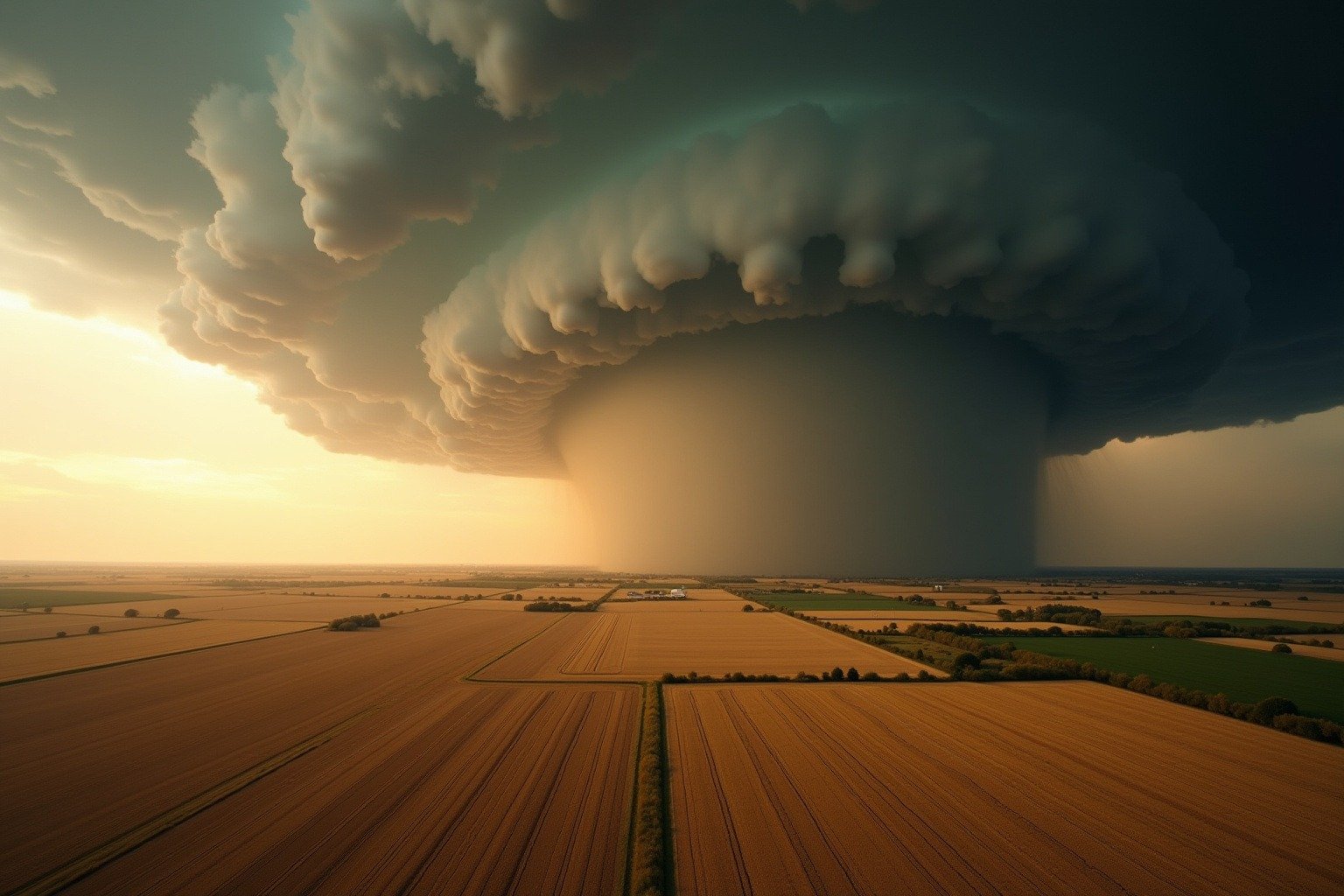
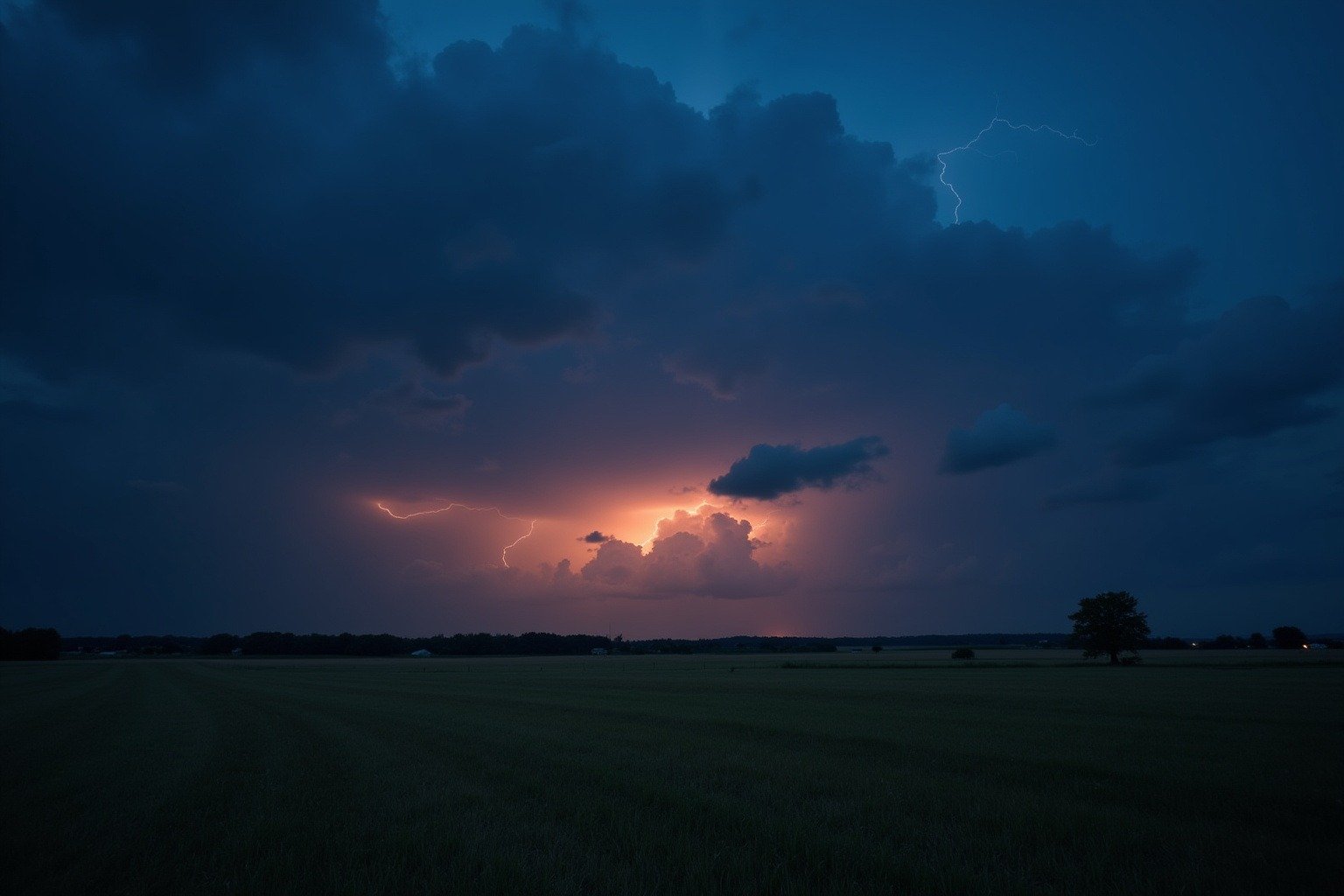
Convectional rainfall happens when the sun heats the ground, which warms the air directly above it. That hot air rises in columns called thermals. As it climbs and cools, towering cumulonimbus clouds build, often producing intense but short-lived thunderstorms. This is the rain of tropical afternoons and summer storms across the American Midwest.
Orographic rainfall occurs when moist air is pushed up by mountains. As the air rises over the windward slope, it cools and releases its moisture as rain or snow. The far side of the mountain, the leeward slope, sits in a rain shadow and can be dramatically drier. Death Valley in California sits in the rain shadow of the Sierra Nevada and receives less than 2 inches of rain per year, while the western slopes of those same mountains can receive over 100 inches.
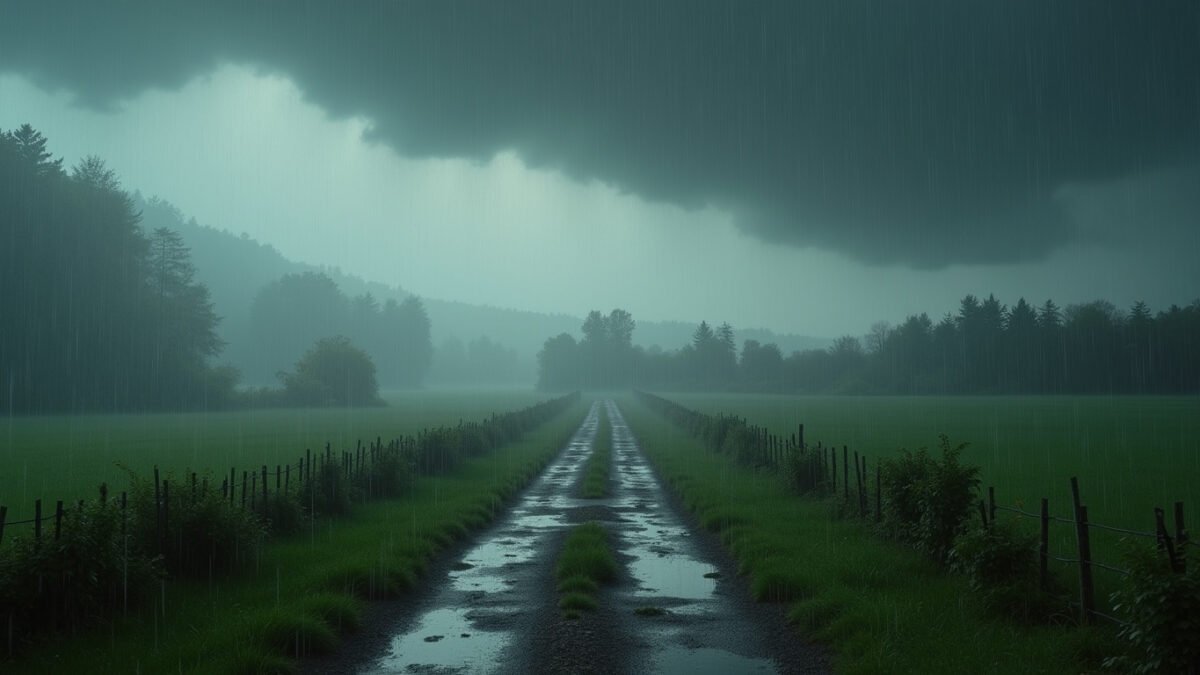
Frontal rainfall happens when two air masses of different temperatures collide. A warm air mass is less dense, so it slides up over the colder air. The rising warm air cools, and widespread rain follows. This is the steady, hours-long rainfall typical of the United Kingdom and the Pacific Northwest. Most winter rain in the middle latitudes comes from frontal systems.
These three types of rainfall often overlap. A single storm system can combine frontal lifting with orographic enhancement, producing extreme totals where moist fronts meet mountain ranges.
How Rain Affects People
Rain is not neutral. It shapes economies, determines where cities can grow, and can mean the difference between feast and famine within a single growing season.
Agriculture and food. Roughly 40 percent of global food production relies on rain-fed agriculture, according to the Food and Agriculture Organization of the United Nations. When the rains fail in the Horn of Africa or the Sahel, millions of people face hunger within months. When they arrive on time, the same land produces enough to feed entire regions. A single missed rainy season can push a farming family into debt that takes five years to recover from.
Cities and infrastructure. Urban areas are designed around expected rainfall. Storm drains, reservoir capacity, and flood walls are all calibrated to historical averages that climate change is now rewriting. In July 2026, parts of Texas received 20 inches of rain in 48 hours, overwhelming drainage systems built for far less. The damage to homes and businesses ran into the billions.
Mental and physical health. Rain affects human psychology in ways that researchers are still measuring. The sound of steady rain can lower cortisol levels and improve sleep. But weeks of unbroken gray skies, common during monsoon seasons and Pacific Northwest winters, are linked to elevated rates of seasonal depression. Vitamin D deficiency rises in rain-heavy climates. The relationship between rain and human wellbeing is deeper than most of us acknowledge.
Why Understanding Rain Matters Now
The water cycle steps that produce rain are accelerating. A warmer atmosphere holds roughly 7 percent more water vapor for every degree Celsius of warming, a relationship described by the Clausius-Clapeyron equation. More moisture in the air means rain, when it falls, falls harder. This is the central reason why understanding how does rain form has become urgent: the physics of a warmer atmosphere actively rewrites the rules that precipitation has followed for millennia.
The consequences are already visible. The frequency of extreme precipitation events has risen by roughly 30 percent in the United States since 1958, according to the National Climate Assessment. Heavier rain does not mean more usable water. Much of it runs off saturated soil so quickly that reservoirs cannot capture it. The result is a paradox: more flooding and more drought, often in the same region within the same year.
Forecasters are getting better at predicting the precipitation process, but the gap between a forecast and useful information for a farmer or city planner remains wide. Closing that gap is one of the most urgent tasks in climate adaptation.
What We Can Learn
Rain is easy to take for granted. It appears in weather apps as a percentage, in gutters as a sound, in reservoirs as a number. But every rainfall is the final act of a physical journey that spans continents and weeks. Water that evaporates from the Pacific Ocean near Hawaii can fall as rain on a cornfield in Nebraska ten days later. The system has no waste. No molecule gets left behind.
The practical lesson is straightforward. When rain patterns shift, everything downstream shifts with them: crop calendars, insurance premiums, building codes, mental health. Climate change is rewriting the assumptions that every civilization on Earth has built around rainfall. Paying attention to how does rain form is not an academic exercise. It is how communities prepare for floods, how farmers decide when to plant, and how cities design the drainage systems that will serve them for the next fifty years.