Coral bleaching is accelerating faster than almost anyone predicted in 2026, and the consequences reach far beyond the ocean. Reefs that took millennia to build are dying in weeks, and a newly declared Super El Nino threatens to make the crisis worse before any recovery can begin.
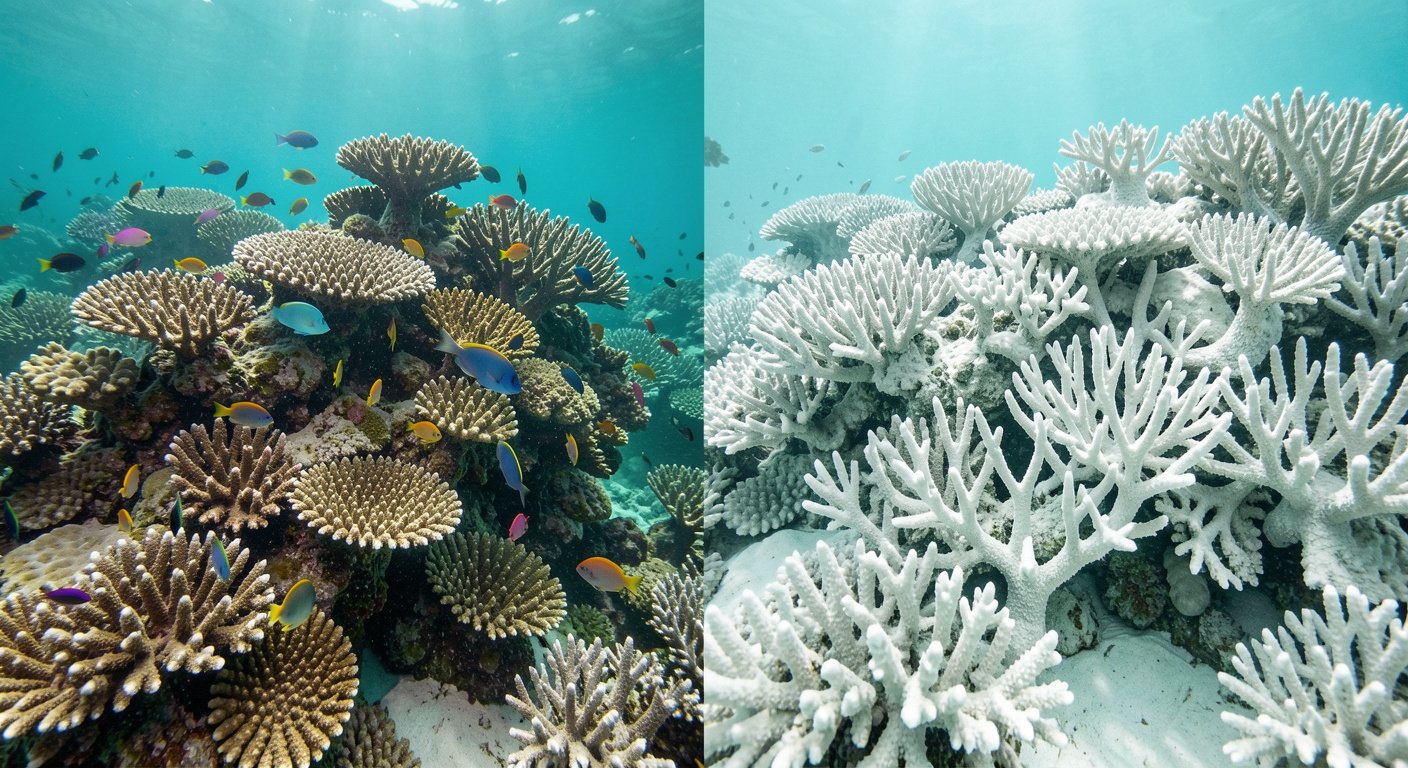
In October 2025, marine scientist Zoe Richards waded into the shallows of Western Australia’s Ningaloo Reef and found a scene she described as “comparable to a bushfire aftermath.” Of 1,600 corals counted in March, only 600 were still alive seven months later. The reef lost more than 60 percent of its corals in a single season. Ningaloo, a World Heritage site, had never suffered climate-driven bleaching before. Now it had become the newest entry in a crisis accelerating faster than almost anyone predicted.
What Is Happening
Coral bleaching is a stress response. When ocean temperatures climb roughly 1°C above the seasonal average for four weeks or more, corals expel the microscopic algae that provide up to 90 percent of their energy. Our coral bleaching explainer covers the full science in simple terms. It is not dead yet, but it is starving, weakened, and likely to die.
The Fourth Global Coral Bleaching Event, which ran from early 2023 through mid-2025, was the most widespread on record. An estimated 84.4 percent of the world’s coral reef areas experienced bleaching-level heat stress. Mass bleaching reached at least 83 countries and territories. The escalation is stark: 21 percent of reefs exposed in 1998, 37 percent in 2010, 68 percent in 2014-2017, and 84 percent in 2023-2025.
Australia’s Great Barrier Reef has endured six mass bleaching events since 2016. The 2024 and 2025 events marked the second time in a decade the reef bleached in back-to-back summers. For the first time in recorded history, both Australian World Heritage reefs, the Great Barrier Reef and Ningaloo, bleached simultaneously.
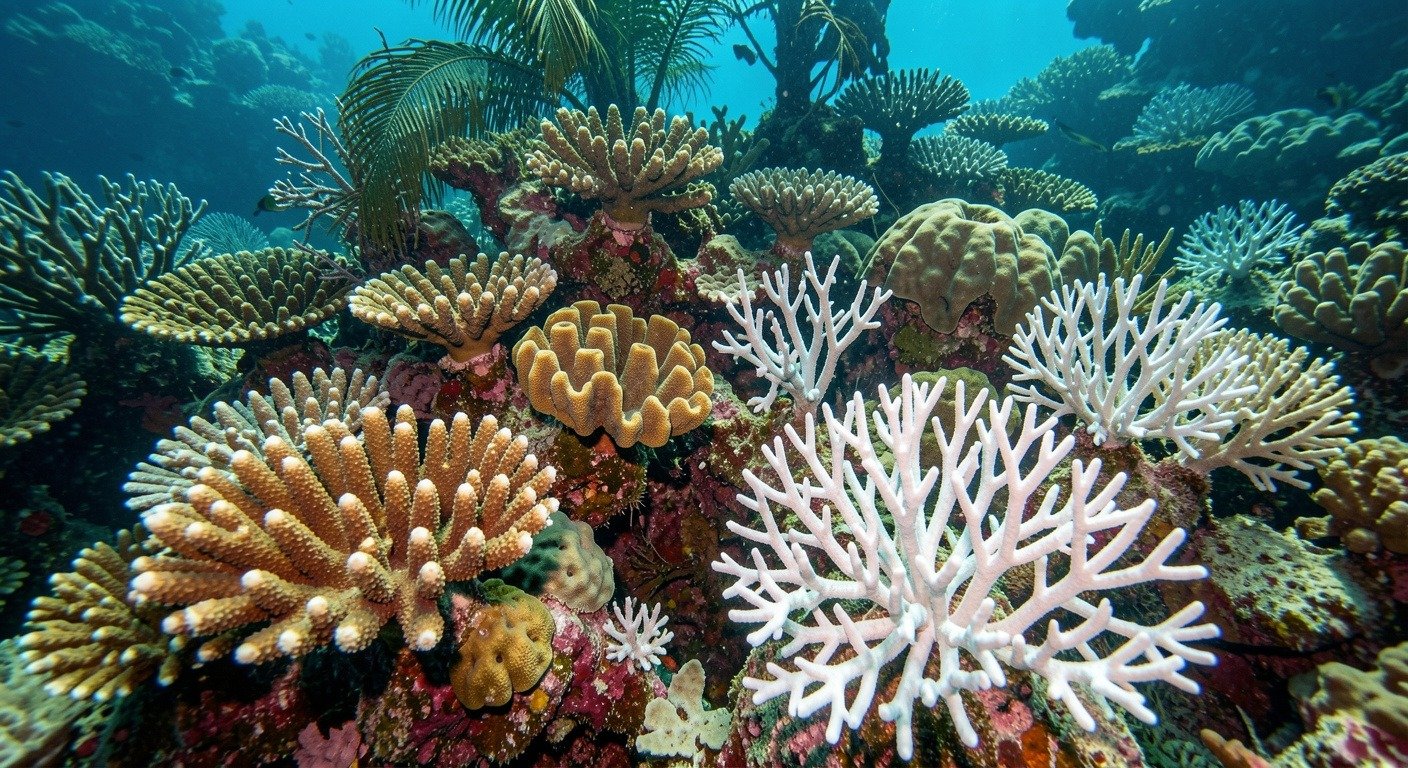
“We’ve lost a lot of the diversity on the reef, the complexity. The coral is providing habitat for fish, for crustaceans, for shells, for worms, it’s quite likely they have all died.”
Dr. Zoe Richards, Curtin University
Why It’s Happening
The immediate cause is blunt: the ocean is absorbing most of the extra heat trapped by greenhouse gases. Global sea surface temperatures in March 2026 averaged 20.97°C, the second-warmest March on record. In January, 69 percent of the global ocean was warmer than average and 18 percent was under an active marine heatwave.
A peer-reviewed analysis in Coral Reefs found that bleaching-level heat stress has persisted for almost the entire last decade. From 2018 through 2025, 87 percent of reef areas worldwide experienced bleaching-level thermal stress, with median heat stress accumulation nearly 50 percent greater than during any previous global bleaching event.
Now a new threat is forming. On June 11, 2026, NOAA declared a Super El Nino underway in the tropical Pacific, with a 63 percent chance of becoming a “very strong” event. Every strong El Nino since 1998 has coincided with a global coral bleaching event. Recent baseline ocean temperatures are now comparable to the extreme anomalies observed during the 1997-1998 El Nino.
“There has never been an El Nino, let alone a Super El Nino, when the background climate was as warm as it is now.”
Human Impact
Coral reefs support roughly 25 percent of all marine species while covering less than 1 percent of the seafloor. When reefs collapse, fish biomass falls by 60 to 80 percent. More than 500 million people depend on reef fisheries. Reef tourism generates roughly $10 billion in direct spending each year. The Great Barrier Reef alone supports 64,000 jobs and contributes $6.4 billion annually to the Australian economy.
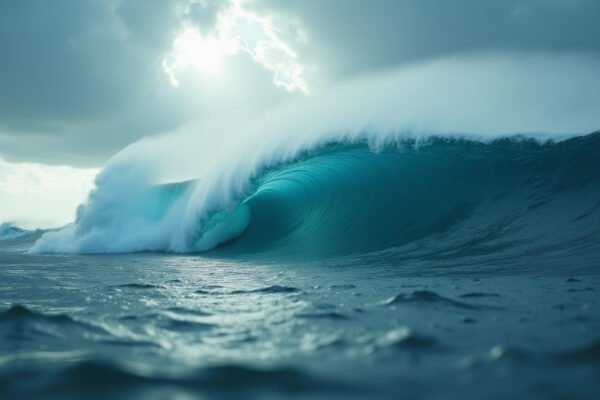
Healthy reefs absorb up to 97 percent of a wave’s energy before it reaches shore. They prevent an estimated $94 billion in coastal damage annually and protect more than 100 million people along tropical coastlines. When Ningaloo’s corals died, communities along Western Australia’s coast lost a natural seawall that had stood for millennia.
Why It Matters Now
The window for coral survival is closing fast. At 1.5°C of warming, up to 90 percent of the world’s coral reefs could disappear by 2050. At 2°C, up to 99 percent could be lost. Global surface air temperature in March 2026 was already 1.48°C above pre-industrial levels.
The gaps between bleaching events, once measured in decades, have shrunk to single years. The Great Barrier Reef bleached in 2016, 2017, 2020, 2022, 2024, and 2025. With El Nino already declared and a 100 percent probability of persisting through fall 2026, 2027 is virtually guaranteed to eclipse 2024 as the warmest year on record.
“We are now in the era where reefs will bleach on a near-annual basis.”
Derek Manzello, NOAA Coral Reef Watch coordinator
What Can Be Done
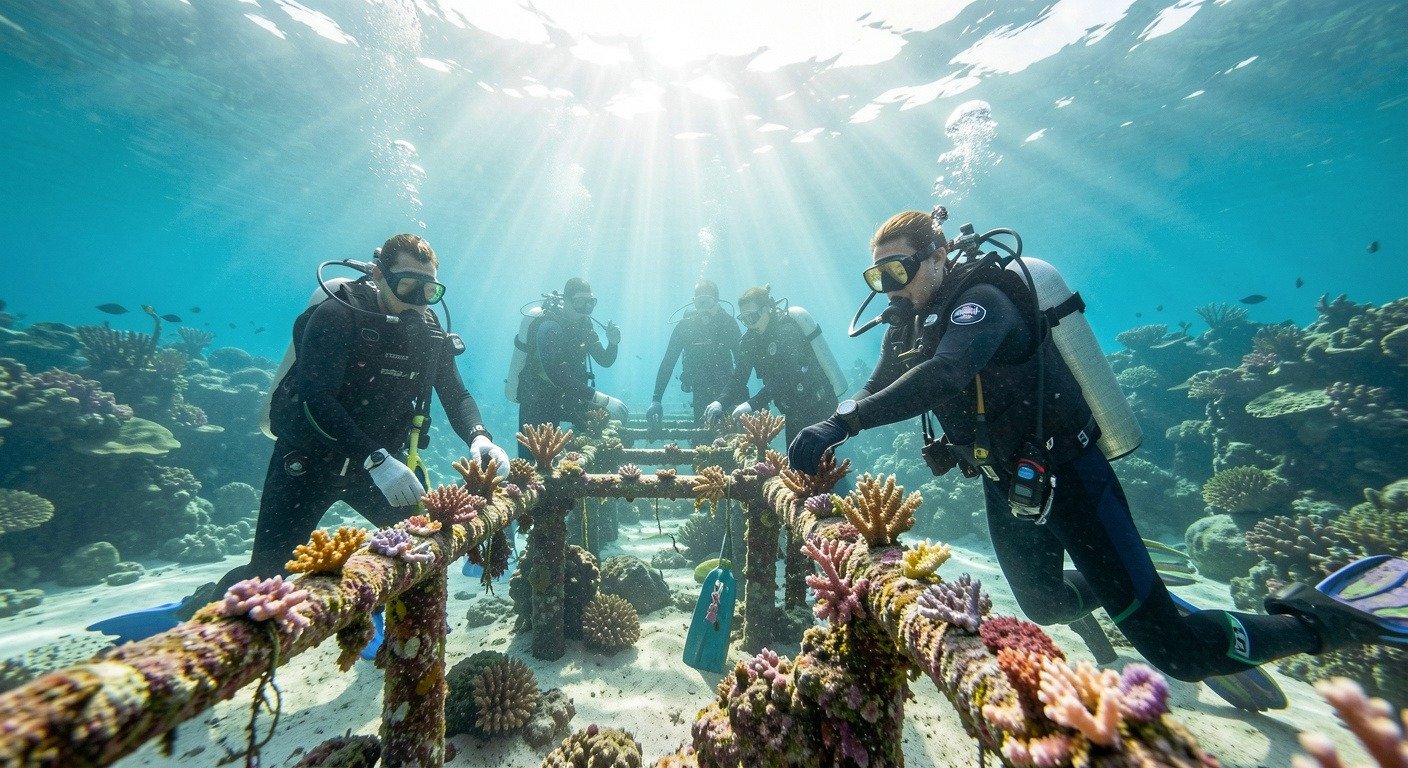
Conservation science is producing real results. Researchers at the Australian Institute of Marine Science are breeding heat-tolerant corals through selective breeding. NOAA’s Mission: Iconic Reefs aims to restore seven sites in the Florida Keys. The Coral Reef Breakthrough initiative aims to secure 125,000 square kilometers of shallow-water tropical reefs by 2030 and mobilize $12 billion. More than 20 active nurseries in the Caribbean already supply over 40,000 healthy corals per year for outplanting.
The tools exist and the funding is growing. What is shrinking, week by week, is the time left to deploy them.
Sources: NOAA Coral Reef Watch, GCRMN, Copernicus Climate Service, Coral Reefs journal, UNEP, Great Barrier Reef Foundation, Australian Institute of Marine Science.