Climate change is making hailstorms bigger, more damaging, and more frequent in unexpected places. Two landmark 2026 studies published in Nature and Nature Climate Change provide the clearest picture yet: hail-prone conditions are shifting poleward, hailstones are growing larger, and the seasonal timing of hail is changing in ways that could catch farmers and insurers off guard.
What the New Research Says
The first study, led by Timothy Raupach and published in Nature Climate Change in June 2026, looked at how the atmospheric ingredients for hail will change under global warming. Since climate models cannot simulate individual hailstorms directly, the researchers used proxy relationships, connecting measurable conditions like atmospheric buoyancy and wind shear to hail risk.
They applied three different proxies across eight climate models and multiple warming scenarios. The results pointed in a consistent direction: hail-prone conditions will decrease across many mid-latitude regions, especially in the Southern Hemisphere, and increase in mid-to-high latitudes, particularly in the Northern Hemisphere.
In practical terms, this means places like northern Europe, Canada, the northwestern United States, southeastern Australia, and New Zealand’s South Island could see more hailstorms in the future. Meanwhile, northern Australia, most of Africa, southern India, and southeastern China are projected to see fewer.
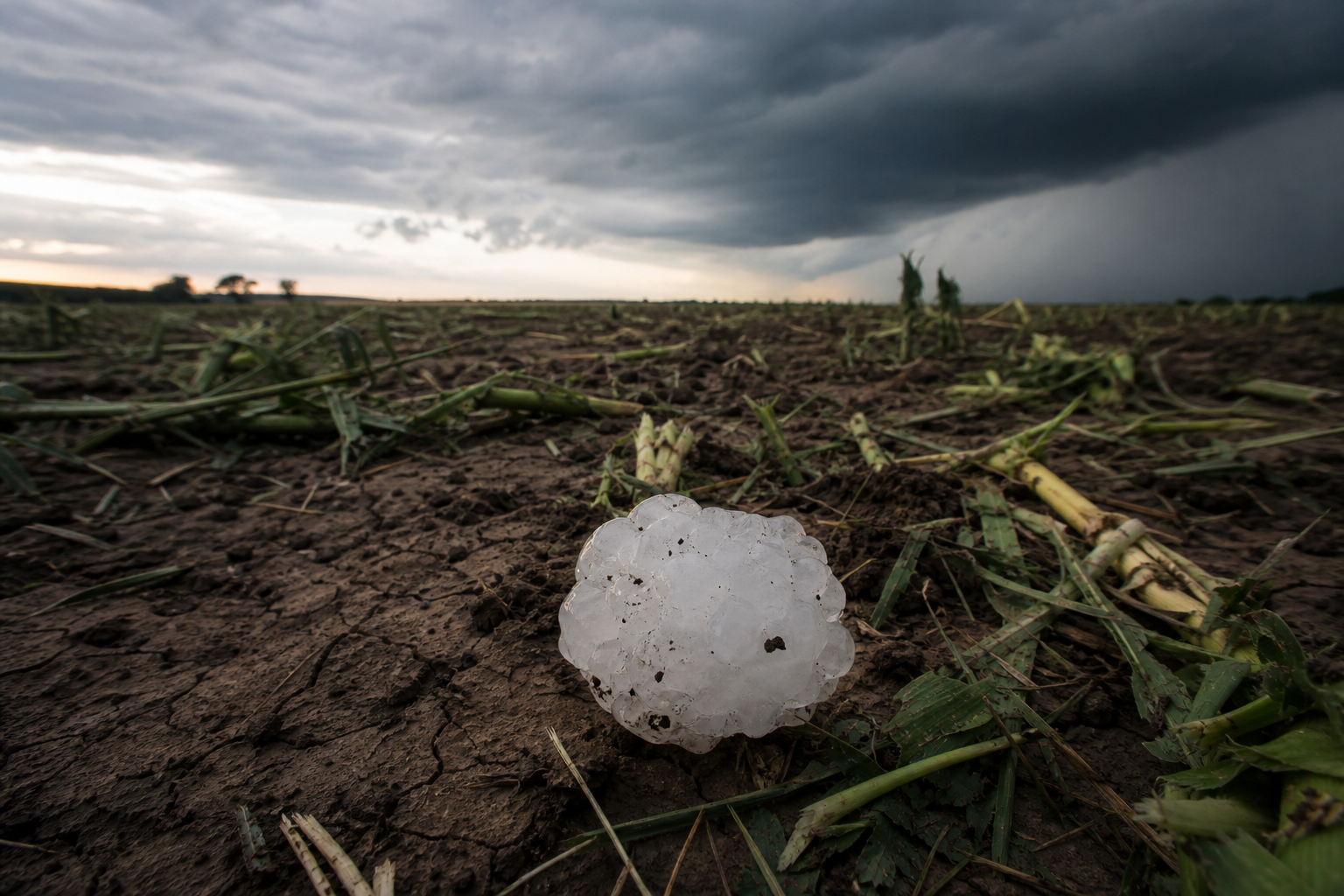
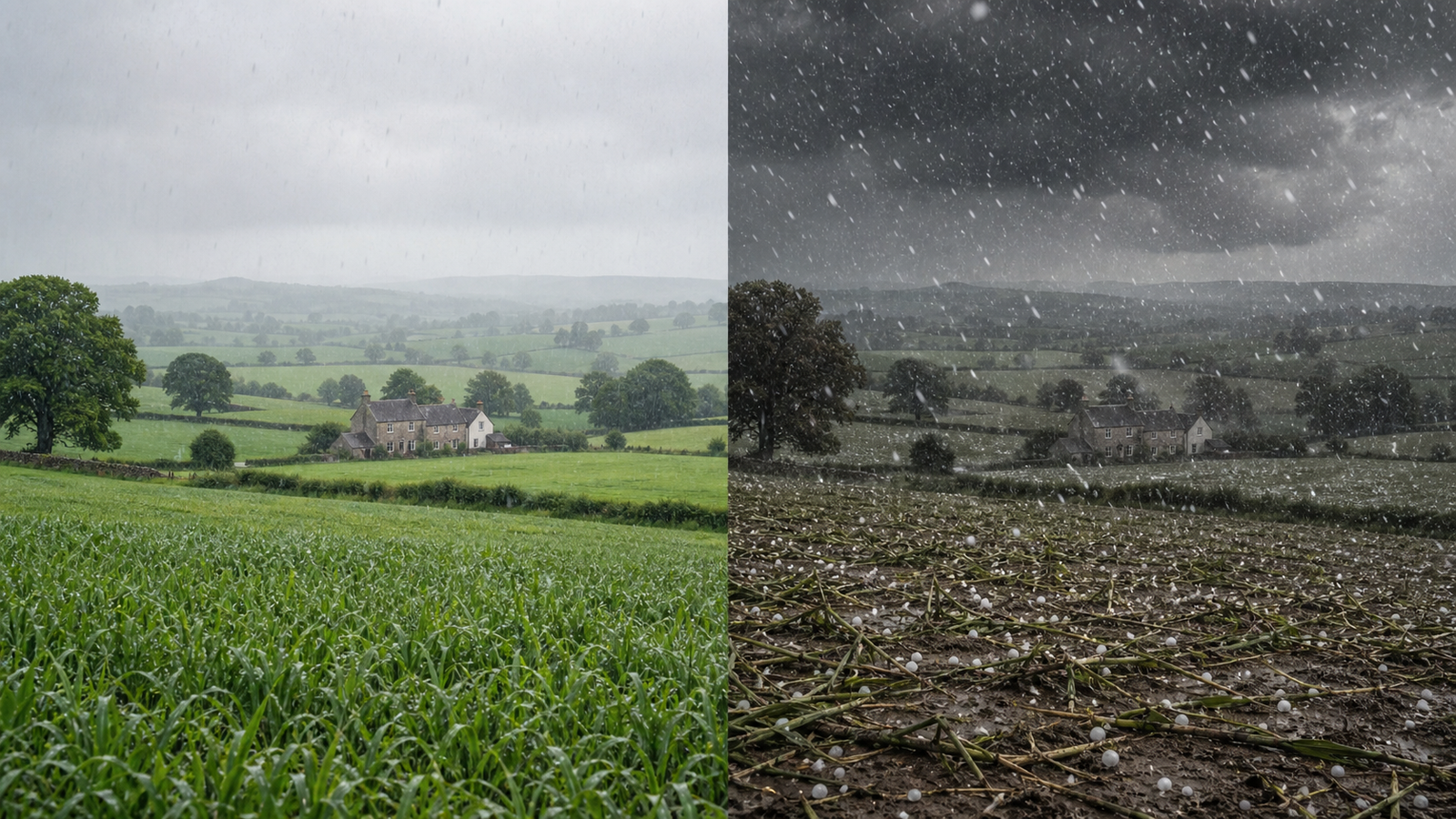
The second study, led by Shiyi Zhang at Peking University and published in Nature, used a different approach. Using a hailstone growth and melting model applied to climate simulations, Zhang’s team found that overall, hailstones will become more damaging. There will be more large stones and fewer small ones. This makes physical sense: in a warmer atmosphere, updrafts can be stronger because there is more moisture and heat to drive them. Those stronger updrafts keep hailstones aloft longer, allowing them to grow larger before falling. The extra melting that comes with a warmer atmosphere mostly affects the smaller stones that would have melted on the way down anyway.
“In a warmer atmosphere, updrafts can be stronger because there is more moisture and heat to drive them. Stronger updrafts keep hailstones aloft longer, allowing them to grow larger.”
Shiyi Zhang et al., Nature (2026)
A Seasonal Shift Nobody Planned For
One of the more surprising findings from the Raupach study is that hail may shift from summer to winter. Summer hail frequency is projected to decrease, while winter hail becomes more common.
For farmers, this flips the risk calendar. Summer crops like maize might actually face less hail damage. But winter crops, wheat, barley, canola, could be hit harder. And if arable farming regions shift poleward as the climate warms, as some agricultural projections suggest, those new farming areas may walk directly into higher hail exposure zones.
Global severe storm costs are already climbing. Part of that is simply because more people and property are in harm’s way, urban expansion, population growth, more insured assets. But the research suggests climate change is starting to play a measurable role as well.
Where the Studies Disagree, and Why That Matters
The two studies do not align everywhere. In the southeastern United States, mid-northern Africa, southern India, and northeastern Australia, Raupach’s team projects decreasing hail frequency, while Zhang’s team projects increasing damage potential.
These disagreements are not failures. They reflect the genuine difficulty of studying hail. Unlike temperature or sea level, hail is small-scale, short-lived, and poorly observed. There is no global hail monitoring network comparable to what exists for hurricanes or drought. Scientists are working with proxies and models because the direct data simply does not exist at a global scale.
The takeaway that both studies share is more important than the regional disagreements: more warming means more hail damage risk. The magnitude of the increase is directly tied to how much greenhouse gas emissions rise.
How Climate Change Affects Hailstorms
| Finding | Source |
|---|---|
| More large stones, fewer small ones | Zhang et al., Nature 2026 |
| Hail shifting from summer to winter | Raupach et al., Nature Climate Change 2026 |
| Mid-latitudes see less hail, high latitudes more | Raupach et al. |
| Australia 2025 hail season cost | A$1.9 billion (insurance) |
| Damage magnitude tied to emissions level | Both studies agree |
What This Means Right Now
The research arrives during an active severe weather season in the United States. As of mid-June 2026, a multi-day storm system put over 90 million Americans under severe weather risk, with large hail listed among the primary hazards for the Midwest and Mid-Atlantic regions.

What You Can Do
- Check your insurance. Hail damage is typically covered by comprehensive auto and homeowners policies, but deductibles vary. Confirm your coverage before storm season peaks.
- Protect your vehicle. If possible, park in a garage or under covered shelter when severe thunderstorm watches are issued. A car cover rated for hail can reduce damage.
- Know your regional risk. Hail risk is not static. If you live in a region historically considered low-risk, check updated severe weather outlooks at NOAA’s Storm Prediction Center.
- Strengthen your roof. Impact-resistant roofing materials (Class 4 rated) can significantly reduce hail damage and may qualify for insurance discounts.
For homeowners, the practical implications are straightforward: hail risk is not static. If you live in a region that historically saw little hail, that may be changing. Insurance premiums in hail-prone areas have been rising, and the trend is unlikely to reverse soon. As we covered in our tornado safety guide, severe storms are becoming more complex to predict and prepare for.
For policymakers and city planners, the research adds urgency to questions about building codes, crop insurance programs, and disaster preparedness in regions that have not traditionally budgeted for hail damage.
Read our explainer on how hurricanes form to understand another way warming oceans are reshaping severe weather.
The Bottom Line
Climate change is not simply making hail worse in a straight line. It is reshaping where hail falls, when it falls, and how big the stones grow. Some regions will see less hail. Others will see more, and more damaging, hail than they have ever experienced before.
The two 2026 Nature studies represent the most detailed look yet at how hail is changing. Their central message is clear: the hail risk map is being redrawn, and the faster emissions are cut, the less dramatic the redrawing will be.
Sources: Raupach et al., Nature Climate Change (June 2026); Zhang et al., Nature (2026); NOAA Storm Prediction Center; NWH June 2026 Storm Outbreak coverage.