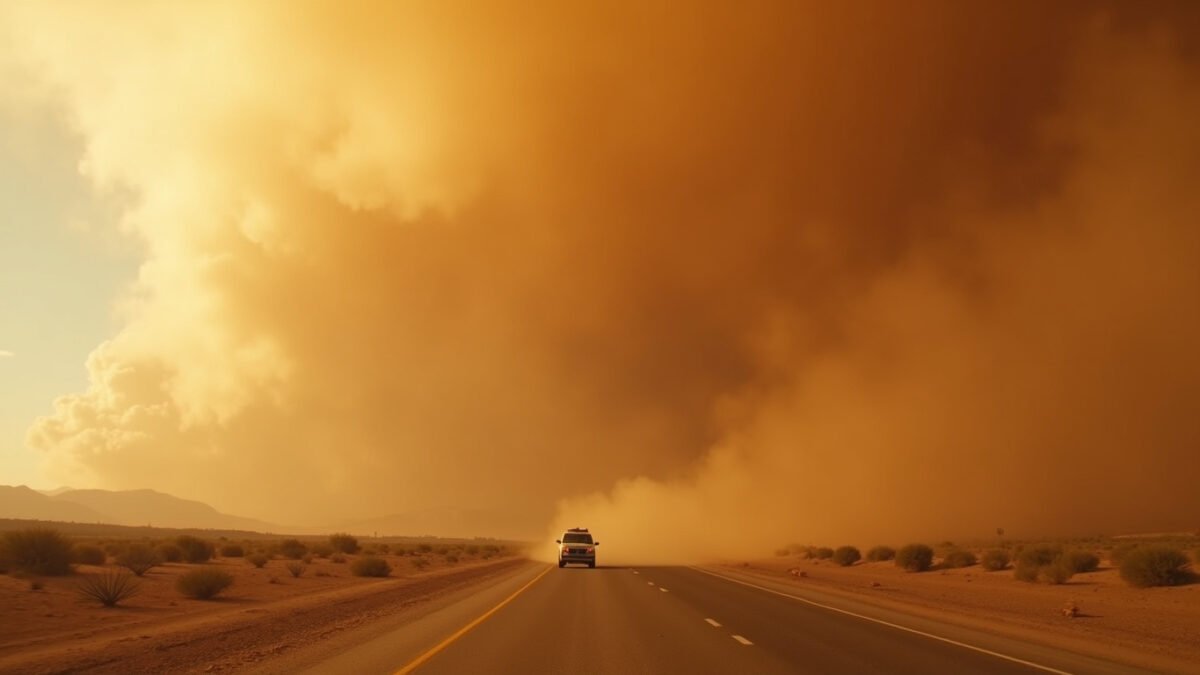
You are driving west of Phoenix on a July afternoon when the horizon goes wrong. The sky ahead is not blue. It is brown, from the ground to the clouds, and it is moving toward you at highway speed. The radio crackles a dust storm warning. You have maybe three minutes before the world disappears.
This is a haboob, and if you have ever seen a photo of a giant wall of dust swallowing a city, you have seen one. But a haboob is not just a big dust storm. It is a dust storm with a very specific, violent origin story.
What Is a Haboob?
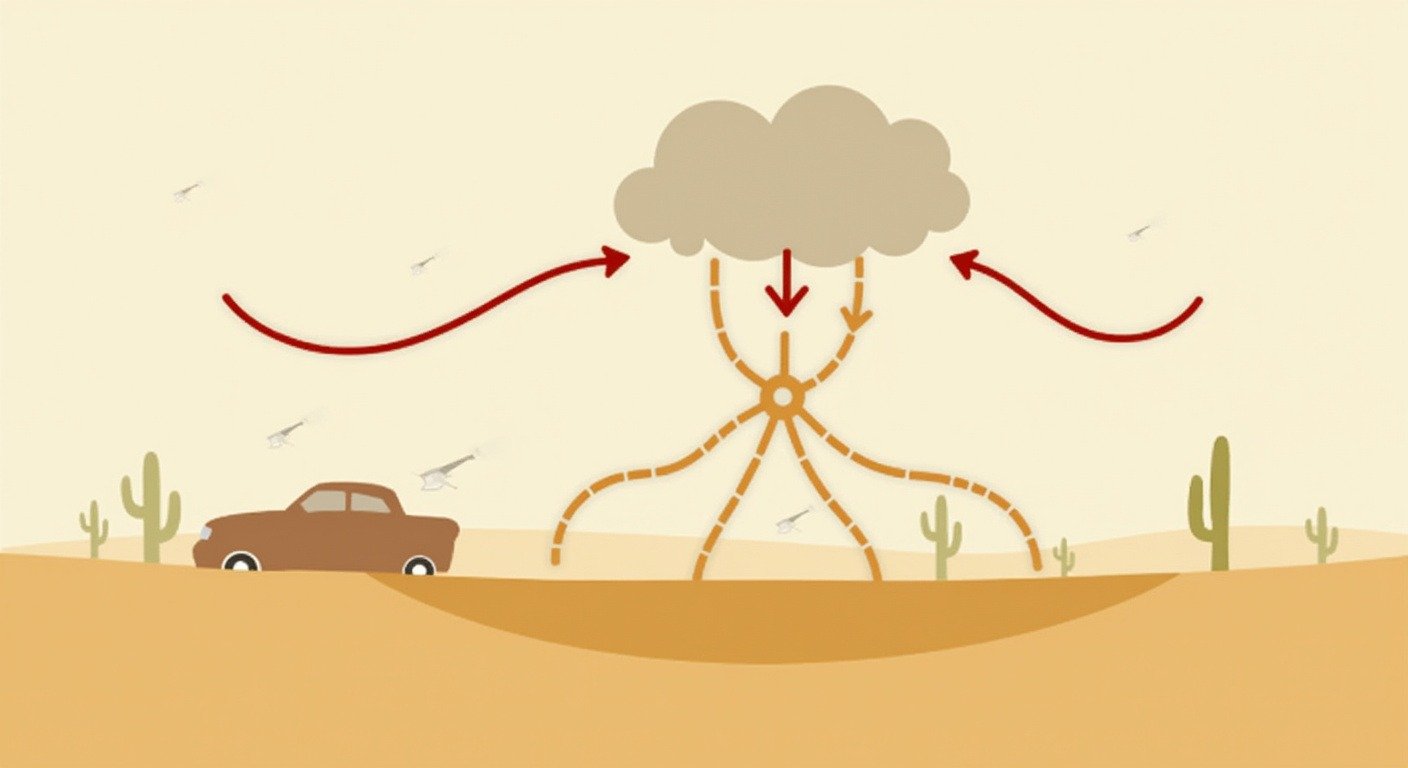
What is a haboob? A haboob is an intense dust storm created by the cold downdraft of a collapsing thunderstorm. When a thunderstorm runs out of energy, all its cold air drops straight down, slams into the ground, and spreads outward in every direction. That spreading wind, called an outflow, sweeps up loose desert soil and hurls it forward as a wall of dust that can be 100 kilometers wide and several kilometers high.
The word “haboob” comes from the Arabic *haab*, meaning wind or blow. It was first used to describe the massive dust storms of Sudan, where documented haboobs have reached 2,000 meters high and advanced at 70 kilometers per hour for over six hours. The term was first applied to North American storms in 1972 by a group of Arizona scientists, and it entered common US usage after a massive Phoenix dust storm in 2011 darkened the city in the middle of the afternoon. According to the National Weather Service, haboobs remain one of the most dramatic and dangerous weather phenomena in the American Southwest.
How Do Dust Storms Form: The Haboob Lifecycle
The haboob formation process is one of the most elegant chain reactions in meteorology. It starts not with wind, but with rain that never reaches the ground.
A typical desert thunderstorm builds through the afternoon as the sun heats the surface, following the same three-ingredient recipe that powers every thunderstorm on Earth. The storm matures, and eventually it collapses. The cold air inside the storm, denser than the surrounding desert air, plunges downward in what meteorologists call a downburst or microburst.
When this column of cold air hits the ground, it cannot go down any further. It spreads outward in every direction, like water from a faucet hitting the sink. This expanding air is the outflow.
Now something critical happens. Much of the rain falling from the thunderstorm evaporates before it reaches the ground, a phenomenon called virga. That evaporation chills the descending air even further. Colder air is heavier, so it accelerates toward the ground, hitting harder and spreading faster.
The outflow wind, now moving at 35 to 100 kilometers per hour, hits the dry desert floor. It scoops up fine dust and sand and pushes it forward. The result is the haboob wall: a clean, advancing front of dust that can stretch 100 kilometers wide, rise several kilometers into the sky, and reduce visibility to near zero in seconds.
This thunderstorm outflow dust wall is what separates a haboob from a regular dust storm. All haboobs are dust storms. Not all dust storms are haboobs.
Haboob vs Dust Storm: The Difference That Matters
The distinction between haboob vs dust storm is not academic. It involves the cause, the scale, and the level of danger.
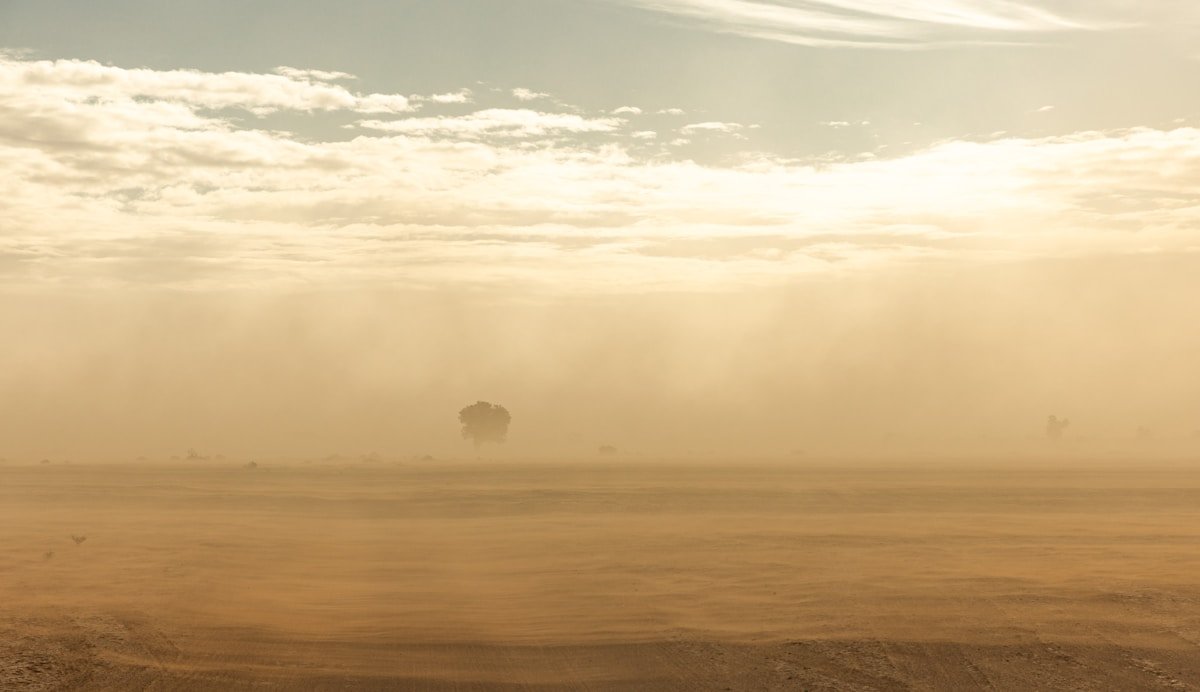
A regular dust storm is driven by surface winds, typically ahead of a cold front or along a dry riverbed. The dust stays relatively low to the ground, and visibility, while poor, rarely drops to zero instantly. Dust storm science categorizes these as synoptic-scale events: broad, gradual, foreseeable.
A haboob is thunderstorm-driven. The dust is lifted high into the atmosphere by the force of the downburst. The wall arrives suddenly, often with almost no warning. Visibility drops from clear to nothing in under a minute. Highway pileups involving dozens of vehicles are a recurring tragedy during haboob events because drivers do not have time to react.
Then there are dust devils, the small spinning whirlwinds you see on hot afternoons. These form from surface heating alone and are a completely different phenomenon from both haboobs and regular dust storms. They last minutes, rarely exceed a few meters wide, and are mostly harmless.
Understanding what causes a dust storm of the haboob variety matters because the safety response is different. A dust storm warning means reduced visibility ahead. A haboob means a wall of dust approaching at speed, and the correct response is immediate, not gradual.
Where Haboobs Happen
Haboobs occur wherever thunderstorms meet deserts. The American Southwest sees them most frequently during monsoon season, from June through September, when moist air from the Gulf of California fuels afternoon thunderstorms over the Sonoran Desert. Phoenix, Arizona, experiences several haboobs every summer. The July 2011 Phoenix dust storm, the one that cemented the word in the American vocabulary, was nearly 2 kilometers high and traveled 240 kilometers before dissipating.
But the Southwest is only one theater. The Sahara and Sahel regions of Africa experience the largest haboobs on Earth. Khartoum, Sudan, sits at the center of the world’s most active haboob corridor. The Arabian Peninsula, plus Iraq and its neighbors, sees them regularly. Australia records monsoon haboob events in its arid interior. NASA has even observed haboob-like dust storms on Mars and Saturn’s moon Titan.
The World Health Organization estimates that 330 million people are exposed daily to wind-transported dust particles. Roughly 25 percent of dust emissions originate from human activities: deforestation, land degradation, water mismanagement, and the expansion of deserts driven by climate change. The same forces that intensify heat domes are drying out landscapes and creating more loose soil for future storms to lift.
What a Haboob Does to Your Body
Dust storm safety is not just about visibility. A haboob carries a payload that can harm you days after the sky clears.
The dust suspended in a haboob contains particulate matter classified as PM10 and PM2.5. PM2.5 particles are 30 times thinner than a human hair. When you breathe them in, they bypass your nose and throat and lodge deep in your lungs. From there, according to the WHO fact sheet on sand and dust storms, they can enter your bloodstream.
The immediate effects include coughing, tightness in the chest, and shortness of breath. The long-term effects are more serious: chronic respiratory disease, cardiovascular problems, and increased mortality rates in communities with frequent dust exposure.
In the American Southwest, haboob dust carries an additional threat. The soil in the desert Southwest, including Arizona and the California borderlands as well as New Mexico, contains *Coccidioides* fungal spores. When a haboob kicks up that soil, the spores become airborne. Inhaling them can cause Valley fever, a fungal infection that produces flu-like symptoms and can, in severe cases, spread from the lungs to the bones to the skin or even the brain.
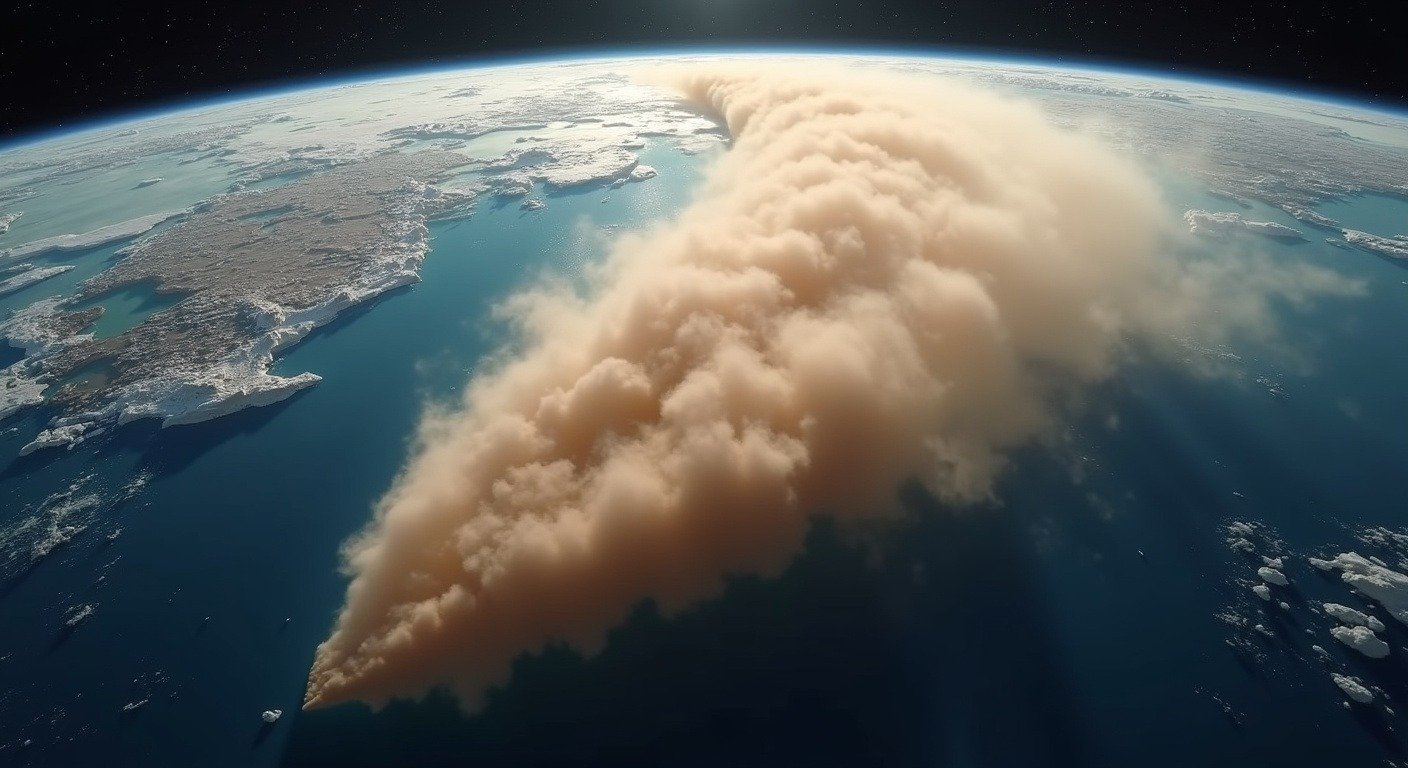
The NASA Earth Observatory tracks dust transport on a global scale. Sahara dust regularly crosses the Atlantic and reaches the Caribbean. Central Asian dust reaches the Korean Peninsula and Japan. The same storm that chokes a city in Sudan also, eventually, fertilizes the Amazon rainforest with phosphorus. Nature’s interconnectedness is nowhere more visible than in a dust plume seen from space.
How to Stay Safe When a Wall of Dust Is Coming
The National Weather Service issues Dust Storm Warnings when haboobs are detected. If you are in a vehicle, the protocol is counterintuitive but life-saving.
Pull completely off the roadway. Do not stop on the shoulder or in a travel lane. Turn off ALL your lights, including your headlights and hazard lights. Take your foot off the brake pedal and stay in the vehicle with your seatbelt fastened.
The “lights out” rule exists because other drivers in near-zero visibility will follow the lights they can see. If they see your taillights, they will steer toward them, assuming you are on the road. They will collide with your parked vehicle. This is not hypothetical. Multi-vehicle pileups during dust storms have killed dozens of people.
If you are outside when a haboob approaches, cover your nose and mouth with a cloth or mask. If you have eye protection, wear it. Get indoors as quickly as possible and close all windows and doors. The dust penetrates everything. After the storm passes, change your clothing and rinse your eyes and skin.
Related: Monsoon Season 2026: What Drives These Seasonal Winds
The Wonder and the Warning
On July 12 every year, the United Nations observes the International Day of Combating Sand and Dust Storms. The date is a recognition that dust storms are not local problems. They are transboundary, crossing continents and oceans, affecting economies, health systems, and ecosystems thousands of kilometers from their source.
So what is a haboob, in the end? It is a thunderstorm’s dying breath, turned sideways and weaponized with the desert floor. It is the atmosphere reminding us that it can still surprise us, still reshape a landscape in minutes, still turn a desert highway into a wall of darkness moving at 60 miles per hour. The Arabic word gave us the name. The science gives us the understanding. The preparation, the pulling over and turning off the lights, gives us the safety. The rest is wonder.