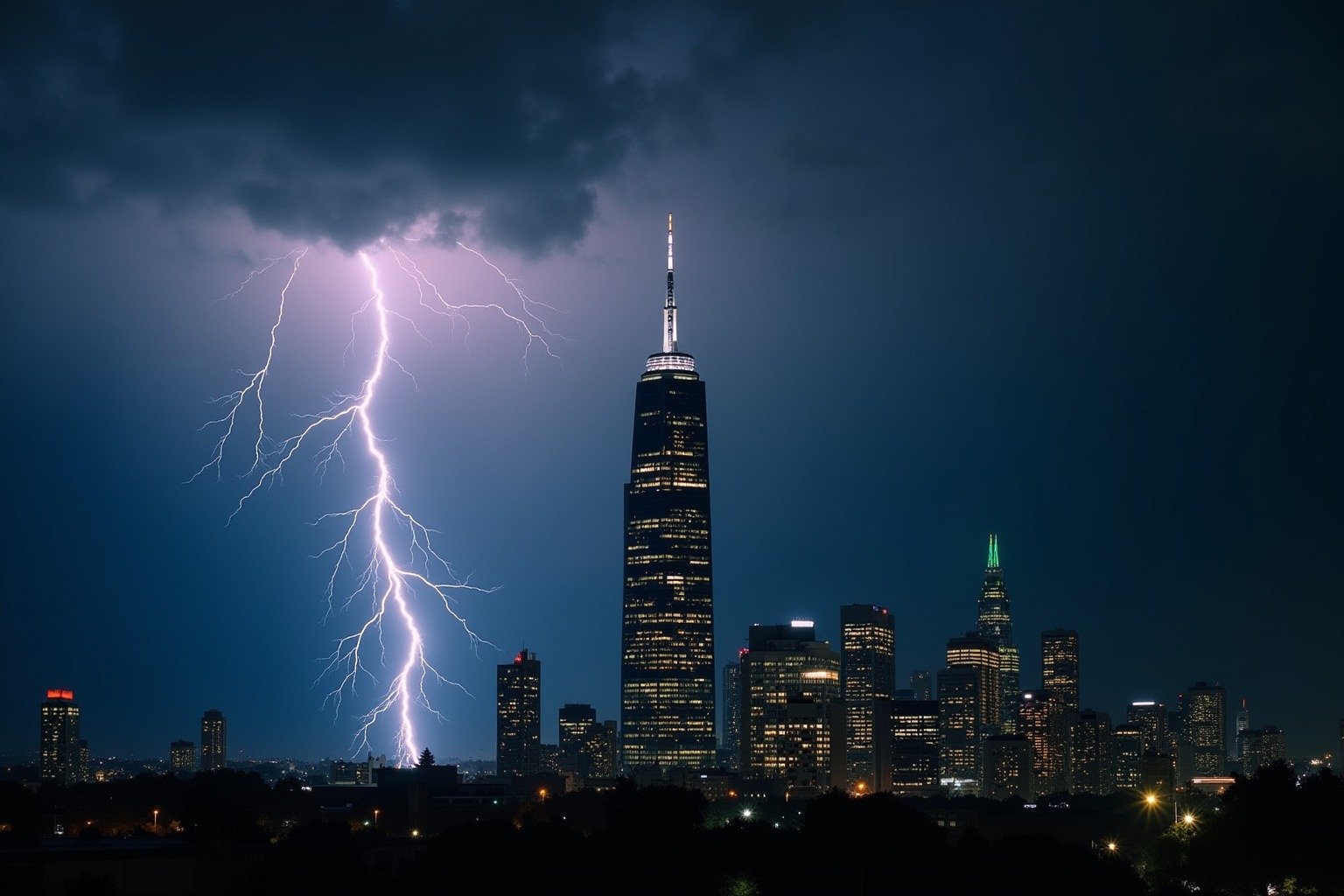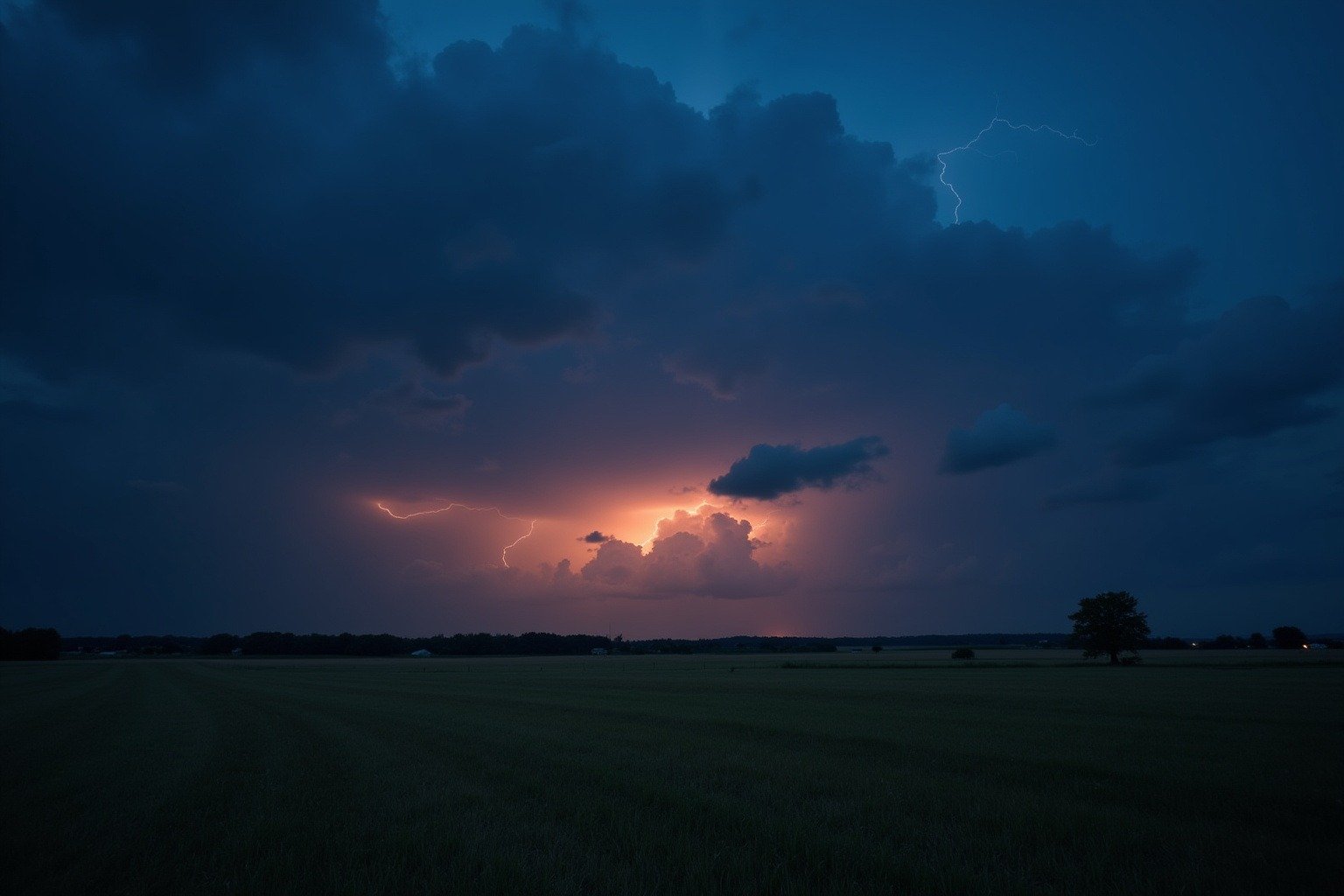
You are sitting on the porch on a humid July night. A cold drink sweats in your hand. The air hangs still. Stars blink overhead through the haze. Then it starts. A flicker on the horizon. Silent pulses of electric white, one after the next, painting the distant sky in brief flashes. No thunder follows. Just light. You are watching what people have called heat lightning for generations. But the heat lightning science behind it is straightforward: heat lightning does not exist as a distinct phenomenon.
What the Heat Lightning Science Actually Shows
Most people get this wrong. Heat lightning is not a special kind of lightning. It is not caused by hot weather. It is not a silent electrical phenomenon unique to summer nights. It is simply regular lightning from a distant thunderstorm, the same phenomenon that how lightning forms covers in detail. You cannot hear the thunder because the storm is too far away. That is the entire explanation. The question what is heat lightning has a one-sentence answer: it is a thunderstorm happening somewhere over the horizon.
The numbers make this clear. Thunder rarely travels more than 10 to 15 miles. Lightning, on the other hand, is visible from much farther. According to the National Weather Service, the flash from a distant thunderstorm reaches your eyes from up to 100 miles away on a clear night. That strike you see on the horizon might have happened in a storm two counties to the west. The weather at your house could be dead calm while a line of thunderstorms rages 70 miles away. The light outruns the sound by a factor of nearly a million. To understand why thunder fades so fast, what makes thunder loud explains the sound physics in full.
The name “heat lightning” comes from when people see it most often: hot, humid summer evenings when the air is thick and thunderstorms are firing up across the region. But the heat itself has nothing to do with producing the flashes. The Farmers’ Almanac describes this as one of the most persistent weather myths in American folklore. Generations of people grew up believing that summer heat alone could spark silent lightning in an otherwise clear sky. Local communities passed the name down without ever questioning the science behind it. The reality is simpler than the myth ever was.
Why You Cannot Hear the Thunder
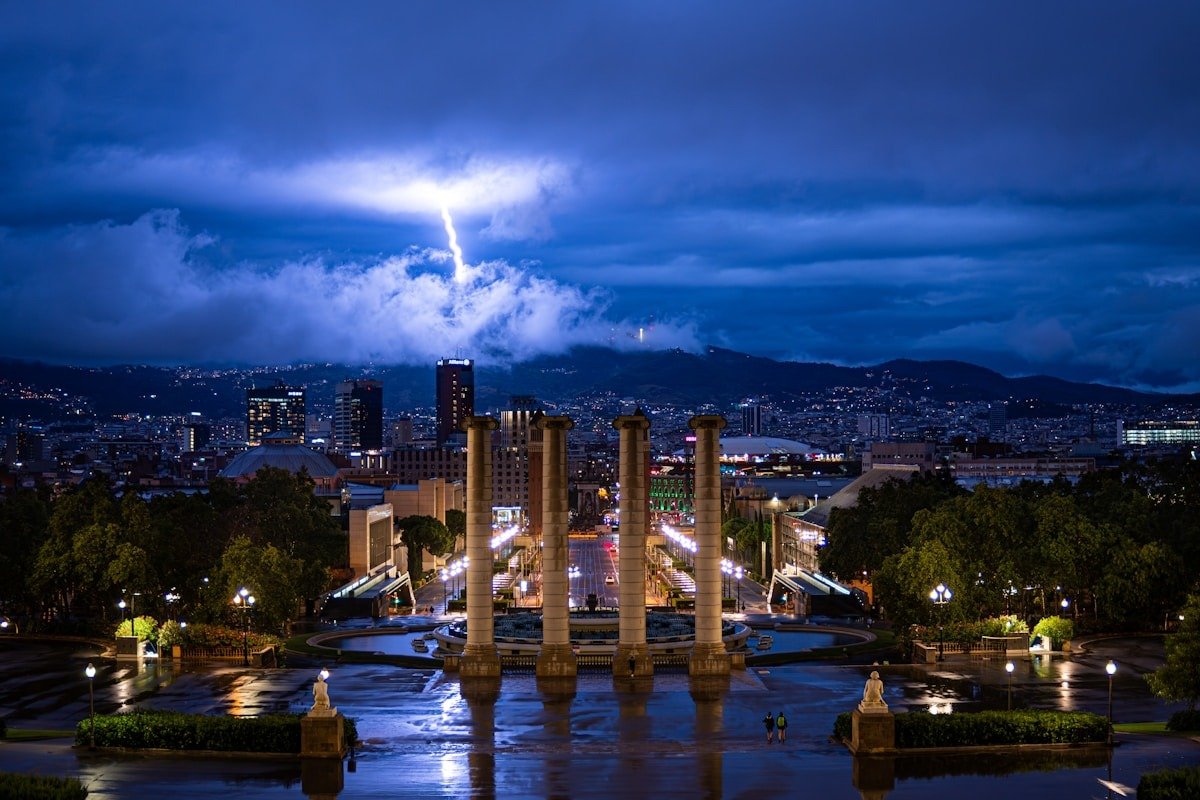
Sound and light behave very differently in the atmosphere. That is the entire explanation for silent lightning summer displays. Light travels at 186,000 miles per second. Sound crawls at roughly 760 miles per hour. A lightning bolt 20 miles away reaches your eyes almost instantly. The thunder takes nearly two minutes to cover the same distance. By the time it would arrive, most of the sound energy has already dissipated.
The professional term is atmospheric refraction, and it makes the silence even more complete. Sound waves bend when they pass through layers of air at different temperatures. On a warm summer night, the air near the ground is hottest. Sound traveling through that warm surface layer curves upward, away from your ears. The UCAR Center for Science Education describes the result as an acoustic shadow. You stand in the quiet zone while thunder rolls on above you, completely inaudible from the surface.
Distance kills sound through simple energy loss too. A thunderclap from a bolt one mile away rattles your windows at 120 decibels. At 10 miles, it is a whisper. At 15 miles, it is gone. It is gone. The lightning stays bright enough to light up the horizon.
Why Hot Summer Nights Are the Best Time to See It
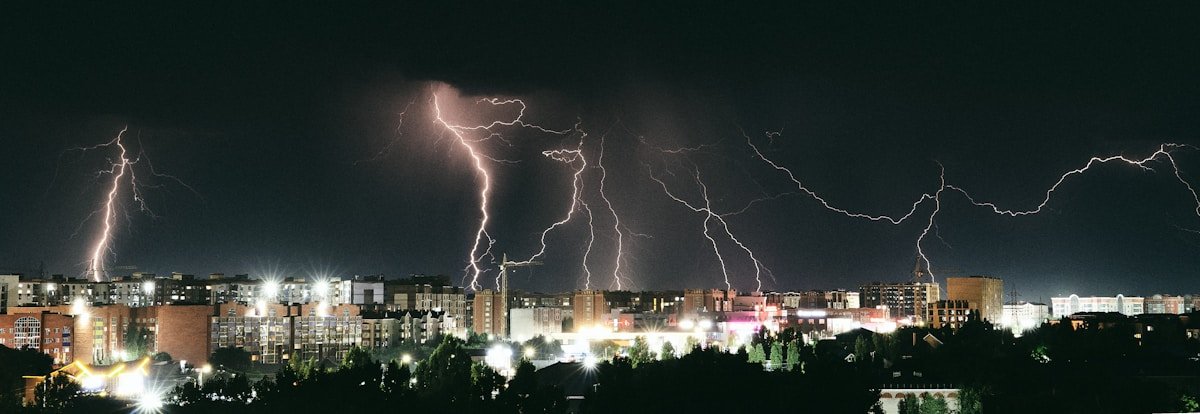
Clear skies after sunset create the perfect viewing conditions for distant thunderstorm lightning. A thunderstorm 60 miles away during the day is invisible to you. Sunlight washes it out. After the sun goes down, the sky goes dark while those distant storms keep churning. Every flash stands out sharply against the black.
Hot, humid air also scatters light differently than cool, dry air. The moisture in a summer atmosphere makes distant flashes appear larger and more diffuse. You see a broad, soft glow rather than a sharp, jagged bolt. This visual softening adds to the illusion that the lightning is happening in your local sky rather than in a storm system beyond the horizon. It is one reason the myth survived for so long. Your eyes tell you the flash is nearby. Your ears tell you nothing. Your brain fills the gap with a folk explanation.
The seasonal pattern matters too. Summer brings the most unstable lower atmosphere of the year. Thunderstorms fire up in the late afternoon and can last well past midnight. You might have clear skies at your house while a line of storms rages 70 miles to the west. July and August are the peak months for sightings across the eastern United States. Farmers keeping late hours in the fields have watched these silent displays for centuries. The mental stress of not knowing whether a storm is approaching or staying distant has shaped how rural communities read the night sky

Telling Heat Lightning Apart From the Real Thing
The heat lightning vs regular lightning distinction matters for more than curiosity. The heat lightning science confirms a practical rule that could save your life. If you can hear thunder, you are within striking range. Lightning can strike up to 10 miles from the parent storm. If you see a flash and hear thunder within 30 seconds, that storm is less than 6 miles away. Seek shelter immediately. Do not wait for rain to start.
If 30 seconds pass without a sound, the storm is at least 6 miles distant. A full minute of silence means roughly 12 miles. If you count slowly to 60 twice and still hear nothing, those silent flashes are truly distant lightning. You are safe to stay on the porch and watch. But do not treat that safety as absolute. The National Weather Service warns that distant storms can move toward you faster than most people expect. What starts as silent heat lightning at 9 p.m. can become a close-range thunderstorm by 10 p.m. Homes and schools in storm-prone areas run regular drills for exactly this scenario. A distant light show can turn into a weather emergency faster than the forecast updates.
What Silent Lightning Teaches Us
Heat lightning is a reminder that human senses were never built to understand weather at the scale it actually operates. You see the flash. Your brain expects the boom. When the boom never comes, your mind defaults to the simplest available story. The myth persisted for over a century because it felt true. Hot night. Silent flashes. Must be the heat itself.
The real heat lightning science is better than the myth. It is a story about the physics of light and sound moving through a layered atmosphere at wildly different speeds. It is about storms powerful enough that you can watch them from 100 miles away on a clear night. Next time you sit on the porch watching silent flashes paint the summer sky, you will know exactly what you are really seeing. A thunderstorm raging beyond the horizon. A light show performed from a distance so great the sound cannot reach you.
The science behind those silent flashes is stranger than it looks — here is why heat lightning happens.