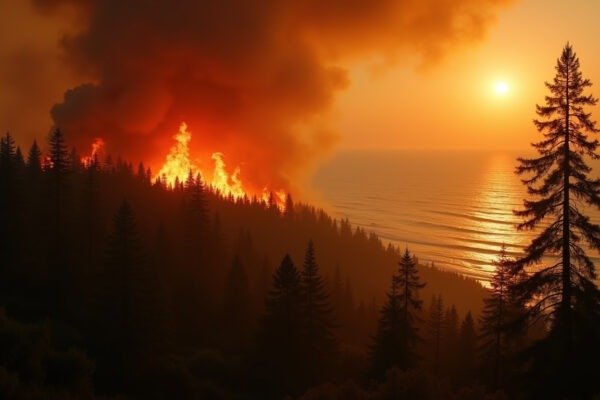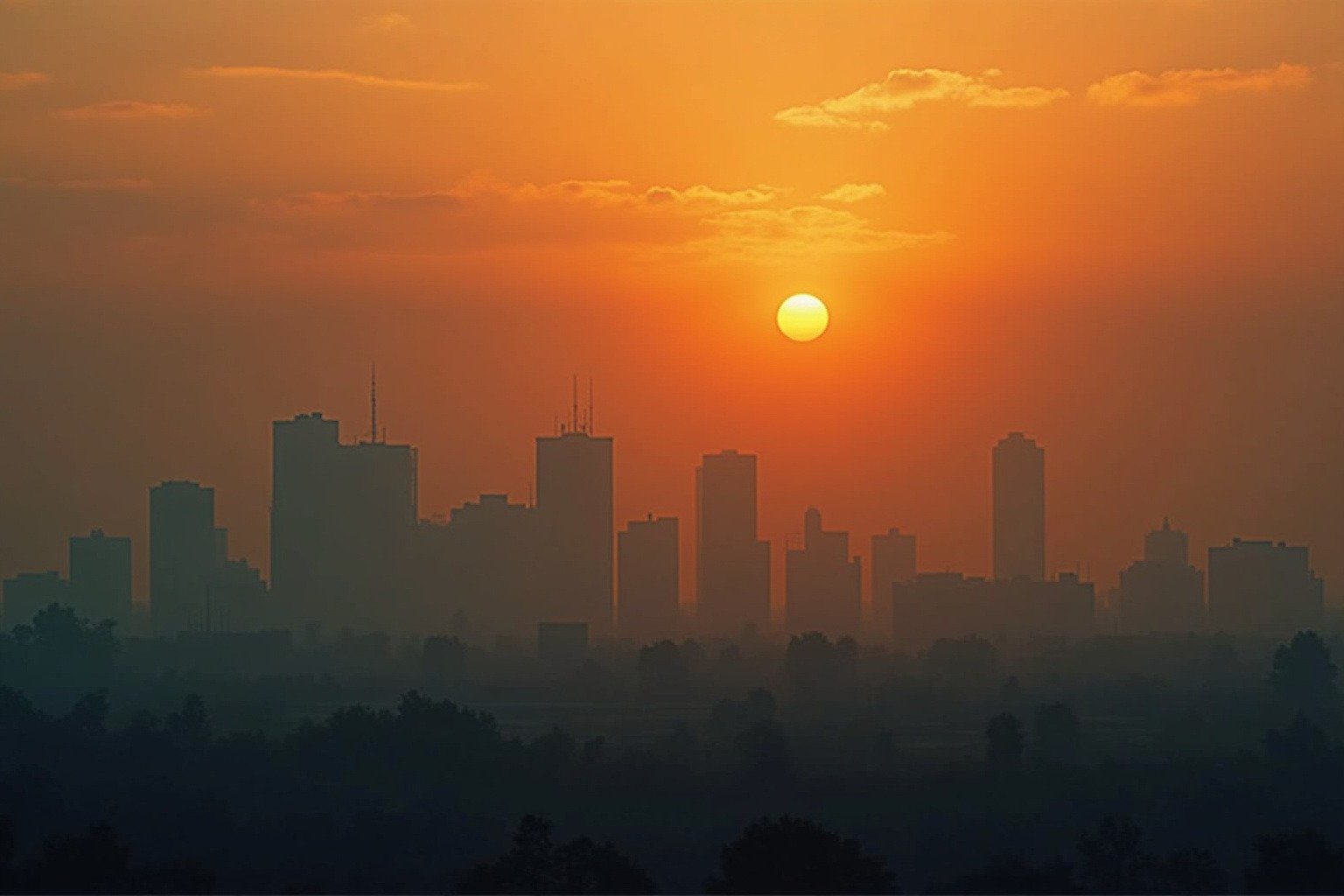
Smoke drifts south across the border like an uninvited guest, turning blue skies gray and making every breath a reminder that fires hundreds of miles away are now everyone’s problem. More than 850 wildfires are actively burning across Canada, and the smoke they produce is choking cities from Minneapolis to Boston. The Canada wildfire smoke 2026 season has become the year’s most far-reaching environmental crisis, triggering air quality alerts July 2026 across more than a dozen states.
What the Canada Wildfire Smoke 2026 Crisis Looks Like
Canada’s 2026 wildfire season started slowly but exploded in late June as dry, warm conditions settled over the boreal forests. By mid-July, the Canadian Interagency Forest Fire Centre reported nearly 850 active fires burning across the country, with the heaviest concentration in Ontario, where 113 fires remain completely out of control. (abcnews.com)
The result is a smoke plume visible from space. NASA’s Earth Observatory captured images of the smoke moving east across the Great Lakes and into the northeastern United States. On the ground, tens of millions of Americans woke up to hazy skies and air quality alerts stretching from the upper Midwest through the mid-Atlantic states and into New England. (science.nasa.gov)
The Minnesota Pollution Control Agency issued air quality alerts across northeast Minnesota through Sunday evening and southeast Minnesota through Monday morning, warning that heavy smoke would remain across the region through July 20. (www.pca.state.mn.us)
Why the Fires Are Burning: The Science Behind Canada Wildfire Smoke 2026
Wildfire smoke in 2026 travels farther and lingers longer because of a combination of factors that have intensified in recent years.
When forests burn, they release tiny particles into the air. These particles are so small that wind can carry them for thousands of miles. A stationary front can then trap that smoke over cities for days, refusing to let it disperse.
The dangerous component in wildfire smoke is PM2.5, which stands for particulate matter smaller than 2.5 microns. PM2.5 wildfire smoke particles are about 30 times smaller than a human hair. Their microscopic size lets them bypass the body’s natural defenses in the nose and throat and travel deep into the lungs and bloodstream. This is why wildfire smoke health effects can be severe even for people who live hundreds of miles from the nearest fire.
The fires spread rapidly because dry, warm conditions turned the boreal forest into kindling. A hot and unusually dry start to summer followed a winter with below-average snowpack, leaving the forest floor ready to burn. The Canadian Interagency Forest Fire Centre confirmed that most of the 113 out-of-control Ontario fires grew explosively, with one observer describing how “trees vanished in seconds” as flames raced through drought-stressed timber. (abcnews.com)
How It Affects People: Health, Economy, and Daily Life
The smoke crisis touches nearly every part of life for the millions living under air quality alerts July 2026.
Health: The New York City Emergency Management department warned residents about the wildfire smoke health effects, stating that “no one is immune.” PM2.5 particles can trigger asthma attacks, worsen heart and lung conditions, and cause burning eyes, scratchy throats, and headaches even in healthy adults. The Air Quality Index in affected regions reached unhealthy levels, meaning everyone, not just sensitive groups, needed to limit outdoor exposure. (www.nyc.gov)
Daily life: Summer camps moved indoors. Outdoor concerts and sports events faced cancellations. In Vermont, air quality alerts forced residents to close windows during what should have been pleasant summer evenings. Parents in Chicago kept children inside for the third consecutive day. A resident told The Guardian on July 18 about the “profound, resigned hopelessness” of yet another summer spent under smoke. (www.theguardian.com)
Economy: Outdoor workers from construction crews to delivery drivers faced the choice between lost wages and dangerous exposure. Restaurants with outdoor seating saw empty patios. Tourism in affected regions dipped as travelers canceled plans. The broader economic impact of repeated smoke events across multiple summers runs into billions in lost productivity and health care costs.
Mental health: Climate anxiety has a new face in 2026. It is not abstract graphs or distant polar bears. It is the smell of smoke at sunrise and the orange sun through a hazy sky. Millions are discovering that clean air, once taken for granted, can no longer be assumed.
Why It Matters Now: A Continental Crisis
The Canada wildfire smoke 2026 season marks a shift in how North America experiences fire. What was once a regional problem confined to a few western states has become a continental crisis. Smoke from fires in northern Ontario and Manitoba now routinely blankets cities from Chicago to Boston, carried by wind currents across the Great Lakes and into the most densely populated corridor on the continent.
What makes 2026 different is the speed of escalation. After a slow start to the fire season, conditions shifted rapidly in late June. By mid-July the number of active fires jumped to more than 850, according to the Canadian Interagency Forest Fire Centre. The fires are now affecting not just the typical western states accustomed to wildfire smoke but the entire eastern seaboard.
Climate scientists point to a pattern: warmer winters reduce snowpack, earlier springs dry out forests sooner, and longer summers extend the fire season. The PM2.5 wildfire smoke from these fires is part of a trend documented in NWH’s coverage of Wildfire Smoke Crossing Continents and the Ontario Wildfires 2026 that forced mass evacuations earlier this month.
What We Can Learn: Protection and Preparation
The immediate priority is protecting health from wildfire smoke health effects. Experts recommend checking the Air Quality Index at AirNow.gov before spending time outdoors. On unhealthy air days, N95 masks offer meaningful protection against PM2.5 particles. Running air purifiers indoors and keeping windows closed makes a measurable difference.
The broader lesson is that wildfire smoke does not respect borders. A fire in northern Ontario becomes a health emergency in Boston. This reality demands cross-border coordination on fire management, early warning systems, and public health communication.
As fires continue to burn and smoke continues to drift, the summer of 2026 is writing another chapter in what the Fire Year 2026 analysis describes as the new normal: hotter, drier summers filled with smoke. Understanding PM2.5 wildfire smoke and its health effects has become essential knowledge for anyone living in North America.