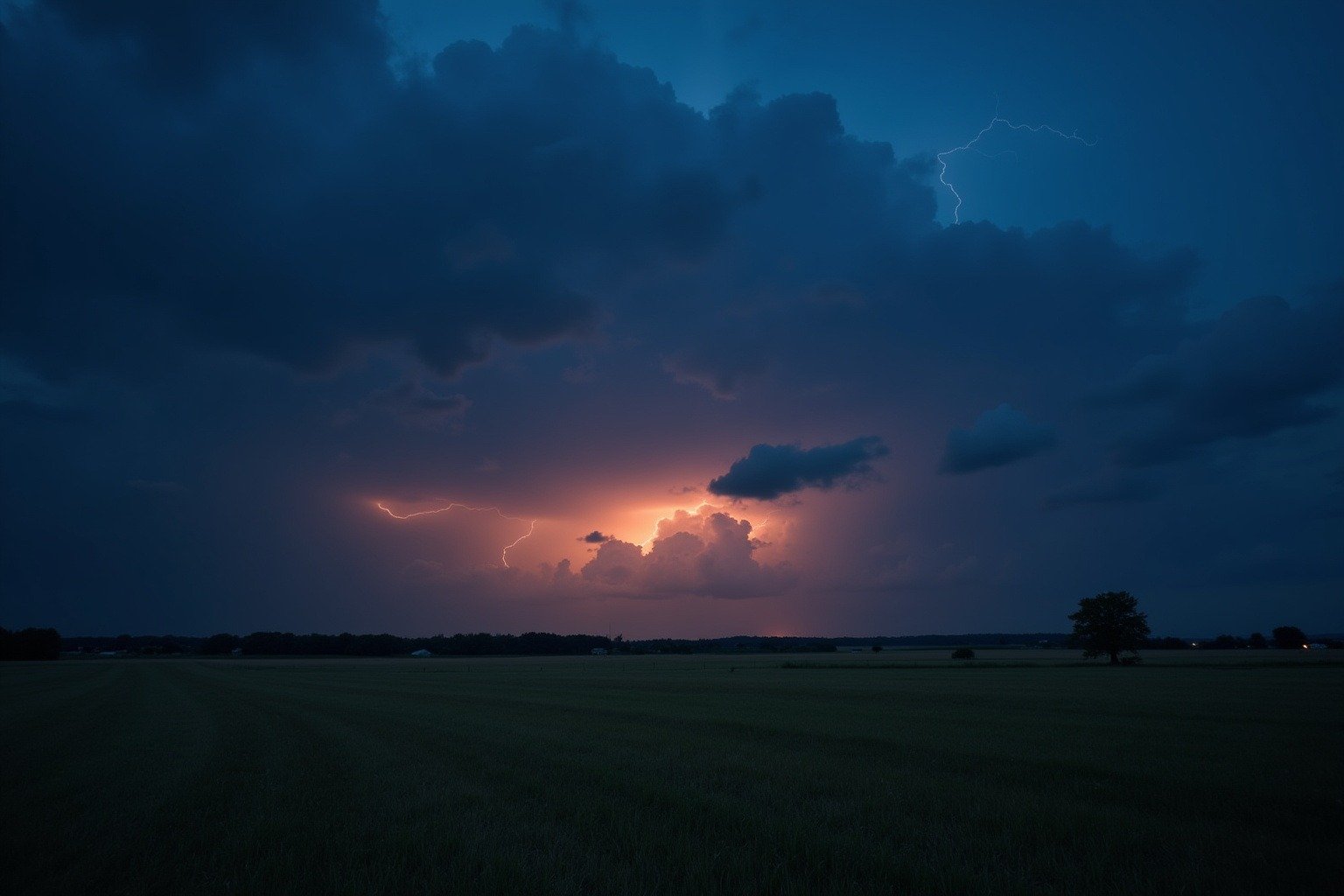
The sky darkens without warning. A gust of cool wind arrives first, kicking up dust and bending tree branches. Then the first low rumble rolls across the countryside, and the show has already started.
A thunderstorm is a rain shower with lightning and thunder. About 16 million ignite each year worldwide, with roughly 2,000 active right now. That is how thunderstorms form everywhere: from three ingredients: moisture, unstable air, and a push upward.
In Simple Terms
A thunderstorm is a rain shower with lightning and thunder, powered by three ingredients: moisture, unstable air, and a lifting mechanism. About 16 million thunderstorms ignite worldwide each year, roughly 2,000 are active right now. Understanding these three ingredients is the key to knowing how thunderstorms form and how to stay safe around them.
Quick Summary
- Thunderstorms need three ingredients: moisture, unstable air, and a lifting mechanism
- Every storm goes through three stages: developing, mature, and dissipating
- The four main types are single-cell, multi-cell, squall line, and supercell
- Flash flooding is the deadliest thunderstorm hazard, killing more Americans than hurricanes, tornadoes, and lightning combined
- The 30/30 rule is the most important safety measure: if thunder follows lightning in under 30 seconds, go indoors; wait 30 minutes after the last thunder before going out
How Thunderstorms Form: The Three Ingredients
Every storm begins with warm, humid air near the ground. Sunlight heats the surface and loads the air with water vapor. That is the first ingredient: moisture, the storm’s fuel.
The second ingredient is unstable air. Warm air at the surface sitting under cooler air aloft is primed to rise, a condition meteorologists call instability. A pot of water on a stove works the same way: heat underneath forces warmer water upward.
The third ingredient is a trigger: afternoon sun heating a hillside, a cold front, or mountains forcing air to climb. Meteorologists call this a lifting mechanism. On a July afternoon in the Midwest, the sun baking farmland is all the lift a storm needs.
From First Cloud to Final Clap
A thunderstorm lives through three stages.
The developing stage starts with a towering cumulus cloud. Warm air rushes upward in an updraft, feeding the cloud with moisture. Little rain falls and lightning is rare.
If you want to learn how to read clouds, spotting a building cumulus is the first skill.
The mature stage is the storm at its peak. Rain and hail grow heavy enough to fall, dragging air downward as a downdraft. When this hits the ground it spreads out as a gust front: cool wind, then heavy rain, hail, frequent lightning, strong winds, and possible tornadoes.
The dissipating stage begins when the downdraft overpowers the updraft, cutting off warm moist inflow. Rain tapers off but lightning danger remains. The anvil top, where the updraft hit the tropopause and spread horizontally, is the storm’s last visible mark.
Types of Thunderstorms: Four Ways the Sky Fights Back
Meteorologists recognize four main types of thunderstorms, each with a distinct character.
A single-cell storm is small and brief, lasting less than an hour. It fires up from afternoon heating and fades quickly. These are popcorn storms: short, isolated, rarely dangerous.
Multi-cell storms are more common. New cells form along the gust front of older ones, building a system that lasts for hours. They produce hail, strong winds, and brief tornadoes.
A squall line stretches hundreds of miles long but only 10 to 20 miles wide. It moves fast with strong winds and heavy rain.
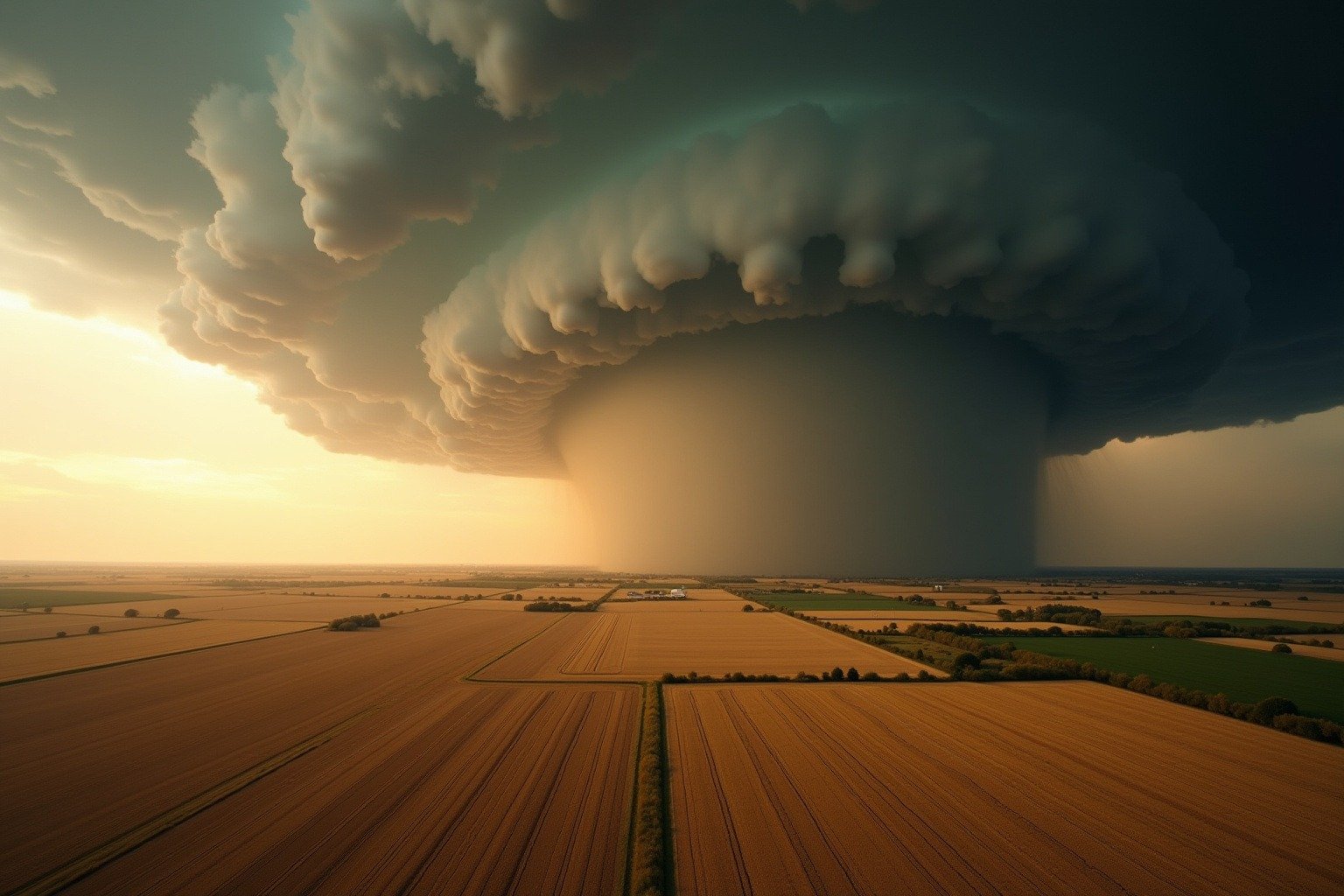
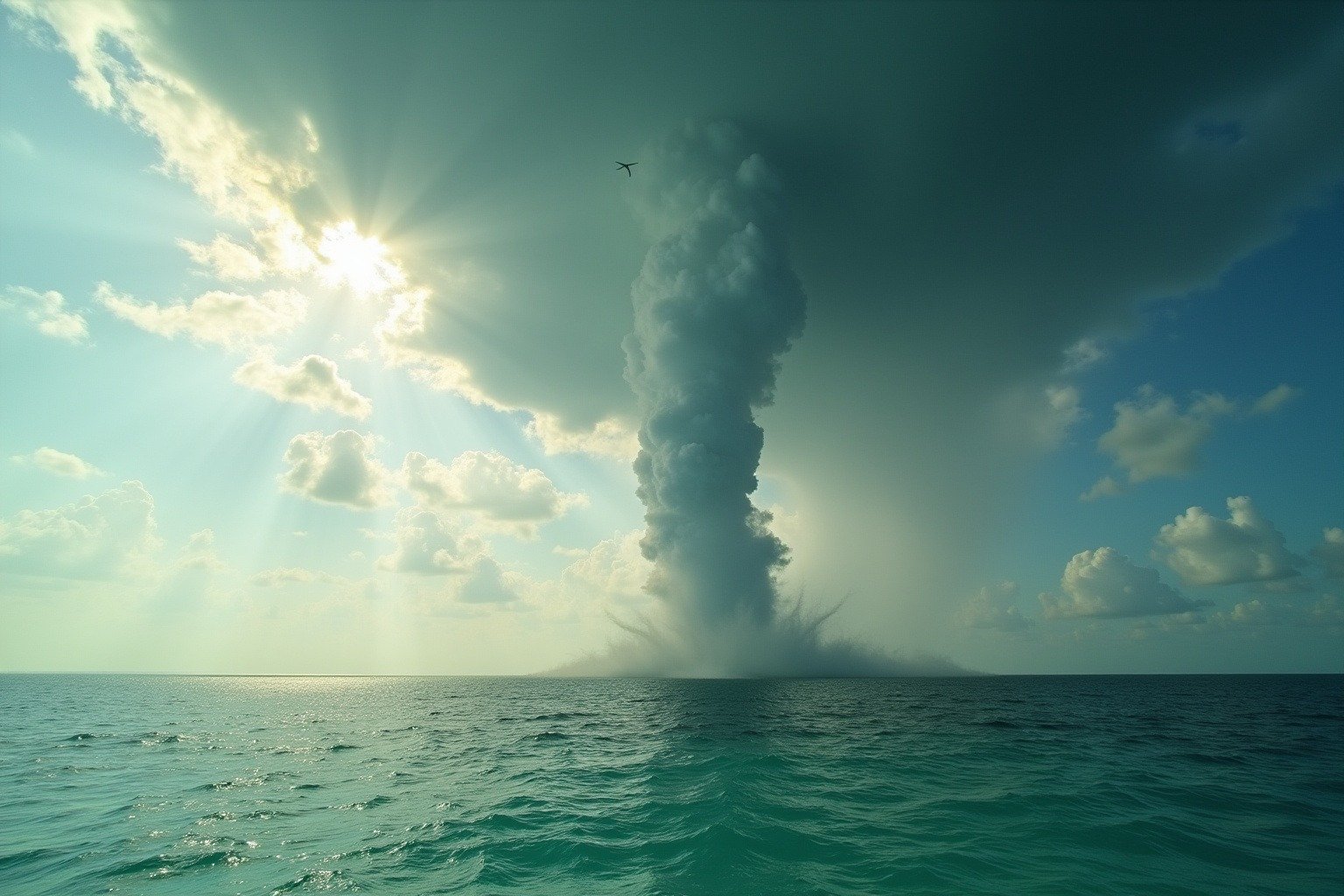
The supercell thunderstorm is the most powerful, housing a rotating updraft called a mesocyclone up to 10 miles wide and 50,000 feet tall. Supercells produce nearly all violent tornadoes, which Doppler radar detects 20 to 60 minutes before touchdown. Over water, the same rotating updraft can spin up a waterspout — one captain’s Key West encounter shows how fast they appear. Read our guide to how tornadoes form from supercells.
The Spark in the Sky: What Causes Lightning
Lightning begins inside the storm among the ice. Soft pellets called graupel collide with smaller ice crystals in the updraft. Electrons shear off during these collisions.
The heavier graupel gains a negative charge and sinks, while lighter ice crystals rise with a positive charge. This separation is what causes lightning. The electric field builds until the atmosphere can no longer insulate: 100 million to 1 billion volts.
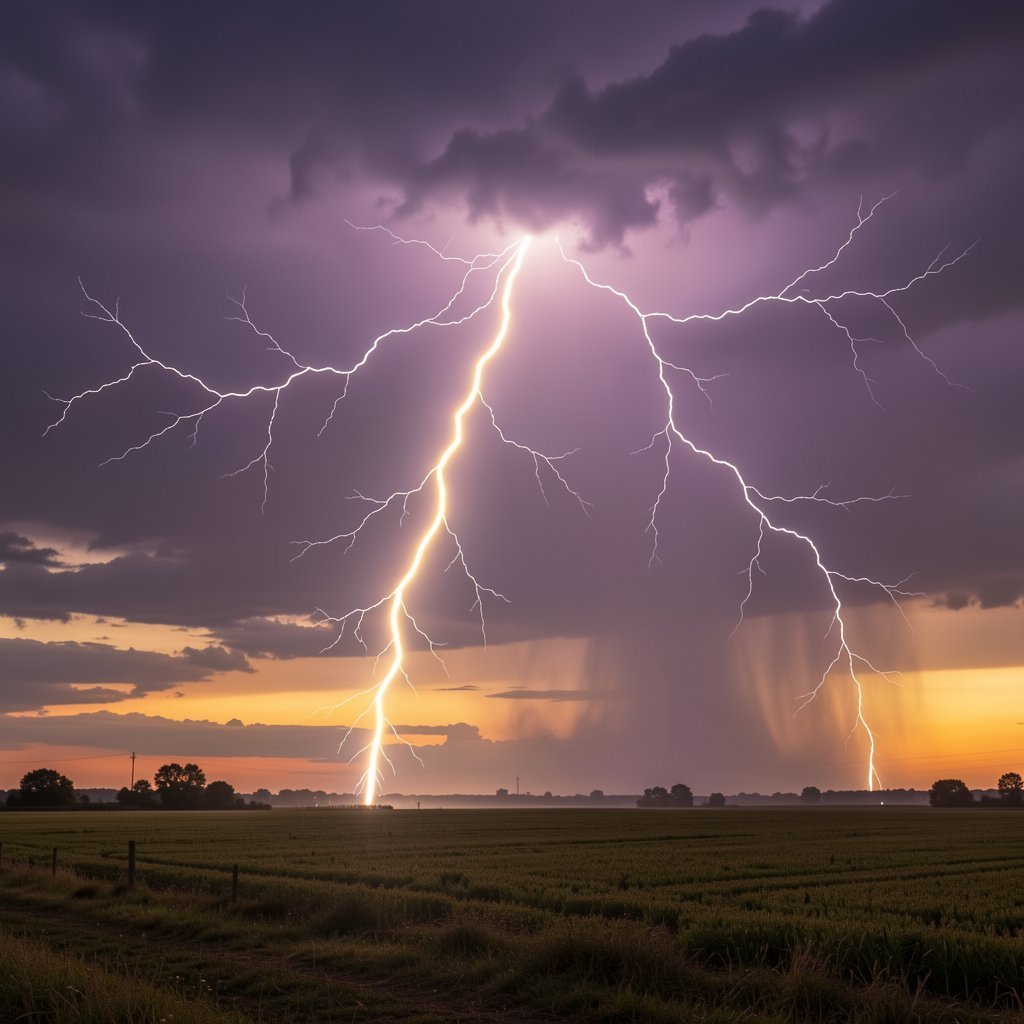
An invisible stepped leader zigzags downward in 50-yard segments, and as it nears the ground, streamers reach up from tall objects. When they connect, the return stroke fires upward: a visible flash at 60,000 miles per second through a channel 1 to 2 inches wide, heated to 50,000 degrees F. Nearly 75 to 80 percent of lightning stays inside the cloud. Learn more about how lightning forms, from stepped leaders to return strokes.
How Does Thunder Work
Thunder is the atmosphere exploding. The lightning channel heats air to 50,000 degrees F in microseconds. The air cannot expand fast enough and bursts outward under extreme pressure.
For the first 10 yards that burst is a shock wave, then it settles into a sound wave. Each point along the channel produces its own shock, combining into the rumble.
That is how does thunder work. For deeper physics, see what makes thunder so loud.
Count seconds between flash and thunder, divide by five. That is your distance in miles. Thunder is audible up to 10 miles away, rarely beyond 25.
What Thunderstorms Cost Us
The United States averages about 20 lightning deaths per year; 21 died in 2025. Hundreds more suffer severe injuries annually: cardiac arrest, neurological damage, burns. Lifetime odds: 1 in 15,300.
Flash flooding is the deadliest thunderstorm hazard. It kills more Americans than hurricanes, tornadoes, and lightning combined. A single storm can drop inches of rain in an hour, overwhelming drainage and sweeping vehicles off roads.
The economic toll is staggering: severe thunderstorms account for nearly half of all billion-dollar weather disasters in the US since 1980, about 47 percent. Hail destroys crops, cars, and roofs. Straight-line winds bring down power lines.
Lightning ignites thousands of fires annually. Positive lightning, less than 5 percent of strikes, is especially effective at fire ignition because its current flows longer.
For aviation, storms create severe turbulence, wind shear, and microbursts. Aircraft can trigger lightning in strong electric fields. Pilots stay 20 miles from any storm.
Key Thunderstorm Facts
| Worldwide thunderstorms per year | 16 million | NSSL |
| Active right now | ~2,000 | NSSL |
| US lightning strikes per year | ~25 million | NWS |
| US lightning deaths (10-year avg) | ~20 per year | NWS |
| Lightning temperature | 50,000 degrees F | NSSL |
| Lightning voltage | 100 million to 1 billion volts | NSSL |
| Supercell updraft size | Up to 10 miles wide, 50,000 ft tall | NSSL |
| Severe storms in billion-dollar disasters | 47% (since 1980) | Climate Central |
Why Thunderstorms Are Getting Stronger
A warmer atmosphere holds more water: about 7 percent more vapor per degree Celsius of warming. This is the Clausius-Clapeyron relationship.
CAPE, or Convective Available Potential Energy, the fuel powering thunderstorm updrafts, is also rising.
Think of it as a battery charge: higher CAPE means more explosive potential. On a humid July afternoon in Kentucky, CAPE can exceed 4,000 J/kg.
Parts of the eastern US have seen 10 to 15 more high-CAPE days per year since 1979. Spring shows the largest increases, especially in the Ohio Valley, Kentucky, and Tennessee.
The tornado picture is more complex. Wind shear, the changing winds that give supercells rotation, may respond differently to warming. Heavy precipitation from thunderstorms is already increasing, and the ingredients are becoming more abundant.
Understanding how thunderstorms form matters more than ever.
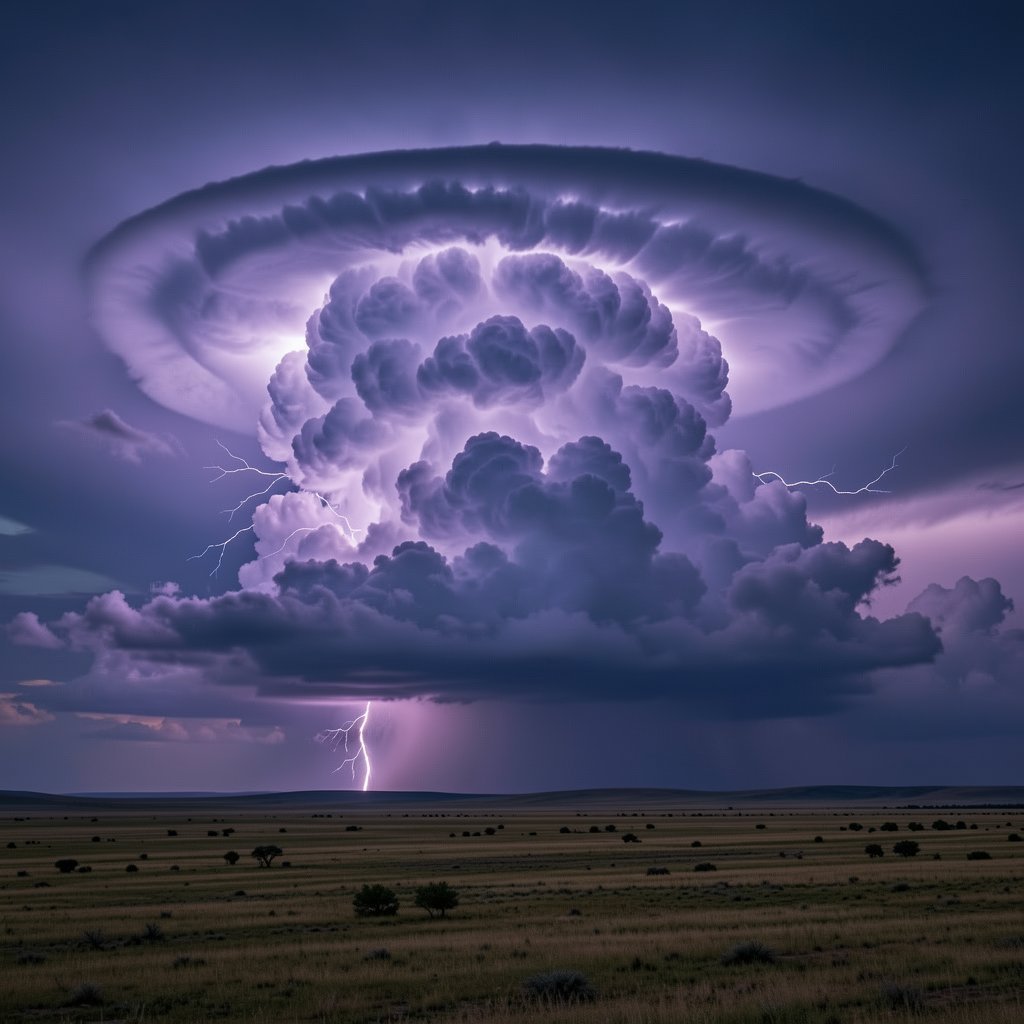 cumulonimbus cloud with flat anvil top and lightning illuminating the storm interior” style=”border-radius:12px;”/>
Thunderstorm Safety Tips That Save Lives
The most important thunderstorm safety tip is simple. If you hear thunder, you are close enough to be struck. “When Thunder Roars, Go Indoors” is not a suggestion.
The 30/30 rule makes it practical. Count seconds between flash and thunder. If fewer than 30, the storm is within 6 miles: go inside.
Wait 30 minutes after the last thunder before going out. Lightning can strike 10 to 15 miles from the parent storm, a bolt from the blue.
Indoors, avoid corded phones, electrical appliances, and plumbing. No showers, no dishes, no touching metal doors or windows.
Outdoors with no building, a hard-topped vehicle is your best shelter. Never shelter under a tree, the second leading cause of lightning casualties. Do not lie flat on the ground.
A few myths: metal does not attract lightning. The Empire State Building is struck 23 times per year because it is tall, not metallic. Lightning victims are safe to touch for CPR.
Crouching helps nothing. Clear skies overhead do not guarantee safety if thunder is audible.
Frequently Asked Questions About Thunderstorms
How long does a thunderstorm last?
A single-cell thunderstorm typically lasts 30 to 60 minutes from development to dissipation. Multi-cell storms can last several hours as new cells form along the gust front. Supercells can persist for hours, with individual updrafts lasting over an hour.
Can thunder happen without lightning?
No. Thunder is caused by lightning, the rapid heating of air along the lightning channel creates a shock wave that becomes the sound we hear. If you hear thunder, there is lightning nearby, even if clouds or distance hide the flash.
How far away can you hear thunder?
Thunder is typically audible up to about 10 miles from the lightning strike, though under ideal conditions it can be heard up to 25 miles. This is why the 30/30 rule works: if thunder follows lightning in under 30 seconds, the storm is within 6 miles.
What is the difference between a thunderstorm watch and a warning?
A Severe Thunderstorm Watch means conditions are favorable for severe thunderstorms in your area. A Severe Thunderstorm Warning means severe weather has been spotted by radar or a storm spotter. Take shelter immediately. Watches cover broad areas; warnings target specific communities in the storm’s path.
Why do thunderstorms happen more in summer?
Summer’s intense surface heating creates the instability that powers thunderstorms. Warm, humid air near the ground rises more easily in summer, and the higher the temperature difference between surface and upper atmosphere, the stronger the updrafts. This is why July and August produce more thunderstorms than any other months across most of the United States.
Sources Used
- NSSL Severe Weather 101: Thunderstorm Basics
- NSSL Severe Weather 101: Thunderstorm Types
- NSSL Severe Weather 101: Lightning
- NSSL Lightning FAQ
- NOAA JetStream: How Lightning is Created
- NOAA JetStream: Sound of Thunder
- NOAA JetStream: Positive and Negative Side of Lightning
- NWS Lightning Safety
- NWS Lightning Fatalities
- NWS Lightning Myths and Facts
- Climate Central: Changing Thunderstorm Potential