Tornado science has advanced dramatically in recent decades, yet these violent storms remain one of nature’s most formidable and least predictable phenomena. A tornado is a violently rotating column of air extending from a thunderstorm to the ground, packing more concentrated energy into a small area than any hurricane on Earth. Learn how tornadoes form in our step-by-step guide.
What Is a Tornado?
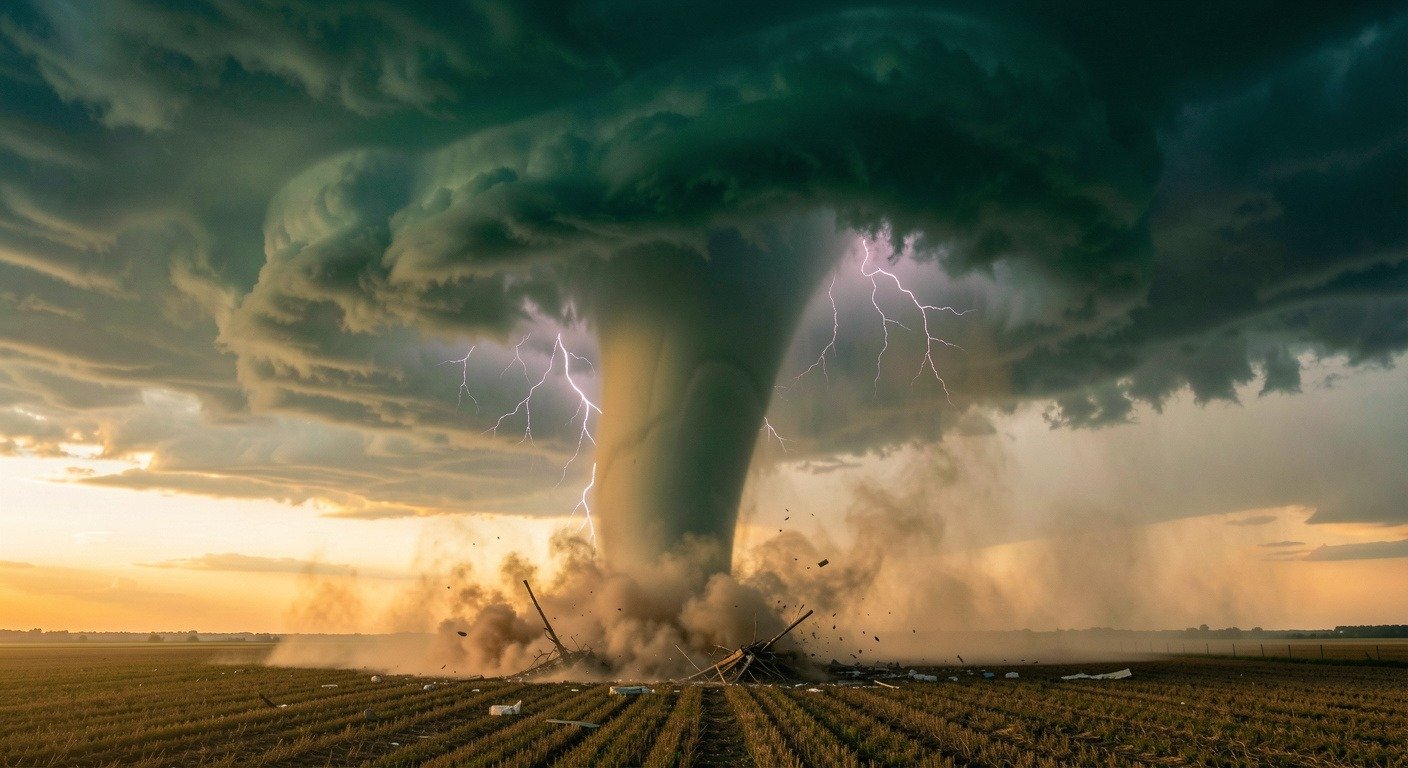
A tornado is a violently rotating column of air that extends from a thunderstorm to the ground. It is the most intense wind event on Earth, capable of winds exceeding 300 miles per hour in the most extreme cases. The United States experiences about 1,200 tornadoes every year, far more than any other country, according to the National Oceanic and Atmospheric Administration.
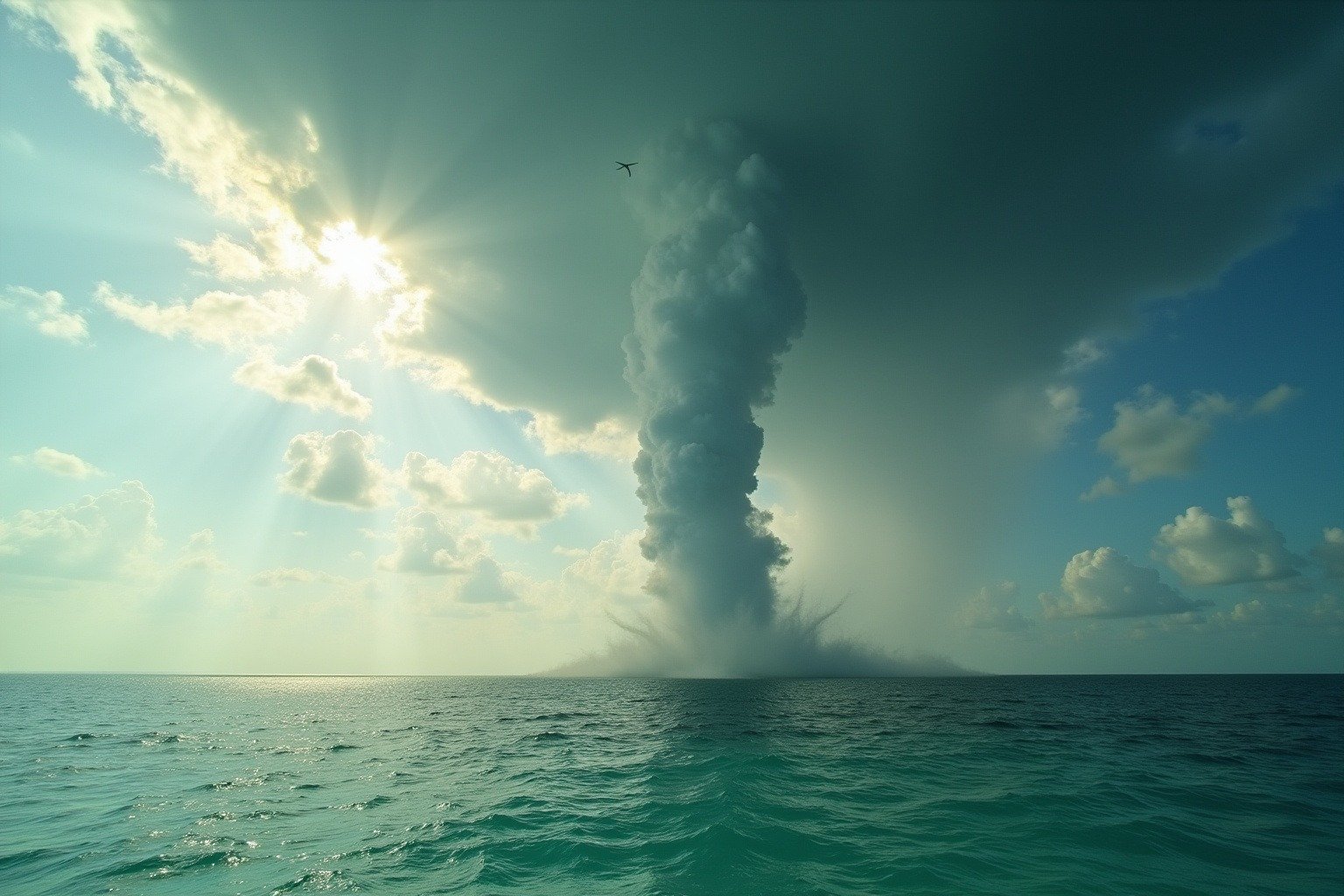
Tornadoes range dramatically in size. The narrowest are rope tornadoes only a few dozen yards wide. The largest, called wedge tornadoes, can stretch more than a mile across. The average tornado stays on the ground for about five minutes and travels roughly three miles, but the most powerful storms have has carved paths of destruction exceeding 200 miles.
One question many people ask about tornado rotation is what happens at the center of a tornado. Unlike a hurricane’s calm eye, the center of a tornado is filled with the most intense upward motion. Air near the ground is drawn into the vortex and then violently lifted. This is why the damage pattern of a tornado often looks like an explosion , the structure is lifted from its foundation rather than knocked over from the side. The rotation tightens so dramatically that wind speeds near the center can exceed 200 miles per hour in the most powerful storms.
.A critical distinction: a funnel cloud that does not touch the ground is not a tornado. The visible condensation funnel people see is only part of the vortex. The actual wind field often extends well beyond what is visible, and the most dangerous winds can occur in a nearly invisible ring just outside the funnel.
How Tornadoes Form: From Supercell to Funnel
Tornado formation remains one of the most studied and least perfectly understood processes in atmospheric science. Researchers at Penn State University and NOAA’s National Severe Storms Laboratory continue to investigate why two nearly identical supercell thunderstorms can produce radically different outcomes, one dropping a violent tornado while the other produces none.
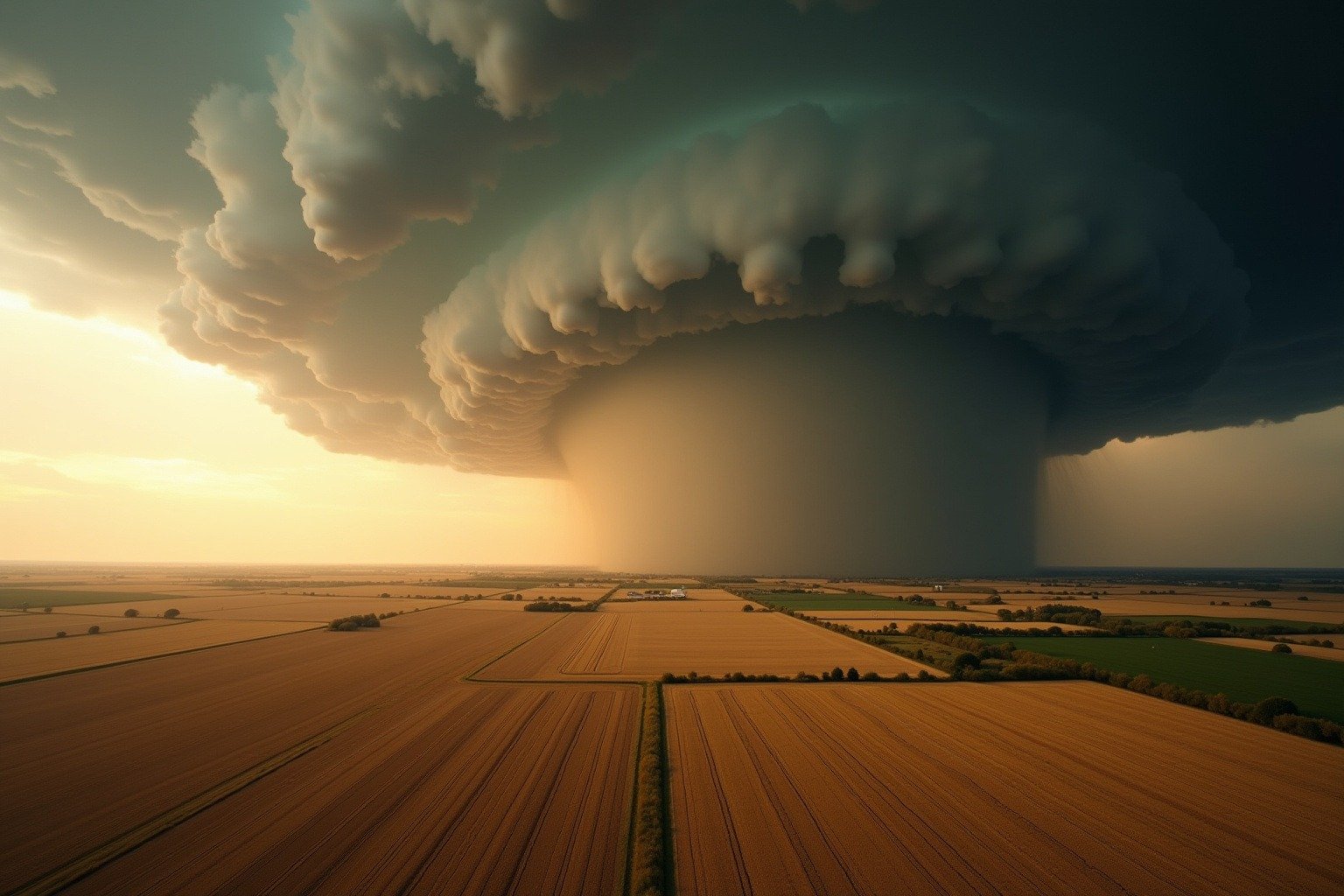
The process begins with a supercell thunderstorm, a rotating storm with a persistent, organized updraft called a mesocyclone. Here is how the sequence unfolds, step by step.
Step 1: Wind shear creates horizontal spin. When winds at different heights blow at different speeds or from different directions, a condition meteorologists call wind shear, invisible horizontal tubes of rotating air roll through the atmosphere like giant sideways pinwheels.
Step 2: The updraft tips the rotation upright. A powerful thunderstorm updraft, a column of rising warm air, catches the horizontal rotation and tilts it into the vertical. This is the birth of the mesocyclone, a rotating column of air two to six miles wide embedded within the storm.
Step 3: Stretching accelerates the spin. As the rotating air is stretched vertically, it spins faster. This is the same physics that makes an ice skater spin faster when pulling in their arms: conservation of angular momentum. Within the broader mesocyclone, a smaller, tighter vortex develops at lower levels.
Step 4: The rear-flank downdraft concentrates the rotation. A surge of cooler, drier air descends around the back side of the mesocyclone, wrapping around the rotating updraft. This rear-flank downdraft squeezes the rotation into an even tighter column near the ground.
Step 5: Touchdown. When the rotating column tightens enough and reaches the surface, a tornado is born. Wind speeds intensify rapidly as the vortex stretches between the cloud base and the ground. Most tornadoes last only minutes before the rear-flank downdraft chokes off the warm inflow feeding the circulation.
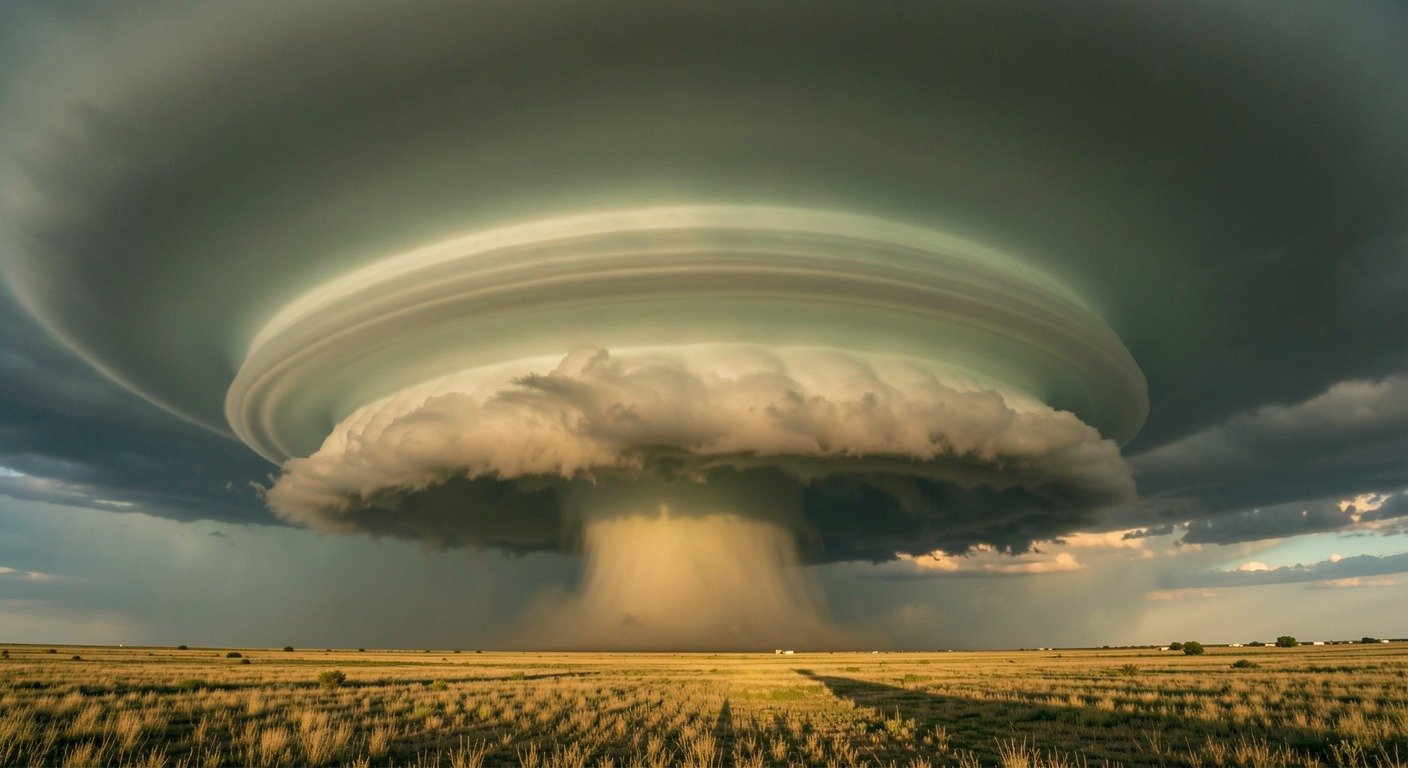
The Enhanced Fujita Scale: Measuring Tornado Strength
Since 2007, the National Weather Service has used the Enhanced Fujita Scale to rate tornadoes. The EF Scale uses 28 different damage indicators, ranging from small barns to steel-reinforced high-rise buildings, to estimate wind speeds based on the destruction left behind.
EF Scale: Tornado Ratings at a Glance
| EF Rating | Wind Speed | Typical Damage |
|---|---|---|
| EF0 | 65–85 mph | Broken branches, minor roof damage |
| EF1 | 86–110 mph | Roofs peeled off, mobile homes overturned |
| EF2 | 111–135 mph | Entire roofs torn off, large trees snapped |
| EF3 | 136–165 mph | Exterior walls collapsed, trains overturned |
| EF4 | 166–200 mph | Well-built homes leveled, cars thrown |
| EF5 | Over 200 mph | Frame houses lifted off foundations, steel-reinforced buildings severely damaged |
EF5 tornadoes are exceedingly rare, accounting for less than 1% of all tornadoes, but they cause a disproportionate share of fatalities. The most recent EF5 in the United States was the Moore, Oklahoma tornado of 2013, which killed 24 people and caused billion in damage. The National Weather Service maintains detailed Enhanced Fujita Scale guidelines for rating tornado damage.. The most recent EF5 in the United States was the Moore, Oklahoma tornado of 2013, which killed 24 people and caused $2 billion in damage.
Why Tornado Alley Is Shifting East
For generations, the term “Tornado Alley” meant the Great Plains: Texas, Oklahoma, Kansas, and Nebraska. That geography is no longer accurate. Research from Northern Illinois University, confirmed by the National Weather Service, shows a clear and sustained eastward migration of tornado activity.
Tornado frequency is decreasing across the traditional Plains corridor and increasing sharply across the Midwest and Southeast, a region researchers now call Dixie Alley. States including Mississippi, Alabama, Tennessee, Arkansas, and Kentucky are recording more tornado days per year than they did three decades ago. According to the Environmental Defense Fund, the population exposed to tornado risk in the Southeast has grown substantially since 2000.
The shift is not academic. It is dangerous for three specific reasons. First, the Southeast is significantly more densely populated than the Great Plains, meaning each tornado encounters more homes, schools, and hospitals. Second, tornadoes in Dixie Alley are disproportionately likely to strike at night, when people are asleep and warnings are harder to receive. Third, the hillier and more forested terrain of the Southeast makes tornadoes harder to see and more likely to be rain-wrapped, hidden inside heavy rainfall.
Scientists attribute the eastward shift to broader climate patterns. As the western United States grows drier, the traditional dryline that sets up over the Plains and triggers supercells is migrating east. The Gulf of Mexico provides abundant warm, moist air to fuel storms across the Southeast, and a warming climate means that moisture source continues to intensify.
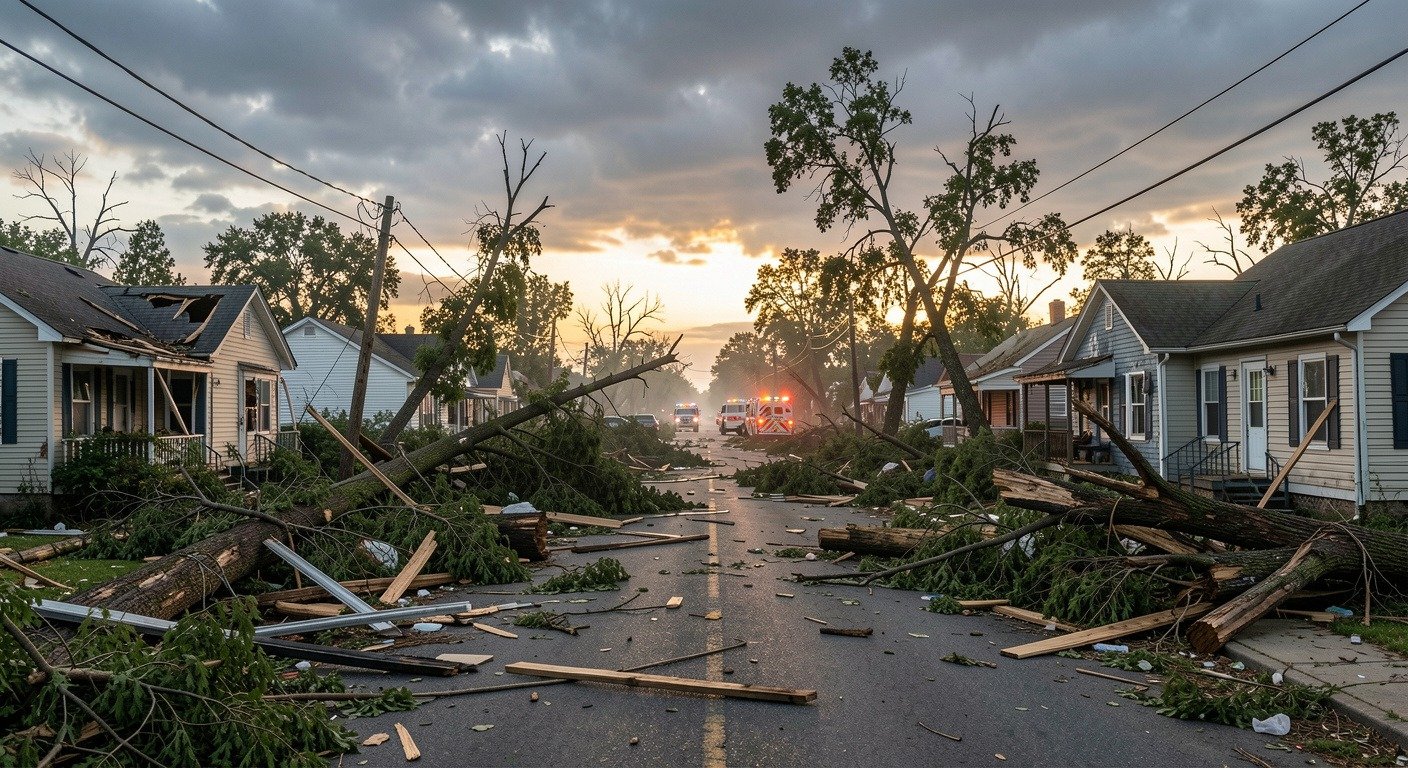
How Tornadoes Affect People
Tornadoes do not only destroy buildings. They unravel communities, disrupt local economies, and leave lasting psychological scars. Understanding the human cost is as important as understanding the science.
Homes and property. An EF2 or stronger tornado can reduce a wood-frame home to rubble in seconds. In 2025, tornadoes caused an estimated $2.5 billion in insured losses in the United States, according to the Insurance Information Institute. Families without adequate coverage can face years of financial hardship.
Health and safety. Flying debris, not wind itself, is the primary cause of tornado deaths. A two-by-four piece of lumber traveling at 150 miles per hour strikes with the force of a cannonball. Head injuries and blunt trauma account for most fatalities. The 2026 season has been relatively mild, with 15 deaths reported through early June, sharply down from 61 by the same point in 2025, according to Fox Weather and NOAA data.
Mental health. Survivors of violent tornadoes often experience post-traumatic stress lasting years. Children are especially vulnerable. Studies following the 2011 Joplin, Missouri EF5, which killed 158 people, found that more than a third of affected children showed signs of PTSD a full year after the event.
Economy and infrastructure. When a tornado tears through a town, businesses close, schools shut down, and transportation corridors are severed. Small communities with limited resources can take a decade or longer to fully recover. The loss of a single major employer can permanently alter a town’s future.
“A tornado is nature’s way of concentrating a hurricane’s worth of energy into a column the width of a football field.”
NOAA National Severe Storms Laboratory
Staying Safe: Before, During, and After a Tornado
Tornado safety is straightforward, but it requires preparation before the warning sounds. Here is what every person in tornado-prone areas needs to know.
Know the difference between a Watch and a Warning. A Tornado Watch means conditions are favorable for tornadoes. Stay alert and check updates. A Tornado Warning means a tornado has been spotted on radar or by a trained spotter. Move to shelter immediately. Do not wait for visual confirmation.
Where to Go
- At home: Go to the lowest floor, interior room, no windows. A basement is best. If you do not have a basement, choose a closet or bathroom in the center of the house. Put as many walls between you and the outside as possible.
- Cover your head and neck. Use your arms, a mattress, a bicycle helmet, or a heavy blanket. Flying debris causes most tornado deaths.
- In a mobile home: Leave immediately. Mobile homes, even when tied down, cannot withstand tornado-force winds. Identify a nearby sturdy building or community shelter ahead of time.
- In a car: Do not try to outrun a tornado. If you can safely drive to a sturdy building, do so. If a tornado is approaching and no shelter is available, get out of the vehicle and lie flat in a low ditch or depression, covering your head. Avoid overpasses, they offer no protection.
- After the storm: Stay out of damaged buildings until authorities declare them safe. Watch for downed power lines, broken gas lines, and sharp debris. Use text messages instead of phone calls to keep lines clear for emergency responders.
Frequently Asked Questions About Tornado Science
What is a tornado and how does it form?
A tornado is a violently rotating column of air that extends from a thunderstorm to the ground. It forms when wind shear creates horizontal rotation in the atmosphere, a thunderstorm updraft tilts that rotation upright, and the rotation tightens and accelerates until it reaches the ground. The full process involves a supercell thunderstorm with a mesocyclone, and most tornadoes last only a few minutes.
Why is Tornado Alley shifting east?
Tornado Alley is shifting east because the western United States is growing drier, pushing the dryline that triggers supercells eastward. The result is increased tornado frequency across the Midwest and Southeast, a region called Dixie Alley. This shift is especially dangerous because the Southeast is more densely populated than the Great Plains, and tornadoes there are more likely to strike at night.
What is the difference between a tornado watch and a tornado warning?
A Tornado Watch means conditions are favorable for tornadoes and you should stay alert. A Tornado Warning means a tornado has been spotted or indicated on radar and you need to take shelter immediately. The warning is the life-saving signal: move to a basement or interior room on the lowest floor, put as many walls between you and the outside, and cover your head and neck.
How are tornadoes rated on the Enhanced Fujita Scale?
Tornadoes are rated on the Enhanced Fujita Scale from EF0 to EF5 based on damage indicators. EF0 tornadoes (65-85 mph) cause minor damage, while EF5 tornadoes (over 200 mph) can lift well-built homes off their foundations. The scale uses 28 different damage indicators to estimate wind speeds, since direct measurement inside a tornado is extremely difficult and dangerous.
How many tornadoes occur in the United States each year?
The United States experiences about 1,200 tornadoes every year, far more than any other country. Most are weak (EF0-EF1), and fewer than 1% reach EF5 intensity. Despite the high number, improved warning systems and public awareness have helped reduce fatalities over the long term, even as tornado patterns shift into more populated regions.
What We Can Learn
Tornadoes are not going away, and shifting patterns mean communities that never thought of themselves as tornado country now need to prepare. Warmer, moisture-rich air masses combined with changing wind patterns have expanded the geography of tornado risk across the eastern United States.
The encouraging news is that preparation saves lives. The relatively low death toll in early 2026 compared to 2025 reflects better warning systems, faster communication through mobile alerts, and more people taking warnings seriously. Every tornado death is a tragedy, but the long-term trend in fatality rates is moving in the right direction as science and technology improve.
For individuals, the takeaway is clear. Know where you will go when a warning sounds. Have a plan for your family. Keep a weather radio with battery backup. And do not assume that because you do not live in Kansas, you are safe. Tornadoes have struck every U.S. state, including Hawaii and Alaska. The sky is the same everywhere, and so is the responsibility to be ready.
Understanding tornado science does not make the storms less powerful. It makes us less vulnerable. When you know how they form, where they are shifting, and what to do when a warning sounds, you replace fear with readiness. That is the only kind of control nature ever offers us.