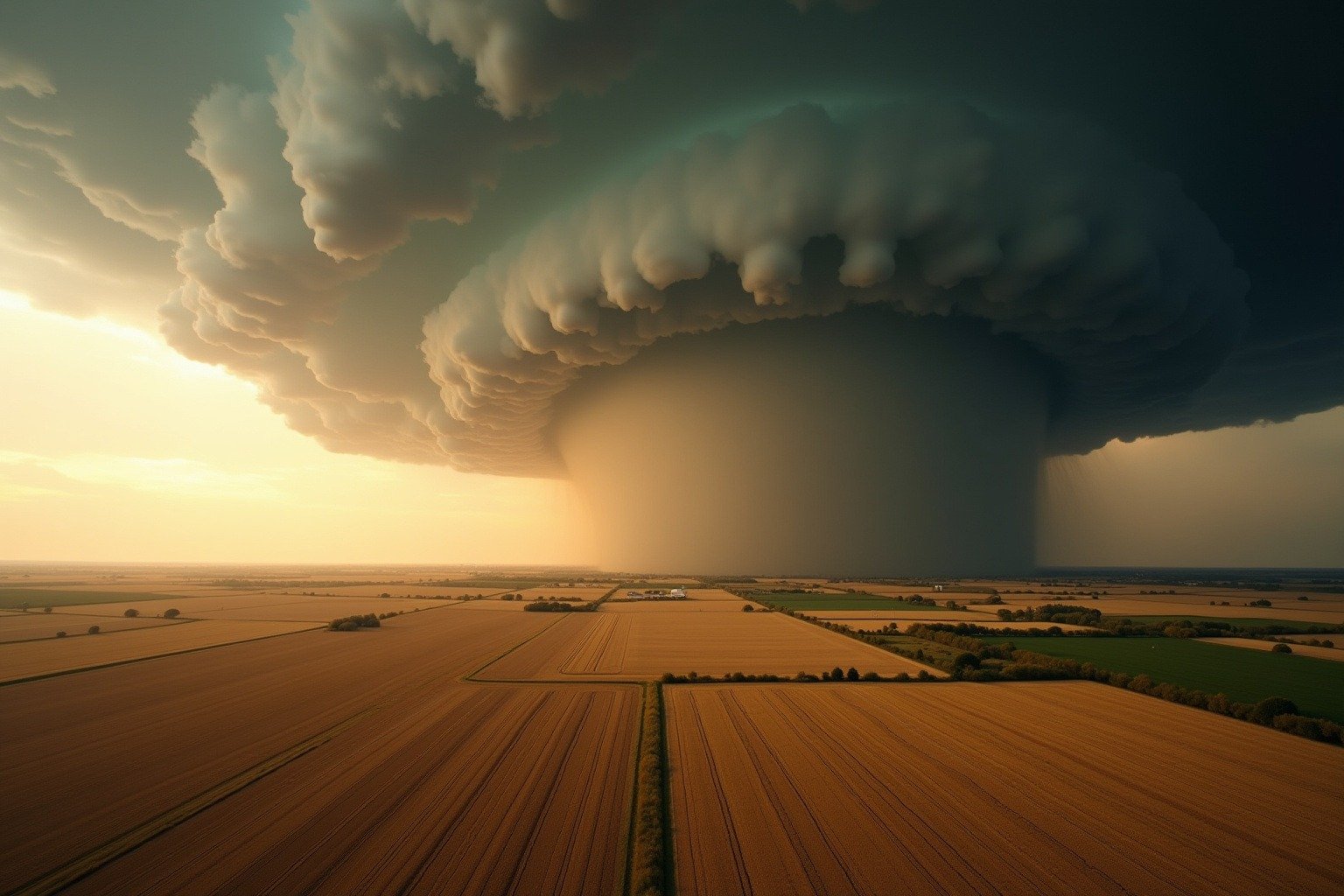
A derecho is a widespread, long-lived straight-line windstorm that can produce hurricane-force gusts across hundreds of miles, without any rotation. Often called an inland hurricane, the costliest thunderstorm in American history was the 2020 Midwest derecho that carved a 770-mile path and caused $11.2 billion in damage.
On August 10, 2020, residents of Cedar Rapids, Iowa, heard the wind pick up. They expected it to pass in 10 or 15 minutes, like any severe thunderstorm. Instead, the wind screamed for nearly an hour. The storm left the city without half its trees, forced a nuclear plant to close, and carved a 770-mile path from South Dakota to Ohio.
What a Derecho Actually Is
Derecho is Spanish for “straight ahead.” University of Iowa physicist Gustavus Hinrichs coined the term in 1888 to distinguish these straight-line windstorms from tornadoes, which spin. The National Weather Service defines a derecho as a windstorm whose damage path spans at least 250 miles, with gusts of 58 mph or stronger along most of it and at least three separated 75-mph reports. Peak gusts have reached 140 mph, matching a Category 4 hurricane. The United States averages one or two derechos a year, roughly 70 percent between May and August.
“The wind screamed for nearly an hour. When it stopped, the 2020 Midwest derecho had cut a 770-mile path and caused $11.2 billion in damage.”
Why Derechos Form
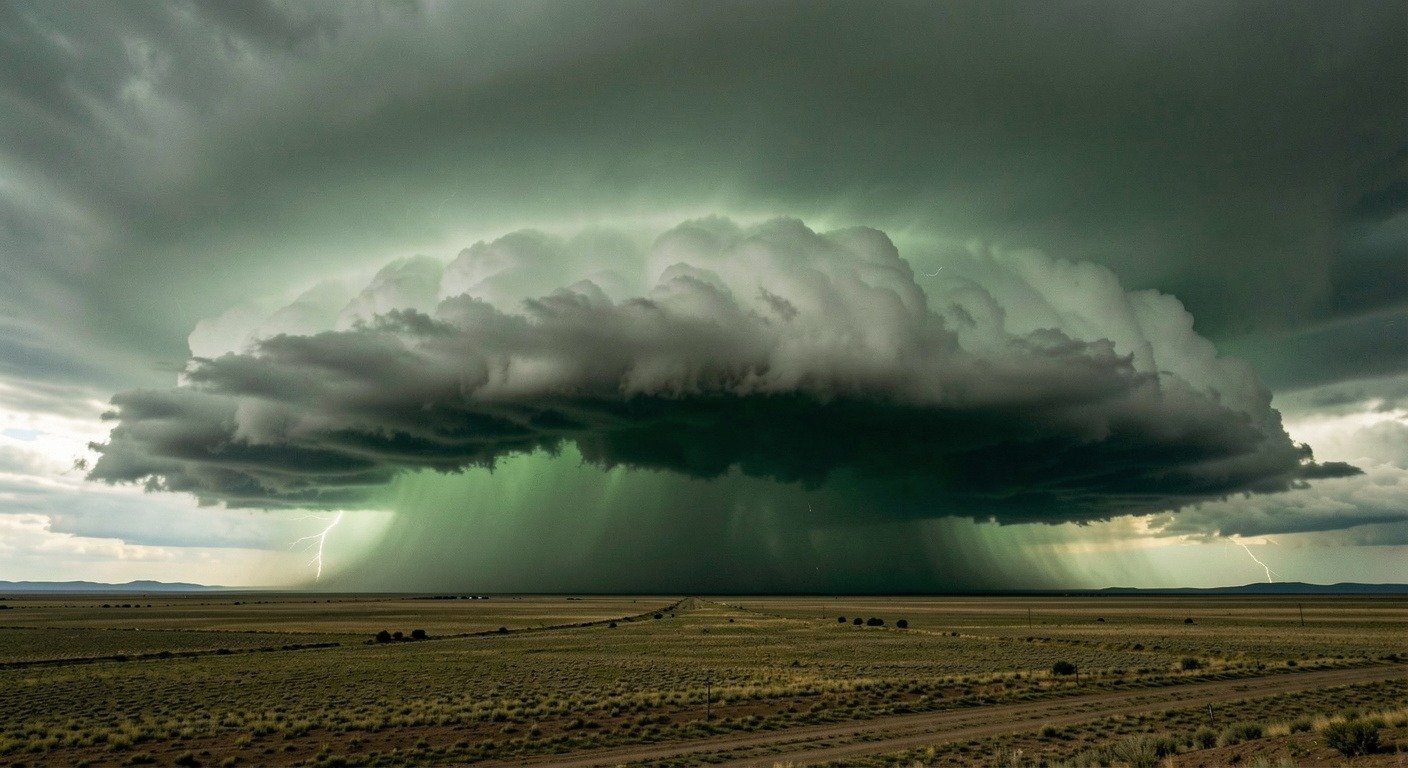
Picture a pot of water on a stove with the lid on: heat builds and steam is trapped. Lift the lid and everything boils over. A derecho starts the same way. The “lid” is a cap, a warm layer holding storms down while instability accumulates. When the cap breaks, often from a cold front, thunderstorms erupt. Rain-cooled downdrafts crash down and spread outward: this is a downburst.
Downbursts feed a cycle. Cool air at the surface shoves warm, moist air upward, seeding new storms. On radar, the storm line bends into a “bow echo,” like an archer’s bow. The fastest winds live at the bow’s center. A 2025 University of Oklahoma study found that strong vertical wind shear is the ingredient that locks the storm into a sustained engine.
How a Derecho Affects People
The 2020 derecho hit 14 million acres of Iowa farmland, flattening 3.57 million acres of corn and 2.5 million acres of soybeans in an afternoon. In Cedar Rapids, streets were impassable for days and the Duane Arnold nuclear plant’s cooling towers were destroyed. Some neighborhoods went without power for weeks during a heat wave. Total damage: $11.2 billion.
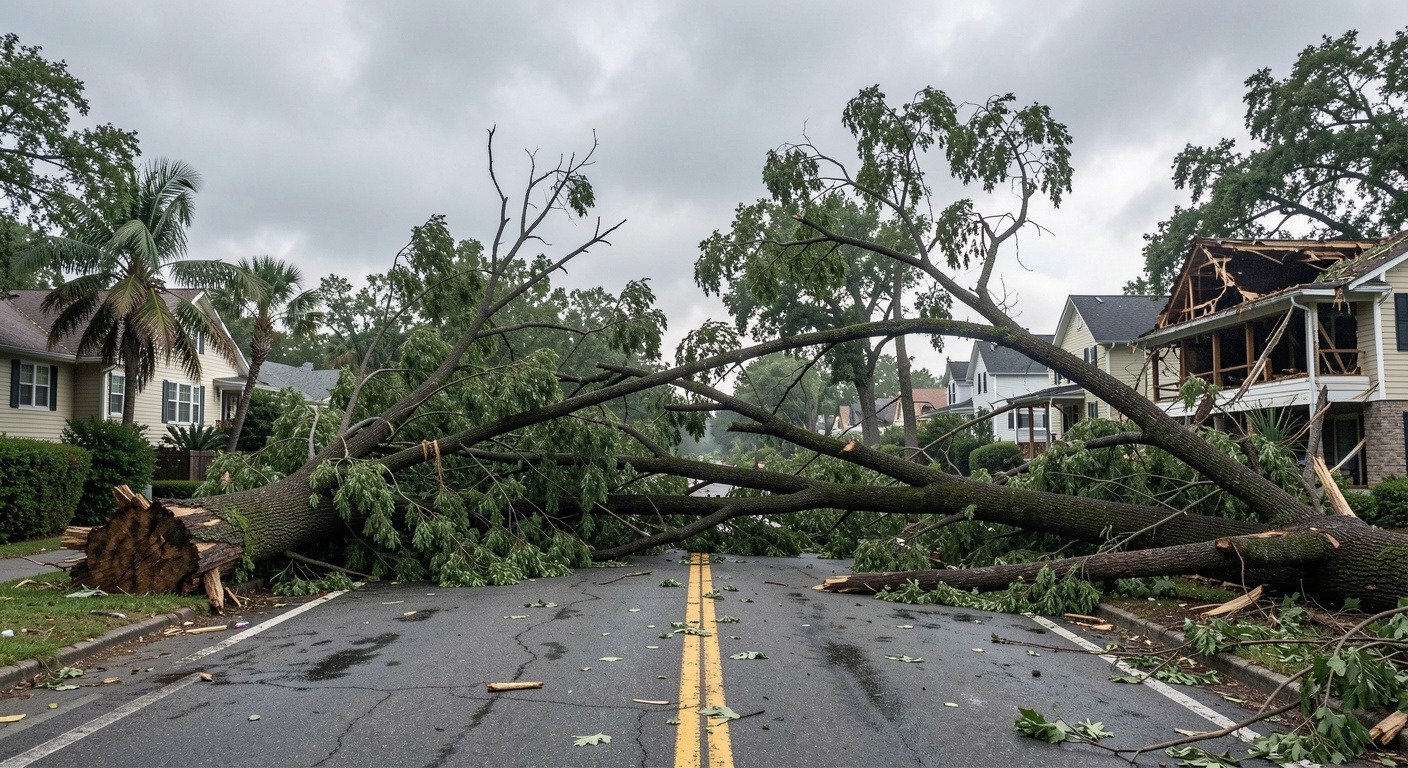
Nearly half of all derecho deaths happen in vehicles or boats. Trees fall onto cars and semi-trucks blow over on highways. Boaters caught by sudden wind and waves drown before reaching shore. The 2012 derecho killed 22 people and left more than 5 million without power during a punishing heat wave. That storm brought the word “derecho” into the public vocabulary.
“Nearly half of all derecho fatalities occur in vehicles or boats. A Severe Thunderstorm Warning should be treated with the same urgency as a Tornado Warning.”
Why Derechos Matter Now
Climate research suggests derechos may grow more frequent in the Midwest and more intense at the high end. In July 2024, a derecho spawned 56 tornadoes across Iowa, Illinois, and Indiana, with 48 in Illinois alone, a state record. Four touched down inside Chicago city limits. In April 2025, another derecho cut power to more than 700,000 people across the Ohio Valley and interior Northeast.
What You Can Do
No specific “derecho warning” exists. These storms are covered by Severe Thunderstorm Warnings. The storm moves at highway speeds and conditions can turn catastrophic in minutes.
- Before: Check forecasts daily, enable emergency alerts, keep a NOAA Weather Radio as backup. Know your shelter: a basement or interior room on the lowest floor, away from windows.
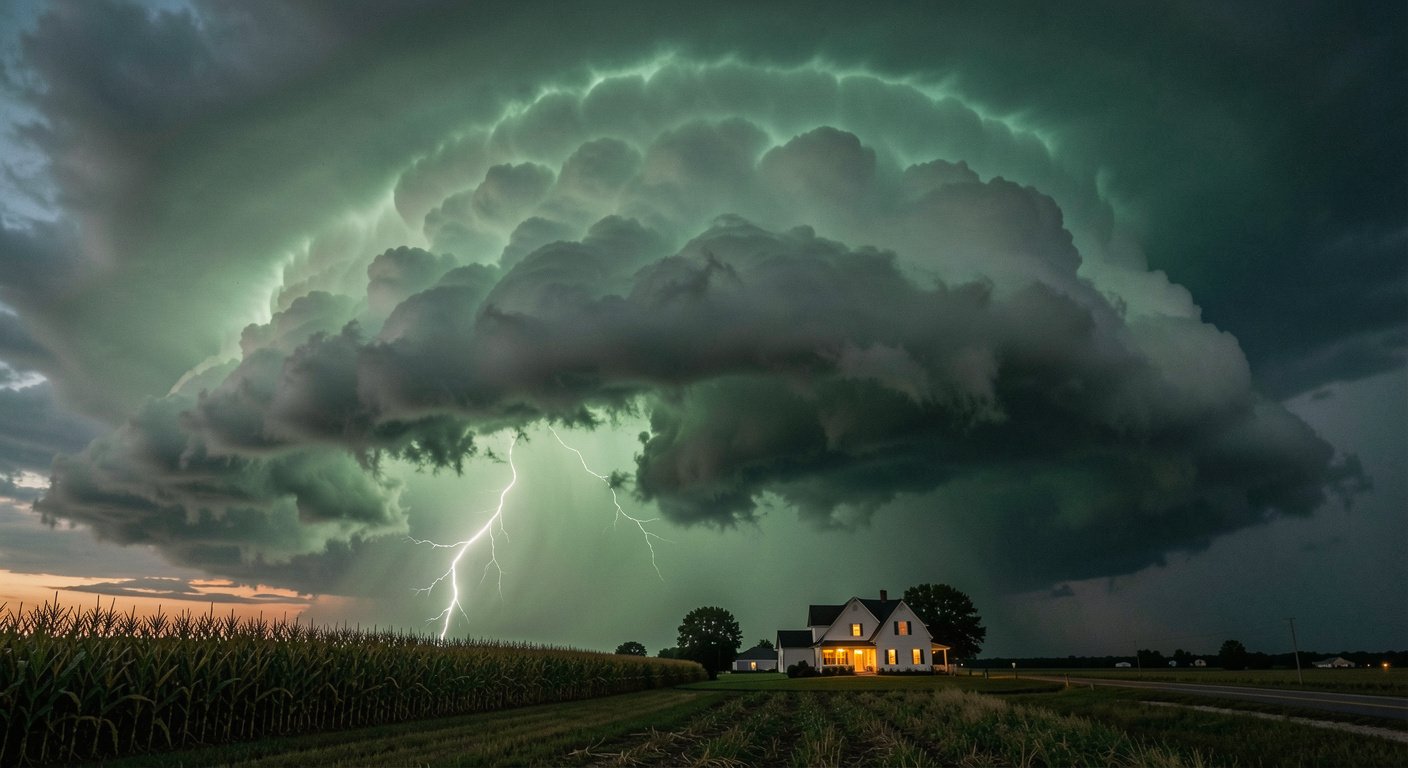
- During: Go indoors immediately. Stay away from windows. In a car, pull over away from trees and power lines, stay buckled, and cover your head. On a boat, head for shore at the first dark shelf cloud.
- After: Stay inside until officials confirm it is safe. Downed power lines are hidden killers.
Derechos are rare. But when they come, they come fast. Knowing what to look for and what to do is the difference between being caught off guard and being ready.
Sources: NOAA Storm Prediction Center, National Weather Service, NESDIS.