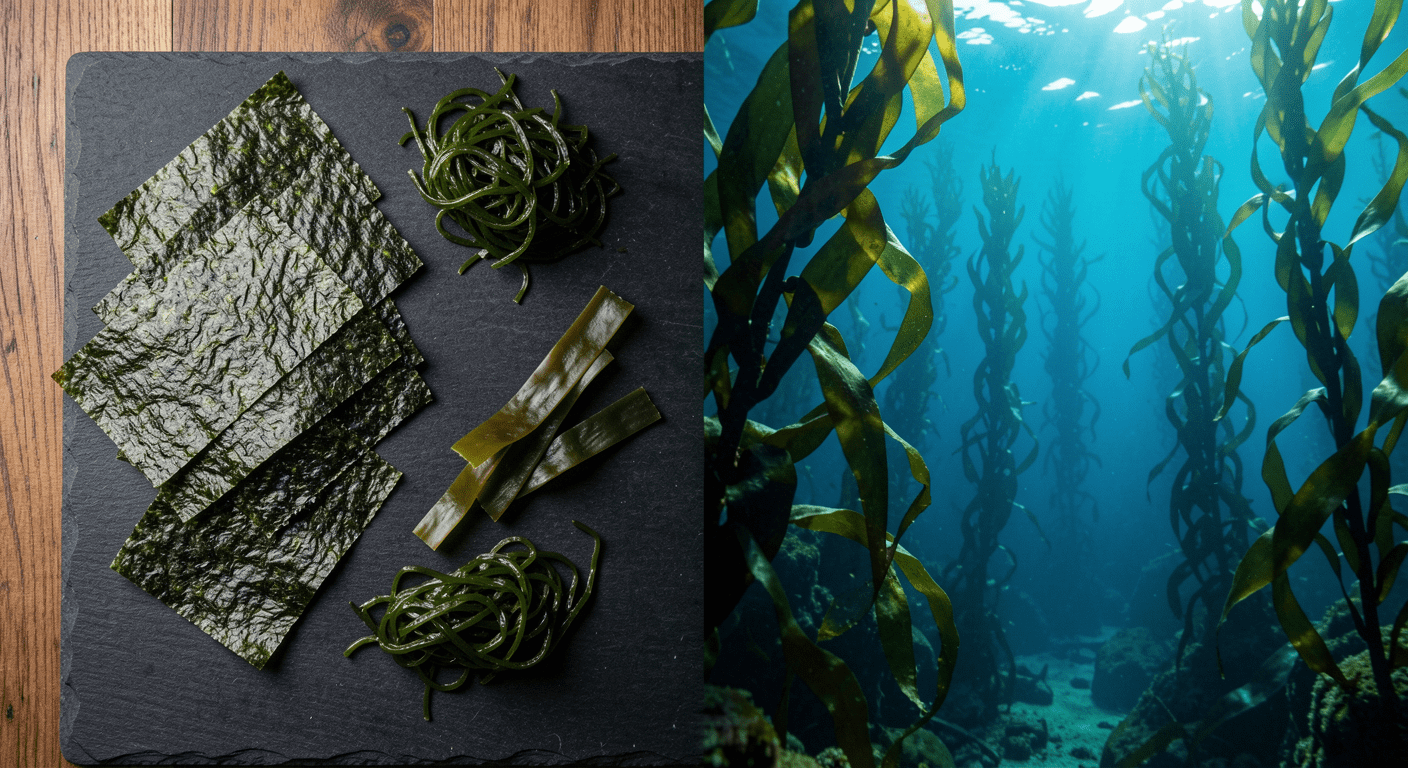
Seaweed is the superfood from the ocean that most people overlook. Long before protein powders and green juice cleanses filled grocery store shelves, coastal communities from Japan to Ireland had already figured out what modern nutrition science is only now confirming: this marine macroalgae is one of the most nutrient-dense foods on the planet.
Seaweed sits at a strange intersection. It is one of the oldest human foods, eaten for thousands of years across Asia, the Pacific Islands, and northern Europe. It is also one of the most promising solutions to some of the hardest problems in food production and climate resilience.
A food that needs no fresh water, no fertilizer, no pesticides, and no arable land to grow. A crop that pulls carbon dioxide from seawater more efficiently than mangroves, eelgrass, and salt marshes combined. And a source of complete protein, omega-3s, and minerals most land vegetables cannot match.
The conversation around seaweed has shifted from “is it safe?” to “how much are we leaving on the table by not growing more of it?”
Quick Summary
- Seaweed is a complete protein with all nine essential amino acids and 35-60% fiber by dry weight
- Kelp contains approximately 2,523 mcg of iodine per gram, so portion control is essential
- A 2023 meta-analysis confirmed seaweed improves cholesterol and blood sugar markers
- Seaweed farming needs no fresh water, no fertilizer, no pesticides, and no land
- Seaweed absorbs more CO2 than mangroves, eelgrass, and salt marshes combined (by biomass)
- Alaska seaweed production grew 200% between 2017 and 2019 to over 112,000 pounds
What Seaweed Is, and Where It Comes From
Seaweed is not a single plant. It is a catchall name for thousands of species of marine macroalgae that fall into three broad groups: brown algae, red algae, and green algae. Each group brings a different nutritional profile and a different role in the kitchen.
Brown algae include the varieties most people recognize: kelp (sold as kombu in Japanese markets), wakame (the silky green seaweed in miso soup), and hijiki. These are the heavy hitters for iodine and fiber. Kelp alone contains approximately 2,523 micrograms of iodine per gram, which is 1,682% of the daily value.
Red algae include nori (the dark sheets wrapped around sushi rolls) and dulse, a chewy reddish seaweed eaten as a snack in Ireland and Atlantic Canada. Green algae cover sea grapes, sea lettuce, and chlorella, all prized for their chlorophyll and vitamin content.
The edible seaweed industry is not a niche operation anymore. According to NOAA Fisheries, seaweed aquaculture is the fastest-growing aquaculture sector in the world. Alaska farmers alone produced more than 112,000 pounds in 2019, a 200% increase over 2017, and the numbers have only climbed since.
Seaweed does not need soil to grow. It anchors to rocks or floats freely in the water column, absorbing everything it needs directly from seawater. This is what makes its nutritional profile so unusual, and it is also why the environmental story matters so much.
These are the same ocean systems that drive weather and climate across the planet.
The Nutritional Science: Why Seaweed Is the Superfood From the Ocean
Seaweed gets called an ocean superfood for a reason grounded in chemistry, not marketing. Marine macroalgae concentrate minerals directly from seawater, packing orders of magnitude more micronutrients per gram than land-grown vegetables.
Iodine and the Thyroid Connection
The thyroid gland needs iodine to produce the hormones that regulate metabolism, growth, and brain development. The adult Recommended Dietary Allowance is 150 micrograms per day, with a tolerable upper limit of 1,100 micrograms.
Most land foods contain almost no iodine unless they are grown in iodine-rich soil or fortified. Seaweed, by contrast, is the most concentrated natural dietary source. According to the NIH Office of Dietary Supplements, a single sheet of nori can supply a day’s iodine needs, while kombu (kelp) at roughly 2,523 micrograms per gram far exceeds the upper limit and must be eaten sparingly.
This is one of the few foods where the nutritional gap between “beneficial” and “too much” is narrow, which is why portion awareness matters with kelp nutrition.
Fiber, Protein, and Compounds Land Plants Cannot Match
Seaweed fiber makes up 35 to 60 percent of its dry weight, higher than most fruits and vegetables. Much of that fiber comes in the form of sulfated polysaccharides like fucoidans and alginates.
These are not just roughage. They act as prebiotics, feeding beneficial gut bacteria and increasing short-chain fatty acid production.
Harvard’s T.H. Chan School of Public Health notes that this seaweed superfood contains all nine essential amino acids, qualifying it as a source of complete protein, which is rare for a non-animal food.
The other headline compound is fucoxanthin, a carotenoid found in brown algae. Laboratory studies show fucoxanthin has 13.5 times the antioxidant capacity of vitamin E.
A 2023 meta-analysis published in the PMC database found that brown seaweed intake significantly decreased total cholesterol and LDL levels, and separately improved post-meal blood glucose, HbA1c, and HOMA-IR markers of insulin resistance.
The science behind seaweed health benefits is growing stronger each year. It is not folk wisdom with a modern rebrand. The evidence base, particularly around heart health and blood sugar management, has moved from animal studies to human meta-analyses.
How Seaweed Affects People
The human impact of seaweed runs deeper than the nutrition label. It touches food security, coastal livelihoods, public health, and the relationship communities have with their marine environments.
Nutrition Where It Is Needed Most
Iodine deficiency remains one of the most preventable causes of cognitive impairment worldwide. For populations without access to iodized salt or dairy from iodine-supplemented feed, affordable seaweed can fill a nutritional gap that has real developmental consequences. Seaweed is shelf-stable, requires no refrigeration, and can be dried and transported at low cost.
Livelihoods on the Water
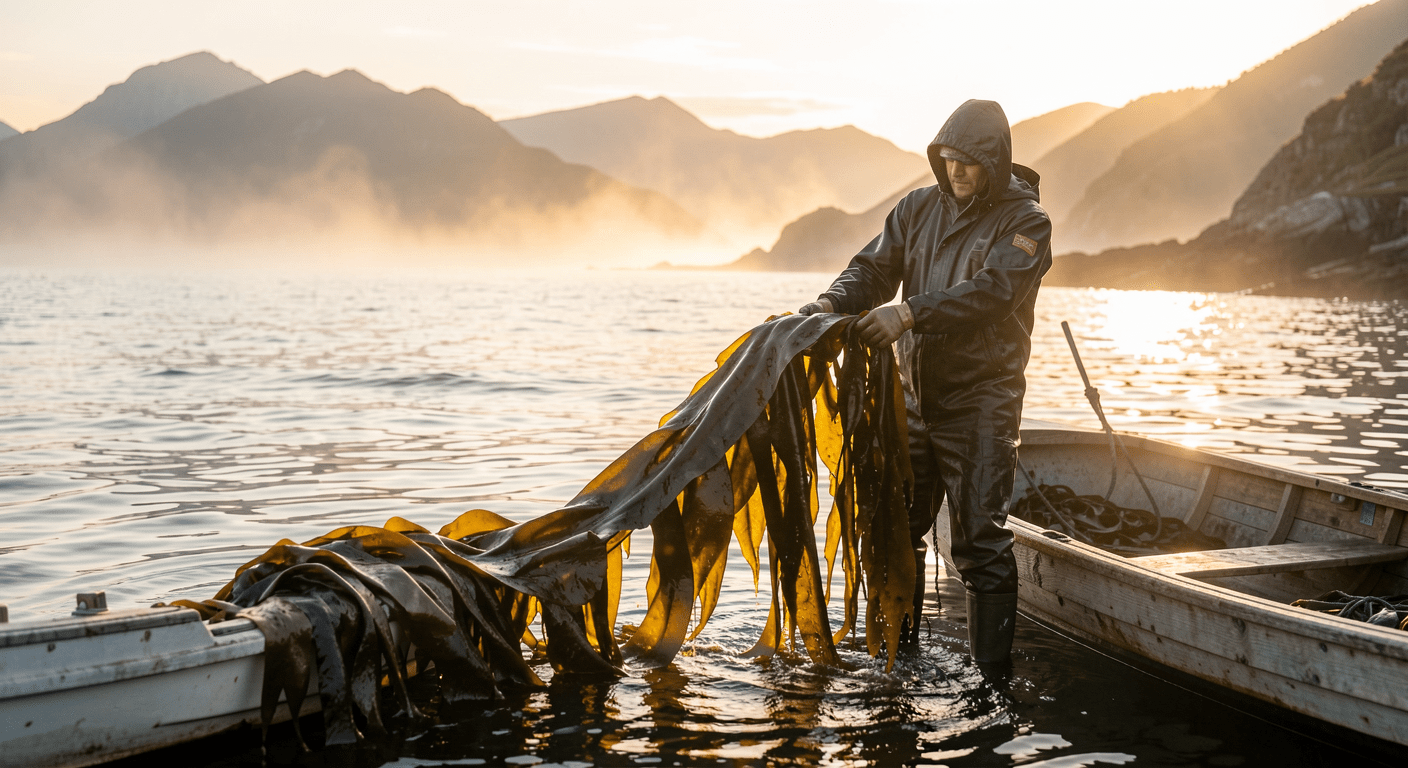
Seaweed farming creates income for coastal communities that might otherwise depend entirely on wild fisheries. According to NOAA, the global seaweed market is valued at over $15 billion.
In Alaska, Maine, and parts of Atlantic Canada, former fishing families are adding seaweed lines to their operations. The startup costs are low compared to finfish aquaculture.
No feed, no antibiotics, no pumps. Just seeded lines in clean water and a boat to harvest them.
Bringing the Ocean Inland
Algal oil supplements, seaweed snacks, and plant-based meat alternatives made with seaweed protein are putting ocean nutrition in front of consumers who live hundreds of miles from the nearest coast. The omega-3 fatty acids EPA and DHA, which are typically associated with fish, actually originate in marine algae. Seaweed-based supplements offer a plant-based alternative that bypasses the middle fish entirely.
Communities as Stewards
Farming seaweed turns harvesters into active participants in ocean health. A kelp farmer who makes a living from clean water has a direct economic incentive to protect it. This model of economic alignment with ecosystem restoration is rare and worth paying attention to.
Why Seaweed Matters for the Planet Right Now
The environmental case for seaweed is not speculative. It is measured, and the numbers are striking.
Seaweeds pull more CO2 from seawater than eelgrass, mangroves, and salt marshes combined, based on biomass data from NOAA Fisheries. Kelp forests and seaweed farms act as localized buffers against ocean acidification, creating pockets of less-corrosive water where shellfish can build stronger shells. This is a direct, measurable benefit that functions alongside, not instead of, broader emissions reduction and climate action.
Seaweed also performs what scientists call nutrient bioremediation. Agricultural runoff carries excess nitrogen and phosphorus into coastal waters, fueling harmful algal blooms and dead zones.
Seaweed farms positioned near river mouths absorb those nutrients before they cause damage. The seaweed then gets harvested and eaten, completing a cycle that turns pollution into food.
The resource efficiency is hard to overstate. Sustainable seaweed farming requires no fresh water, no fertilizer, no pesticides, and no arable land. In a world where conventional agriculture demands enormous freshwater and land resources, a crop that needs none of these inputs represents a genuine structural advantage.
That is what makes this superfood from the ocean different from every other crop we grow.
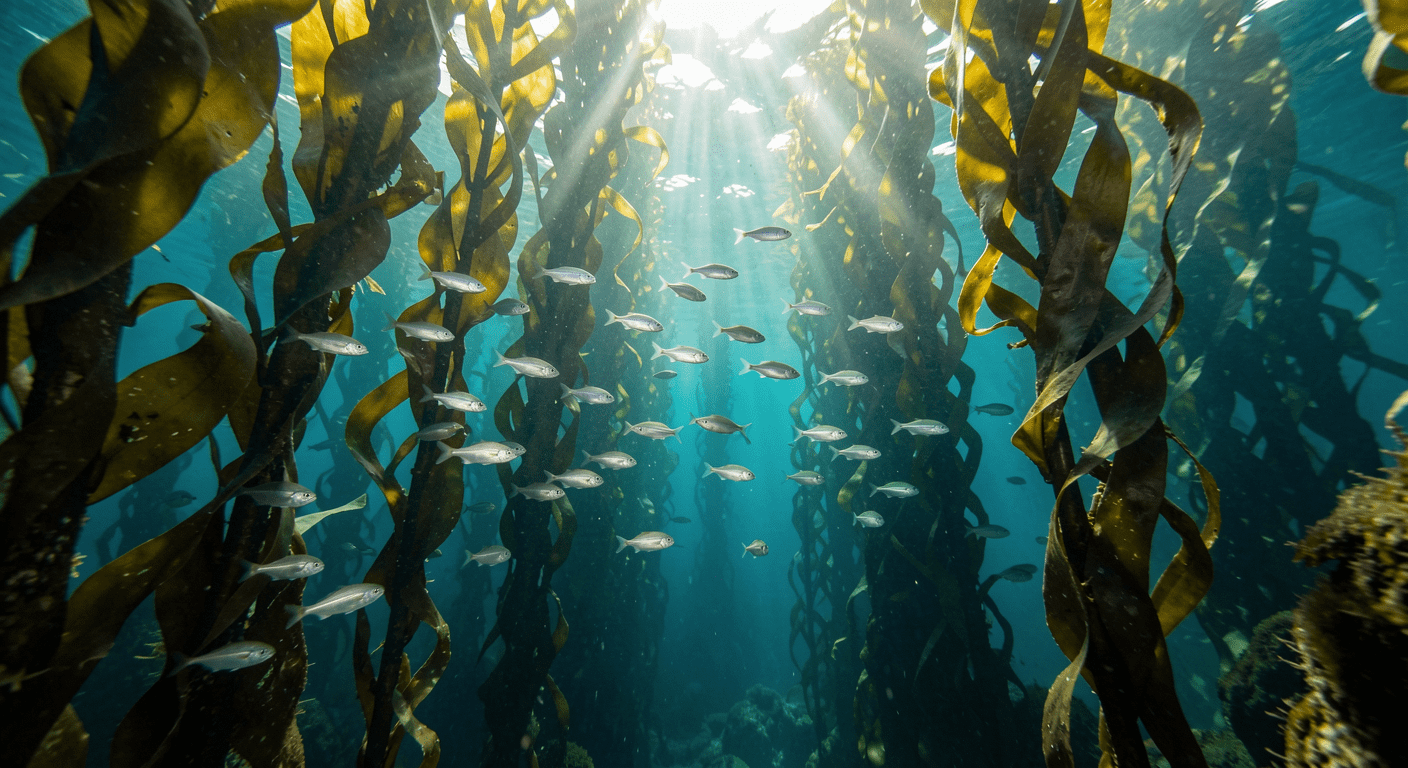
Kelp forests are also critical marine habitat. They provide shelter and nursery grounds for commercially important fish species, crabs, and sea urchins. Restoration aquaculture programs are now using farmed kelp to regrow wild kelp forests that have declined due to warming waters and overgrazing by urchins.
What We Can Learn From Seaweed
The practical takeaways are straightforward, and they start with what goes on the plate.
Start with small amounts. A sheet of nori as a snack, a sprinkle of dried wakame in soup, or a strip of kombu added to a pot of beans to improve digestibility and add minerals.
Cooking seaweed reduces iodine content, which matters for anyone eating large portions. Boiling kombu, for instance, leaches a significant portion of its iodine into the water. Use that water as a broth base and you capture the minerals without exceeding safe levels.
Pay attention to sourcing. Wild-harvested seaweed can accumulate heavy metals depending on local water quality. Farmed seaweed from regulated waters in the United States, Japan, and South Korea is generally tested and considered safe.
Hijiki, regardless of source, contains naturally high levels of inorganic arsenic. Most health authorities, including the UK Food Standards Agency, advise avoiding it or eating it only rarely.
Choose farmed over wild where you can. Farmed seaweed supports the sustainable seaweed farming economy, contributes to local water quality improvement, and gives you a product with traceable growing conditions.
Beyond the plate, the lesson is about rethinking what a resilient food system looks like. The fastest-growing food on Earth needs none of the inputs that make modern agriculture carbon-intensive.
It cleans the water it grows in. It creates habitat. It provides complete protein and bioavailable minerals to populations that need them.
If there is a better definition of a superfood from the ocean, nobody has found it yet.
Seaweed vs. Land Vegetables: Nutrition by the Numbers
Did you know? Fucoxanthin, the brownish-yellow pigment that gives kelp its color, has 13.5 times the antioxidant capacity of vitamin E. It is only found in brown seaweeds and is being studied for its anti-inflammatory and metabolic effects.
| Nutrient | Seaweed (Kelp) | Spinach (Raw) | Difference |
|---|---|---|---|
| Iodine | ~2,523 mcg/g | ~0.006 mcg/g | 420,000x |
| Fiber (% dry weight) | 35-60% | ~2.2% (fresh) | 16-27x |
| Complete Protein | Yes (all 9 EAAs) | No (incomplete) | Structural difference |
Frequently Asked Questions
- Is all seaweed edible? No. Most seaweed is technically non-toxic, but not all species taste good or have a desirable texture. Stick to commercially sold varieties: nori, wakame, kombu, dulse, arame, and sea lettuce are all widely eaten and tested for safety. Do not harvest random seaweed from beaches unless you can positively identify it and know the water quality of the area.
- How much seaweed should I eat per day? A typical serving is about 5 grams of dried seaweed, which is roughly one sheet of nori. For kombu or kelp, much less. A postage-stamp-sized piece of dried kombu in soup is enough to flavor the broth and add minerals without pushing iodine intake too high. The upper tolerable limit for iodine is 1,100 mcg per day. One gram of dried kombu can contain 2,523 mcg.
- Which seaweed has the most iodine? Kombu (kelp) has by far the most, at roughly 2,523 mcg per gram. Wakame is moderate, at around 40-70 mcg per gram. Nori is lower, at roughly 30-45 mcg per sheet. If you have a thyroid condition, consult your doctor before adding seaweed to your diet, especially kombu.
- Is seaweed safe during pregnancy? Moderate amounts of low-iodine seaweed like nori are generally considered safe. High-iodine varieties like kombu should be avoided. The NIH recommends that pregnant women not exceed 1,100 mcg of iodine per day from all sources combined. Always check with your healthcare provider.
- Can seaweed replace fish for omega-3s? Yes, and in a way that is more direct than fish. Fish get their EPA and DHA omega-3s from eating algae. Algal oil supplements cut out the middle step and provide the same fatty acids in a plant-based form. Seaweed snacks contain some omega-3s but typically in smaller concentrations than concentrated algal oil.
- Does cooking seaweed reduce its nutrients? Cooking does reduce iodine content, especially boiling, which leaches iodine into the cooking water. Some water-soluble vitamins also decrease with heat. Minerals like calcium, iron, and magnesium are largely heat-stable. If you want to moderate iodine intake, cook your seaweed and discard or repurpose the water.
- Is seaweed farming really sustainable? Yes, and it may be one of the most sustainable forms of agriculture ever developed. It requires zero freshwater, zero fertilizer, zero pesticides, and zero arable land. It absorbs excess nutrients from agricultural runoff and captures carbon dioxide. Farmed kelp also provides habitat for marine life. The main sustainability concern is ensuring farms do not shade out sensitive seafloor habitats or entangle marine mammals, which is managed through site selection and gear design.
Sources
- Harvard T.H. Chan School of Public Health: The Nutrition Source, Seaweed
- NIH Office of Dietary Supplements: Iodine Fact Sheet
- NOAA Fisheries: Seaweed Aquaculture
- Healthline: 7 Surprising Health Benefits of Eating Seaweed
- FAO: A Guide to the Seaweed Industry (Fisheries Technical Paper 441)
- ScienceDirect: Edible Seaweed, Overview