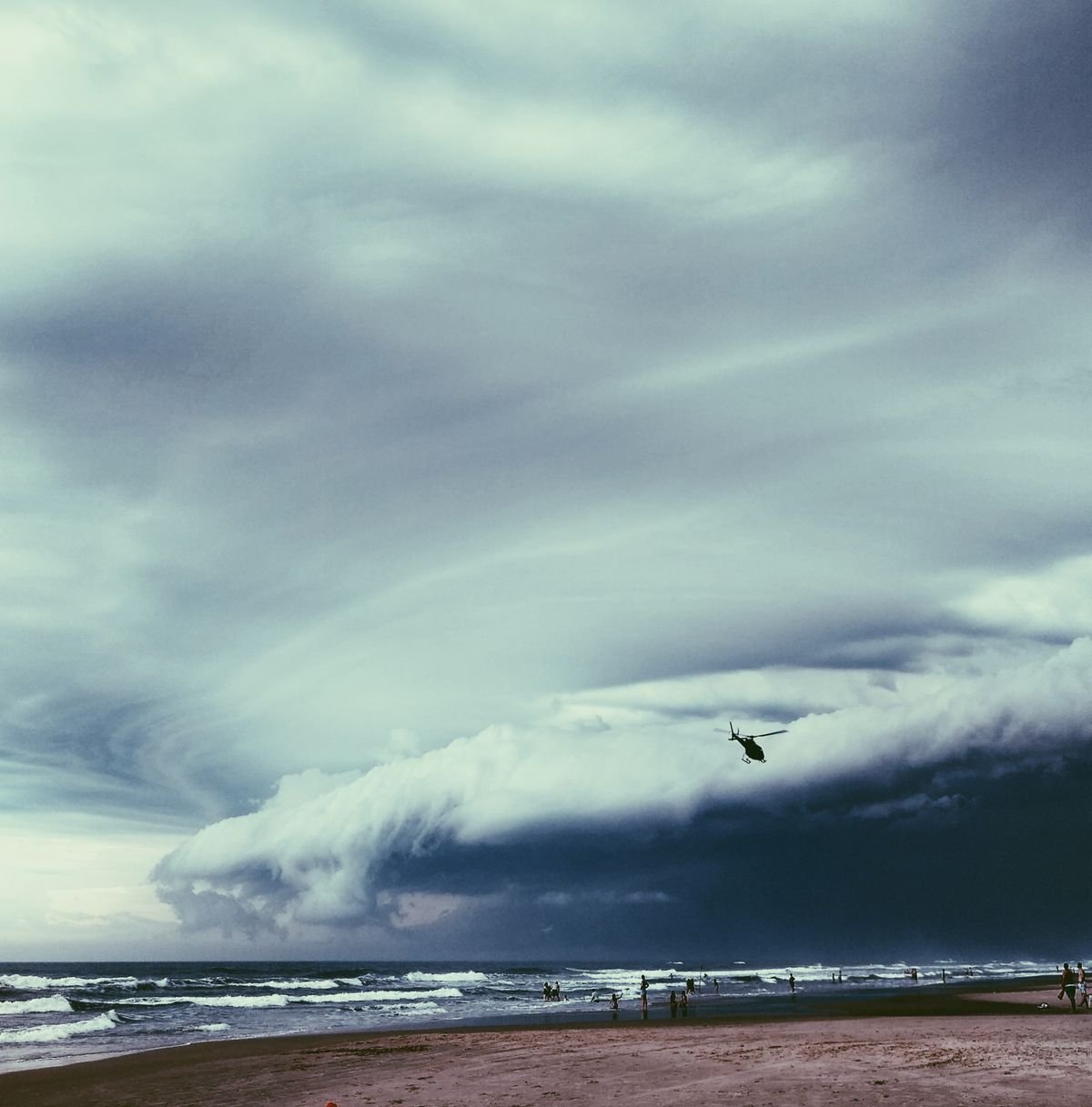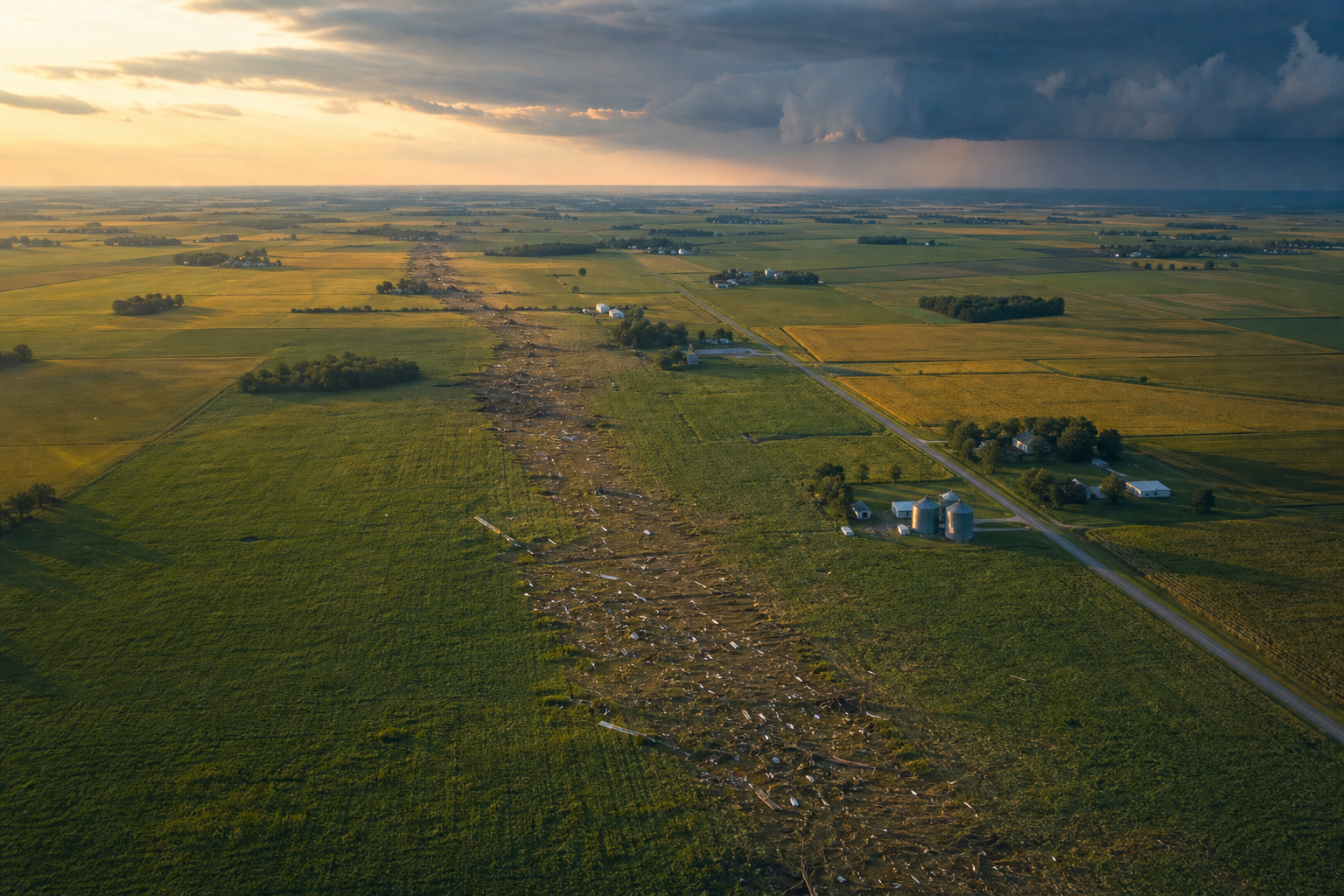
Illinois has recorded 140 tornadoes in a single season, the most of any state in the country, and the third time in four years the state has held that unwanted title. On June 11, a severe weather outbreak tore across northern Illinois and northwest Indiana with at least 7 confirmed tornadoes, including two EF-3s. Climate patterns, a developing El Nino, and shifting storm tracks are converging to turn the Midwest into the new Tornado Alley.
What Happened on June 11
The storms fired up Thursday afternoon and kept going into the night. Supercells dropped tornadoes across a broad swath from north-central Illinois into northwest Indiana.
The strongest was the EF-3 near Streator, about 90 miles southwest of Chicago. It carved a path through rural farmland and damaged multiple homes. Another EF-3 hit near Kouts, Indiana, about 50 miles southeast of Chicago.
“The Streator EF-3 was a wedge tornado, wide, rain-wrapped, and hard to see until it was right on top of you. NWS damage surveys found winds around 150 mph near the core of the damage path.”
National Weather Service Chicago, June 2026 Preliminary Event Assessment
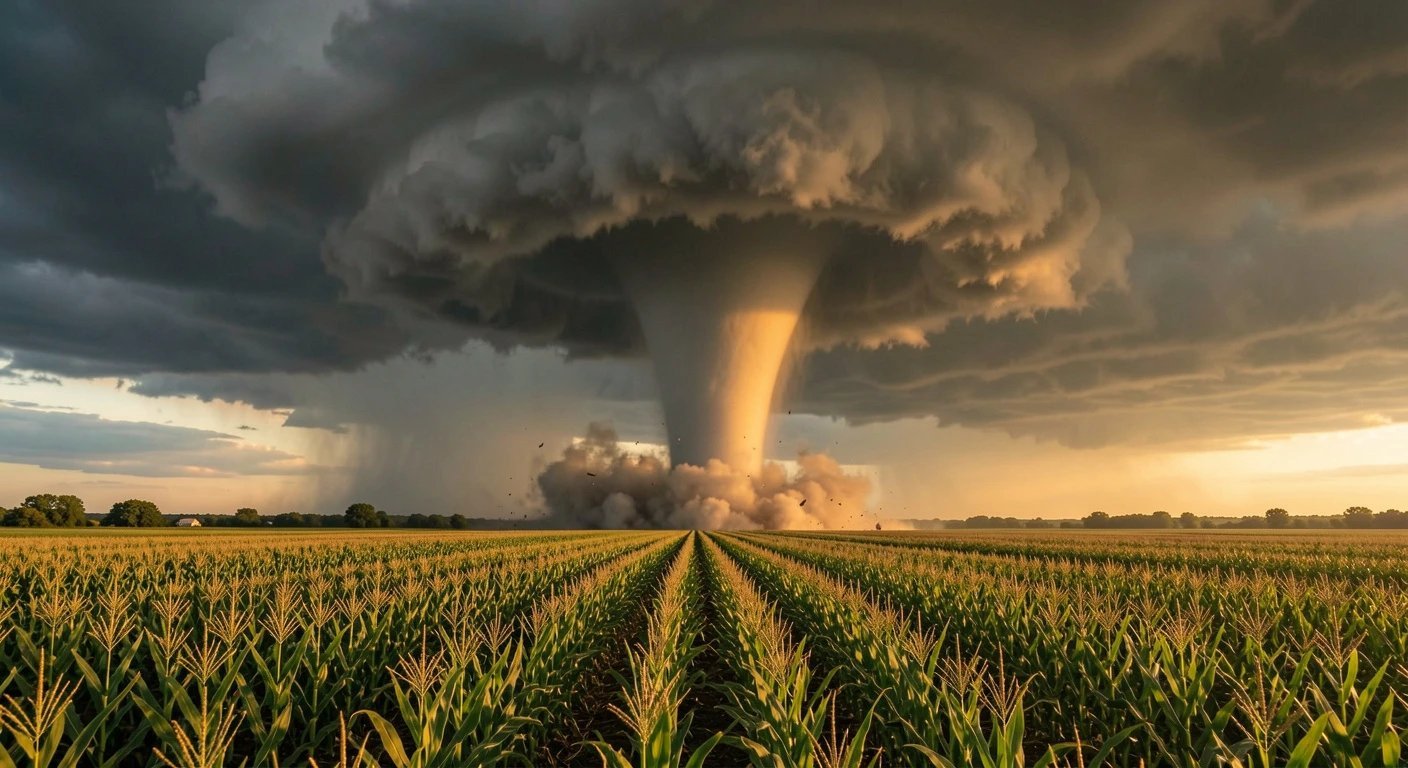
But the outbreak was not just about the big ones. NWS Chicago’s preliminary event page lists multiple weaker tornadoes too, spin-ups that touched down briefly in open fields and suburban areas. The same storm system also dumped up to 3.16 inches of rain, causing localized flooding alongside the tornado damage. In the Naperville-Woodridge-Willow Springs corridor, CNN reports more than 230 homes were damaged and multiple people were killed.
140 Tornadoes and Counting
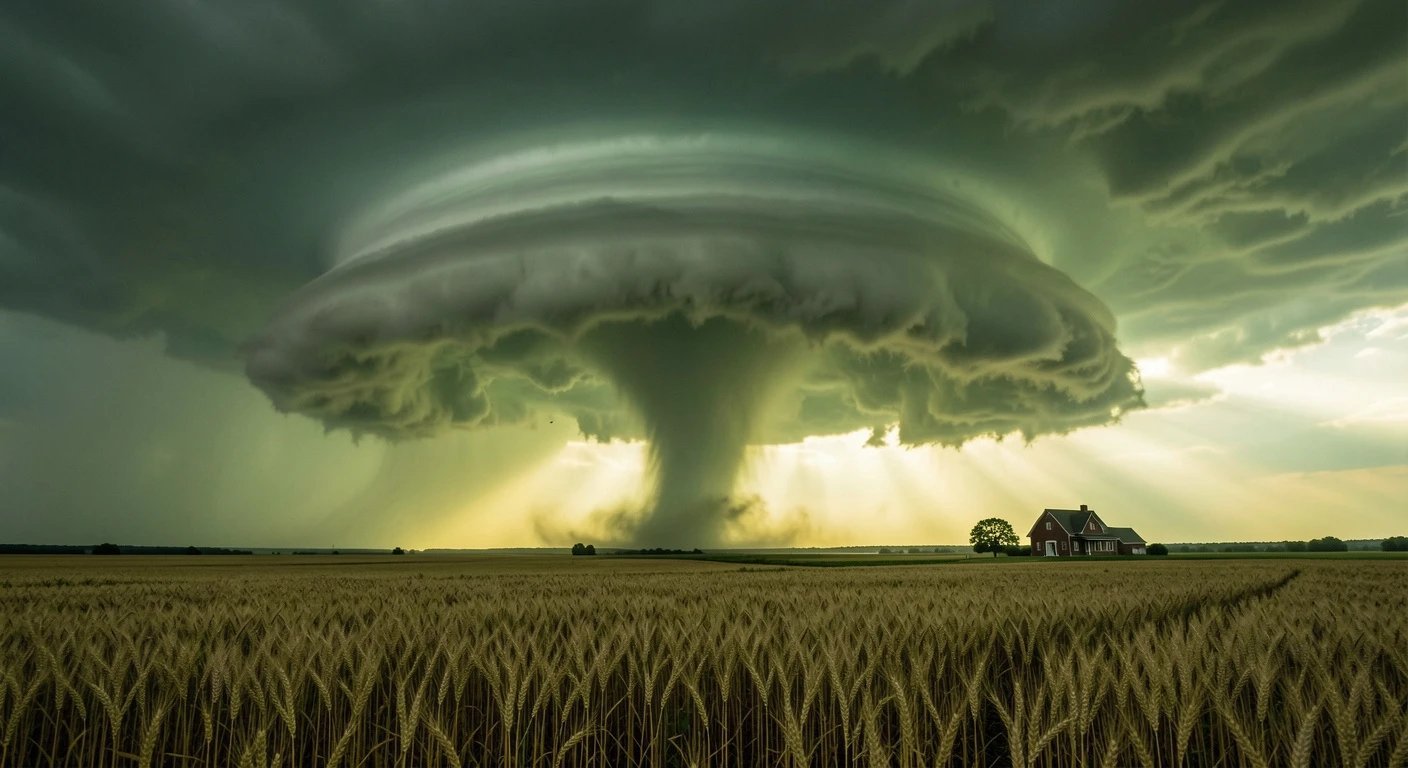
Illinois has already recorded 140 tornadoes in 2026, and we are only halfway through the year. The typical annual average for the state is around 50 to 60. That is not a fluke. It is a pattern: Illinois has led the nation in tornado counts for three of the last four years. The traditional Tornado Alley (Kansas, Oklahoma, Texas) has actually seen relatively quiet seasons by comparison. Instead, the action has shifted east and north, a phenomenon meteorologists call Tornado Alley migration.
Illinois Tornado Season 2026
| Metric | Value |
|---|---|
| 2026 tornadoes (through June) | 140 |
| Typical annual average | 50-60 |
| June 11 outbreak: confirmed twisters | 7+ (including 2 EF-3s) |
| Naperville corridor damage | 230+ homes damaged |
| Streator EF-3 wind speed | ~150 mph |
| Years IL led nation (last 4) | 3 out of 4 |
Why Is Illinois Getting Hammered?
Three converging factors are driving the surge:
- The jet stream pattern. A persistent trough in the western US and a ridge in the east has been steering storm systems right through the Midwest. Combined with warm, moist air from the Gulf of Mexico, which has been running above average this spring, you get the instability needed for powerful thunderstorms.
- The developing El Nino. NOAA confirmed El Nino conditions on June 11, and models suggest it could strengthen into a super El Nino by winter. Counterintuitively, certain El Nino patterns can enhance Midwest tornado activity by shifting the jet stream and increasing wind shear. Read our super El Nino forecast for the full analysis.
- Climate variability. No single tornado or season can be blamed on climate change. But warmer Gulf waters, more atmospheric moisture, and shifting storm tracks are consistent with what climate models have been projecting for decades. Read our June 2026 storm outbreak coverage for context.
What You Need to Know Going Forward
Tornado season is not over. June and July can still produce significant outbreaks, especially when a developing El Nino keeps the atmosphere energized. If you live in Illinois or the broader Midwest:
- Have multiple ways to get warnings. Phone alerts, NOAA weather radio, and a weather app with push notifications. Do not rely on outdoor sirens.
- Know your safe place. Basement, interior room on the lowest floor, or a tornado shelter. Mobile homes are not safe in tornadoes.
- Do not wait until you see the tornado. By the time you spot it, it may be too late. The Streator tornado moved at 45 mph, giving residents only 10 to 15 minutes of warning.
This season is already historic. And with climate patterns shifting, Illinois might stay in the crosshairs for years to come.
Sources: NWS Chicago; CBS Chicago; CNN; NOAA Climate Prediction Center; NOAA Storm Prediction Center.