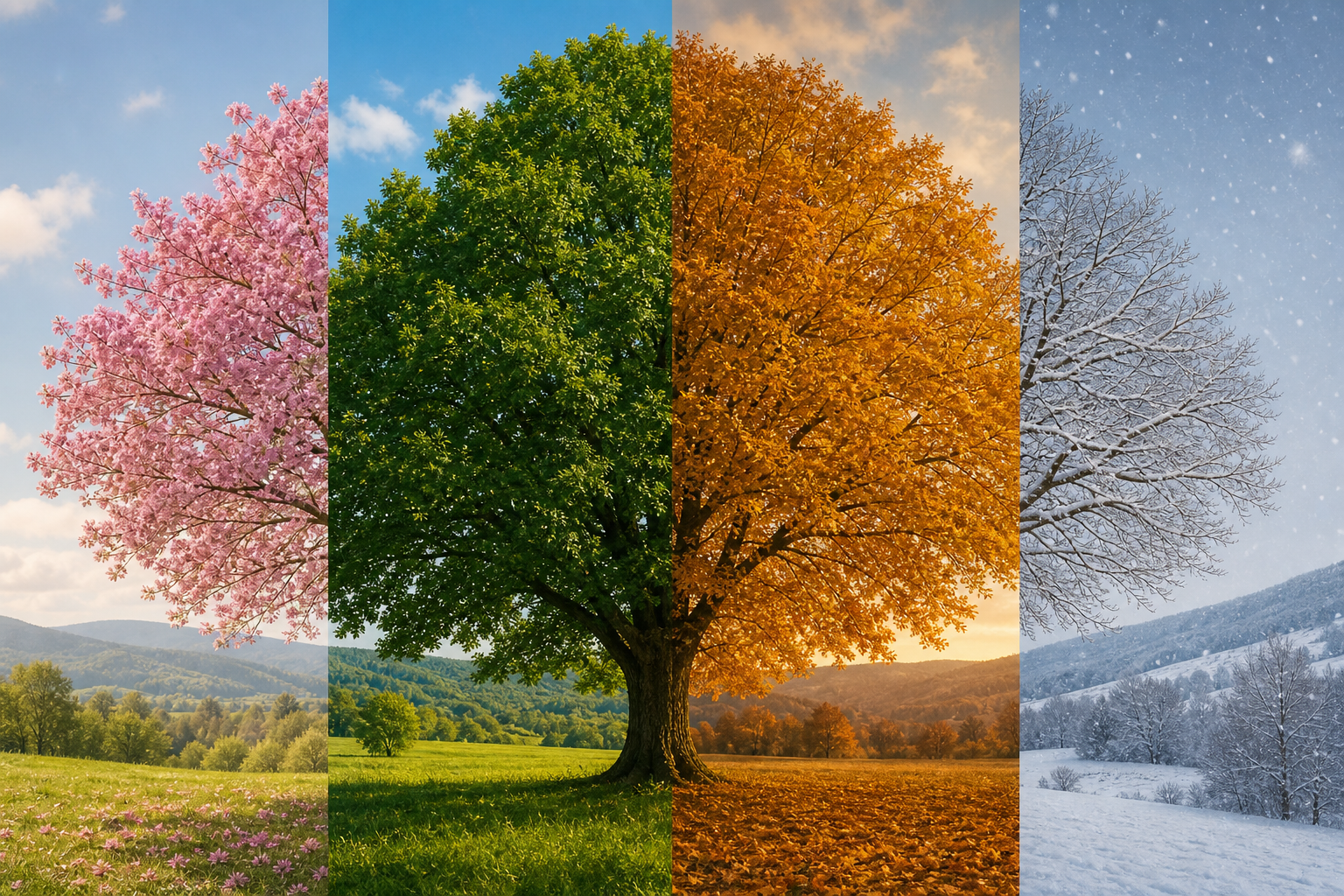
Seasons exist because of one number: 23.5 degrees, the angle of Earth’s axial tilt. This tilt stays pointed toward the North Star all year as Earth orbits the Sun, meaning different parts of the planet receive more or less direct sunlight depending on the time of year. It is not distance from the Sun that causes seasons (Earth is actually closest to the Sun in January), it is the angle of sunlight. Here is the simple science behind summer, winter, spring, and fall.
Why Seasons Happen: The Tilt That Shapes Everything
Earth spins on an axis tilted at 23.5 degrees relative to its path around the Sun. Scientists call this axial tilt or obliquity. This tilt stays pointed in the same direction all year, toward the North Star Polaris, no matter where Earth is in its orbit.
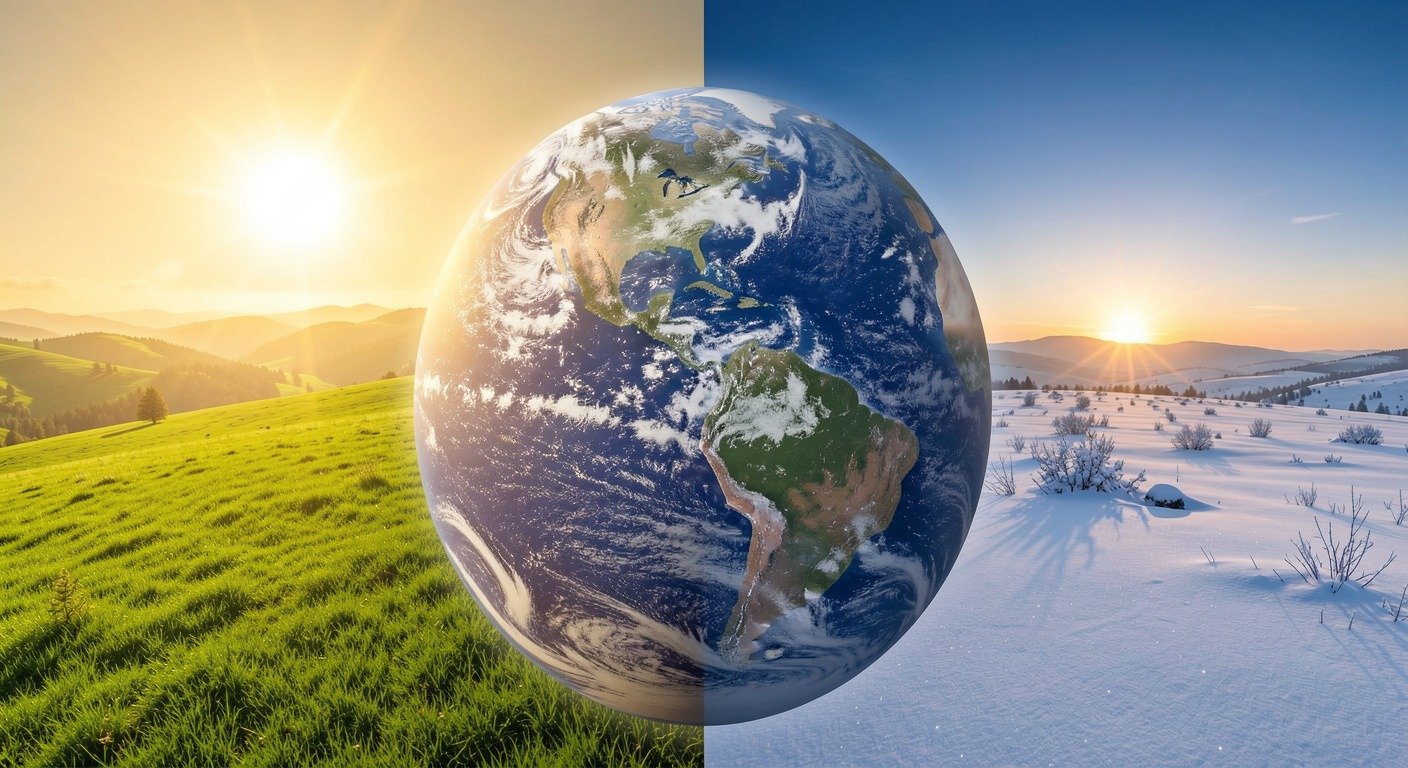
During June, the Northern Hemisphere leans toward the Sun. Sunlight strikes the ground more directly, packing more energy into each square meter. Days get longer. That is summer for Chicago, Paris, and Beijing. At the same time, the Southern Hemisphere leans away and gets winter for Sydney, Buenos Aires, and Johannesburg. Six months later in December, the situation reverses.
The Four Markers: Solstices and Equinoxes
Summer solstice (around June 21): North Pole tilts closest to the Sun. Longest day in the Northern Hemisphere. Winter solstice (around December 21): North Pole tilts farthest from the Sun. Shortest day. Spring equinox (around March 20) and autumn equinox (around September 22): Sun shines directly over the equator. Every place on Earth gets roughly 12 hours of daylight and 12 hours of darkness.
“Every season you have ever lived through, every snow day, every first bloom, every harvest, was set in motion by a 23.5-degree tilt that never changes direction.”
NatureWeatherHub
How Seasons Shape Human Life
Farming and Food
Agriculture depends entirely on seasonal patterns. According to the USDA, seasonal timing affects planting decisions for over 90 percent of American crop acreage. A late frost in spring can wipe out fruit blossoms. An early autumn freeze can trap corn and soybeans before harvest.
Health and Mood
Seasonal changes affect the human body directly. Less sunlight in winter means less vitamin D production, linked to lower immune function and mood. Seasonal Affective Disorder affects an estimated 5 percent of U.S. adults, with symptoms that track the shortening days of autumn and winter.
Travel, Culture, and Economy
Entire industries rise and fall with the seasons. Ski resorts live or die by winter snowfall. Beach towns depend on dry-season tourists. Japan’s cherry blossom season draws millions of visitors and generates billions in tourism revenue. Seasonal festivals from Diwali to Christmas to Lunar New Year anchor the cultural calendar for billions.
Seasons by the Numbers
| Metric | Value |
|---|---|
| Earth’s axial tilt | 23.5 degrees |
| Spring arrival shift (since 1950s) | 10-14 days earlier |
| US crop acreage affected by seasonal timing | >90% |
| SAD prevalence (US adults) | ~5% |
| NH snow cover decrease (since 1960s) | ~1 million sq miles |
| Lyme disease increase (since 1990s) | Tripled |
Why Seasons Matter Now: Climate Change Is Rewriting the Calendar
Seasons have been stable for thousands of years, but that stability is weakening. According to NASA, spring now arrives roughly 10 to 14 days earlier in many parts of the Northern Hemisphere than it did in the 1950s. Plants bloom sooner. Ice on lakes melts weeks earlier. Migratory birds arrive before their food sources are ready.
Summer heat waves are lasting longer. The growing season has extended in some regions, which sounds good until you consider that pests and disease-carrying insects survive warmer winters. Lyme disease cases in the United States have tripled since the 1990s, partly because ticks now survive winters that used to kill them.
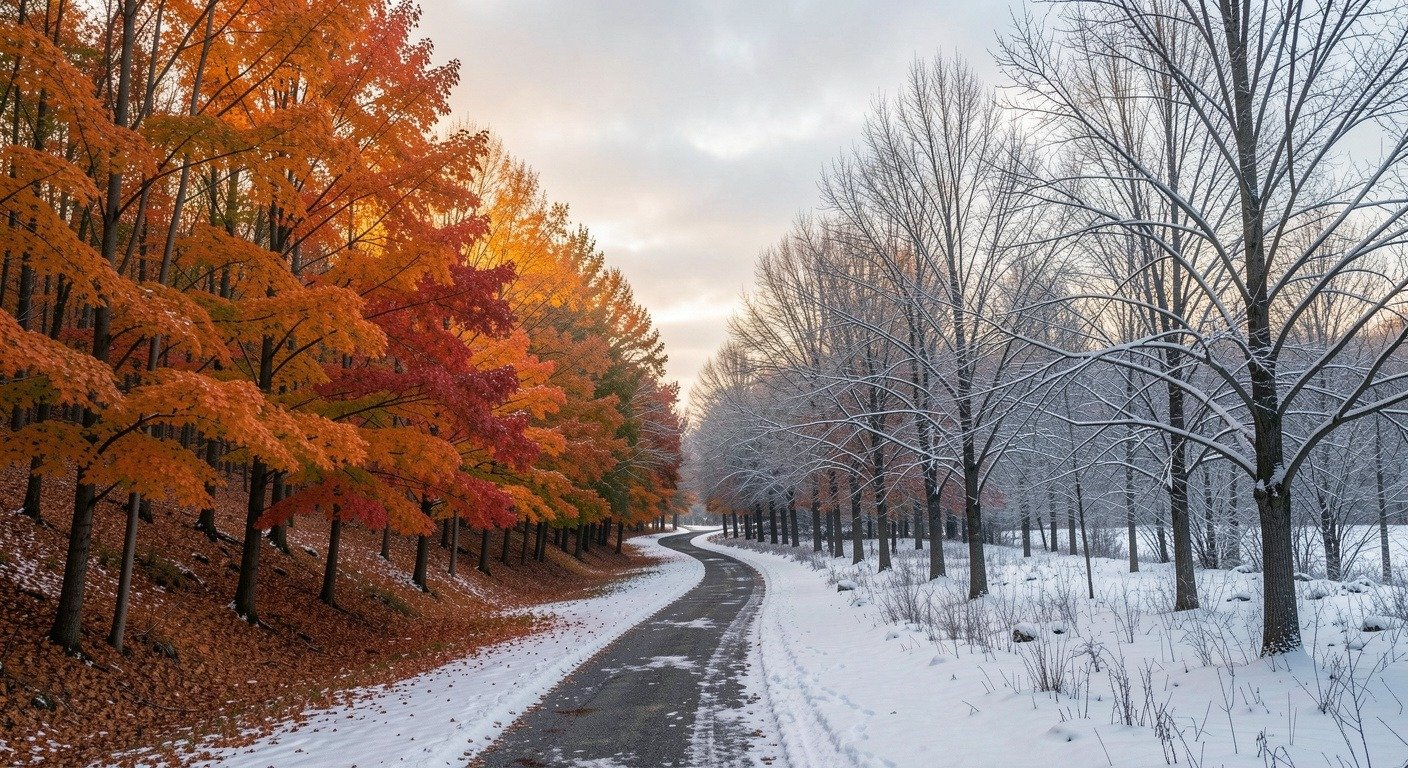
The National Oceanic and Atmospheric Administration reports that snow cover in the Northern Hemisphere has decreased by about 1 million square miles since the late 1960s. For communities that depend on snowpack for drinking water, including much of the American West, shorter winters are a water security crisis.
What We Can Learn From the Seasons
Understanding why seasons change does more than answer a trivia question. It connects you to a planetary rhythm that has shaped every civilization, every ecosystem, and every human life. Here is a practical takeaway: pay attention. Notice when the first buds appear in your neighborhood. Note when the first frost hits. You will start to see patterns, and when those patterns shift, you will notice. For more on how climate is changing seasonal patterns, read our heat dome explainer.
Sources: NASA Climate; NOAA; USDA; CDC Lyme Disease Data.