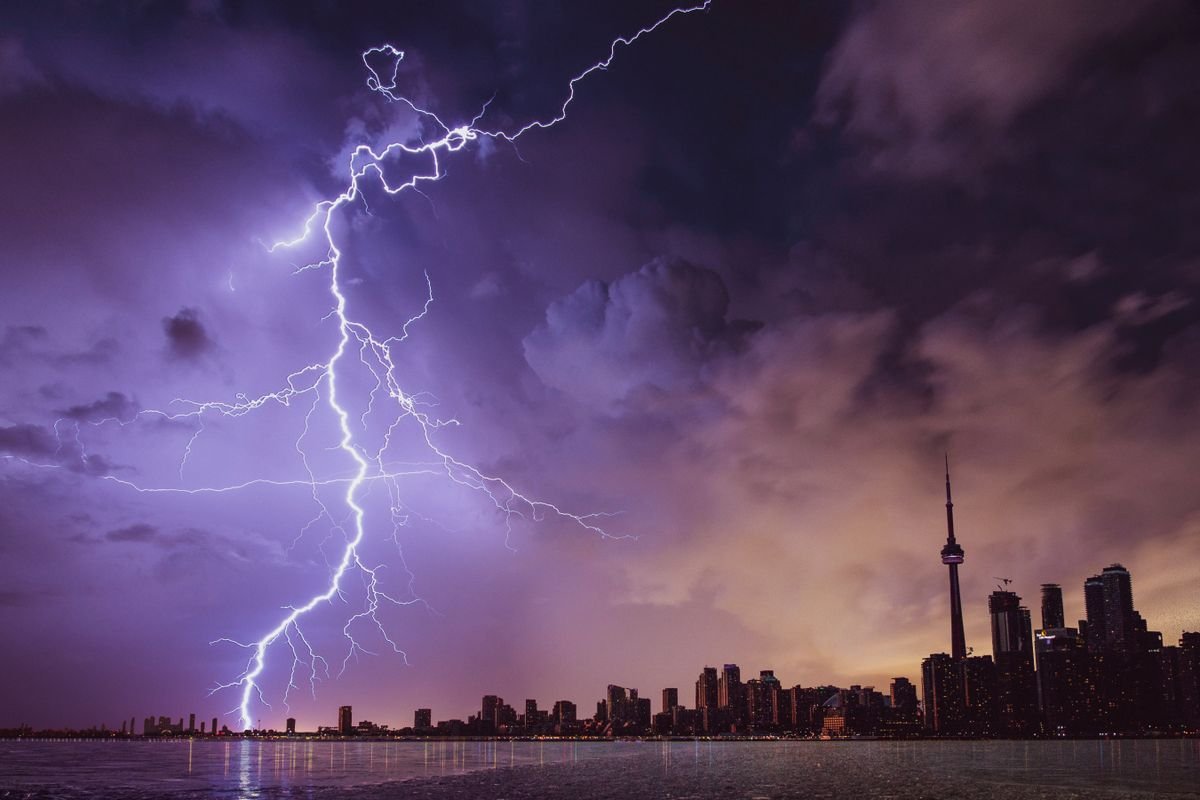
On a July evening, you lean back on the porch and watch the horizon flicker. No sound follows. Just silent flashes threading through distant clouds. Someone beside you says it: “heat lightning.” The name has been passed down for generations. It is wrong.
Heat lightning has nothing to do with heat. The term describes ordinary lightning from a thunderstorm too far away for you to hear. Heat lightning science confirms this: what you see is a real electrical discharge from a storm 50 to 100 miles beyond the horizon. Distance simply swallows the sound before it reaches your ears.
What Heat Lightning Actually Is
Heat lightning is regular lightning, with no separate category, no special atmospheric condition, and no link to temperature. Every flash you see on a hot summer night comes from a thunderstorm sitting beyond your visible horizon, hidden by the curvature of the Earth. What reaches you is light cast upward into higher clouds and scattered across the sky.
The confusion is understandable. These silent displays appear on warm, humid evenings, often with no rain falling where you stand. Generations connected the heat to the lightning and assumed it was a separate phenomenon. According to the National Severe Storms Laboratory, “heat lightning” is strictly a colloquial name with no scientific meaning. To understand how lightning forms, scientists track electrical charge separation inside cumulonimbus clouds. The same process powers every distant flash you see.
Why You Can See It But Not Hear It
This is where the physics gets sharp. Light and sound travel at different speeds, and sound has a shorter effective range.
Simple: You see the flash because light crosses 50 miles in a fraction of a millisecond. You hear nothing because the thunder’s sound wave loses energy to the atmosphere and bends away from the ground long before it reaches you.
Term: The key concepts are sound attenuation and atmospheric refraction. Thunder is a shock wave created when lightning superheats the air to roughly 50,000 degrees Fahrenheit in microseconds. The National Weather Service explains that this explosive expansion produces a sound wave that travels outward from the strike. Sound loses intensity with every mile it covers. By the time the wave has traveled 10 to 15 miles, most of its energy is gone. Beyond 25 miles, thunder is almost never audible at ground level.
Atmospheric refraction also plays a role. Warm air near the ground bends sound waves upward. On a hot summer night, the temperature gradient between the warm surface and cooler air aloft creates a natural sound barrier. The thunder wave bends away from your ears and into the upper atmosphere. The NWS Lightning Safety page confirms that if you can see lightning at any distance, you are close enough to be struck if the storm moves your way.
Example: A thunderstorm sits 60 miles west of you at 10 p.m. on a July night. The storm top reaches 40,000 feet, catching the last light of the sun that has already set where you stand. Every intracloud flash illuminates the upper portion of the storm. You see these as diffuse, silent bursts on the western horizon. The thunder from those same strikes never travels past 15 miles. The sound dissipates into heat and motion in the air long before reaching your porch.
Where and When It Appears
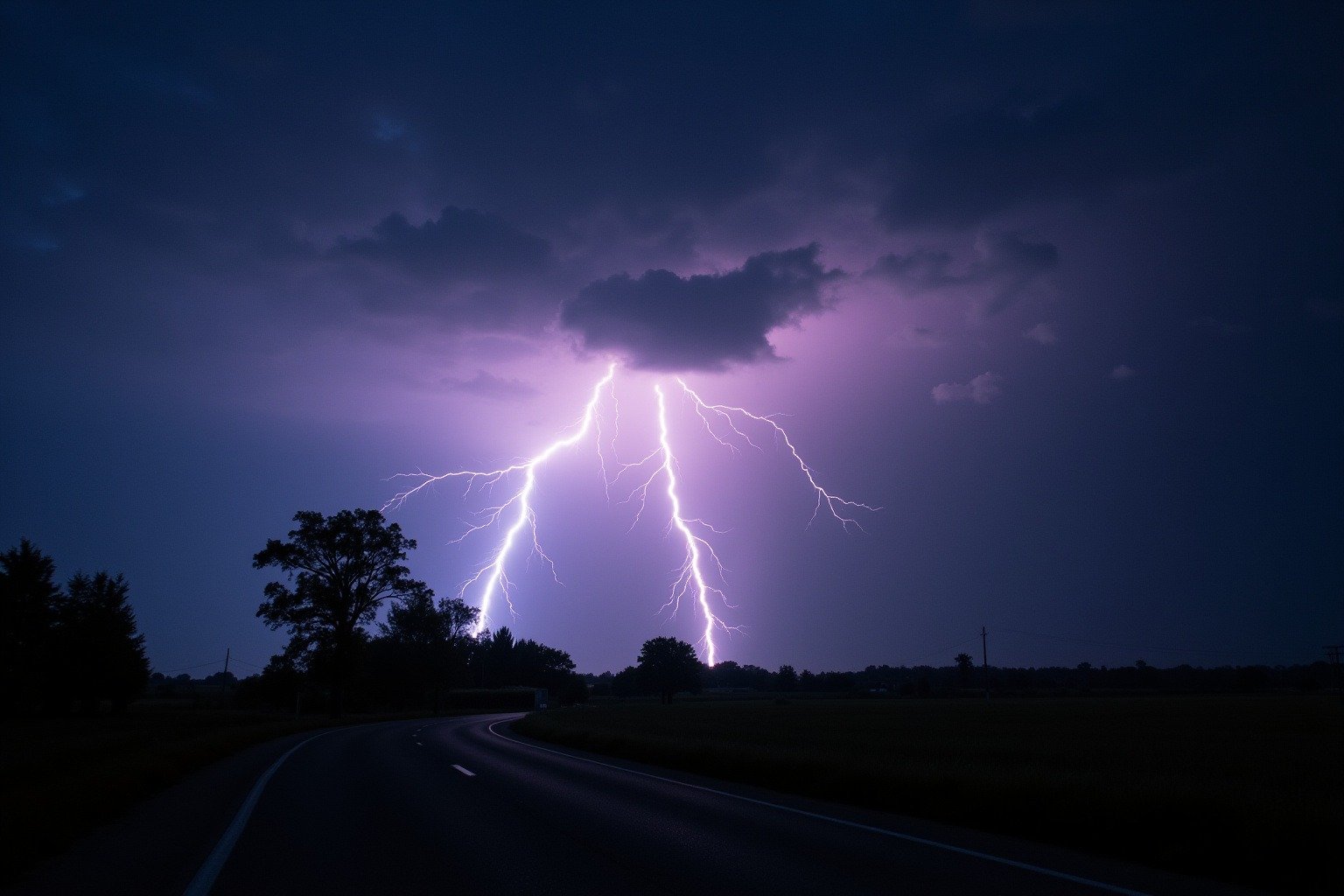
The reason heat lightning is associated with summer is straightforward: thunderstorms are most common then. Warm, humid air masses build during the day. By evening, they rise high enough to generate towering cumulonimbus clouds, often in clusters along cold fronts 50 to 100 miles from where you are standing.
You are most likely to see heat lightning on a clear night when the air near the ground is warm and still. No local clouds block the view, and the temperature inversion bends sound upward, silencing the thunder that would otherwise tell you a storm is nearby. Heat lightning science identifies this combination of clear skies at your location and distant convection along a front as the classic setup.
The flickering looks continuous because multiple storms in a line produce flashes at different intervals. From 60 miles away, you cannot resolve individual cloud-to-ground strokes. What reaches your eye is the diffuse glow of intracloud lightning, the most common type, which accounts for roughly 75 percent of all lightning discharges. The storms are real. The danger is real. You just cannot hear them.
Is It Dangerous?
The question people ask most is whether heat lightning poses any risk. The answer depends on where the storm is and which way it is moving.
A storm 60 miles away that is drifting farther west is no threat. But a storm 30 miles away that is moving toward you at 25 miles per hour will close the gap in just over an hour. The silent flickers you are watching now could be directly overhead by midnight. The NWS Lightning Safety guidance is unambiguous: if you can see lightning, the storm is close enough to reach you. Thunder may not be audible, but that does not mean you are safe.
The real hazard is the false sense of security. You see a storm that looks distant and silent. It feels harmless. You stay outside. You keep swimming. You finish the barbecue. Research on how thunderstorms form shows these systems can intensify rapidly in the evening as daytime heating fuels convective growth. A storm producing only intracloud lightning at 9 p.m. can send cloud-to-ground strikes into your area by 10 p.m.
Lightning kills an average of 21 people per year in the U.S. Many of those deaths happen when people wait too long to seek shelter because the storm “looks far away.” Heat lightning is not a separate, harmless phenomenon. It is a thunderstorm at a distance, and every thunderstorm deserves the same caution.
What Heat Lightning Science Tells You
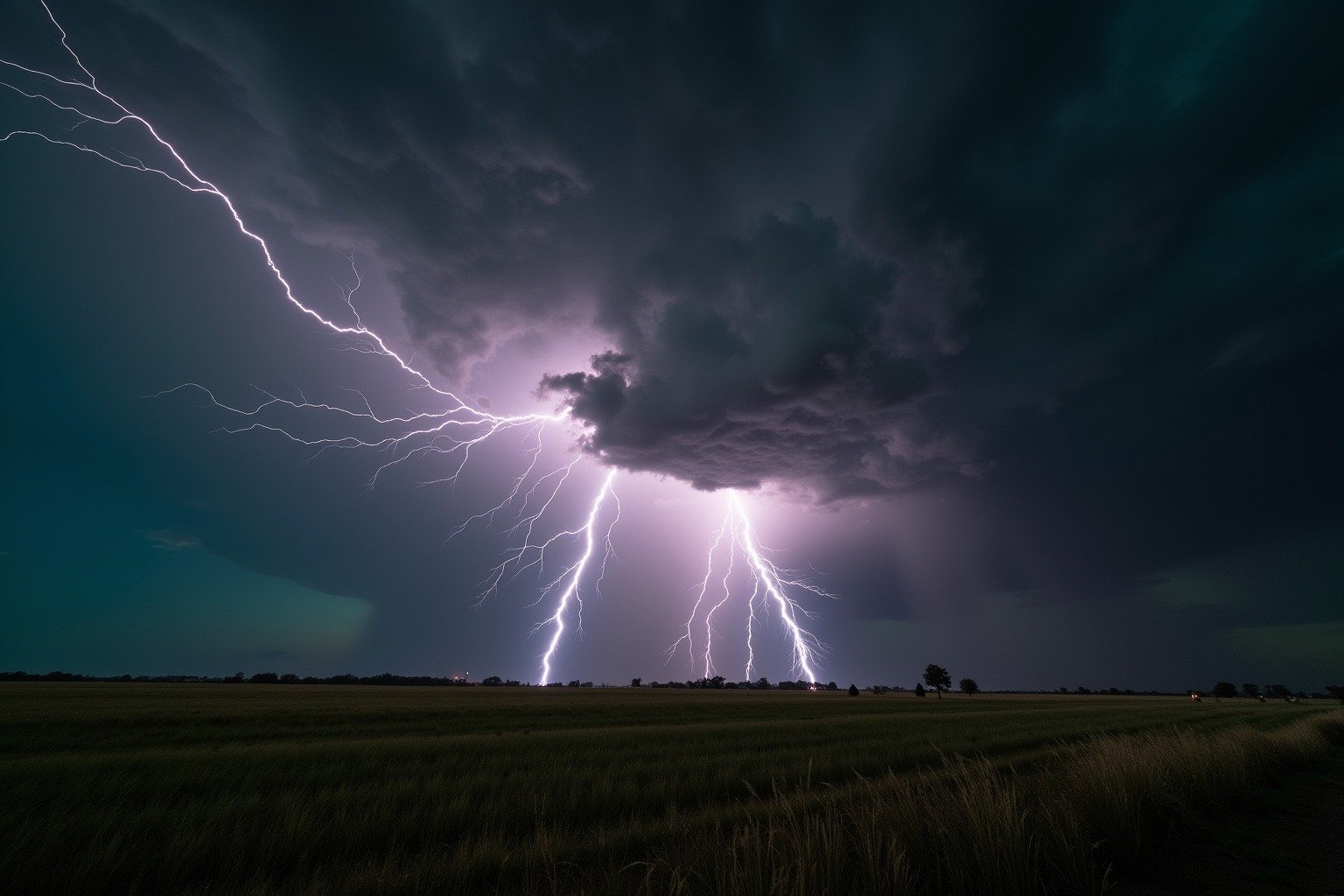
The takeaway is simple. The next time you see silent flashes on a summer night, recognize them for what they are: a thunderstorm far enough away that you cannot hear it, but close enough that you can see it. That means the storm is within your visual horizon, which in flat terrain can extend 50 miles or more for a storm top reaching 40,000 feet.
Check a radar app. If the storm is moving toward you, head indoors. Lightning can strike 10 to 15 miles ahead of the rain core, a phenomenon meteorologists call a “bolt from the blue.” According to the science behind thunder and lightning, these strikes are dangerous because they catch people under clear skies.
Heat lightning science tells us one clear thing: the name is folklore. The lightning is real. Treat it accordingly.
For the human side of those silent flashes, read the story from a porch at dusk.