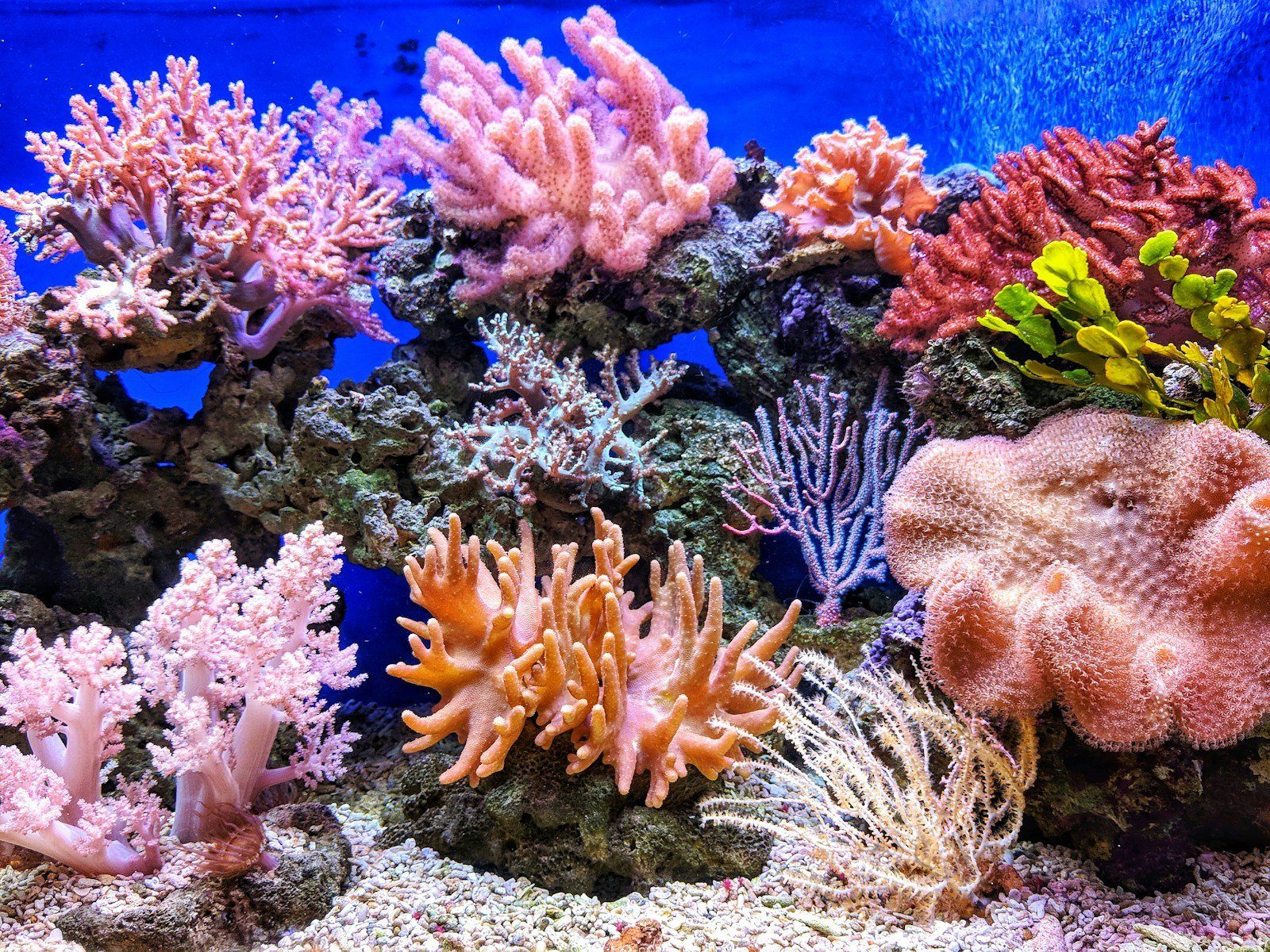
A healthy coral reef is a riot of color. A bleached reef is a ghost of itself, bone-white and nearly silent, and the transformation can happen in a matter of days. Coral bleaching explained simply: heat breaks a million-year partnership between coral and algae, and the reef turns white.
Coral bleaching is the most visible signal that the ocean is running a fever. When seawater gets too warm for too long, the tiny algae that give corals their color and most of their food abandon their hosts, leaving behind transparent tissue over white skeleton. The coral is not dead yet, but it is starving.
Understanding coral bleaching is not just about marine biology. It is about the food on your plate, the beaches you visit, and the coastal communities that depend on reefs for survival.
Coral Bleaching Explained: What It Actually Is
A coral is an animal, not a plant. Each coral polyp, about the size of a grain of rice, builds a limestone cup around itself and lives inside it by the thousands, forming colonies that grow into the massive reef structures we recognize from photographs and documentaries.
Inside each polyp live microscopic algae called zooxanthellae. These algae photosynthesize, turning sunlight into energy, and they share roughly 90 percent of that energy with the coral. In return, the coral provides the algae with a protected, sunlit home. This partnership has worked for millions of years, until the recent acceleration of coral bleaching events.
When the water gets too hot, the partnership breaks down. The algae start producing toxins instead of food. The coral, stressed and effectively being poisoned by its own houseguests, expels the algae. Without the algae, the coral loses its color and turns white.
That is how coral bleaching works at the cellular level. This is why coral reefs turn white when ocean temperatures spike.
A bleached coral is still alive, but it has lost its main food source. If the water cools within a few weeks, the algae can return and the coral can recover. If the heat persists, the coral starves and dies, leaving behind bare skeleton that slowly erodes.
Why Coral Bleaching Happens
The ocean absorbs more than 90 percent of the extra heat trapped by greenhouse gases. That heat does not stay at the surface. It spreads, accumulates, and pushes seawater temperatures past the narrow range corals can tolerate. As we covered in our climate change explainer, the ocean has absorbed most of the warming since the industrial era began, and corals are paying the price.
Most corals live within 1 to 2 degrees Celsius of their upper temperature limit. A sustained increase of just 1 degree Celsius above the average summer maximum is enough to trigger bleaching. At 2 degrees above normal, severe bleaching and widespread death become likely.
Simple explanation: Corals live in a tight temperature window. When the ocean warms past that window, the relationship between coral and algae collapses.
The professional term is thermal stress, measured in degree heating weeks (DHW). One DHW equals one week of temperatures 1 degree Celsius above the usual summer peak. At 4 DHW, significant bleaching is expected.
At 8 DHW, severe bleaching and mortality become widespread. During the 2023 to 2025 global event, many reefs accumulated 15 to 20 DHW, conditions never before recorded. That is what causes coral bleaching at the planetary scale: accumulated ocean heat pushing past every known threshold.
Real-world example: In early 2024, the southern Great Barrier Reef experienced water temperatures 2.5 degrees Celsius above normal for more than eight weeks. Aerial surveys found bleaching across 73 percent of the surveyed reefs. It was the fifth mass bleaching on the Reef since 2016 and the third to strike during La Nina conditions that were supposed to offer cooler relief.
How Coral Bleaching Affects People
Coral reefs cover less than 1 percent of the ocean floor, but they support roughly 25 percent of all marine life. The coral bleaching human impact reaches far beyond the ocean, touching food supplies, local economies, and coastal safety.
Food and fisheries. An estimated 500 million people depend on coral reefs for food and income. In developing coastal nations across Southeast Asia, the Pacific, and East Africa, reef fish provide the primary source of protein. When reefs die, those fish populations crash within years. The US alone generates roughly 200 million dollars annually from reef-associated fisheries.
Tourism and local economies. Reef tourism is a multi-billion-dollar industry. In Florida and Hawaii, reefs support 2 billion dollars in annual tourism and recreation spending. Australia’s Great Barrier Reef generates roughly 6.4 billion Australian dollars per year and supports 64,000 jobs. When a reef bleaches and dies, those tourism dollars disappear, and the economic shock hits dive operators, hotels, restaurants, and the families who depend on them.
Coastal protection. Healthy reefs absorb up to 97 percent of wave energy before it reaches shore. They are natural breakwaters, protecting coastal communities from storm surges and erosion. A dead reef crumbles: the limestone skeleton erodes, the structure collapses, and the coastline behind it becomes exposed to the full force of the ocean. For low-lying island nations and coastal cities, losing their reefs means losing their first line of defense against the sea.
Why It Matters Now
The fourth global coral bleaching event officially began in 2023. By late 2025, when NOAA reported it was likely ending, bleaching-level heat stress had reached 84.4 percent of the world’s coral reef area. Mass bleaching was confirmed in at least 83 countries and territories. The coral bleaching effects were unprecedented: it was the most widespread event ever recorded.
In December 2023, NOAA added three new alert levels to its bleaching warning system, bringing the maximum from Level 2 to Level 5. The old scale was no longer sufficient. The heat was breaking the measurement system.
The Great Barrier Reef has now endured five mass bleaching events since 2016. The interval between events is shrinking. Reefs that once had 20 to 30 years to recover between bleachings now get 2 to 5 years. Many corals need a decade or more to fully regrow after severe damage. They are not getting that time.
What We Can Learn
Coral bleaching is not a remote problem that only matters to marine biologists. It is an early warning, written in white skeleton across the shallow seas, that the ocean is changing faster than its inhabitants can adapt.
There are reasons for measured hope. Some reefs are naturally more resilient. The northern Red Sea reefs, for example, have survived in unusually warm water for thousands of years and may be genetically equipped to handle higher temperatures.
Scientists have identified 165,922 square kilometers of climate-resilient reefs across 71 countries, triple the area previously known. Coral spawning events, like the Great Barrier Reef’s annual synchronized release of eggs and sperm, give reefs a fighting chance to regenerate.
But regeneration only works if the intervals between heat waves are long enough. Cutting greenhouse gas emissions remains the only way to buy that time. Local actions like reducing runoff and pollution, restricting overfishing, and protecting herbivorous fish that keep algae in check can improve a reef’s odds. They cannot replace cooler water.
Sources
- NOAA Coral Reef Watch: Satellite Monitoring and Bleaching Alerts
- NOAA: Fourth Global Coral Bleaching Event
- Australian Institute of Marine Science: Coral Bleaching
- NOAA Ocean Service: What is Coral Bleaching?
“The most important thing to understand about coral bleaching is that it is reversible, but only if we give the ocean a chance to cool down.”