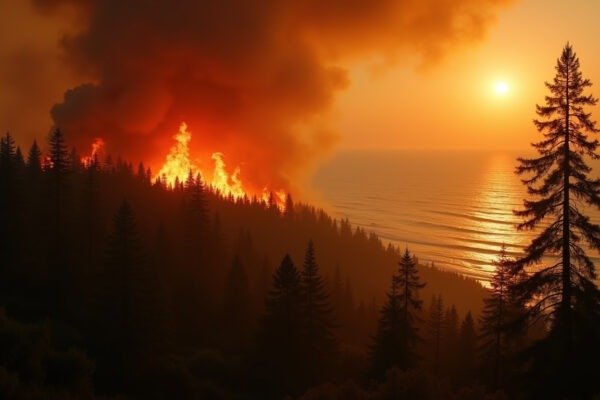
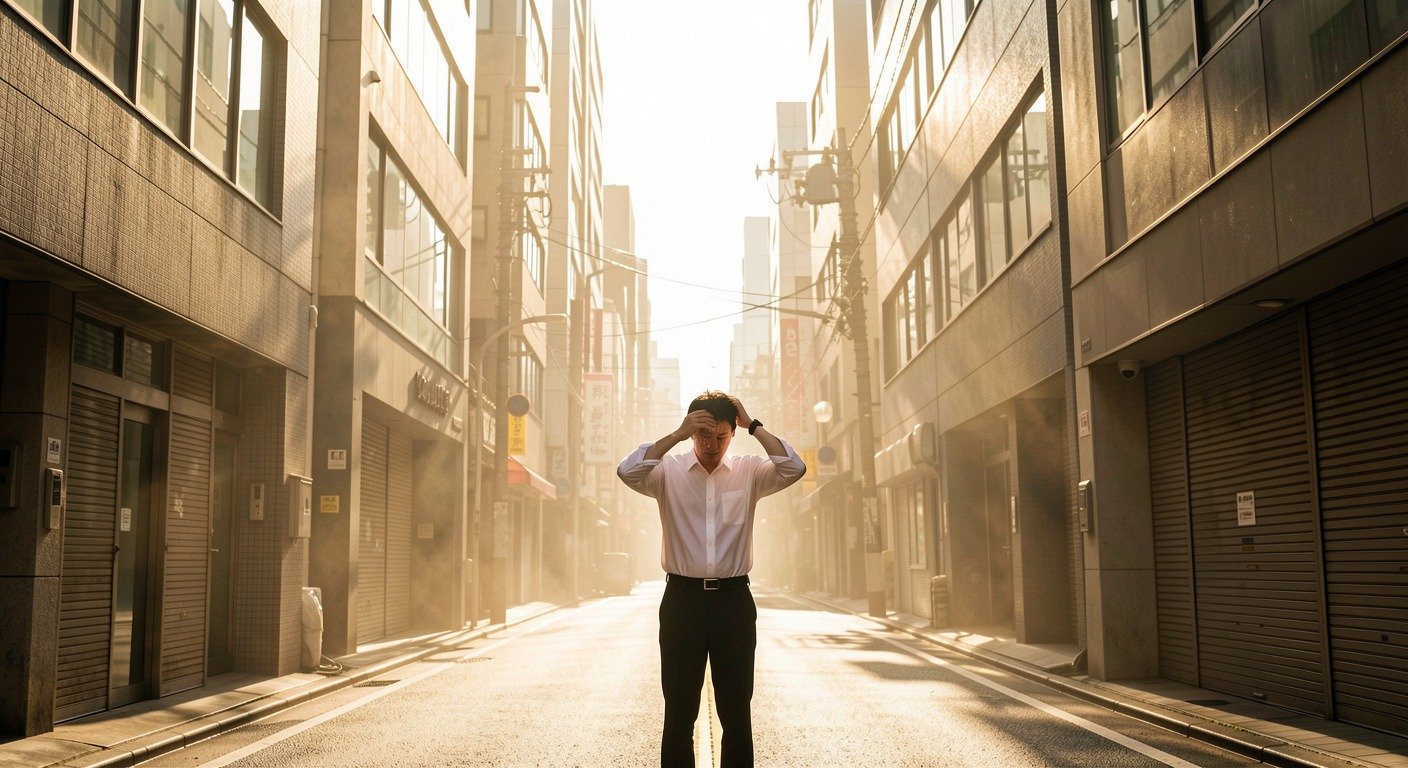
Japan has created a new word for its new reality: kokushobi. “Cruelly hot.” When a language needs a new word to describe the weather, something fundamental has changed. The Tokyo heat emergency 2026 marks the moment a wealthy, technologically advanced nation admitted that the climate has outrun human adaptation.
- Japan adopted “kokushobi” (cruelly hot day) in April 2026, the first new heat danger category in 19 years
- Tokyo is waiving water bills for ~8 million households for four months to encourage air conditioner use
- Japan recorded 2,160 heatstroke deaths in 2024, a record high; the new national target is below 1,000 per year
- Tokyo is one of the most intense urban heat islands on Earth, nighttime temps can be 5 to 10 degrees C warmer than rural areas
Tokyo is facing a summer unlike any in its modern history. After three consecutive years of record-breaking global heat, Japan deployed an unprecedented set of emergency measures: a new danger category for 40-degree-Celsius days, a water bill waiver for 8 million households, and a national plan to cut heatstroke deaths below 1,000 per year.
What Happened: Japan’s Heat Emergency Unfolds
The summer of 2026 did not arrive suddenly. The three hottest years in recorded human history, 2023 through 2025, set the stage. For the first time, the three-year global average exceeded 1.5 degrees Celsius above pre-industrial levels, according to the Copernicus Climate Change Service.
Japan felt this directly. In August 2025, Isesaki in Gunma Prefecture hit 41.8 degrees Celsius, the highest temperature ever recorded in the country. Central Tokyo set a new record for its longest streak of days at 35 degrees Celsius or above. That same year, Japan recorded 2,160 heatstroke deaths, the highest annual toll ever, with the five-year average climbing above 1,500, according to the Japan Times.
The government responded in stages. On April 17, 2026, the Japan Meteorological Agency officially adopted kokushobi, Japanese for “cruelly hot day,” as the term for days reaching 40 degrees Celsius or above. The kokushobi cruelly hot day classification was the first new heat-related weather term created in Japan since 2007. The JMA ran a public poll: kokushobi received 202,954 votes, roughly three times the runner-up.
By June 2026, the Tokyo Metropolitan Government announced a four-month waiver of water charges for approximately 8 million households, saving each roughly JPY 5,000 per month. The policy explicitly aimed to remove the financial barrier to air conditioner use, since most heatstroke deaths occur indoors with AC units present but turned off. The national government then unveiled a revised heatstroke action plan on June 28, setting a target of below 1,000 annual deaths “as soon as possible” and aiming for 100 percent municipal cooling shelter coverage by 2030.
Taken together, these measures constitute a Japan heat disaster declaration in all but name. While no single legal document bears that title, the convergence of a new danger category, direct financial relief tied to heat survival, and a disaster-level national action plan marks a historic shift in how the country treats extreme heat.
Why It Happens: The Science of a City That Cannot Cool Down
Tokyo’s heat problem is not just about the weather. It is about what the city has become.
The simplest explanation is the urban heat island effect. Cities trap heat. Concrete, asphalt, and steel absorb solar radiation during the day and release it slowly at night, keeping urban areas much warmer than surrounding countryside.
The Japan urban heat island problem is among the most severe on Earth. Tokyo’s nighttime temperatures can be 5 to 10 degrees Celsius warmer than rural Saitama or Chiba. The body never gets a break from the heat, even after sunset.
Humidity makes the danger worse. A measurement called wet-bulb temperature combines heat and humidity to show how well the human body can cool itself through sweating. At a wet-bulb temperature above 31 to 35 degrees Celsius, even a healthy person at rest cannot survive for long, according to WMO research.
Tokyo’s combination of air temperatures above 35 degrees Celsius with 70 to 80 percent humidity creates wet-bulb values that approach dangerous thresholds. In those conditions, air conditioning stops being a comfort and becomes a survival tool.
Research published in 2025 in Springer found that Tokyo experiences the most frequent extreme heat events in the Kanto Plain when measured by wet-bulb temperature. The city sits at a latitude where the Pacific High pressure system strengthens in summer and traps hot, humid air over the archipelago, making it especially vulnerable.
123 people died of heatstroke in Tokyo last July. 98 percent of them were indoors. Most had air conditioners. They simply did not turn them on.
Tokyo Medical Examiner, via AP and CNN investigations
How the Tokyo Heat Emergency 2026 Affects People
The human cost is measured in lives already lost and lives the new measures are trying to save.
Health: The Indoor Danger
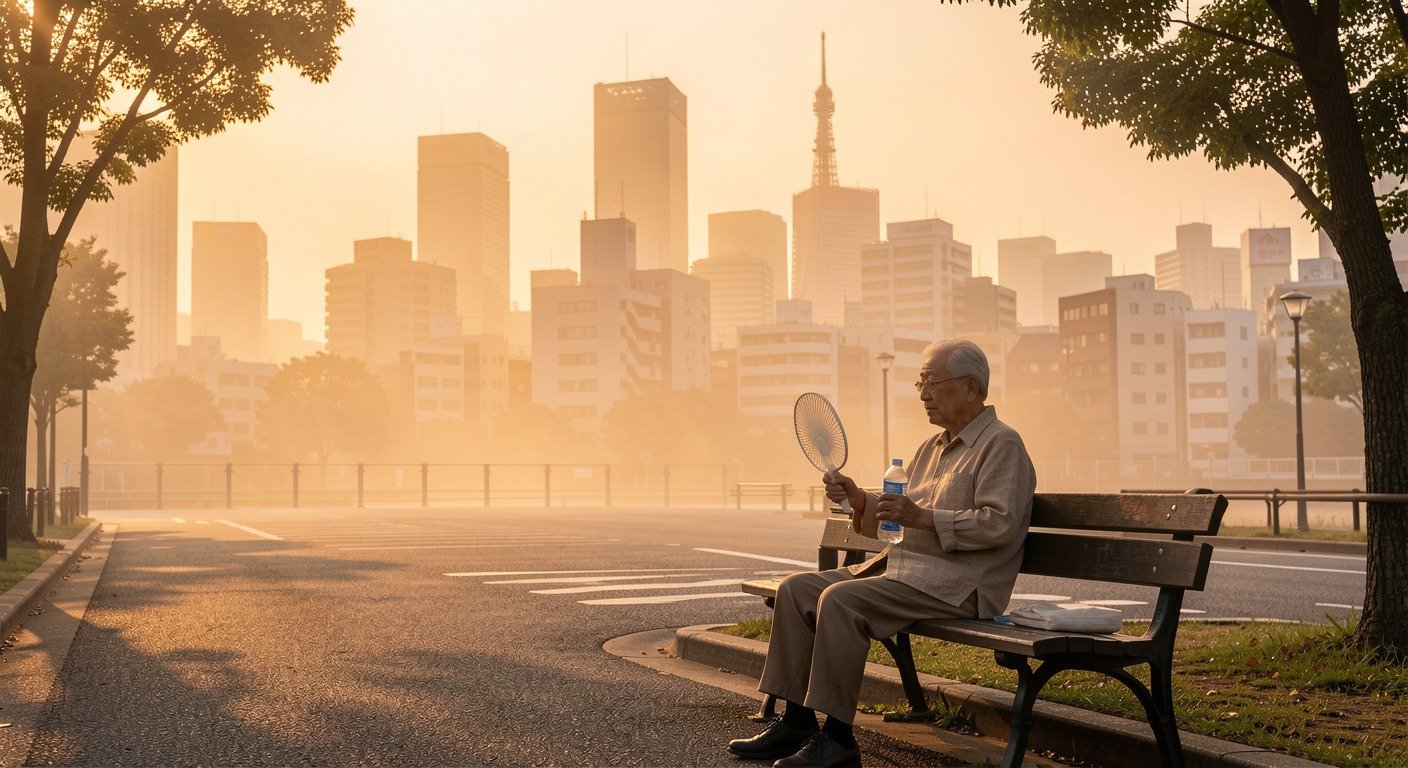
In July 2024, 123 people, mostly elderly, died of heatstroke in Tokyo’s 23 metropolitan districts. Ninety-eight percent of those deaths occurred indoors. A CNN investigation found that of 101 suspected heatstroke deaths that summer, 66 happened in rooms with air conditioners that were simply not turned on.
Across Japan, more than 37,000 people were hospitalized for heatstroke in July 2024 alone, according to the Fire and Disaster Management Agency. The Tokyo heatwave deaths of 2024, totaling 2,160 nationally, set the highest annual toll ever recorded.
Japan is the world’s most elderly society. Older adults have a reduced sweat response, weaker thirst perception, and higher rates of conditions that heat worsens, including cardiovascular and respiratory disease. Global data from the WHO shows that heat-related mortality for people over 65 increased by approximately 85 percent between 2000 to 2004 and 2017 to 2021.
Economy: Lost Productivity, New Rules
Heat stress is also an economic drag. The Lancet Countdown estimated that heat contributed to USD 835 billion in lost labor productivity worldwide in 2023. In Japan, mandatory workplace heatstroke prevention measures introduced in June 2025 halved workplace heat deaths within their first year. Companies like Suntory now operate electrolyte drink vending services for workers, and Daikin runs cooling spot projects with heatstroke risk maps.
Urban Life: Shelters and Survival
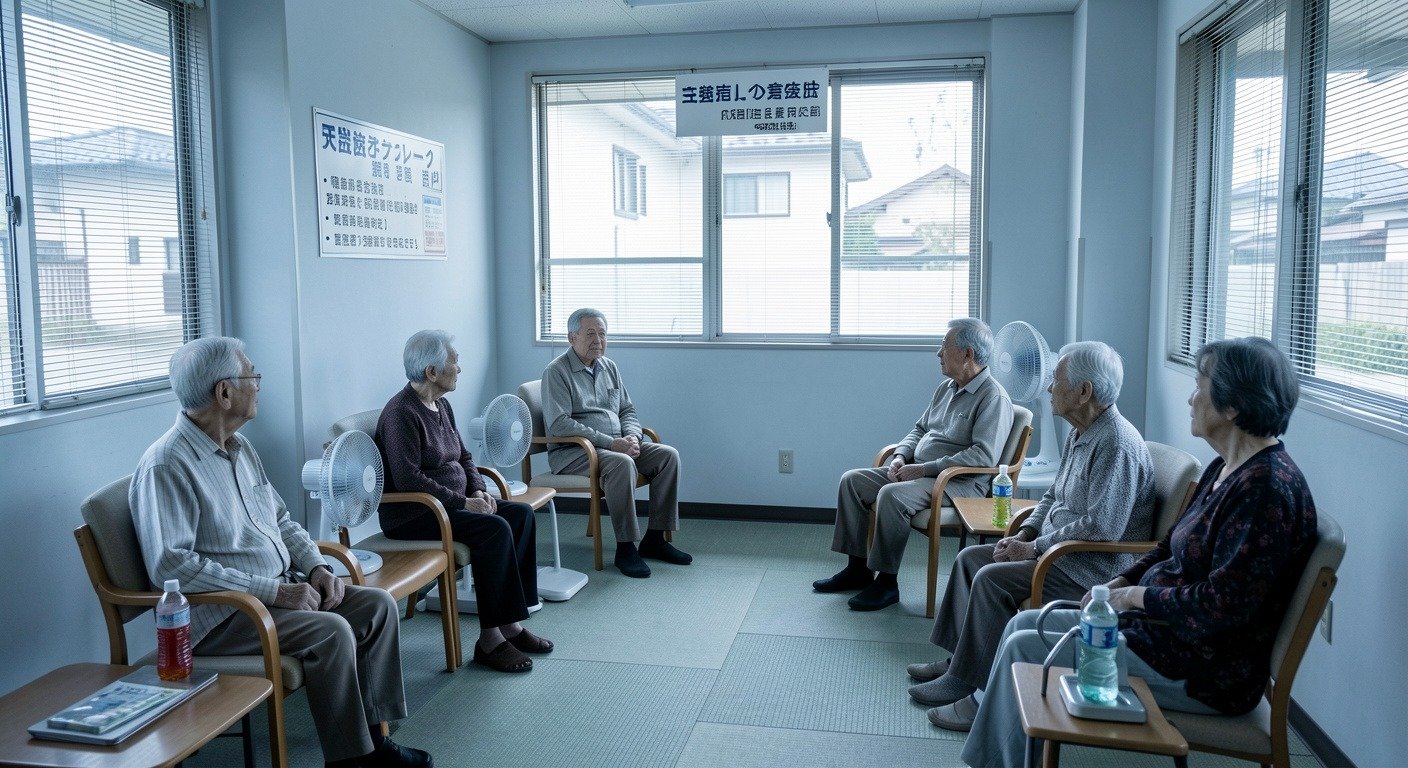
Approximately 23,000 cooling shelters have been designated across roughly 70 percent of Japanese municipalities. These are public and private air-conditioned facilities where people can seek refuge when special heatstroke alerts are activated. The revised national plan targets 100 percent coverage by 2030. For now, special support is directed at the most vulnerable: elderly residents, agricultural workers, and construction workers who face the highest exposure.
 extreme heat outside” class=”wp-image-4146″ style=”border-radius:12px”/>
| National record temperature | 41.8 degrees C (Isesaki, Aug 2025) |
| 2024 heatstroke deaths | 2,160 (record high) |
| 2026 death reduction target | Below 1,000 per year |
| Tokyo water waiver | ~8 million households, 4 months |
| Cooling shelters | ~23,000 across Japan |
| Global annual heat deaths | ~489,000 (45% in Asia) |
| Urban heat island effect | 5 to 10 degrees C warmer at night |
Why It Matters Now: A Preview for Every Hot City
The Tokyo heat emergency 2026 matters far beyond Japan. Approximately 489,000 heat-related deaths occur globally each year, 45 percent of them in Asia, according to the WHO. Global heat mortality rose from an estimated 335,000 per year in the 1990s to 546,000 per year between 2012 and 2021, a 60 percent increase, according to the Lancet Countdown.
Tokyo is a preview of what every hot, dense city will face as global temperatures stay above normal. The WMO forecast for May to July 2026 confirms elevated temperatures worldwide. The question is not whether other cities will need cooling shelters, water waivers, and new words for dangerous heat. The question is how quickly they will act before the body count forces their hand.
What We Can Learn: Adaptation Is No Longer Optional
Japan’s response offers three lessons for cities everywhere.
First, remove the financial barriers to survival. The Tokyo water waiver is a blunt but effective admission that if staying alive costs money people do not have, the government must bridge the gap.
Second, make cooling infrastructure a public good. Cooling shelters, heatstroke alerts, and workplace mandates are not luxuries. They are the minimum infrastructure a hot city needs.
Third, help bodies adapt before the heat arrives. Japan promotes shonetsu junka, or heat acclimatization: light exercise and warm baths in late spring so the body learns to sweat earlier and more efficiently before summer peaks. This practice is a form of Japan heatstroke prevention that costs nothing and requires no technology.
The Tokyo heat emergency 2026 is not a forecast. It is a real-time demonstration that even the most prepared societies are being forced to redesign their relationship with summer. The rest of the world should be taking notes.