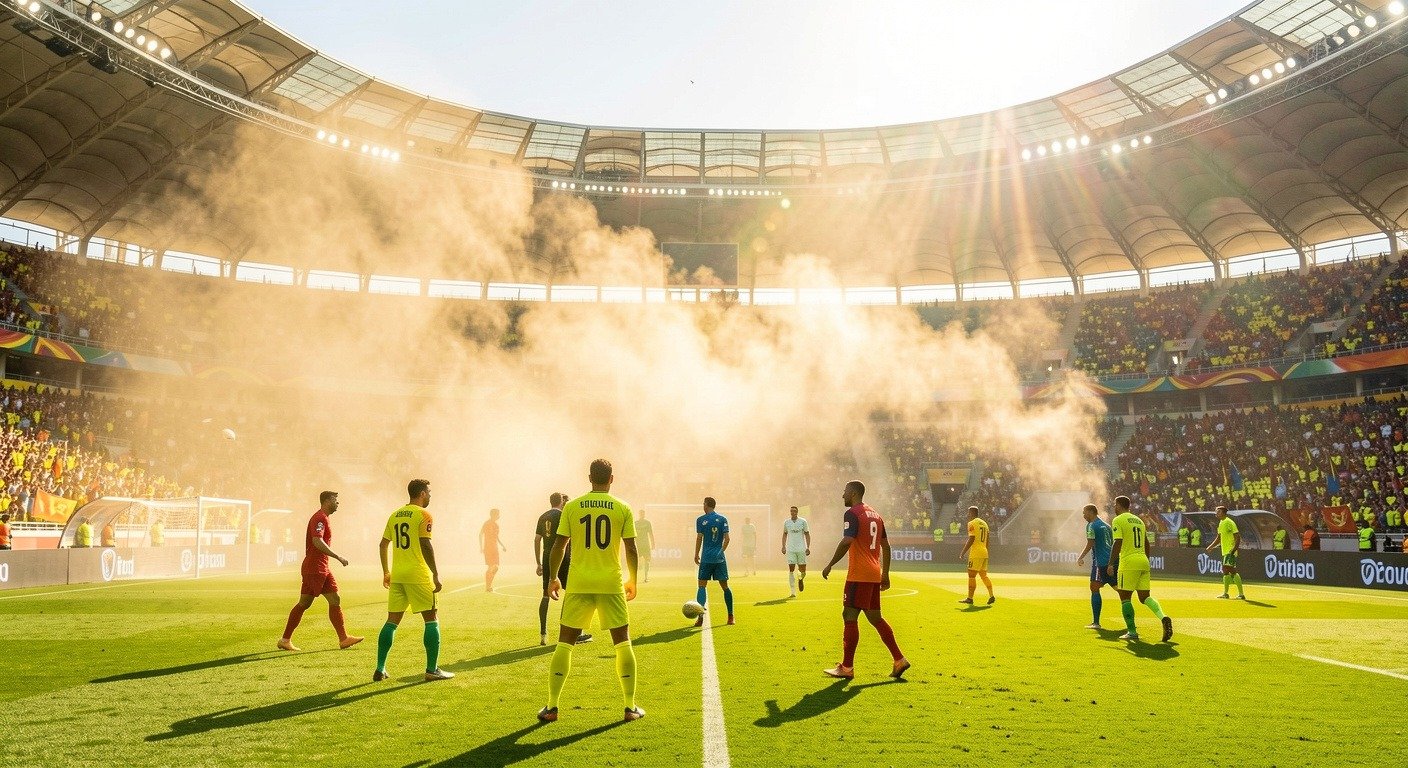
The 2026 FIFA World Cup faces a silent opponent more dangerous than any team: extreme summer heat, with one in four matches projected to exceed the player safety limit. The World Weather Attribution group analyzed all 104 matches across 16 host cities. The results are sobering: 26 matches likely to hit dangerous heat levels, 9 in stadiums without air conditioning, and 5 expected to cross the threshold where player unions say conditions are unsafe. WBGT determines whether World Cup matches stay safe. The science, the stakes, and the solutions.
What Is WBGT? And Why Should Soccer Fans Care?
You have probably checked the temperature before heading out the door. But for athletes running 10 kilometers in 90-plus minutes under stadium lights, there is a more important number: WBGT, or Wet Bulb Globe Temperature. It combines temperature, humidity, wind speed, and solar radiation. When humidity is high, sweat stops evaporating. Your body just heats up.
- 26C WBGT: Cooling breaks required. Players need water and rest.
- 28C WBGT: Conditions are unsafe. Matches should be postponed, according to FIFPRO.
FIFA has its own threshold: 32C WBGT. The gap between what the science says and what the rules allow is a real problem.
By the Numbers
In May, World Weather Attribution ran the data on all 104 World Cup matches across 16 host cities:
- 26 matches likely to hit 26C WBGT or higher. That is one in four games.
- 9 matches in stadiums without air conditioning.
- 5 matches expected to hit 28C WBGT or higher, the unsafe threshold.
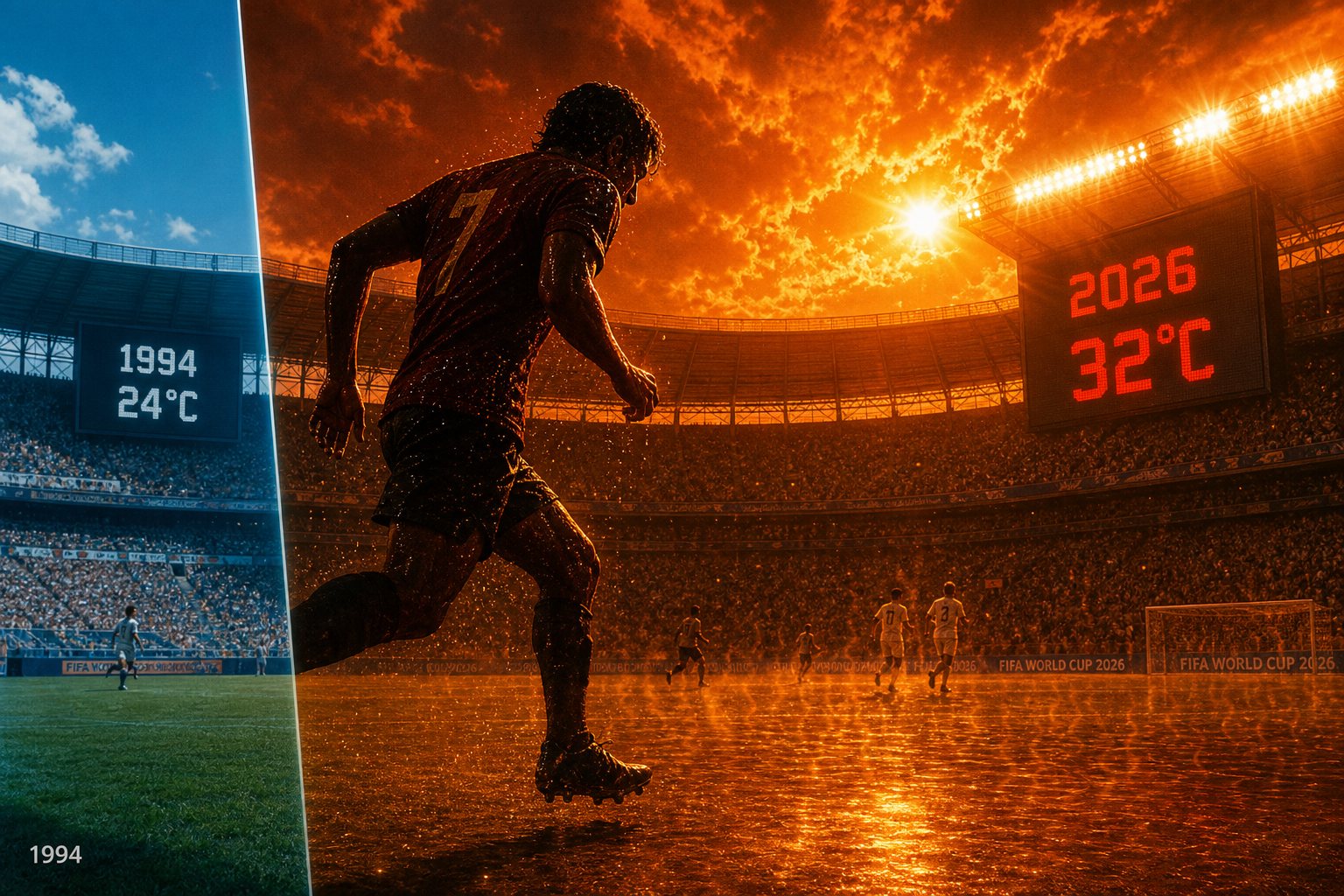
- In 1994, the last time the US hosted, that number was 3.
The risk has nearly doubled in 32 years.
World Cup 2026 Heat Risk
| Metric | Value |
|---|---|
| Total matches analyzed | 104 |
| Matches over 26C WBGT (cooling breaks) | 26 (25%) |
| High-risk in non-AC stadiums | 9 |
| Matches over 28C WBGT (unsafe) | 5 |
| 1994 comparison | 3 unsafe matches |
| FIFA-FIFPRO threshold gap | 32C vs 28C (4-degree gap) |
Kansas City, 6 PM. Netherlands vs. Tunisia.
Arrowhead Stadium in Kansas City, Missouri. Evening kickoff at 6 PM local time during the group stage. Netherlands against Tunisia. Regular group stage fixture on paper. The WWA analysis gives this specific match a 7% chance of exceeding 28C WBGT even at sunset.
“7% sounds small. But this is not a scoreline. It is a medical safety limit. A 7% chance that players are sprinting, colliding, heading balls in conditions their own union says is unsafe.”
World Weather Attribution, 2026 World Cup Heat Analysis
What does 28C WBGT feel like? Imagine standing still and sweating, except the sweat will not dry. Your body temperature climbs. Your heart rate stays high. Your brain slows down. Now imagine doing that while someone runs at you at full speed 70 minutes into a match.
 extreme heat” style=”border-radius:12px;”/>
Why This Matters Now and in the Future
This World Cup is not an anomaly. It is a preview. In 1994, three matches hit unsafe heat levels. Three decades later, that number is five, with better stadium infrastructure. Then there is 2030: the next World Cup spanning six countries including Morocco, where summer temperatures regularly hit 40C. If 2026 is a warning, 2030 could be a full crisis. This is about what happens when a global celebration of athleticism runs into a warming planet.
What Can Be Done?
- Cooling breaks: FIFA has mandated three-minute breaks each half. Better than nothing, but not a solution for WBGT above 28C.
- Scheduling: High-risk matches could kick off later or move to cooler cities. Broadcast contracts and ticket sales make this harder than it sounds.
- Infrastructure: Air-conditioned stadiums help, but they are expensive and energy-intensive. Not all 16 host cities have them.
- Climate action: The only real long-term answer. Every fraction of a degree of warming avoided means fewer matches in the danger zone. Read our heat dome science guide for context on rising temperatures.
This World Cup will produce moments that last forever. But some of the most important stories might happen off the ball: in the water breaks, the substitution patterns, the medical tents, and the quiet decisions about whether it is safe to play at all.
Sources: World Weather Attribution; FIFPRO Extreme Weather Guidelines; NOAA WBGT Explanation; WHO Heat and Health.
Related: Why Seasons Change | Tornado Safety Guide