Spring in Japan is one of the most spectacular seasonal transitions on Earth: cherry blossoms, mild temperatures, and landscapes that shift from snow to green in a matter of weeks. But if you are planning a trip, the weather matters more than the postcards suggest. Here is what to actually expect from Japan’s spring climate, region by region, and how to time your visit perfectly.

The Spring Weather Window
Spring in Japan runs from March to May, but the experience changes dramatically from month to month:
- March: Still cool. Average temperatures in Tokyo range from 5-13 degrees C (41-55 degrees F). Northern regions like Hokkaido remain snowy. Cherry blossoms begin blooming in southern Japan by mid-to-late March.
- April: This is the sweet spot. Tokyo temperatures climb to 10-19 degrees C (50-66 degrees F). Cherry blossoms peak in central Japan, including Tokyo, Kyoto, and Osaka, usually in early April. Light layers and a light jacket are all you need.
- May: Warm and pleasant. Tokyo reaches 15-24 degrees C (59-75 degrees F). Cherry blossoms are gone, but wisteria, azaleas, and shibazakura (moss phlox) take over. Rain increases later in the month as the rainy season approaches.
Japan Spring Weather at a Glance
| Month | Tokyo Avg Temp | Highlights |
|---|---|---|
| March | 5-13 C (41-55 F) | Early sakura in south; snow in Hokkaido |
| Early April | 10-19 C (50-66 F) | Peak sakura in Tokyo/Kyoto/Osaka |
| Late April | 12-21 C (54-70 F) | Sakura fading; wisteria blooming |
| May | 15-24 C (59-75 F) | Azaleas, moss phlox; rain increasing |
Cherry Blossom Timing
The famous sakura bloom is brief, typically 7-10 days from first bloom to full bloom to petals falling. And timing varies by location and year:
- Southern Japan (Kyushu, Shikoku): Late March
- Central Japan (Tokyo, Kyoto, Osaka): Late March to early April
- Northern Japan (Tohoku, Hokkaido): Mid-April to early May
The Japan Meteorological Agency releases updated bloom forecasts starting in January each year. If cherry blossoms are your goal, book for early April and track the forecast.
“The sakura bloom is brief, typically 7-10 days from first bloom to full bloom to petals falling. The Japan Meteorological Agency tracks the sakura zensen (cherry blossom front) as it moves northward across the country.”
Japan National Tourism Organization
Where to Go for Nature in Spring
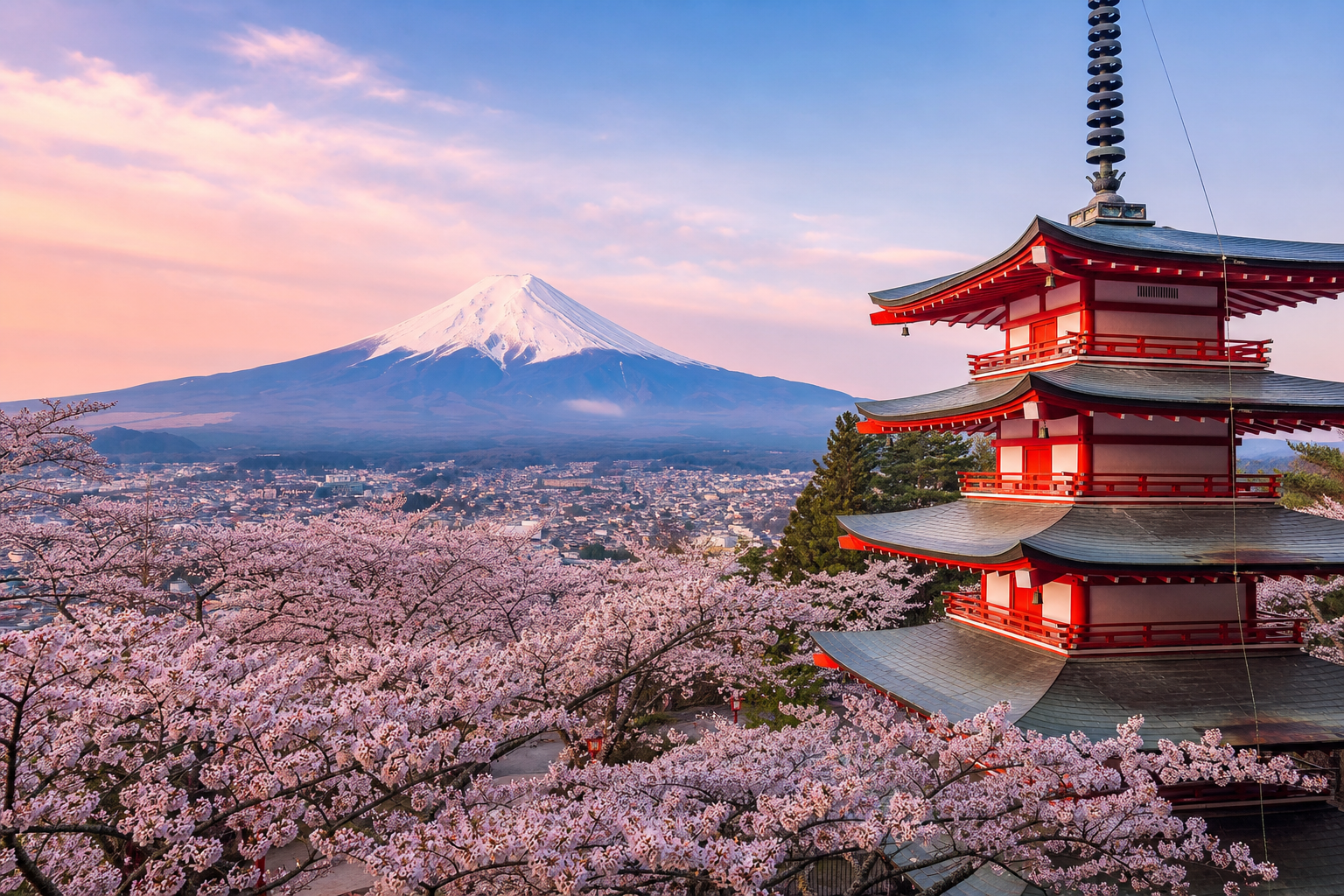
- Kyoto: Temples framed by cherry blossoms. The Philosopher’s Path and Maruyama Park are iconic. Arrive early, these spots get crowded.
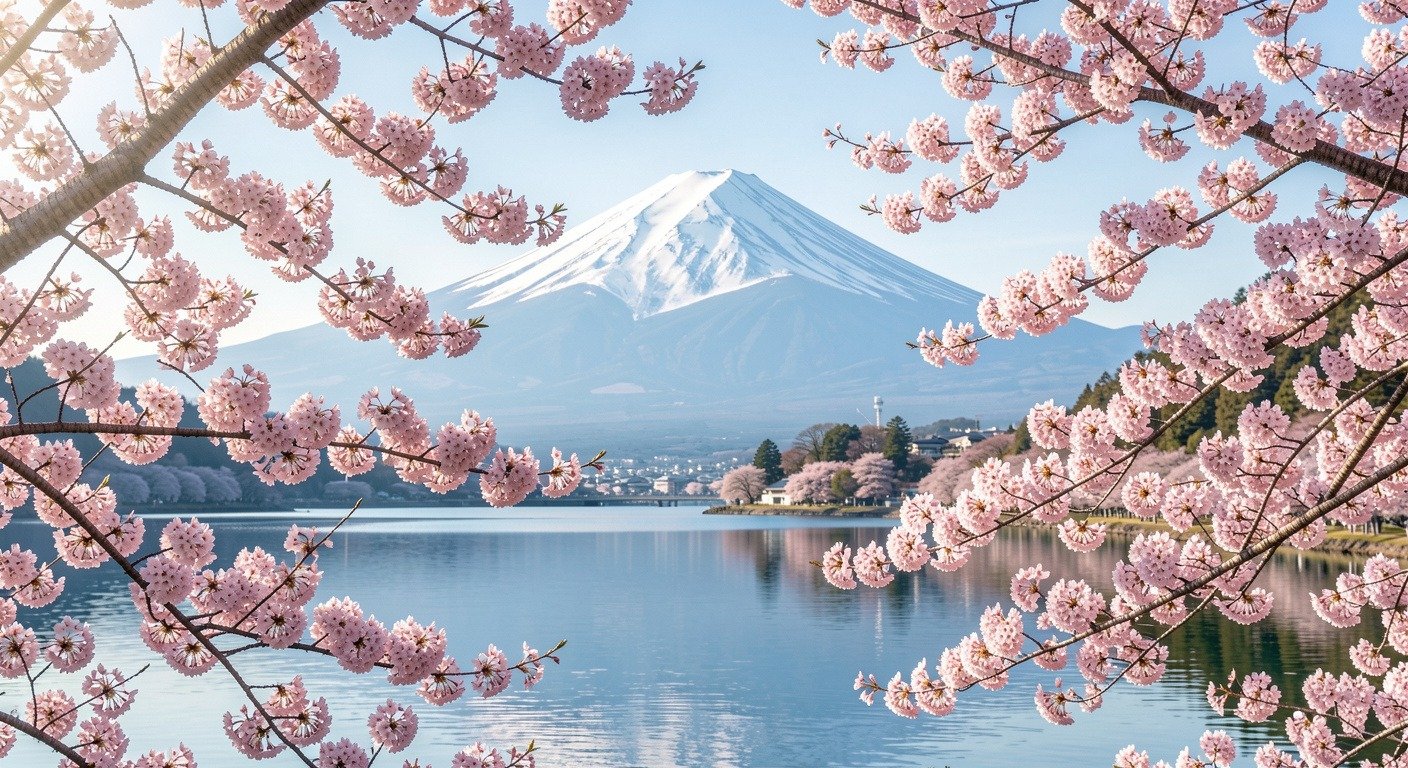
- Mount Fuji: Spring is ideal for viewing Fuji, clear skies are more common than in summer. The Fuji Five Lakes area offers stunning reflection shots with cherry blossoms in the foreground.
- Hokkaido: If you want cherry blossoms without crowds, go north. Hakodate and Matsumae Castle bloom in late April and early May, long after central Japan’s season ends.
- Japanese Alps (Kamikochi, Tateyama Kurobe): High-altitude hiking routes open in late April. Snow walls on the Tateyama Kurobe Alpine Route can tower 15-20 meters high, a surreal spring experience.
What to Pack
- Layers: Mornings and evenings are cool, afternoons warm. A light jacket or fleece plus t-shirts works well.
- Comfortable walking shoes: You will walk more than you expect, especially in cities like Kyoto where temples are spread out.
- Rain jacket or umbrella: Spring showers are common, especially in late April and May.
- Allergy medication: Japan’s cedar pollen season peaks in spring. If you have hay fever, come prepared, pollen counts can be intense.
The Bottom Line
Best time to visit: First two weeks of April for cherry blossoms and ideal weather.
Runner-up: Mid-to-late May for warmer temperatures, fewer crowds, and different flowers in bloom.
Budget tip: Late March and late April are shoulder periods, fewer tourists, lower hotel prices, and still beautiful weather. For more travel weather guides, see our midnight sun travel guide.
Written by NatureWeatherHub, your simple guide to weather, nature, and the planet.
Sources: Japan Meteorological Agency; Japan National Tourism Organization; Japan-Guide Cherry Blossom Forecast.