June is the best month to visit Yellowstone and Grand Teton for wildlife, wildflowers, and fewer crowds. Between winter snowmelt and summer rush, these two world-class national parks sit just 30 miles apart in Wyoming, and early summer offers full access to geysers, grizzlies, wolves, and granite peaks without the July-August crush.
Why June Is the Best Month to Visit Yellowstone and Grand Teton
Most people wait until July or August to visit America’s national parks. That’s exactly the problem, by midsummer, the roads are jammed, parking lots are overflowing, and you’re sharing viewpoints with hundreds of strangers.
June is different. It’s the short window between winter’s thaw and summer’s chaos, when the parks are fully awake but not yet overwhelmed.
Nowhere is this more true than in the Yellowstone-Grand Teton corridor of Wyoming. Two world-class national parks sit just 30 miles apart, and June might be the single best month to see them both in one trip.
Yellowstone: The World’s First National Park in Full Swing
Yellowstone is a 2.2-million-acre volcano with half the world’s geysers sitting on top of it. Half a world away, the Pacific Ring of Fire is far more restless right now — Indonesia recorded multiple volcanic eruptions across its archipelago in 2026. By June, every road is open. Every lodge is running. The snow is melting, the rivers are high, and the landscape feels impossibly alive.
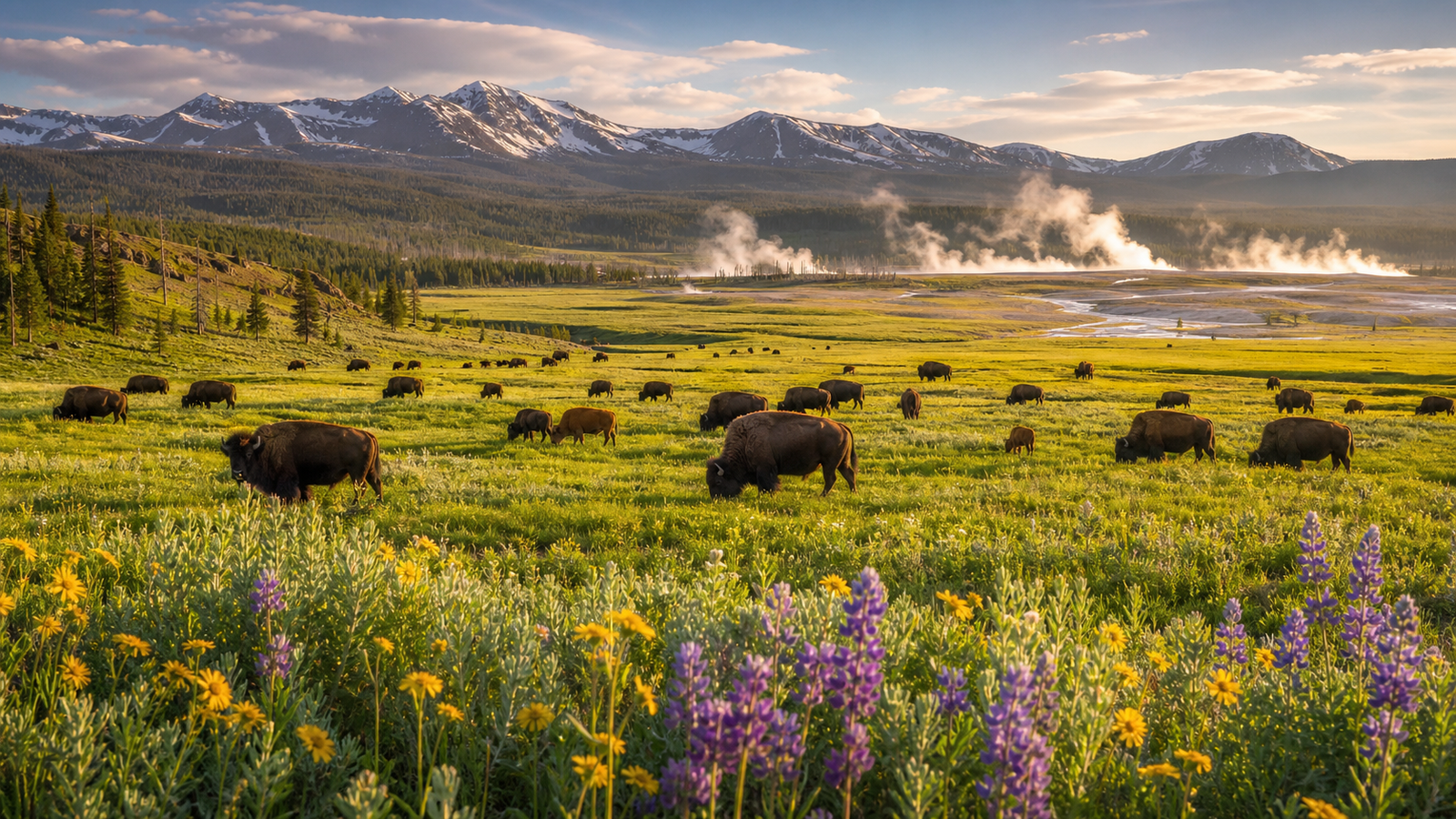
The numbers tell the story. Yellowstone is home to roughly 4,600 bison, over 700 grizzly and black bears, and at least 95 wolves spread across 10 packs. There are more than 500 active geysers, more than anywhere else on Earth.
Old Faithful erupts every 60 to 110 minutes like clockwork. The Grand Prismatic Spring, 370 feet across and impossibly vivid, is the largest hot spring in the United States. And the Lamar Valley in the northeast corner of the park is often called the “Serengeti of North America” for good reason: in June, at dawn, you can watch wolves hunt, bison graze, and grizzlies dig for roots, all from one pullout if you’re lucky.
What Makes June Special
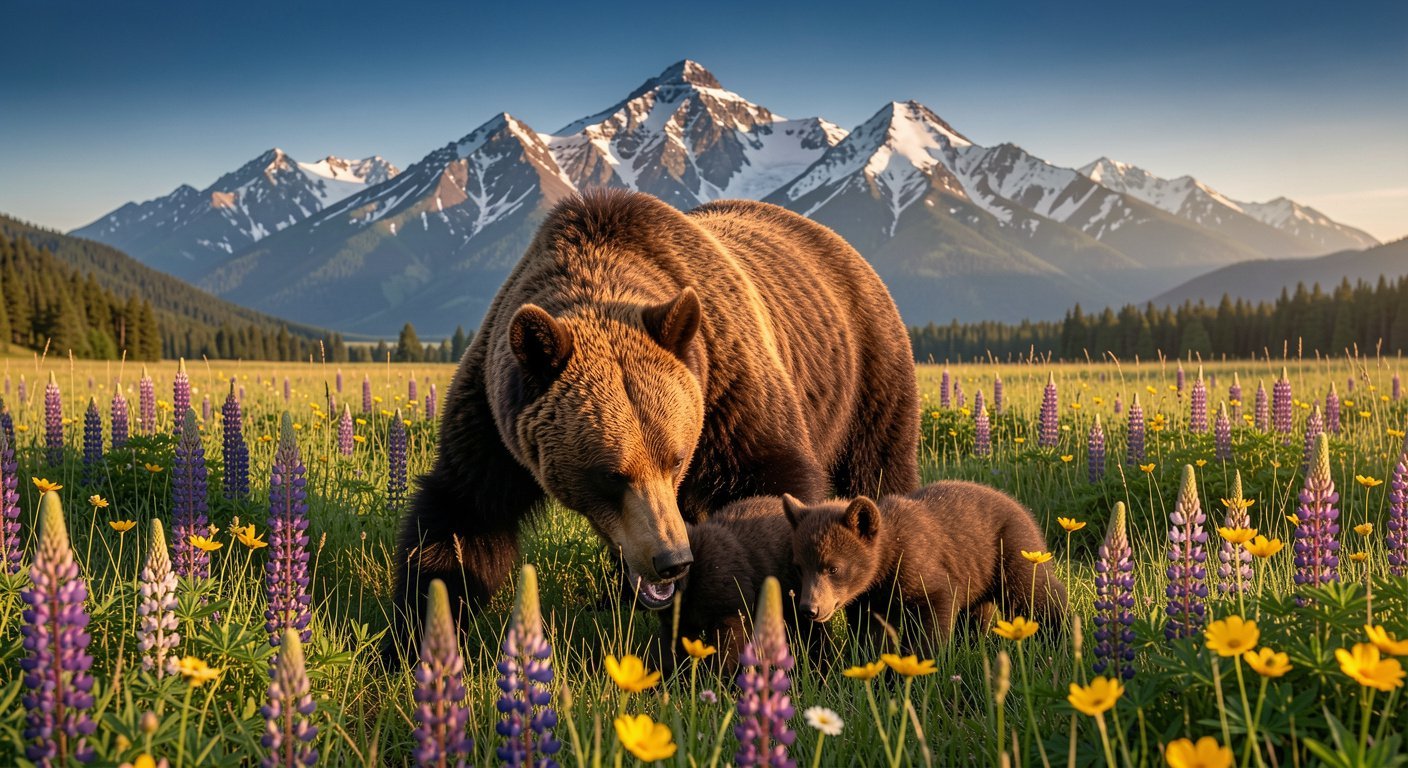
June in Yellowstone means wildflowers. Lupines, arrowleaf balsamroot, and sticky geraniums carpet the meadows while the mountains still hold snow on the peaks. It’s a photographer’s dream.
The wildlife is especially active. Bison calves, rusty orange against the green grass, stay close to their mothers. Bear cubs born during winter are out exploring for the first time. The wolves of Lamar are feeding pups at den sites.
Temperatures range from highs around 65-75°F (18-24°C) during the day to lows in the 30s at night. That crisp mountain air means comfortable hiking and active wildlife that hasn’t yet retreated to high, shady elevations to escape midsummer heat.
Grand Teton: 30 Miles South, a Completely Different World
Drive south from Yellowstone for an hour and the landscape transforms. The rolling volcanic plateau gives way to the Teton Range, a wall of granite peaks that rise 7,000 feet straight up from the valley floor with no foothills to soften the view.
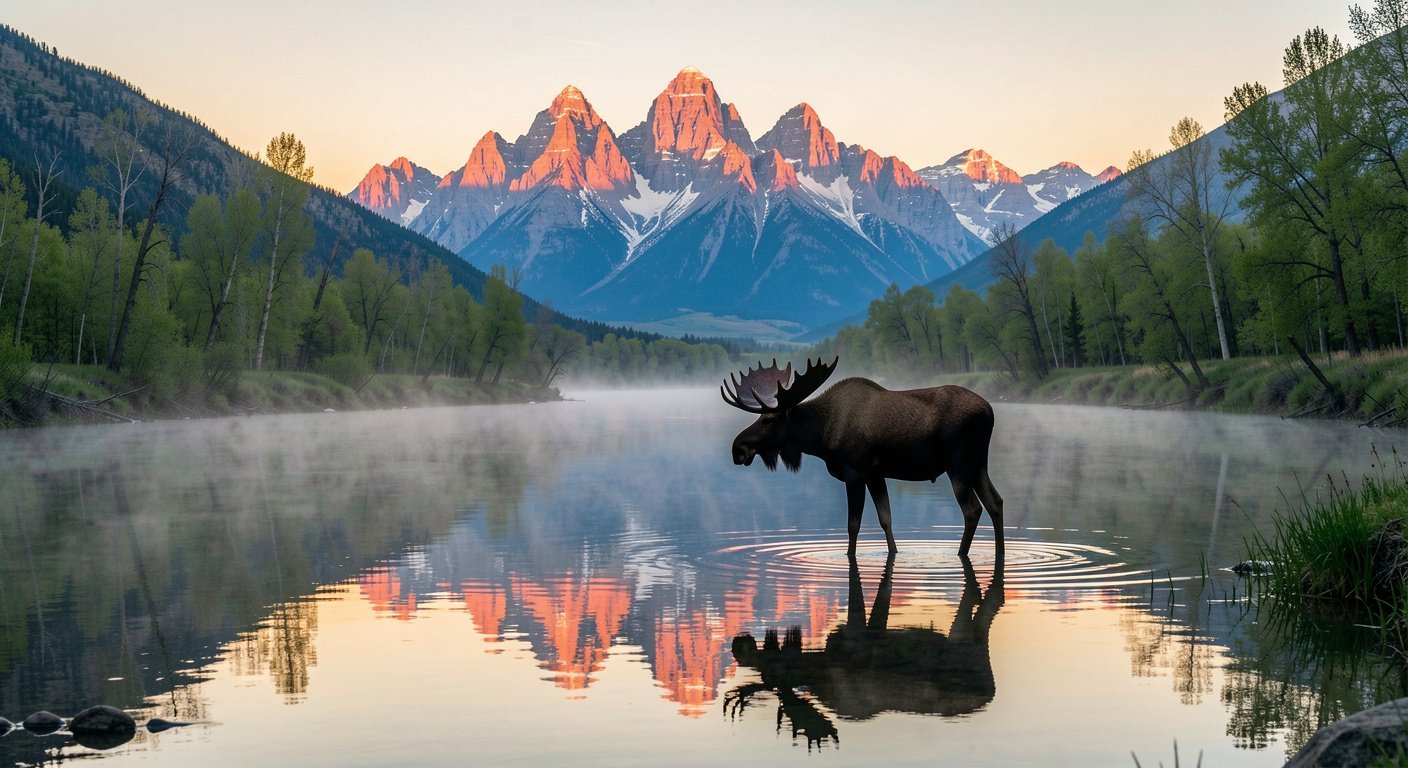
Grand Teton National Park is smaller and more concentrated. With over 250 miles of trails, it’s a hiker’s park. In June, the valley wildflowers are near peak, the crowds are noticeably smaller than July and August, and the wildlife is on full display, moose with calves, elk herds, and the occasional black bear wandering through sagebrush flats.
Jenny Lake is the centerpiece, a deep glacial lake at the base of the Tetons that reflects the peaks in perfect symmetry on calm mornings. The Jenny Lake Trail and the short hike to Hidden Falls are both fully accessible by June.
Why Combine Both in One Trip
These two parks sit next to each other, connected by the John D. Rockefeller Jr. Memorial Parkway. You can stay in one place, Jackson Hole, West Yellowstone, or a mix of both, and hit both parks in a single trip lasting 5 to 7 days.
A solid itinerary: spend 3 days in Yellowstone (one for geysers and thermal features, one for Lamar Valley wildlife, one for the Grand Canyon of the Yellowstone), then 2-3 days in Grand Teton for hiking, wildlife, and the stunning Jenny Lake area.
The drive between them along the parkway is an attraction in itself. You’ll pass the Snake River, spot moose in the willows, and watch the Tetons grow larger in the windshield with every mile.
Practical Tips for a June Trip
Start your days early. In June, the sun rises around 5:40 AM, and the days are near their longest of the year (our midnight sun guide explains why). The best wildlife viewing happens between 5 and 9 AM, animals are most active in the cool hours, and the light is at its best for photography. Bonus: you’ll have the roads mostly to yourself.
Bring layers, lots of them. A June morning might start at 35°F (2°C) and hit 70°F (21°C) by afternoon. A rain jacket is essential, afternoon thunderstorms are common, especially in the Tetons.
Carry bear spray and know how to use it. Both parks are grizzly country. Stay at least 100 yards from bears and wolves, and 25 yards from bison and elk. Yes, bison may look slow, but they can run 35 mph and weigh up to 2,000 pounds.
Book lodging months in advance. Even in June, park lodges fill up fast. If you’re too late, Jackson Hole and West Yellowstone have extensive options, just expect a 30-60 minute drive to reach key sites.
Don’t skip the thermal features. People come for the wildlife and forget that Yellowstone sits on a supervolcano. The boardwalks around Old Faithful, Grand Prismatic Spring, and the Norris Geyser Basin are unlike anything else on the continent, and in June, steam rising from hot springs against cool mountain air creates an incredible atmosphere.
June vs. The Rest of Summer
July and August bring heat, peak crowds, and afternoon thunderstorms that can shut down trails. In 2025, Yellowstone saw over 4.5 million visitors, more than half of whom came between June and August. June accounts for roughly 800,000 of those visits, compared to 950,000+ in both July and August. That 15-20% difference in crowd size is noticeable when you’re trying to find a parking spot at Old Faithful or a quiet overlook in the Tetons.
September is also excellent, but by then some park services begin closing and fall weather can be unpredictable. June gives you full access, fully staffed visitor centers, and every road and trail open, without the crush of midsummer.
The Bottom Line
If you want to see America’s most dramatic landscapes at their greenest, with wildlife everywhere you look and enough space to actually enjoy it, June is your month. Yellowstone and Grand Teton back-to-back in early summer is one of the best nature experiences on the planet.
Just book early, pack layers, and set that alarm for 5 AM. The wolves, the bears, and the geysers will be waiting.
Written by NatureWeatherHub, your simple guide to weather, nature, and the planet.
Sources: NPS Yellowstone visitation statistics, NPS Grand Teton weather and seasons.