168 vehicles. Eight lives. One wall of white.
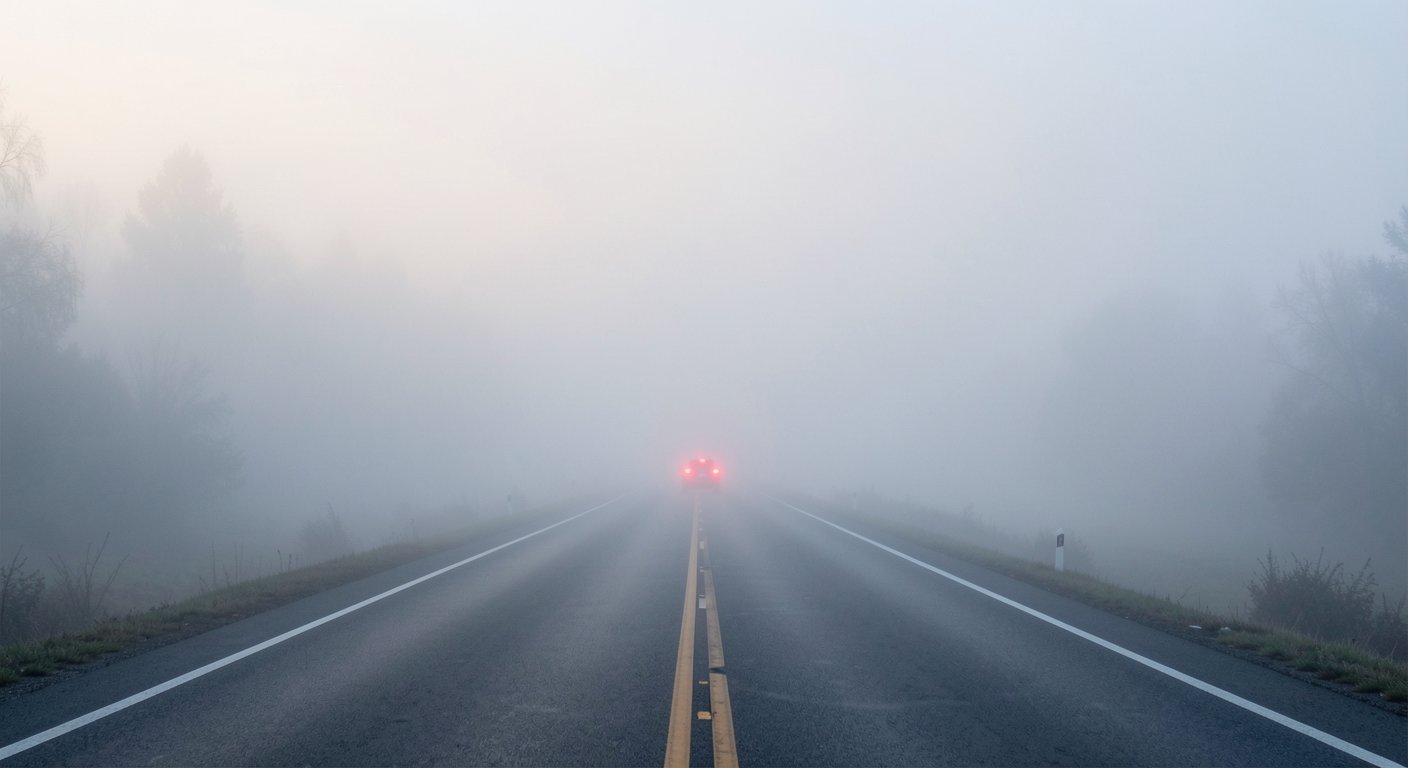
On October 23, 2023, drivers on Louisiana’s I-55 were moving at highway speed when a dense fog bank swallowed the road. A marsh fire had injected smoke into the fog, creating what meteorologists call super fog: near-zero visibility with no warning. Within minutes, cars, trucks, and tankers piled into each other in a chain reaction that nobody saw coming. Every driver in that fog bank was suddenly asking the same question: how fog forms, and why it is this deadly.
Fog is a cloud that forms at ground level when air cools to its dew point and water vapor condenses into tiny floating droplets. There are five main types, each forming under different conditions. Fog is the most underestimated weather killer on roads because it can reduce visibility to near zero in seconds, leaving drivers with no time to stop.
- Fog forms when air temperature drops to the dew point, creating 100% humidity at ground level
- Five main types: radiation fog (most common), advection fog (coastal), upslope fog (mountain), steam fog (lake), and freezing fog (supercooled)
- FHWA estimates 38,700 fog-related crashes, 600 deaths, and 16,300 injuries annually in the U.S.
- The foggiest place on Earth, the Grand Banks off Newfoundland, sees 206 foggy days per year
What Is Fog and How Fog Forms
Fog is simply a cloud that touches the ground. It forms the same way clouds form in the sky: when air cools enough that it can no longer hold its moisture. The invisible water vapor in the air condenses into billions of tiny water droplets that hang suspended at the surface.
The trigger is the dew point. Every parcel of air holds water vapor, and warmer air can hold more of it. Cool that air down far enough, and it reaches the dew point temperature: the point where the air becomes saturated and water condenses out. Picture a cold glass of water on a warm day. Droplets appear on the outside because the glass cools the surrounding air below its dew point. Fog works the same way, just on a much larger scale.
The Five Types of Fog Everyone Should Know
Not all fog is the same. Knowing which type you are looking at tells you how long it will last and how dangerous it might be.
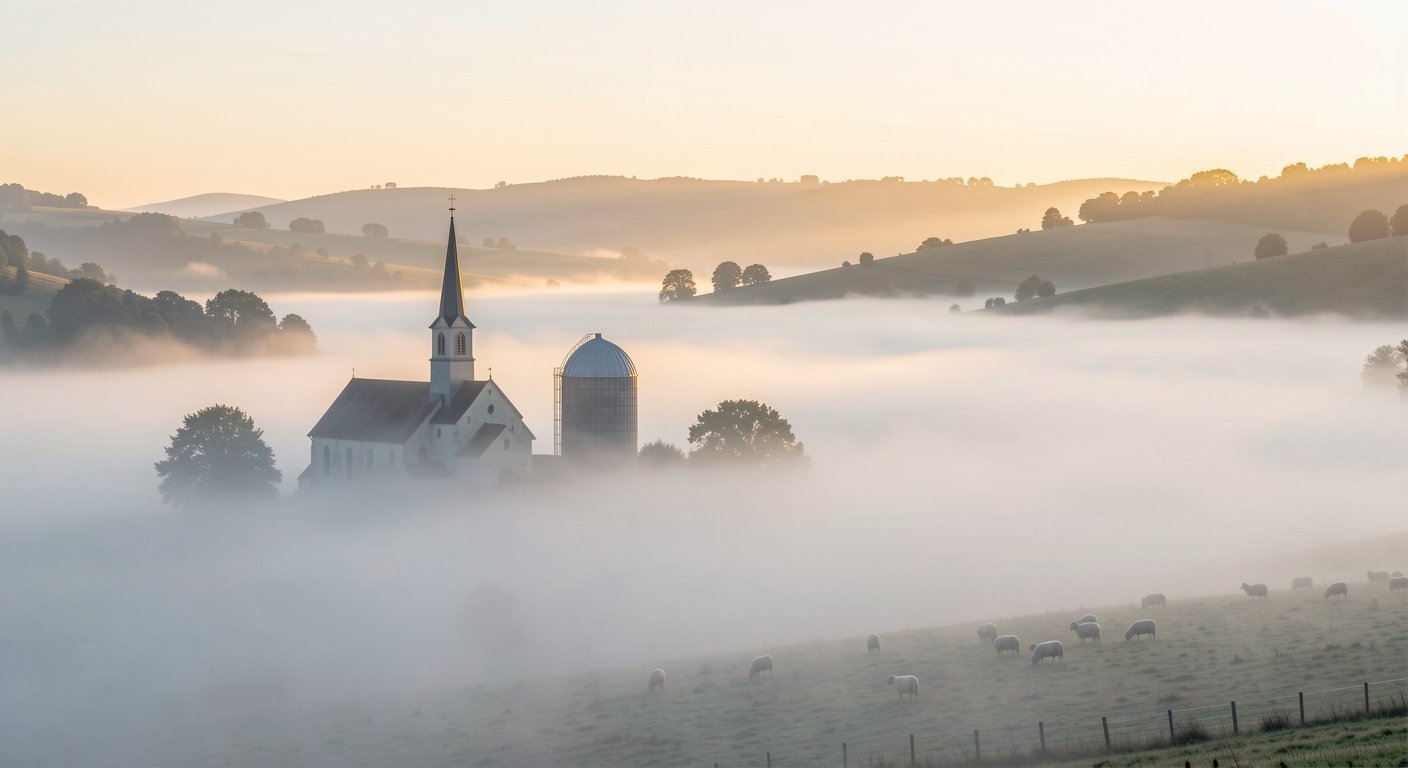
Radiation fog is the most common types of fog and the one you see on calm, clear mornings after rain. During the night, the ground radiates heat into space and cools down. That cooling spreads to the air just above the surface until it reaches saturation. Example: A foggy valley at dawn that burns off by mid-morning as the sun warms the ground.
Advection fog forms when warm, moist air blows across a cold surface. The surface cools the air from below until condensation happens. Unlike radiation fog, advection fog can form in windy conditions and does not need clear skies. Example: San Francisco’s famous summer fog. Warm Pacific air sweeps over the cold California Current, and the resulting fog pours through the Golden Gate for hours, sometimes days.
Upslope fog happens when moist air is pushed uphill by terrain. As the air rises, it expands and cools until it hits its dew point. Example: The eastern foothills of the Rocky Mountains, where air from the Great Plains climbs and condenses into fog hugging the slopes. Locals in Wyoming call it Cheyenne fog.
Steam fog forms when cold, dry air moves over warm water. The water evaporates into the cold air above, where the moisture immediately condenses into wispy columns that look like steam rising from the surface. Example: The Great Lakes in autumn, when early-season cold air masses pass over water still warm from summer. It looks like the lake is boiling.
Freezing fog is the most deceptive of all. The air temperature is below 32 degrees Fahrenheit, but the water droplets stay liquid, suspended in a supercooled state. The instant they touch a surface, a tree branch, a road sign, a windshield, they freeze into a crust of rime ice. Example: A winter morning where fog has coated every surface in a white, feathery ice layer. It is beautiful and dangerously slick.
In California’s Central Valley, a dense winter variant of radiation fog called tule fog forms when clear nights cool the valley floor and surrounding mountains trap the cold air like a bowl. Visibility can drop to near zero in minutes. In January 2026 alone, tule fog caused two massive pileups: 150 vehicles on Highway 99 and 43 more on Highway 58, just three days apart.
Why Fog Is So Dangerous on Roads
The Federal Highway Administration estimates that fog contributes to approximately 38,700 crashes, 600 deaths, and 16,300 injuries every year on American roads. That is why fog is dangerous in ways that other weather conditions are not: fog-related crashes carry a higher fatality rate per incident than crashes in rain or snow.
The physics is brutally simple. At 70 miles per hour, a driver needs roughly 300 feet to stop. Dense fog can cut visibility to less than 50 feet. By the time you see the stopped car ahead, there is no stopping distance left. What follows is a chain-reaction pileup: one car stops, the next car rear-ends it, and every car behind does the same, stacking vehicles into each other at highway speed.
The Louisiana I-55 pileup involved 168 vehicles. Eight people died and 63 were injured. The twin California tule fog pileups of January 2026 added 193 more vehicles and sent at least 19 people to hospitals. These were not freak accidents. They were fog doing what physics says fog will do when drivers do not slow down.
Beyond the road, fog disrupts aviation with takeoff and landing restrictions, delays maritime shipping through fog-prone ports, and creates cascading economic costs from canceled flights and cargo delays. For residents of chronically foggy places like Point Reyes and the Grand Banks, living under near-constant overcast conditions carries real psychological weight.
| Weather Condition | Annual U.S. Crashes | Annual Deaths | Fatality Rate Per Crash |
|---|---|---|---|
| Fog | ~38,700 | ~600 | Highest |
| Rain | ~500,000+ | ~2,400 | Lower |
| Snow/Sleet | ~200,000+ | ~900 | Lower |
Sources: FHWA, NHTSA. While fog causes far fewer total crashes, the fatality rate per crash is the highest of any weather condition.
Where Fog Rules the World
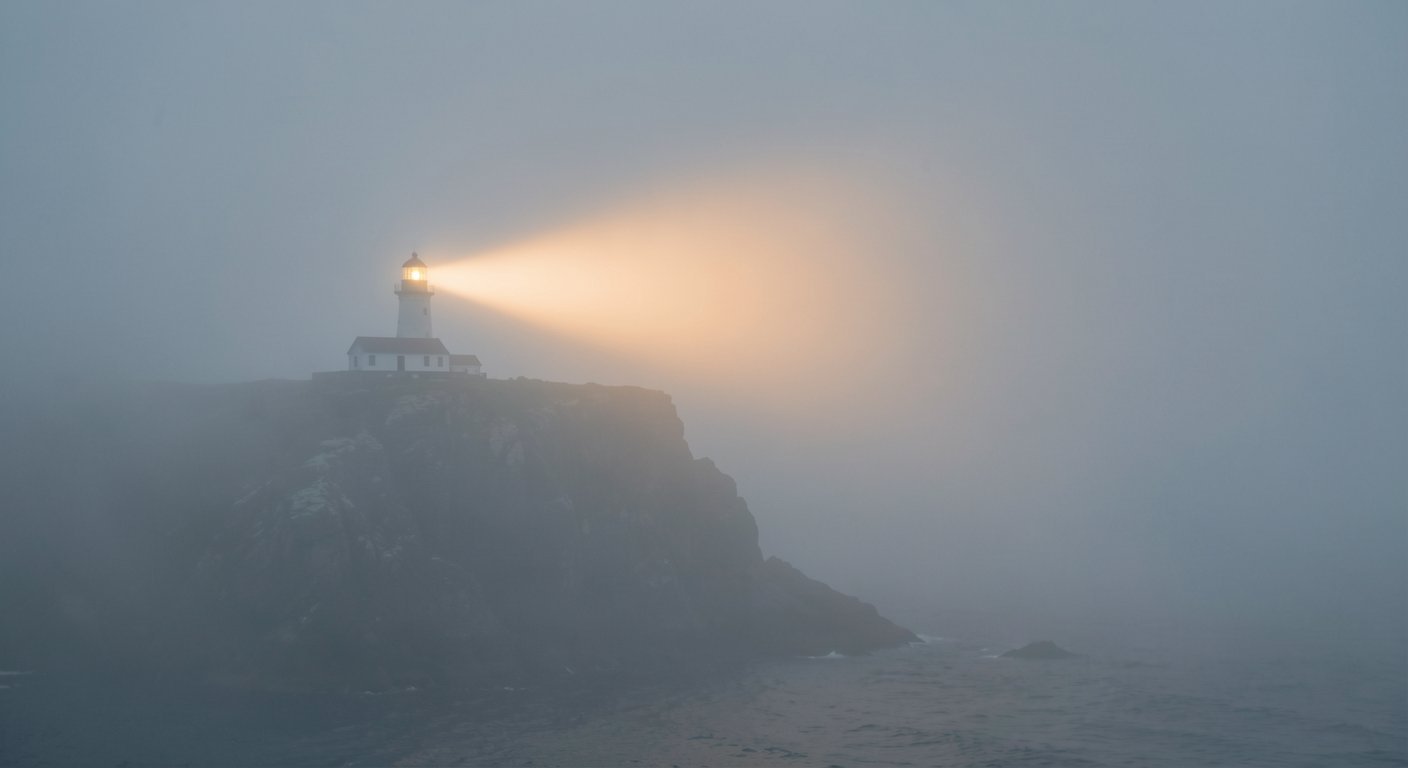
The foggiest places on Earth share a common recipe: cold ocean currents meeting warm, moist air. The Grand Banks, off the coast of Newfoundland, tops the list at 206 foggy days a year, where the cold Labrador Current collides with the warm Gulf Stream. Point Reyes, California comes close with 200 foggy days annually. Washington state averages 165 foggy days statewide, with Cape Disappointment seeing roughly three and a half months of thick fog alone. On Mistake Island, Maine, the Moose Peak Lighthouse recorded 1,562 hours of fog in a single year. That is 65 full days spent inside a cloud.
How to Drive Safely in Fog
The National Weather Service has seven core rules for fog driving safety. These four driving in fog tips matter most.
- Use low beams, never high beams. High beams reflect off the water droplets and create a white wall that blinds you. Low beams angle down and give you the best view of the road surface.
- Slow down. Every mile per hour you shave off gives you more reaction time and shorter stopping distance.
- Follow the white line on the right edge of the road, not the center line. It keeps you oriented without pulling your eyes toward oncoming traffic.
- If visibility drops to zero, pull completely off the road, turn off your lights, and take your foot off the brake. Drivers behind you may see your brake lights as a guide to follow and hit you from behind.
Fog is the most underestimated weather killer on American roads.
NatureWeatherHub
Understanding how fog forms and what to do when you drive into it is not abstract science. It is the difference between getting home and becoming part of a statistic. The next time you see that wall of white rolling toward you, slow down, switch to low beams, and remember: fog does not have to be deadly if you treat it with the respect it demands.
Sources
- NWS Fog Definitions
- NWS Radiation/Advection Fog Ingredients
- NWS Fog Forecasting
- NWS Driving in Fog Safety
- Farmers Almanac: Foggiest Places 2026
- AP News: Louisiana I-55 Super Fog Pileup
- USA Today: CA Hwy 99 Tule Fog Pileup
- Desert Sun: CA Hwy 58 Tule Fog Pileup