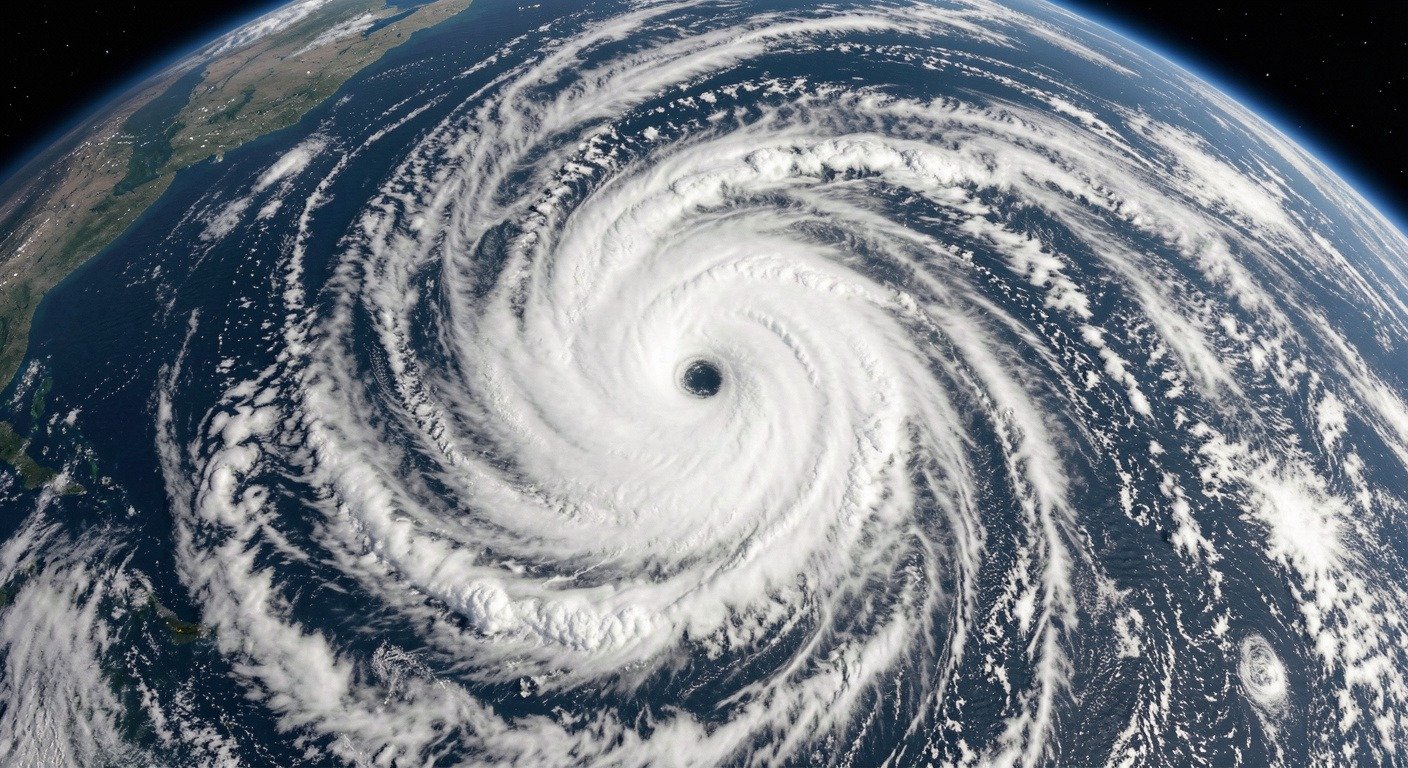
When you look at a satellite image of a hurricane spinning over the Atlantic, one truth holds every single time. In the Northern Hemisphere, the storm always rotates counterclockwise.
Hurricanes in the Southern Hemisphere spin the opposite way. The question of why do hurricanes spin counterclockwise traces back to the rotation of Earth itself. The answer explains why hurricanes never cross the equator and why one side of the storm is far more dangerous than the other.
Why Do Hurricanes Spin Counterclockwise: The Coriolis Effect
The force behind hurricane spin is called the Coriolis effect, named after French mathematician Gaspard Gustave de Coriolis, who studied energy transfer in rotating systems. Here is the simplest way to understand it.
Imagine standing on a spinning merry-go-round. You try to roll a ball straight across the platform to a friend on the other side.
The ball appears to curve away, as if some invisible hand is pushing it. In reality, the ball is traveling in a straight line. The platform underneath it is what is rotating.
Earth works the same way. As air moves across the rotating planet, its path bends.
In the Northern Hemisphere, moving air is deflected to the right. In the Southern Hemisphere, it is deflected to the left. At the equator, there is zero deflection.
A hurricane is a massive low-pressure system. Air rushes inward from all directions toward the storm’s center.
The Coriolis effect hurricanes experience in the Northern Hemisphere pushes every bit of that incoming air to the right. The combined result is a storm that rotates counterclockwise. In the Southern Hemisphere, the same physics produces a clockwise hurricane rotation direction.
National Ocean Service describes it clearly: “Air spirals in toward the center in a counter-clockwise pattern in the northern hemisphere (clockwise in the southern hemisphere).”
NASA Space Place puts it more simply: “Storms that form north of the equator spin counterclockwise. Storms south of the equator spin clockwise. This difference is because of Earth’s rotation on its axis.”
The hurricane spin direction northern hemisphere residents see on satellite maps follows one rule: counterclockwise rotation, every time. This consistent hurricane spin direction is dictated entirely by the Coriolis effect, which bends moving air to the right north of the equator. When someone asks why do hurricanes spin counterclockwise, the answer is always the same: Earth’s rotation bends every wind current to the right.
Why the Equator Is a Hurricane-Free Zone
The Coriolis effect does more than set the rotation direction. It creates one of meteorology’s most reliable rules.
Tropical cyclones do not form within about 5 degrees of the equator, a distance of roughly 300 miles. The Coriolis force tropical cyclone forecasters measure near the equator is simply too weak to spin up a storm.
As NOAA JetStream explains: “with only the rarest exceptions, these storms do not form within 5 degrees latitude of the equator. This is due to the lack of sufficient Coriolis force, the force that causes the cyclone to spin.”
Could a hurricane cross the equator? No. If one approached, the Coriolis force would drop to zero and the storm would lose its organized rotation and collapse.
This is why hurricanes don’t cross the equator. It is one of the most reliable boundaries, and the 2026 Atlantic hurricane season forecast and preparation guide outlooks assume it will hold.
There has been exactly one documented exception. On December 27, 2001, Typhoon Vamei formed near Singapore at just 1.5 degrees north of the equator, with sustained winds of 87 mph and gusts up to 120 mph.
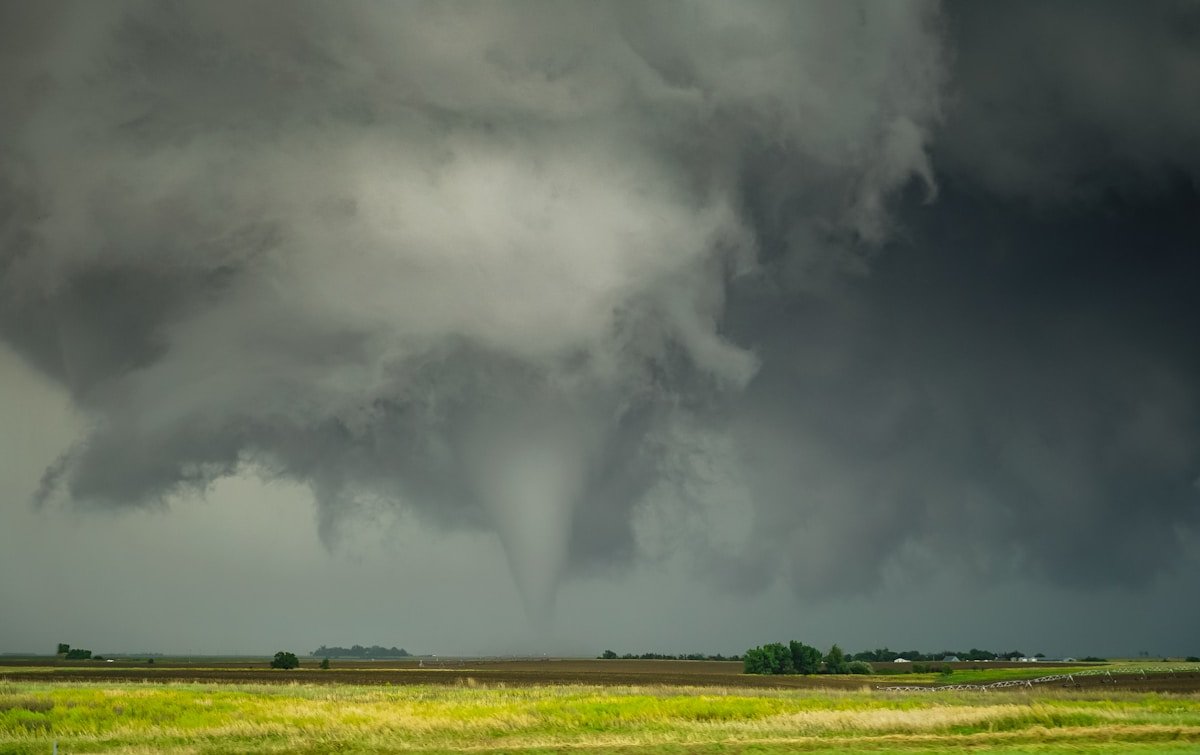
Before Vamei, the closest tropical cyclone to the equator was Typhoon Sarah in 1956 at 3.3 degrees north. Vamei is a once-in-a-century anomaly. Meteorologists still cite that single storm from 2001 because it proves how strong the equator barrier is.
What the Spin Means for Anyone in the Path
Knowing why hurricanes spin counterclockwise is not just a science curiosity. It has real consequences for anyone in a storm’s path.
In a Northern Hemisphere hurricane, the right-front quadrant carries the most destructive winds, storm surge, and tornado risk. The storm’s forward motion adds to its rotational wind speed on the right side. Emergency managers target evacuation orders to the communities that will feel the worst of the storm.
The deadliest hurricane hazard is not the wind. Hurricane Helene made that starkly clear in September 2024, killing more than 200 people and becoming the third-deadliest hurricane of the modern era, behind only Maria and Katrina, according to NOAA Climate.gov. Nearly half of those deaths happened in North Carolina, hundreds of miles from where the storm came ashore. Inland flooding did most of the killing. Over the decade from 2013 to 2022, 251 of the 442 deaths directly tied to U.S. tropical systems — 56.8 percent — were caused by inland flooding. The same physics that drives hurricane rotation also powers derechos, sometimes called inland hurricanes, which produce similar destructive winds far from the coast.
Most fatalities happened because people underestimated moving water and walked or drove into flood conditions. Tropical Storm Arthur’s flooding across the Gulf Coast in 2026 was a stark reminder of this danger.
Storm surge, the wall of water pushed ashore by rotating winds, can raise water levels 15 feet or more. Much of the densely populated US Atlantic and Gulf Coast sits less than 10 feet above mean sea level. A warming climate makes these numbers more dangerous each year.
As oceans warm, hurricanes grow stronger and wetter, making rotation physics more important each season. Evacuation orders based on a storm’s right-front quadrant are calculated decisions rooted in Coriolis physics that shape every Atlantic hurricane season.
Nature’s Spinning Engine
A hurricane is a spinning engine governed by physics that shapes every storm on Earth.
The Coriolis effect decides the direction. The equator draws the boundary. The storm’s rotation determines where the greatest danger hides.
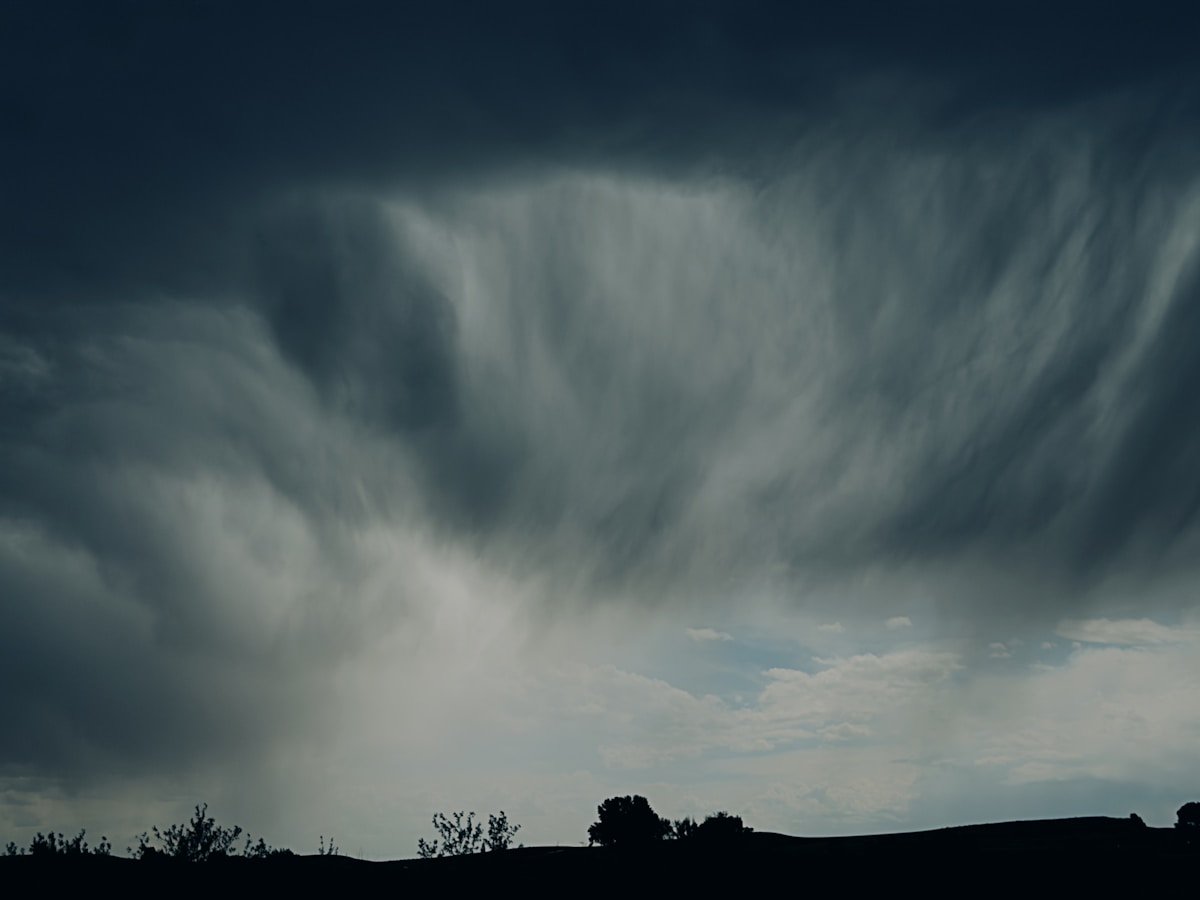
When you understand the spin, you understand the storm. That knowledge helps forecasters issue better warnings and helps people in the path make decisions that can save their lives.
\n
Frequently Asked Questions About Hurricane Spin
\n\n\n\nWhy do hurricanes spin counterclockwise in the Northern Hemisphere?
\n\n\nHurricanes spin counterclockwise in the Northern Hemisphere because of the Coriolis effect. As air rushes toward the low-pressure center of the storm, Earth’s rotation deflects it to the right. The combined result of all this deflected air creates a counterclockwise rotation. In the Southern Hemisphere, the same physics produces clockwise rotation.
\n\n\n\nDo all hurricanes spin the same direction?
\n\n\nNo. Hurricanes north of the equator rotate counterclockwise, while hurricanes south of the equator rotate clockwise. The direction is determined by the Coriolis effect, which deflects moving air to the right in the Northern Hemisphere and to the left in the Southern Hemisphere. The hurricane spin direction reverses exactly at the equator.
\n\n\n\nCan a hurricane ever cross the equator?
\n\n\nNo. A hurricane cannot cross the equator because the Coriolis force drops to zero at the equator. Without this spinning force, the storm would lose its organized rotation and collapse. The only known exception is Typhoon Vamei in 2001, which formed at just 1.5 degrees north of the equator, but even it did not cross to the Southern Hemisphere.
\n\n\n\nWhat is a hurricane spin direction called in the Southern Hemisphere?
\n\n\nIn the Southern Hemisphere, hurricane spin direction is clockwise. The same physics, the Coriolis effect, produces the opposite rotation because air is deflected to the left instead of the right. Meteorologists refer to the rotation direction as cyclonic circulation, which is counterclockwise in the Northern Hemisphere and clockwise in the Southern Hemisphere.
\n\n\n\nDoes hurricane spin direction affect storm intensity?
\n\n\nNot directly, but the rotation does determine which side of the storm carries the strongest winds. In a Northern Hemisphere hurricane, the right-front quadrant is the most dangerous because the storm’s forward motion adds to its rotational wind speed on that side. This is why emergency managers focus evacuation orders on the right side of the projected path.
\n\n\n\n\n\n\n
Final Call to Action
“When you understand the spin, you understand the storm.”
The next time you see a hurricane on a weather map, you will know exactly why it turns the way it does. You will know which side to watch. And you will know that the same force spinning the storm is the one keeping it from ever crossing the equator.