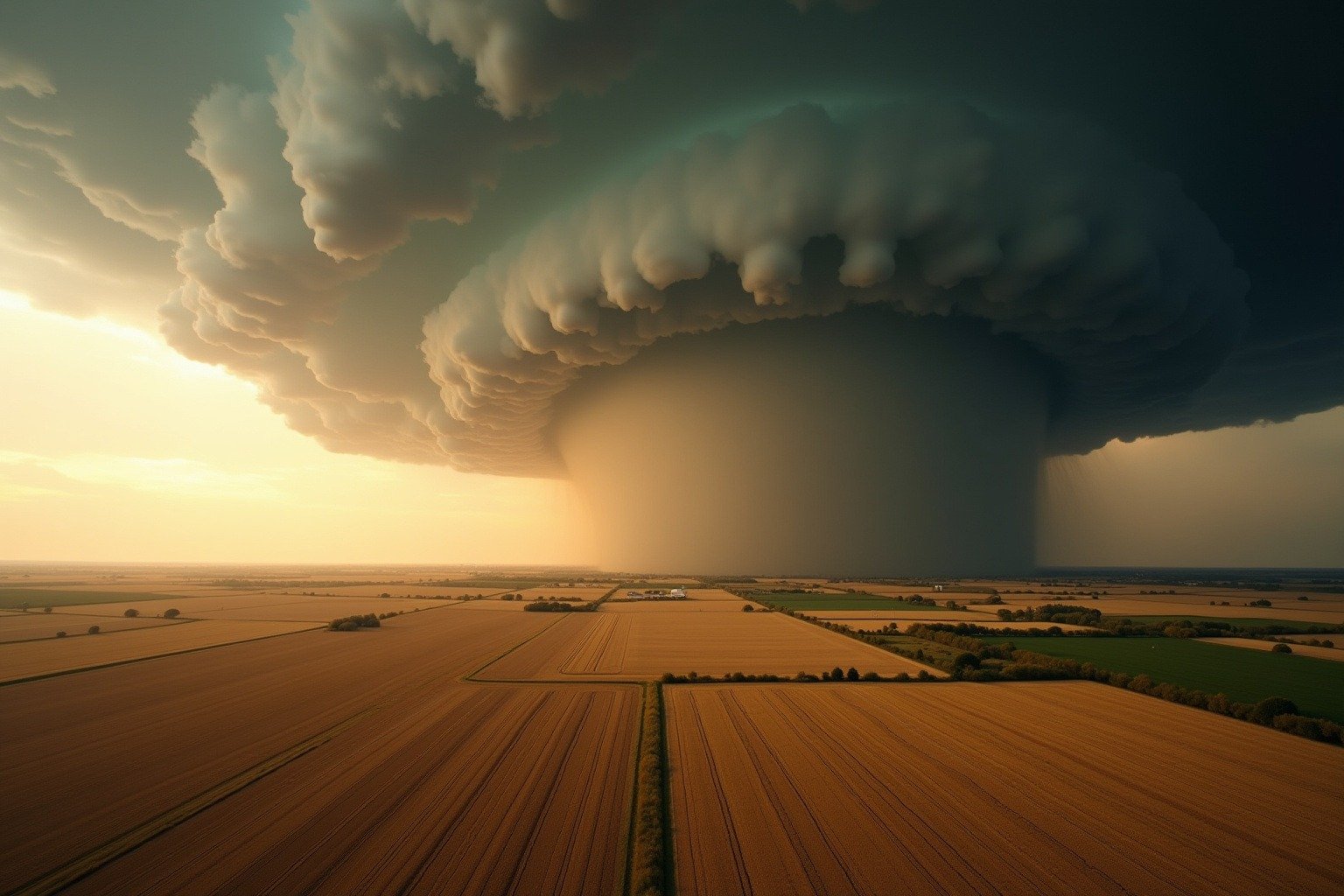
The air feels like an oven. Birds stop singing. Roads begin to buckle. When a heat wave settles over a city, life itself slows down, and for some, it stops completely.
You have probably heard the term “heat dome” on the news, especially during the record-shattering European heat wave of June 2026. But what actually causes a heat wave? Why do some stretches of hot weather turn deadly while others are just uncomfortable? Understanding the science is not just academic, it is a survival skill in a warming world.
What a Heat Wave Actually Is
A heat wave is not simply a hot day. It is an extended period of abnormally high temperatures, typically lasting three or more days, that is unusually hot for a specific location and time of year. A 35°C (95°F) week in Phoenix is an average July, but the same temperatures in London would trigger a national emergency.
Meteorologists define heat waves relative to local climate baselines. The World Meteorological Organization (WMO) considers a heat wave to be five or more consecutive days where the daily maximum temperature exceeds the average maximum by 5°C (9°F). But the real story is not just the numbers. It is the atmospheric machinery behind them.
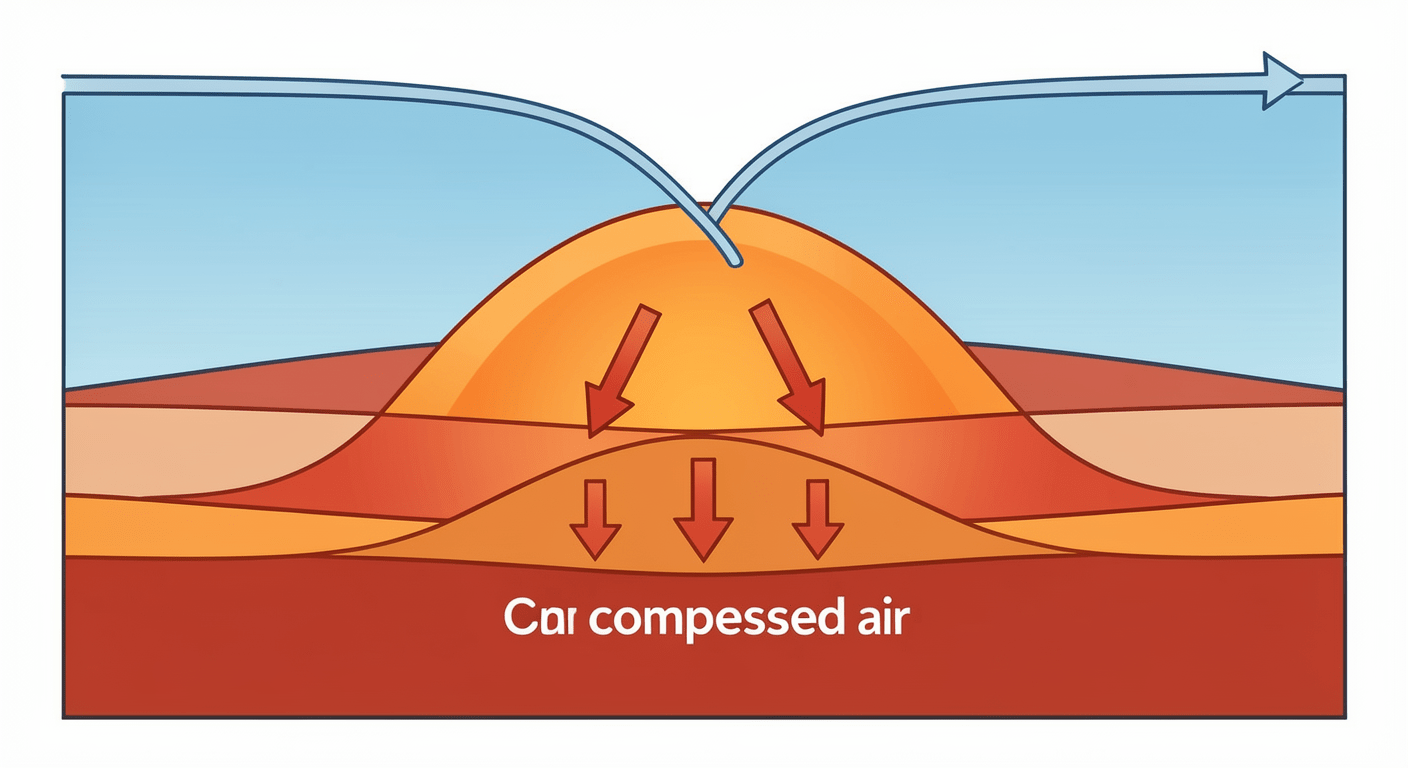
The most extreme heat waves are driven by a phenomenon called a heat dome. Picture a giant invisible lid pressing down over an entire region, trapping hot air underneath for days or weeks. That lid is a massive area of high pressure. Air underneath it sinks, compresses, and heats up. Meanwhile, clear skies let the sun bake the ground uninterrupted. The system becomes self-reinforcing: hot ground heats the air, high pressure traps the air, and the cycle intensifies.
The Science: High Pressure, Jet Streams, and Compression Heating
Heat domes are born in the upper atmosphere. Here is how it works, step by step.
Simple Explanation
The jet stream is a river of fast-moving wind about 8 to 14 kilometers (5 to 9 miles) above Earth’s surface. It normally flows west to east in a relatively straight or gently wavy pattern, separating cold polar air from warm tropical air.
Sometimes the jet stream develops a large northward bulge, like a giant atmospheric wave. Underneath that bulge, a strong high-pressure system builds and parks itself over a region. High-pressure air sinks toward the ground. As it descends, the air compresses, and compression produces heat, the physics of a bicycle pump pushed hard. The sinking air also suppresses cloud formation, so there is nothing to block the sun. Days turn into a relentless bake cycle.
The Professional Term: Atmospheric Blocking and Omega Blocks
Meteorologists call this pattern an omega block, named after the Greek letter Omega (Ω). The jet stream forms a shape that looks exactly like the Ω symbol: a high-pressure ridge in the center flanked by low-pressure troughs on either side. The surrounding low-pressure systems act like bookends, locking the high-pressure zone in place. Weather systems slide around the block rather than pushing through it. The trapped high-pressure area becomes a heat dome that can persist for one to two weeks.
Real-World Example: The June 2026 European Heat Dome
In late June 2026, an omega block formed over Western Europe. A strong high-pressure ridge settled over France, the United Kingdom, Spain, and Germany. Temperatures climbed past 40°C (104°F) in multiple countries. France recorded its hottest day in history. The UK issued its first-ever red extreme heat warning for late June. At least 40 people drowned in France as crowds sought relief in rivers and canals. The heat dome held for nearly five days before the jet stream shifted and broke the pattern.
The same mechanism produced the deadly 2021 Pacific Northwest heat dome, where the town of Lytton, British Columbia hit 49.6°C (121.3°F). It has driven every major heat event in recent memory, from India’s 2024 scorcher to Europe’s repeated summer crises.
A heat dome is not just hot air. It is a 1,000-mile-wide pressure cooker with the lid screwed tight. Understanding it is the first step to surviving it.
How Heat Waves Affect People
Extreme heat kills more people globally than any other weather-related hazard, more than hurricanes, floods, and tornadoes combined. The World Health Organization identifies heat stress as a leading cause of weather-related deaths worldwide.
Health Impacts
The human body can only tolerate a narrow internal temperature range. When ambient temperatures exceed roughly 35°C (95°F) at high humidity, the body’s natural cooling mechanism, sweating, stops working effectively. This threshold is called the wet-bulb temperature, and it is being crossed more frequently as global temperatures rise.
Heat stress triggers a cascade of health failures: heat exhaustion, heatstroke, cardiovascular strain, kidney failure, and respiratory distress. The elderly, young children, outdoor workers, and people with pre-existing conditions face the highest risk. During Europe’s 2022 heat wave, an estimated 61,000 people died from heat-related causes. A 2025 Lancet Countdown report found that 12 of 20 key health indicators linked to climate change have reached record levels.
Infrastructure Failure
Heat waves push infrastructure past its design limits. Asphalt roads soften and buckle. Railway tracks warp, causing derailment risks and forcing speed restrictions. Power grids strain under the demand for air conditioning. Overhead power lines sag from thermal expansion. In 2026, several European countries restricted train speeds and warned of rolling blackouts as demand surged.
Agriculture and Food Supply
Crops have thermal limits too. Wheat, corn, and rice yields drop sharply when temperatures exceed certain thresholds during critical growth periods. Livestock suffer heat stress, reducing milk and meat production. India’s 2026 monsoon deficit, directly linked to climate-driven atmospheric changes, threatens food security for over 600 million people. According to the Food and Agriculture Organization, heat waves have reduced global agricultural productivity by an estimated 5 to 10 percent over the past three decades.
Economy and Productivity
The economic toll is staggering. Outdoor workers lose productive hours. Emergency rooms fill with heat-related cases. Businesses close. According to the International Labour Organization, heat stress could cost the global economy $2.4 trillion annually by 2030 in lost productivity. A single severe heat wave can cause billions in crop losses, infrastructure damage, and healthcare costs.
Why Heat Waves Matter More Now
The baseline has changed. What was once a once-in-a-century event is becoming a once-a-decade event, and in some regions, an every-summer reality.
Climate change is the force multiplier. Global average temperatures have risen roughly 1.2°C (2.2°F) since pre-industrial times. This may sound small, but a warmer atmosphere holds more energy and more moisture. The result: heat waves that start from a higher baseline temperature, last longer, and cover wider areas.
A 2022 study by World Weather Attribution found that the record UK heat wave that year was made at least 10 times more likely by human-caused climate change. The 2021 Pacific Northwest heat dome was deemed “virtually impossible” without it. Every additional fraction of a degree of global warming shifts the probability curve further toward extreme events.
Europe is warming faster than the global average, roughly twice as fast according to the European Environment Agency. By 2050, the kind of heat that triggered red alerts across the continent in June 2026 may be considered a normal summer.
What We Can Learn: Preparing for a Hotter Future
Heat waves are predictable days to weeks in advance. That means preparation is possible, and preparation saves lives.
Individual Actions
Know the warning signs of heat illness: heavy sweating, weakness, dizziness, nausea, headache, cold and clammy skin. Move to a cool space, drink water, and seek medical help if symptoms worsen. During a heat advisory, avoid outdoor activity between 11 a.m. and 4 p.m. Check on elderly neighbors and relatives. Never leave children or pets in parked vehicles.

Community and Government Response
Cooling centers in public buildings are proven lifesavers. Cities like Paris and Barcelona have mapped heat vulnerability by neighborhood and opened hundreds of air-conditioned public spaces during heat emergencies. Early warning systems allow hospitals to prepare for surges. Urban planning matters too: tree canopies, green roofs, and reflective surfaces can reduce city temperatures by several degrees.
Long-Term Adaptation
The cities of tomorrow must be built for the temperatures of tomorrow. That means lighter-colored pavement, expanded tree cover, better building insulation, and energy grids sized for peak cooling demand. It also means recognizing that some outdoor jobs cannot be done safely during extreme heat and building labor protections around that reality.
Heat waves are not anomalies anymore. They are the new summer. But knowing how they form, who they hurt, and how to prepare turns a frightening force of nature into a challenge we can meet.
Heat waves will keep coming. The science is clear on why they form and why they are getting worse. What we do with that knowledge, prepare our communities, protect the vulnerable, and build for a hotter world, is up to us.
Sources
- World Meteorological Organization (WMO): Heatwave definition and global coordination
- World Health Organization (WHO): Heat and Health fact sheet
- National Geographic: What Is a Heat Dome?
- European Environment Agency: Climate Change Impacts on Heat
- Lancet Countdown 2025 Report: Health and Climate Change
- World Weather Attribution: 2022 UK Heat Wave Attribution Study
- International Labour Organization: Working on a Warmer Planet