Lois Grippen was working the ticket booth at the Coconino County Fairgrounds when the afternoon turned strange. The sky stayed blue. The sun kept burning. But somewhere near the midway, a column of dust started spinning. It grew from a wisp into a tower of swirling dirt and straw within seconds. Grippen heard tents ripping before she saw the funnel. Booths lifted and tumbled. People ran. By the time it passed, less than a minute later, several fairgoers were injured and the fairgrounds looked like a bomb had gone off in the craft tent section. The date was September 14, 2000. Anyone at those fairgrounds that afternoon learned the answer to what is a dust devil the hard way.
What Is a Dust Devil?
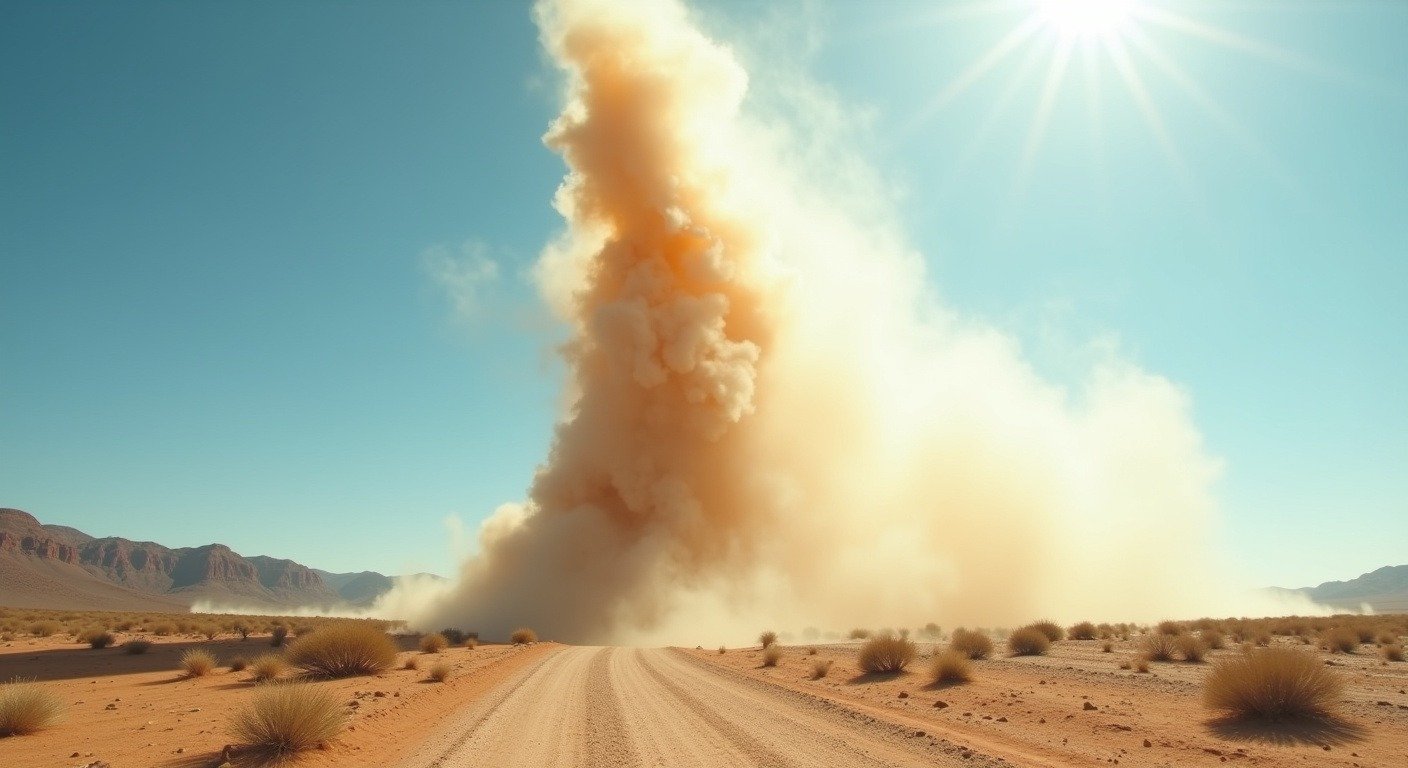
A dust devil is a rotating column of air that picks up dust, sand, and loose debris from the ground. You see them most often on hot, sunny afternoons in dry places like Arizona, Nevada, and the deserts of the Middle East. They look like miniature tornadoes. That comparison trips people up every time, and understanding the difference between a dust devil vs tornado matters more than you might think.
Most dust devils are harmless. They spin across a parking lot, scatter some leaves, and vanish. The one that hit Flagstaff was an outlier, large and well-defined according to the National Weather Service. The NWS describes them as “dust-filled vortices, created by strong surface heating,” generally smaller and less intense than any tornado.
Millions of people in the American Southwest watch dust devils spin across vacant lots every summer. The phenomenon belongs to the same family as waterspouts, which rise from warm water, and haboobs, which roll across deserts as walls of dust. But unlike either of those, a dust devil needs nothing more than sun, dirt, and a slight breeze to come alive.
How Do Dust Devils Form?
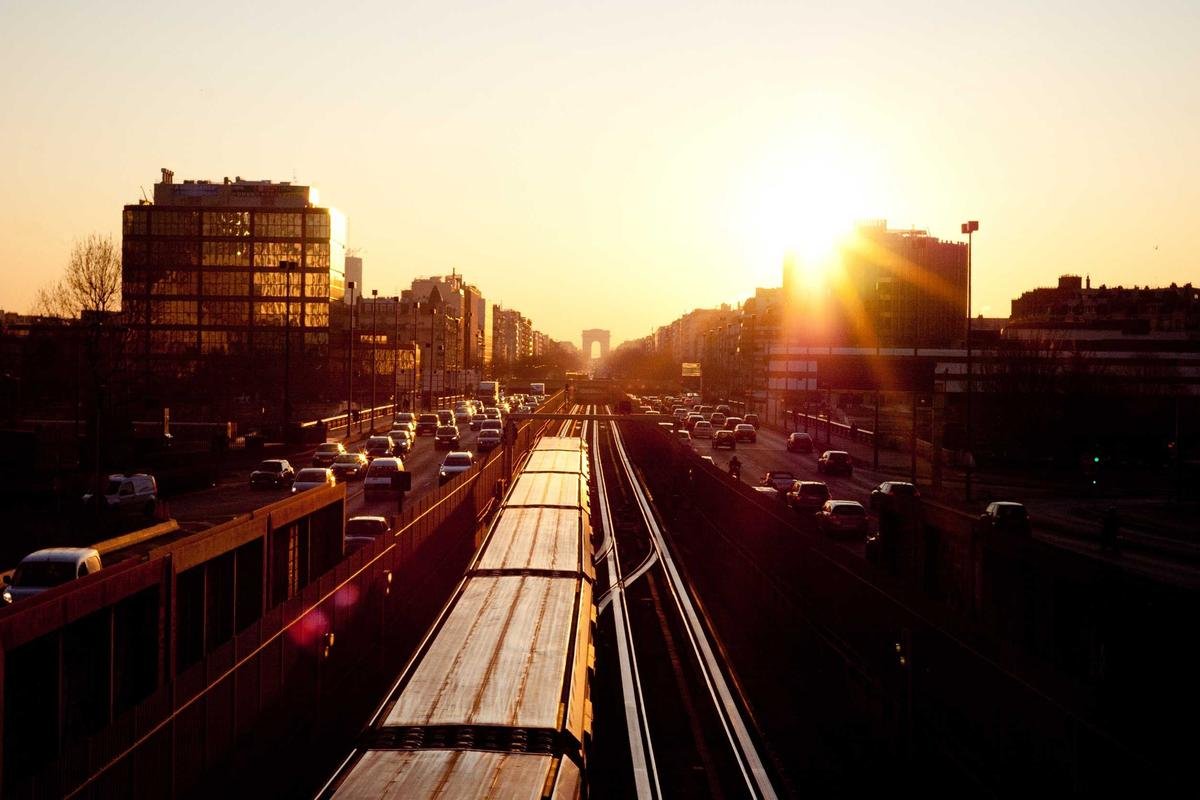
The answer to how do dust devils form starts at your feet. On a clear day with light winds, the sun heats the ground unevenly. A patch of dark asphalt gets hotter than the pale dirt beside it. A freshly irrigated field sits next to dry desert floor. That temperature difference is the trigger.
Hot air over the warmer surface rises fast. Cooler air rushes in from the sides to replace it. If there is a slight breeze or even a random swirl in that incoming air, the rising column begins to rotate. This is the same physics you see when water drains from a bathtub, only here the fluid is air heated by the sun. Meteorologists call it a convective vortex. Once the spinning column reaches the ground, it picks up loose sand, dust, and debris. You now have a dust devil.
The setup requires strong surface heating, clear skies, and light ambient winds. Gusty days kill dust devils before they can organize. That is why May and June are peak months in northern Arizona. The NWS notes that intense solar heating, dry sandy soil, and large stretches of lightly vegetated terrain create perfect conditions hundreds of times each season.
A typical dust devil spans 10 to 300 feet across and rises between 400 and 1,000 feet high. Wind speeds usually stay below 45 miles per hour, and most vanish within a minute. Rare ones grow much larger. A dust devil can reach 300 feet in diameter with winds exceeding 60 miles per hour, lasting 20 minutes or longer before fading. The NWS has documented some reaching heights well over 1,000 feet.
Dust Devil vs Tornado
People wonder about dust devil vs tornado because the two look similar from a distance. Both are spinning columns that can pick up debris. The resemblance ends there.
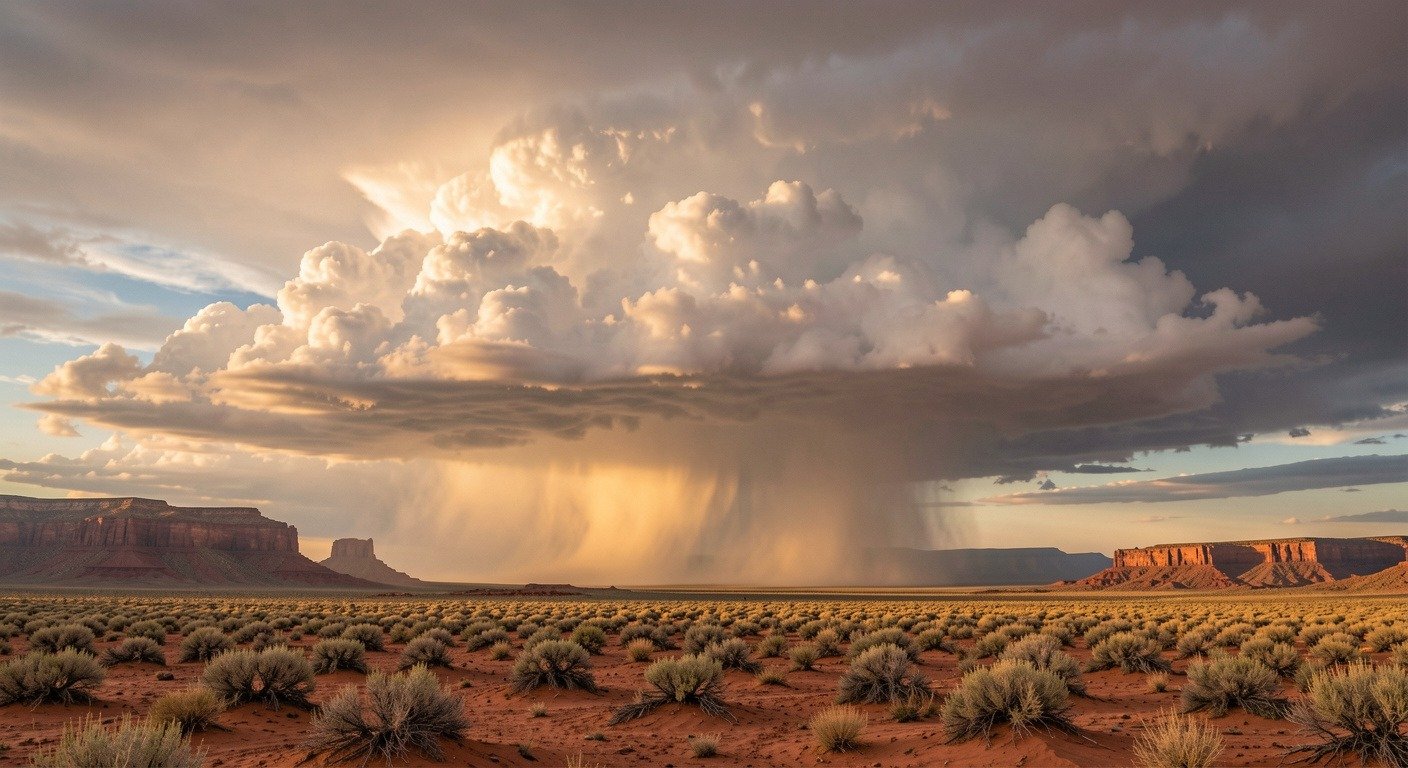
Tornadoes are born in the clouds, descending from supercell thunderstorms connected to a rotating mesocyclone thousands of feet up. The NWS classifies them on the Enhanced Fujita scale. An EF0 produces winds of 65 to 85 miles per hour. An EF5 exceeds 200 miles per hour. Tornadoes can travel for miles and last for hours. They can level entire towns.
Dust devils form from the ground up under clear skies and strong sun. They have no parent thunderstorm. Their winds rarely exceed 60 miles per hour. They do not connect to a cloud base. They last seconds or minutes, not hours. The strongest dust devil ever observed would barely register as a tornado on the EF scale. Critically, dust devils give no warning: no radar signature, no watch from the Storm Prediction Center. They appear from a blue sky and vanish just as fast. How tornadoes form is a process tied to massive storm systems with rotation at multiple atmospheric levels.
Think of a tornado as a freight train descending from the clouds. A dust devil is a leaf blower that learned to spin. Both deserve respect. Only one can level a town.
Are Dust Devils Dangerous?
The question “are dust devils dangerous” deserves an honest answer. For most people, most of the time, no. You can stand 30 feet from a small one and feel a gentle breeze as it swirls past and dissolves against a building.
But the honest answer includes a “however.” On September 14, 2000, the Coconino County dust devil injured multiple people and caused extensive damage to fairgrounds structures, according to the NWS. In 2003, a dust devil in Maine lifted the roof off a building and killed a man inside. Aviation safety reports indicate that dust devils have contributed to more than 100 aircraft accidents, some fatal.
In January 2025, a dust devil swept through the Rose Bowl fan festival in Pasadena, California, the day before the college football championship. Three people suffered minor injuries when the vortex spun through the outdoor event area, tossing lightweight canopies and sending visitors scrambling.
The danger is not the wind speed alone. It is what the wind picks up. A 45-mile-per-hour gust carrying sand, gravel, tent poles, and broken signage can do real damage. For pilots, the hazard is different: a dust devil crossing a runway during takeoff or landing creates sudden, invisible wind shear. Even a small vortex can flip a light aircraft.
If you are outdoors in dust devil country and you see a large one approaching, move indoors or into a sturdy vehicle. Stay away from lightweight canopies, umbrellas and anything the wind can turn into a projectile. The NWS advises treating a large dust devil the way you would treat any strong wind event. Get low. Get inside. Stay away from windows.
The Meaning
Dust devils carry a quiet lesson. Weather does not need a storm to be dangerous. You do not need clouds or a forecast. On a perfectly beautiful afternoon in the desert, the ground itself can create violence. That is humbling.
For communities in the American Southwest, dust devils are a regular part of life. Farmers watch them spin across dry fields and know the soil is too loose. Event organizers in Phoenix and Tucson plan outdoor setups with dust devil winds in mind. Air traffic controllers at desert airports factor them into takeoff and landing clearances. The phenomenon shapes how people live, work, and travel across millions of square miles of arid land.
The Resonance
In March 2005, NASA’s Spirit rover was sitting on the surface of Mars, 140 million miles from that Flagstaff fairground. On its 421st sol, the rover’s rear hazard-avoidance camera caught two dust devils crossing the floor of Gusev Crater. They left dark streaks in the red dust where they had scoured the surface clean. NASA published the images. The dust devils on Mars looked exactly like the ones photographed in Arizona.
Mars has an atmosphere less than 1 percent as dense as Earth’s. Its air pressure barely registers against ours. Yet the same physics works. The sun heats the surface. Hot air rises. The column spins. Dust lifts. The phenomenon that ripped through a county fair in Flagstaff and scattered a Rose Bowl fan festival plays out on another planet, driven by the same simple rules.
When you watch a dust devil spin across an empty lot on a hot afternoon, you are watching a piece of physics that works everywhere the sun shines on a dusty surface. You are watching the same process that shapes the surface of another world. The dust devil does not care which planet it is on. It only needs heat, dust, and a little bit of spin.