
Table of Contents
If I asked you to name a superfood, you’d probably say kale, chia, or perhaps an obscure berry from a high-altitude mountain range. You certainly wouldn’t pick a scrawny, drought-resistant moringa tree native to North India
Yet, this small, fast-growing plant, known across the world as the “Miracle Tree” or “drumstick tree” is exploding onto the global stage. It’s the subject of relentless scientific research and a surging market valued at roughly 8.6 Billion in 2025**, predicted to skyrocket to **17.1 Billion by 2034.
Why the frenzy? Because the moringa tree, or Moringa oleifera, isn’t just nutritious; it’s a living pharmacy. Historically, it has been used in traditional herbal remedies for thousands of years to treat over 300 conditions. Nearly all parts of the moringa tree ,the bark, pods, roots, and especially the moringa leaves and moringa seeds are either eaten or utilized medicinally.
But here’s the fascinating contradiction: While the hype suggests a universal cure, the science is still playing catch-up, and taking the wrong part of the plant, or the wrong dosage, can be dangerous.
The real story of Moringa oleifera is less about miracles, and more about powerful, proven moringa benefits, massive global stakes, and crucial questions about safety and dosage.
Chapter 1: The Nutritional Truth Behind the Miracle Leaves
To understand the global excitement, you have to appreciate the nutritional density of the moringa leaves. For people in developing nations where diets often lack essential micronutrients and protein, Moringa oleifera is quite literally an indispensable food source.
When dried and processed into moringa powder ;the most common commercial form in Western markets ,moringa retains much of its core nutritional value.
If we zoom in on the raw data for one cup (21 grams) of fresh, chopped moringa leaves, the numbers are staggering:
| Nutrient | Percentage of RDA (21g serving) | Comparative Context |
| Protein | 2 g | The leaves are a rich protein source, containing between 27 and 30 percent protein by dry weight. |
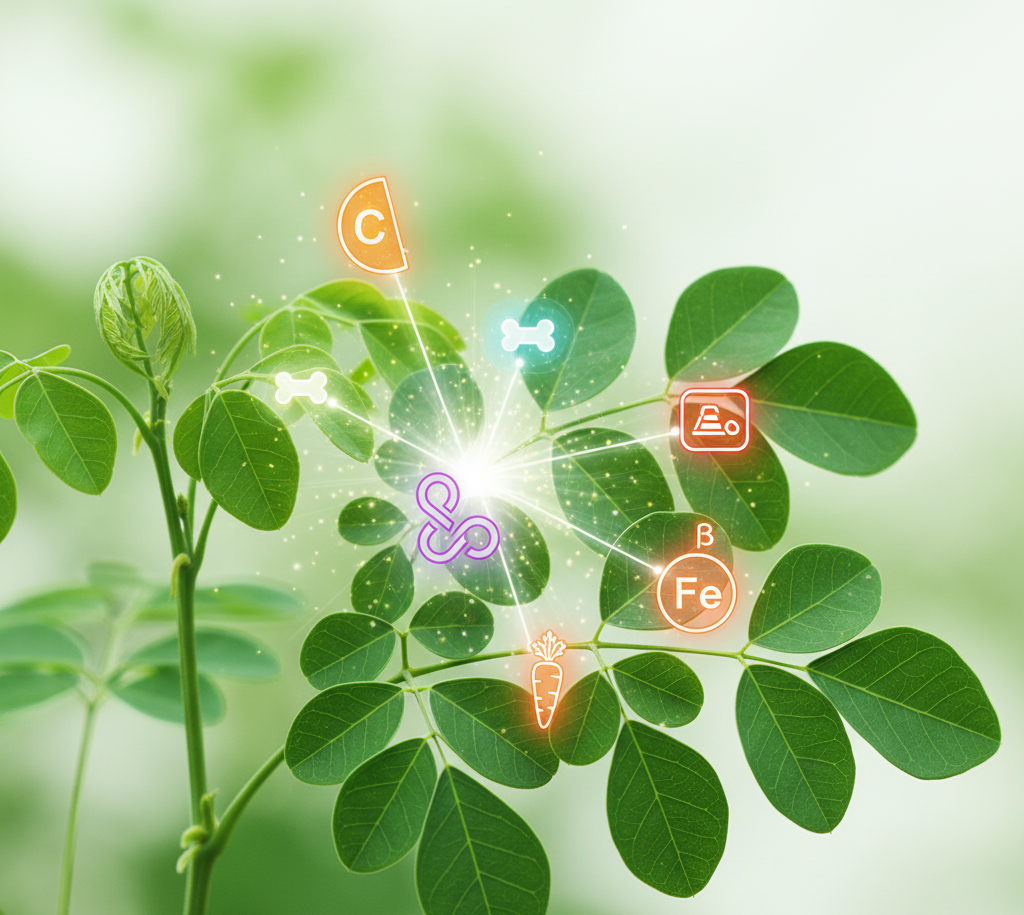
| Vitamin C | 12% of the RDA | Seven times as much Vitamin C as oranges. This strong antioxidant boosts body defenses. |
| Iron | 11% of the RDA | Contains iron content comparable to or even higher than spinach. |
| Vitamin A | 9% of the RDA (from beta-carotene) | Contains four times the amount of Vitamin A found in carrots, essential for healthy vision and immune function. |
| Magnesium | 8% of the RDA | A vital mineral for maintaining bodily functions. |
The leaves are also exceptionally rich in calcium, containing more calcium per gram than milk (seventeen times more). Furthermore, unlike most plant proteins, moringa leaves contain all of the essential amino acids in significant amounts.
The Antioxidant Defense
The moringa benefits extend far beyond basic nutrition due to its vast array of bioactive compounds. Researchers have found over 90 bioactive plant compounds in Moringa oleifera. The leaves are particularly rich in antioxidants, approximately 46 of them including flavonoids, phenolics, carotenoids, and ascorbic acid.
High levels of these antioxidants help counteract oxidative stress, which is linked to chronic diseases like diabetes, heart disease, and cancer. Specific compounds like Quercetin and Myricetin are known for their antioxidant and potential blood pressure-managing properties.
Chapter 2: Targeting Disease: From Anemia to Arthritis
The most compelling proof that Moringa oleifera is not just good nutrition, but also powerful medicine, comes from clinical interventions focused on chronic conditions.
Proven Support for Women’s Health: The Anemia Solution
Anemia during pregnancy remains a major public health concern in developing nations, with prevalence often around 36.5%. An Indonesian study aimed to see if moringa capsules could enhance the effectiveness of standard iron and folic acid (IFA) tablets.
In a quasi-experiment, pregnant mothers with anemia received either standard IFA tablets alone or IFA plus moringa oleifera capsules containing 500 mg of moringa leaves powder, taken 2×2 capsules per day for 30 days.
The results were statistically significant (p=0.000):
• The control group (IFA alone) saw hemoglobin levels increase by 0.81 mg/dL.
• The group receiving IFA plus moringa capsules saw hemoglobin levels increase by 1.743 mg/dL.
The improvement rate was more than double in the moringa group. The key moringa benefit for women in this context is clear: the moringa leaves are rich in Vitamin C, which dramatically boosts the absorption of non-heme iron from the diet and tablets, making the increase in maternal hemoglobin more significant. For expectant mothers, Moringa oleifera is recommended as a dietary supplement to help reduce the prevalence of anemia.
Beyond anemia, other moringa benefits for women include treating symptoms of menopause. Early research suggests that adding fresh moringa leaves to food for three months may improve menopausal symptoms such as sleeping problems and hot flashes.
Fighting Inflammation and Joint Pain
The most robust clinical trial in the sources validates moringa’s anti-inflammatory power using moringa capsules.
In a randomized controlled trial involving patients with Rheumatoid Arthritis (RA), a chronic, inflammatory, and progressive disease participants were given 1000 mg of M. oleifera leaf extract twice daily (2 grams total) for 30 days. The primary measure of disease activity was the DAS28-hsCRP score.
The results showed a significant improvement (decrease) in the DAS28-hsCRP scores in the moringa group (p=0.001).
This powerful anti-inflammatory action is rooted in the plant’s compounds, which suppress the inflammatory response:
• Mechanism: Moringa oleifera lessens inflammation by inhibiting the Nuclear Factor-ĸB (NF-ĸB) signaling pathway.
• Outcome: Blocking NF-ĸB subsequently leads to a decrease in pro-inflammatory cytokines (such as IL-6, TNF-α, and IL-1).
Blood Sugar and Cholesterol
The benefits of moringa extend to metabolic health:
• Blood Sugar: A 2020 review of human and animal studies found that Moringa oleifera helped lower blood sugar levels, which is a key aspect of managing diabetes. These effects are attributed to compounds like chlorogenic acid and isothiocyanates.
• Cholesterol: Research suggests moringa may have antihyperlipidemic properties, helping to lower cholesterol and triglycerides, and potentially increasing HDL (good) cholesterol while lowering LDL (bad) cholesterol. However, human research on this effect is still inconclusive and requires further study.

Chapter 3: The Environmental Depth: A Sustainable Water Solution
The true versatility of the moringa tree is revealed not in a pill bottle, but in a beaker of dirty water. Historically, one of the most vital things what moringa used for by African tribes and developing communities is water purification.
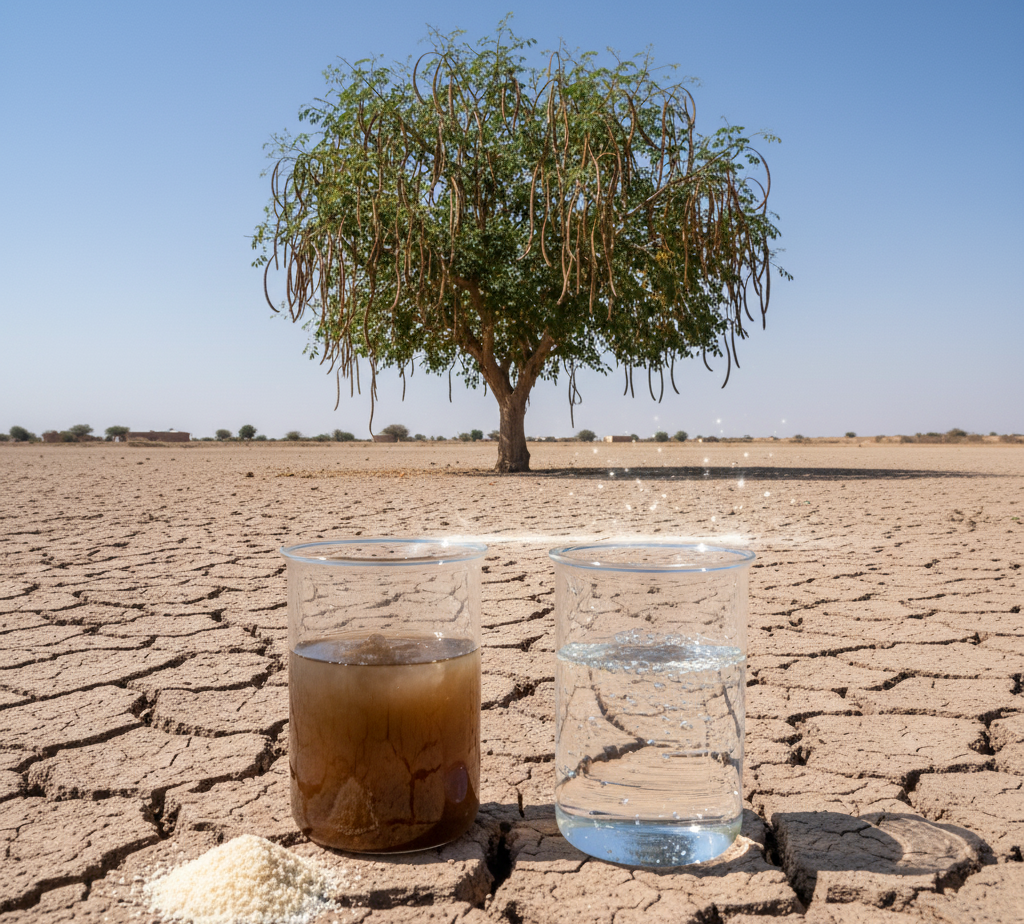
The tree’s moringa seeds contain a specialized protein that acts as a natural coagulant. When processed into powder and added to contaminated water, the protein component causes suspended solids and harmful microorganisms to clump together and settle out.
A study focusing on the application of Moringa oleifera seeds (MOS) powder in Nile River water demonstrated its astonishing effectiveness:
• Turbidity: MOS successfully reduced the water’s turbidity (cloudiness) from 8.24 NTU to 1.53 NTU. This is an 81.43% removal percentage.
• Algae Removal: MOS proved to be highly efficient, achieving an algal removal rate between 92% and 97%. Specific problematic groups, including Blue-green algae, were removed at a rate of 95% to 100%.
The use of moringa seeds provides a natural, affordable, and superior replacement for conventional chemical coagulants like aluminum salts. This makes Moringa oleifera a critical, cost-effective solution for providing safe drinking water in impoverished nations.
Chapter 4: The Commercial Market and Key Questions
The commercialization of moringa products from moringa powder to oil is dominated by global awareness and demand for plant-based supplements.
What Moringa Used For in Modern Markets
The market is highly fragmented, with major applications falling into:
1. Food and Beverages: This segment holds the dominant market share globally. Powdered moringa leaves are mixed into food as a condiment or added to smoothies, rice, yogurt, or porridge for children. The flowers can be used to make a tasty moringa tea.
2. Personal Care: Moringa seeds yield oil, which is valued for its moisture capabilities and use in beauty products, particularly in the North American region.
3. Pharmaceuticals: Products like standardized leaf extracts used in moringa capsules are sold for managing conditions like obesity and diabetes.
Ambiguities: Weight Loss and Men’s Health
Two major search questions often arise concerning specific physiological moringa benefits for men and general populations, but the scientific evidence is limited:
1. Can moringa help with weight loss?
This is a point of frequent inquiry in the wellness sphere.
• The Findings: Some animal studies found that moringa helped reduce visceral fat, subcutaneous fat, and body weight.
• The Scientific Gap: However, no studies have examined the effects of moringa on weight loss and belly fat in humans. Any anti-obesity effects seen in animals may be linked to the plant’s ability to improve lipid profiles.
2. Moringa Benefits for Men
While the sources confirm the moringa market tracks “Men’s Health”, specific clinical validation is sparse:
• Traditional use includes the moringa seeds being used to treat prostate and bladder problems.
• There is insufficient evidence to rate moringa for uses such as increasing sexual desire in healthy people.
Chapter 5: Dosage, Safety, and the Critical Caveats
The high school reading level takeaway from the supplement industry is simple: the FDA does not regulate or standardize the quality, purity, and dosages of supplements. When buying moringa powder or moringa capsules, consumers should look for third-party verification to ensure they are from a reputable source.
How Much Moringa Powder Per Day is Safe?
Determining the therapeutic dose is complex, as it varies by condition and product form (extract vs. powder).
• General Medicinal Dosing: Moringa leaves and moringa seeds in extracts or powders have most often been used by adults in doses of 6–10 grams by mouth daily.
• Inflammation Dose: The successful RA clinical trial used a high dose of leaf extract: 1000 mg twice daily (2 grams total).
• Maximum Safety Limit: The margin for safety, especially with concentrated forms, is debated in the sources. One review suggests consuming no more than 70 mg per day to prevent a buildup of toxins. In contrast, side effects like nausea have been reported when taking 20 g (20,000 mg) of powdered moringa leaf daily. Another review suggests intake should not surpass 70 gm/day (70,000 mg) to prevent cumulative toxicity. This huge discrepancy highlights the lack of consensus, requiring caution.
Toxic Parts and Drug Interactions
Safety is the most crucial caveat when discussing the moringa tree.
• Toxic Components: The moringa root and root bark are possibly unsafe because they contain toxic substances. Historically, the root and bark were used in traditional medicine to cause miscarriages.
• Pregnancy Risk: While moringa leaves may be possibly safe in the second or third trimester of pregnancy, the root, bark, or flowers are possibly unsafe due to chemicals that might make the uterus contract.
• Drug Interactions: Due to its effects on glucose and blood pressure, moringa could interact with medications used to treat diabetes, high blood pressure, and thyroid disorders. Taking moringa along with diabetes medications might cause blood sugar to drop too low, necessitating close monitoring.
Conclusion: The Path Forward for the Miracle Tree
The journey of Moringa oleifera from an ancient herbal remedy documented in the Charaka Samhita to a $17 billion global market contender is extraordinary. This single, hardy moringa tree offers profound, proven moringa benefits by tackling anemia (a major moringa benefit for women), reducing inflammation, stabilizing blood sugar (modestly), and providing an affordable solution for water purification using its moringa seeds.
The most effective tools we have are the moringa leaves and the moringa powder derived from them. While moringa capsules offer convenience, the nutrients are best obtained from consumption as a whole food.
However, the questions remain sharp: Can moringa help with weight loss in humans? How do we standardize dosing (how much moringa powder per day is truly safe)? And how do we ensure the surging demand for this plant doesn’t lead to unsafe harvesting or unregulated supplements?
The scientific community agrees that further mechanism-based studies are needed. But one thing is certain: Moringa oleifera has earned its nickname. It is a genuine powerhouse, capable of delivering immense value to human health and global sustainability, making it arguably the most important green thing you’ve never paid attention to.
source –
https://www.healthline.com/nutrition/6-benefits-of-moringa-oleifera
https://www.custommarketinsights.com/report/moringa-products-market/
More Contents about nature on Nature & Environment


