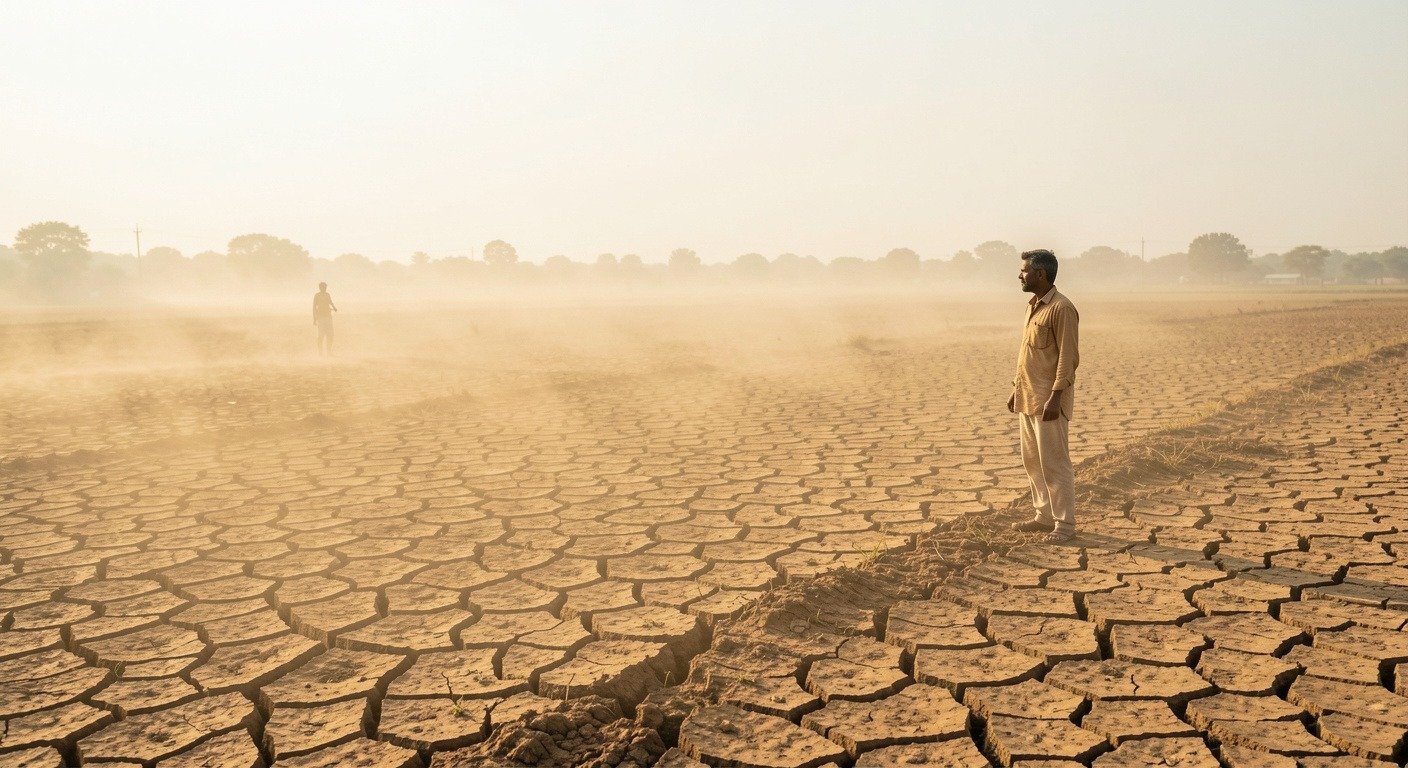
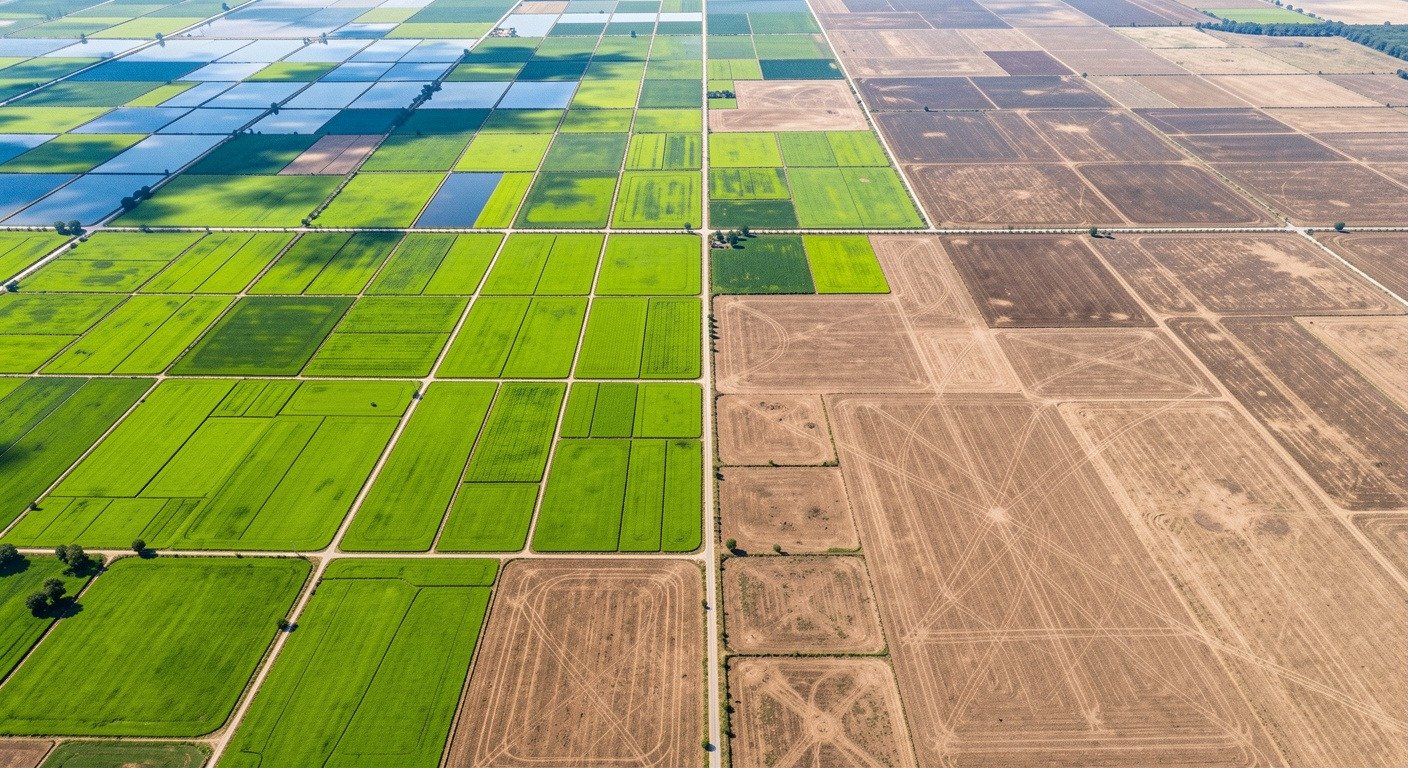
A farmer in central India walks the edge of his field. The soil under his feet should be dark with moisture by now. Instead, it crumbles to powder. The monsoon is weeks late, and when it came, it barely stayed. Across South Asia, the same story is unfolding, and it is only June.
India’s 2026 southwest monsoon, the weather system that delivers roughly 70 percent of the country’s annual rainfall and sustains over 600 million people who depend on agriculture, is failing. As of late June, monsoon rains are 43 percent below average, according to India’s Meteorological Department. The government is preparing contingency plans. Two hundred districts have been flagged as vulnerable. And the worst of the dry spell may still be ahead.
What Is Happening: The Numbers Behind a Failing Monsoon
The southwest monsoon typically arrives at the southern tip of India in early June and sweeps north across the subcontinent over the following weeks. By mid-June, much of the country should be receiving regular rainfall. In 2026, it stalled.
According to The Hindu, India faced a nationwide rainfall deficit of 41 percent between June 4 and June 18. The monsoon stalled over southern Maharashtra and stopped advancing. Central India was hit hardest, at 55 percent below normal as of June 14. Al Jazeera reported on June 23 that the cumulative deficit had widened to 43 percent across the country.
The India Meteorological Department and the agriculture ministry have responded by flagging approximately 200 districts, nearly a quarter of all districts in the country, as vulnerable to crop failure and water stress, according to DownToEarth. The ministry has activated contingency plans: drought-resistant seed distribution, water conservation advisories, and crop diversification recommendations. But for millions of smallholder farmers, there is no backup. While central India stayed dry, the eastern monsoon turned destructive — the Brahmaputra’s July floods in Assam killed 50 and displaced 700,000.
Monsoon 2026 by the Numbers
- 43%: Rainfall deficit nationwide as of June 23 (Al Jazeera)
- 55%: Deficit in central India as of mid-June (IMD)
- 200: Districts flagged vulnerable by India’s agriculture ministry (DownToEarth)
- 600 million+: People dependent on monsoon-fed agriculture in India
- 70%: Share of India’s annual rainfall delivered by the southwest monsoon
Why It Is Happening: El Nino and a Warming Planet
The simplest explanation is El Nino. In June 2026, NOAA confirmed that El Nino conditions had developed in the tropical Pacific Ocean, as explained in our El Nino complete guide. During an El Nino event, warm water shifts eastward across the Pacific, altering the atmospheric circulation patterns that normally pull moisture from the Indian Ocean toward the subcontinent.
The scientific term is the Walker Circulation, a large-scale pattern of air movement over the tropical Pacific and Indian Oceans. Normally, warm air rises over the western Pacific and Indian Ocean, drawing in moisture-laden winds that become the monsoon. During El Nino, the rising air shifts to the central and eastern Pacific. The monsoon engine loses power. Historically, about 60 percent of El Nino years produce below-normal monsoon rainfall over India.
Think of it like a conveyor belt that normally carries moisture from the ocean to the land. El Nino moves the belt’s starting point thousands of kilometers east, and less moisture makes it to the farms and reservoirs of South Asia.
The World Meteorological Organization had warned about this back in April. Its seasonal outlook, released on April 30, forecast below-normal rainfall for the entire June-to-September monsoon season across much of South Asia, with the strongest deficit signals over central and northwestern India, Pakistan, and Bangladesh. The WMO cited both El Nino and broader climate trends. Warmer air holds more moisture on average, but it also makes rainfall patterns more erratic: longer dry spells punctuated by more intense bursts when rain does arrive.
How It Affects People: Beyond the Rainfall Numbers
For someone living outside South Asia, a 43 percent rainfall deficit may sound like a statistic. On the ground, it is everything.
Farmers and Food Security
Over 600 million people in India depend on agriculture for their livelihoods, and the majority of India’s farmland is rain-fed, not irrigated. When the monsoon fails, crops fail. Rice, cotton, soybeans, pulses, and sugarcane, all planted with the expectation of June rains, are at immediate risk. According to the agriculture ministry, many farmers in the 200 flagged districts are being advised to switch to shorter-duration crop varieties or delay planting entirely, both of which reduce yields.
Water and Energy
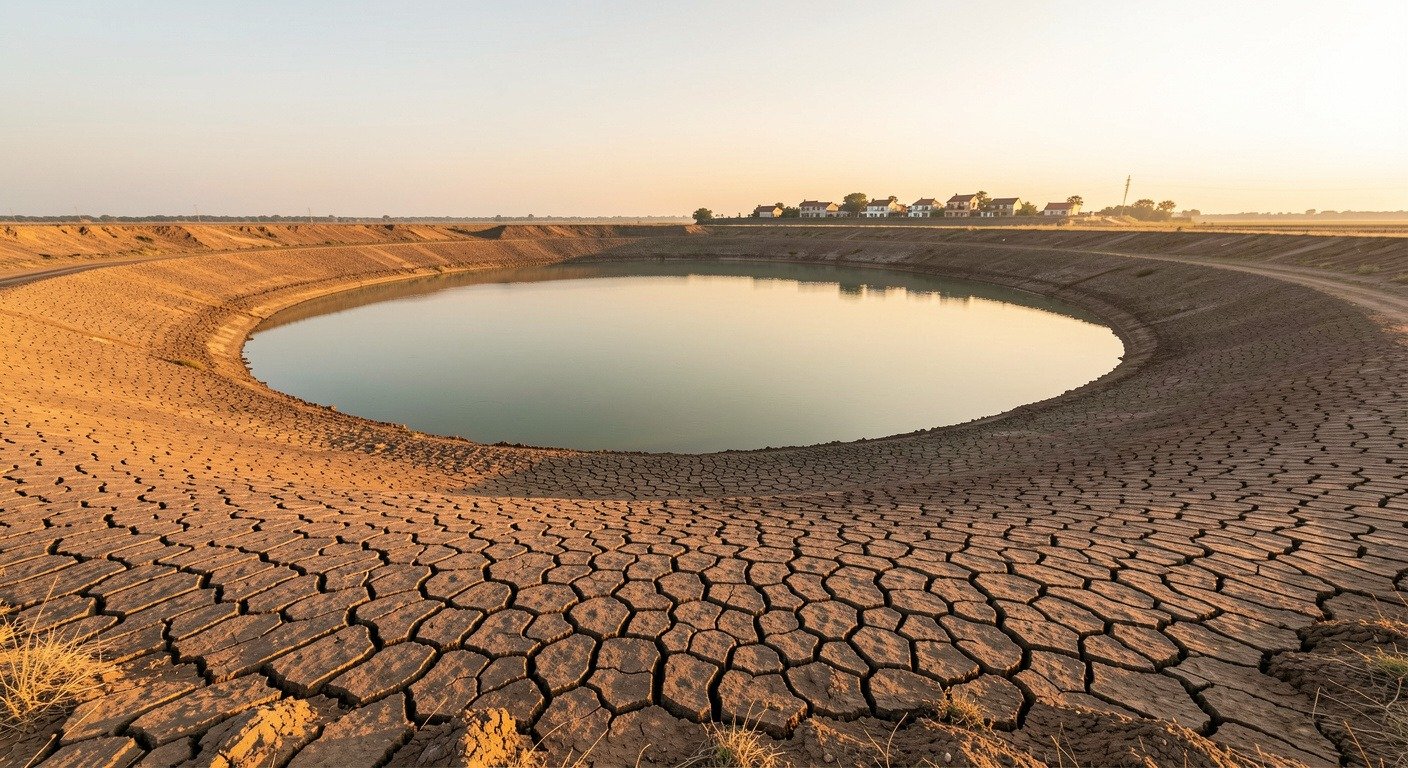
India’s major reservoirs were already below normal levels entering the monsoon season after a dry winter. A weak monsoon means reservoir levels will drop further in the months when demand peaks, from June through September. This affects drinking water, irrigation canals, and hydropower generation, which provides roughly 11 percent of India’s electricity. When reservoirs run low, power cuts follow, and they hit rural areas hardest.
Economy and Prices
Agriculture contributes about 14 percent of India’s GDP, but it employs nearly half the workforce. A poor monsoon sends shock waves through the economy. Food prices rise. Rural demand falls. The government may need to increase subsidies for fertilizer and diesel, expand food distribution programs, and restrict agricultural exports to protect domestic supply, as it did during previous weak monsoon years in 2014 and 2015.
Al Jazeera reported that food inflation is already a concern in several Indian states, with vegetable prices rising sharply in urban markets. The longer the dry spell continues, the more pressure builds.
Why It Matters Now: A Region Already Under Pressure
South Asia entered 2026 already strained. India experienced record-breaking heat waves in March and April, with temperatures exceeding 45 degrees Celsius in several states. Pakistan and Bangladesh faced similar extremes. These heat waves dried out soils before the monsoon even had a chance to begin, meaning the rain that does fall will first need to replenish ground moisture before it can support crops.
The 2026 El Nino event is still developing and may strengthen into a historically significant episode, as covered in our coverage of El Nino 2026. If that happens, the monsoon could weaken further through August and September, the critical months for crop maturity.
The WMO warned that below-normal rainfall is expected across all of South Asia, not just India. Pakistan, Bangladesh, Nepal, Sri Lanka, and Myanmar all rely on the same monsoon system. A regional monsoon failure would strain food supplies across a region that is home to nearly two billion people.
What We Can Learn: Adaptation in a Warming World
A weak monsoon in an El Nino year is not new. What is changing is the frequency and intensity of these disruptions. Climate models project that as the planet warms, monsoon rainfall will become more variable, meaning both stronger wet years and more severe dry years. The challenge is building systems that can handle both extremes.
India has made progress. The country’s monsoon forecasting has improved dramatically over the past two decades, giving farmers and governments earlier warnings. Crop insurance programs have expanded, though coverage is still limited. Investments in drip irrigation, drought-resistant seeds, and water harvesting have helped some regions become more resilient. But adaptation is expensive, and it reaches large commercial farms faster than it reaches the smallholder farmers who produce the majority of India’s food.
For the rest of the world, South Asia’s monsoon is a reminder that climate disruption travels through the food system. India is the world’s largest exporter of rice and a major producer of sugar, cotton, and spices. A weak monsoon there means tighter global supplies and higher prices everywhere. The interconnectedness that defines the modern food system means no country is entirely insulated from a rainfall deficit half a world away.
The monsoon is not something that happens to India. It is something that happens to all of us.
Sources
1. Al Jazeera, “India prepares contingency plans due to weak monsoon season” (June 23, 2026): aljazeera.com
2. World Meteorological Organization, “South Asia is expected to receive below average monsoon rainfall” (April 30, 2026): wmo.int
3. DownToEarth, “Around 200 districts flagged for El Nino impact as weak monsoon forecast puts agriculture ministry in crisis mode” (June 12, 2026): downtoearth.org.in
4. The Hindu, “Monsoon tracker updates on June 19, 2026” (June 19, 2026): thehindu.com
5. Eos.org, “The prospects for the 2026 monsoon in South Asia” (May 21, 2026): eos.org