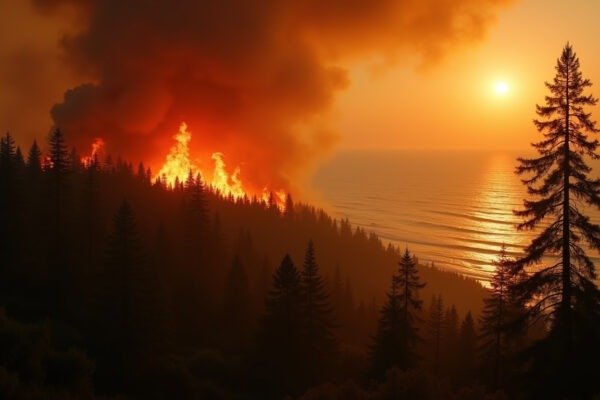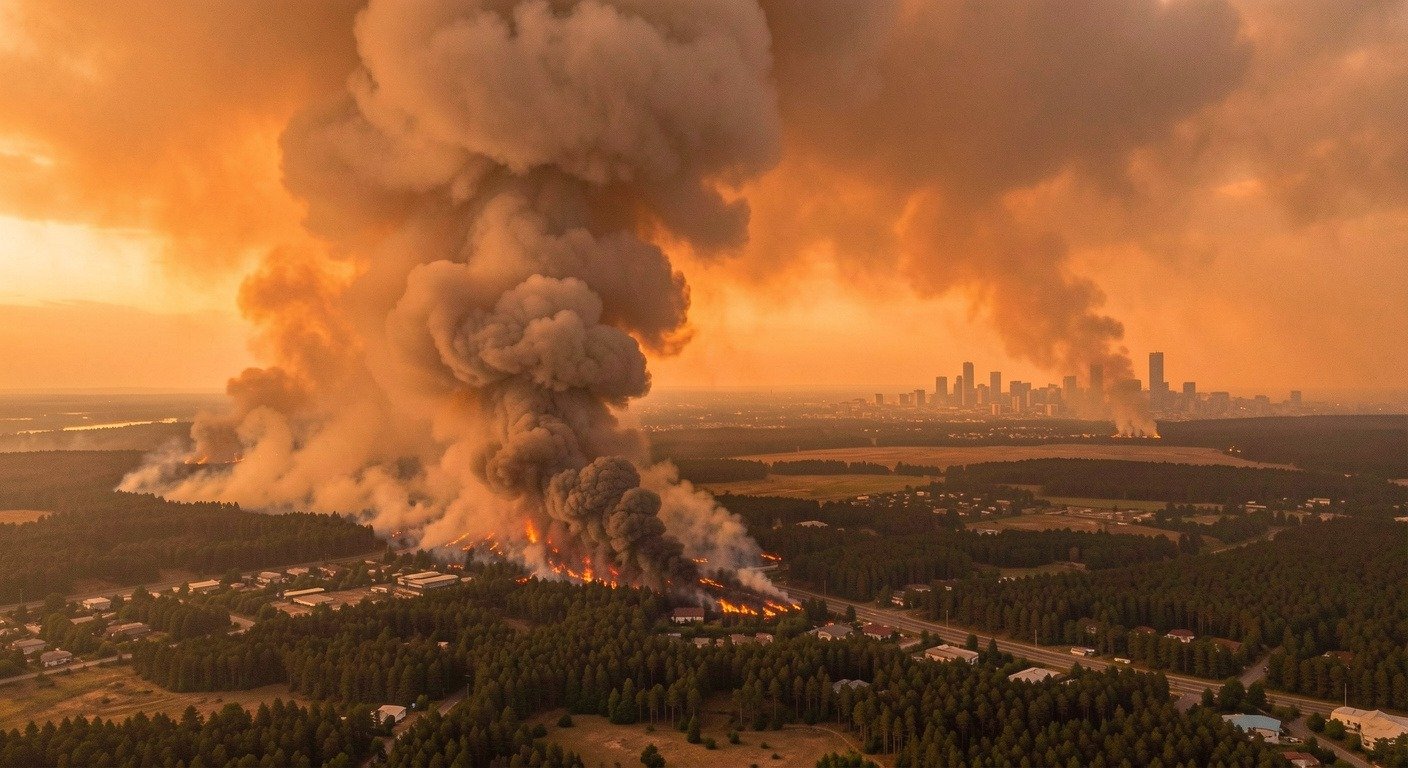
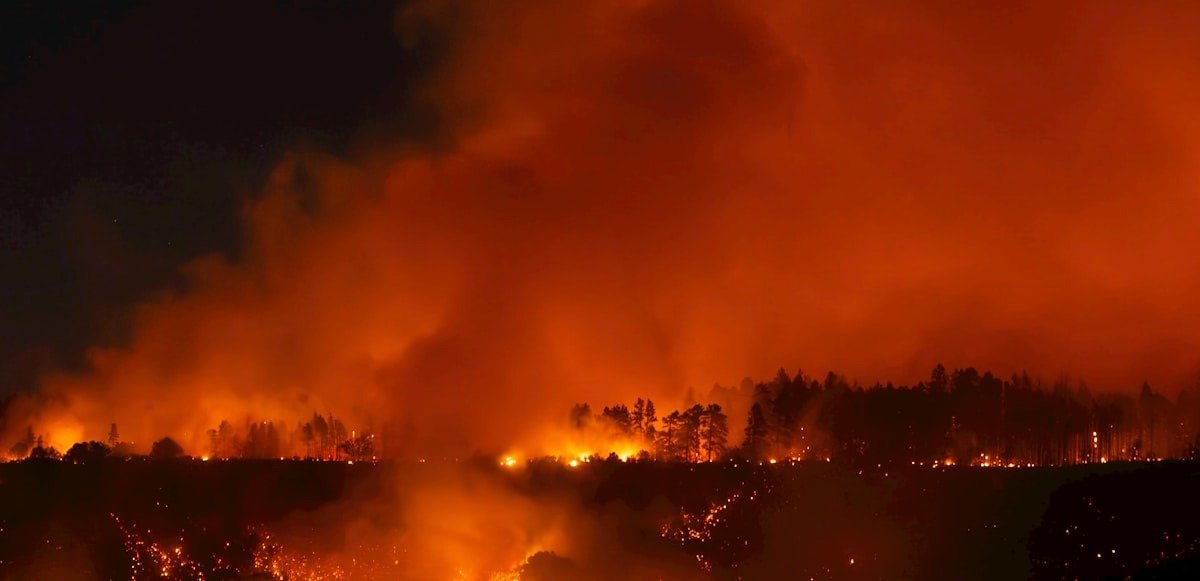
In June 2023, the skies over New York City turned orange. Not a filter. Not a movie scene. Wildfire smoke from Quebec had traveled more than 500 miles and settled over the most photographed skyline on Earth. Schools canceled recess. Flights were grounded. Millions of people were told to stay indoors and keep the windows shut. The air quality index in Manhattan briefly ranked among the worst in the world.
The smoke did not stop there. Within weeks, the same plumes drifted across the Atlantic Ocean, passing over a remote observatory in Birkenes, Norway, then farther south into Europe. By the summer of 2025, smoke from Canadian wildfires was visible in the skies above Trento, Italy; Davos, Switzerland; and the Austrian Alps. What happened in 2023 was not an anomaly. It was a preview.
Now, in June 2026, the same pattern is unfolding. Fires across North America are sending smoke across borders and oceans, and the public health consequences are mounting. The World Meteorological Organization has confirmed that transboundary wildfire smoke is now a routine global phenomenon, one that is erasing decades of progress on air quality and exposing millions of people to hazardous pollution from fires they never saw.
How Smoke Crosses the World
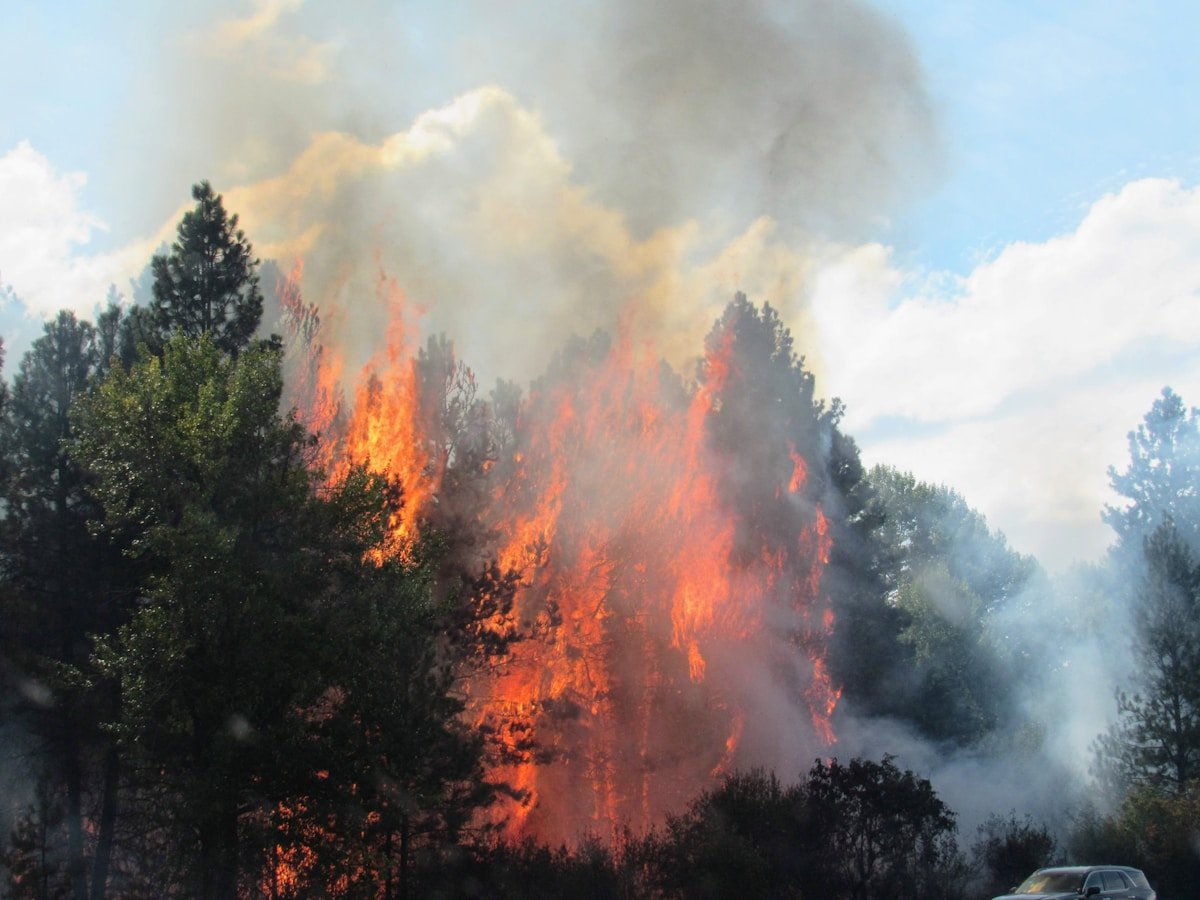
When a forest burns, it does not just release heat and flame. It releases billions of tiny particles into the air, along with gases like carbon monoxide, volatile organic compounds, and nitrogen oxides. The most dangerous of these particles are known as PM2.5: particulate matter with a diameter of 2.5 micrometers or less, roughly 30 times smaller than a human hair.
These particles are small enough to be lifted high into the atmosphere by the heat of the fire itself. In the most extreme fires, pyrocumulonimbus clouds form: fire-generated thunderstorms that can punch smoke directly into the upper troposphere and lower stratosphere. Once there, jet streams carry the particles thousands of miles, across continents and oceans, depositing them far from the original burn zone.
The WMO describes the process with clinical precision: smoke from wildfires can travel thousands of kilometers, crossing borders, oceans, and continents. Understanding where it will go next has become an increasingly important scientific challenge. Satellites now track smoke plumes in near real time, and NASA’s GEOS-FP model produces daily global smoke forecasts that anyone can view. The images often resemble weather radar, but instead of rain, the swirling colors represent airborne particles drifting across the planet.
The Health Toll That Keeps Growing
PM2.5 is not just an annoyance that makes the sky look strange. It is a killer. Because the particles are so small, they bypass the body’s natural defenses in the nose and throat, penetrating deep into the lungs and entering the bloodstream. During extreme fire events, PM2.5 concentrations can reach 10 to 20 times the safety guidelines set by the World Health Organization.
The mortality numbers are staggering. A 2024 study found that wildfire smoke PM2.5 contributed to more than 50,000 premature deaths in California over a single decade. Nationwide, roughly 24,100 deaths per year in the United States are attributed to wildfire smoke exposure. Globally, researchers project that without significant emissions reductions, wildfire smoke could cause 1.4 million premature deaths per year by the end of the century.
There is another layer to the health crisis, one that only recently came into focus. In June 2026, a study published in the journal Science revealed that wildfire smoke has reversed decades of American progress on ground-level ozone. For years, tighter regulations on cars, power plants, and industrial sources had driven ozone levels steadily downward, by about 0.65 parts per billion per year. Since 2015, that trend has reversed. Ozone is now increasing by 0.13 parts per billion per year, driven entirely by wildfire emissions. The reversal is estimated to cause roughly 318 premature deaths annually in the United States.
Ground-level ozone is a respiratory irritant that forms when pollutants react with sunlight. Wildfire smoke carries the chemical precursors for ozone hundreds of miles downwind, raising concentrations in communities that are nowhere near a fire. The study’s authors put it plainly: even as the country cleaned up its tailpipes and smokestacks, wildfires erased the gains.
The people most at risk are the same groups vulnerable to most forms of air pollution: children, whose lungs are still developing; older adults; and anyone with asthma, chronic obstructive pulmonary disease, or heart conditions. But the danger compounds when wildfire smoke arrives during a heat wave. Combined heat and smoke events sharply increase hospitalizations for cardiorespiratory problems, and both are becoming more common.
Wildfire Smoke: Key Numbers
| Metric | Value |
|---|---|
| PM2.5 particle size | ≤2.5 micrometers (30x smaller than hair) |
| U.S. annual deaths from smoke | ~24,100 |
| 2026 U.S. acres burned (by June 18) | 2.63 million (1M above average) |
| Extreme wildfire increase by 2030 | +14% projected |
| Ozone trend reversal | +0.13 ppb/year since 2015 (smoke-driven) |
The 2026 fire season is running far above historical norms. By June 18, the National Interagency Fire Center had recorded 33,349 fires burning 2.63 million acres across the United States. That is nearly a million acres more than the ten-year average. The National Preparedness Level was raised to Level 3 on a five-level scale, signaling that significant wildland fire activity is straining resources across multiple regions.
The most extreme example came from Nebraska. In March, the Morrill Fire ignited and grew into the largest wildfire in state history, burning more than 642,000 acres. It killed one person, destroyed homes, and left ranchers surveying landscapes of ash and blackened tree skeletons. A separate fire in Nebraska, the Cottonwood Fire, burned an additional 129,000 acres. In Oklahoma and Kansas, the Ranger Road Fire consumed more than 283,000 acres.
Canada, meanwhile, has had a comparatively slow start to its 2026 season, with 1,896 fires burning roughly 177,000 hectares as of June 21, well below the five-year average of 2.3 million hectares. But hotspots are growing in British Columbia and the Northwest Territories, where hot, dry, stormy weather has triggered evacuation alerts and orders. By mid-July, Ontario had joined the list: nearly 200 fires forced evacuations across the province. The 2025 season was Canada’s second-worst on record, a reminder that slow starts can accelerate quickly.
The larger trajectory is what worries scientists. The WMO and the United Nations Environment Programme project that extreme wildfires will increase by 14 percent by 2030 and by as much as 50 percent by the end of the century. Fire season, once a predictable window from roughly May through November, has expanded into a year-round phenomenon. In January 2026, 69 percent of the United States was under drought conditions. The Los Angeles fires of January 2025, which killed 31 people and destroyed more than 16,000 structures, proved that winter no longer offers a reprieve.
What We Can Learn
There is no single solution to transboundary wildfire smoke. But there are tools that can reduce the harm, and they start with knowing what is in the air. Early warning systems operated by the WMO and national agencies now provide smoke forecasts that give communities hours or days of lead time before hazardous air arrives. Regional centers in Singapore and Montreal coordinate international monitoring and prediction.

For individuals, the protective steps are concrete. Check local air quality indices before spending time outdoors, particularly during fire season. When PM2.5 levels are elevated, N95 masks provide meaningful filtration. Indoor air purifiers with HEPA filters can dramatically reduce exposure at home. Have an evacuation plan ready, especially if you live in a fire-prone area.
At the policy level, the path forward requires two things at once. The first is better fire management: controlled burns, fuel reduction, and land-use planning that limits the buildup of flammable vegetation. The second, and more fundamental, is aggressive climate mitigation to slow the warming that is making fires larger, hotter, and more frequent. As the authors of the Science study concluded, mitigating climate change and implementing fire prevention measures can lead to improved air quality standards and potentially bring large benefits to public health.
The smoke that starts in a forest in Saskatchewan or a grassland in Nebraska does not stay there. It moves. It crosses borders. It settles in lungs thousands of miles away. The orange skies of 2023 were a photograph. The science of 2026 confirms they were also a forecast.